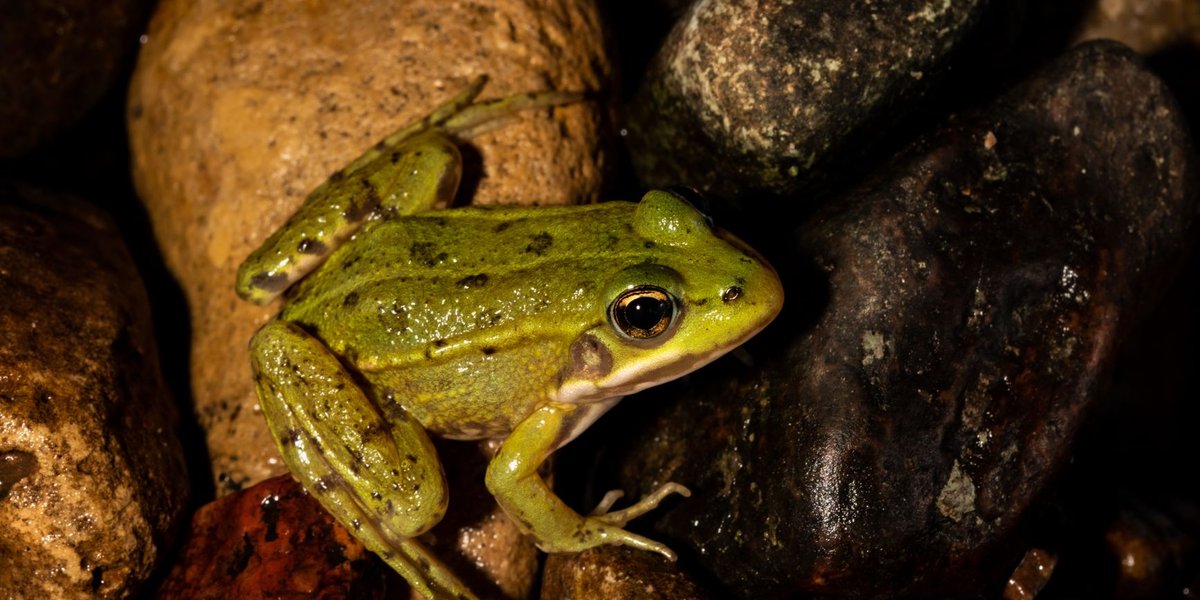
Frogs swallow with their eyeballs, breathe through their skin, and one species can spend winter frozen solid and walk away in spring. Those are real, documented facts about frogs, and they’re only the start. Below are 20, grouped by theme, with a quick reference box up top and a frog vs toad table at the end.
Contents
- Quick facts about frogs
- Anatomy and senses
- Skin and toxins
- Life cycle
- Habitat and survival
- Record-holders
- Myths and threats
- Frog vs toad
- FAQ
Quick facts about frogs
| Species | More than 7,500 described, according to AmphibiaWeb, which updates its count as new frogs are named |
| Range | Every continent except Antarctica |
| Size | From under 1 cm (0.3 in) to about 30 cm (1 ft) |
| Diet | Adults eat live prey: insects, spiders, worms, and in big species mice, snakes, and other frogs. Most tadpoles graze on algae and plant matter |
| Lifespan | Roughly 2 to 10 years in the wild for most species; 15 to 20+ in captivity for some |
| Order | Anura (“without a tail”), which includes toads |
Species counts differ between sources because taxonomists keep splitting and discovering species. This post was last updated in October 2026.
Anatomy and senses
1. Frogs swallow with their eyes
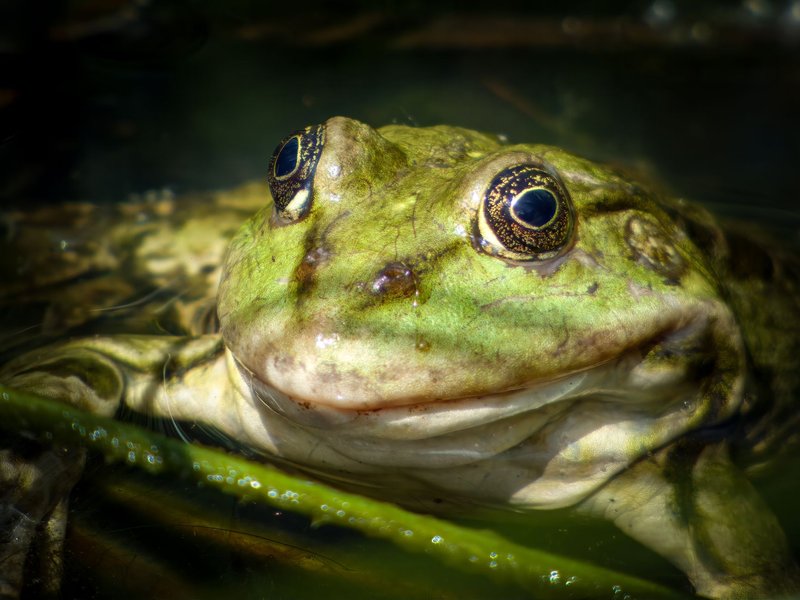
A frog’s eyeballs sink down into its head when it swallows. The retracting eyes press on the roof of the mouth and push food down the throat. You can watch it happen: a frog mid-meal blinks hard and its eyes visibly dip.
2. The tongue is attached at the front
Humans have tongues rooted at the back. Frogs have them hinged near the front of the lower jaw, so the tongue flips out and over like a hinged lid. Add sticky saliva and a strike that takes well under a tenth of a second, and an insect has no time to react.
3. The ears are circles on the outside of the head
Frogs have no external ear flap. The round, flat patch of skin behind each eye is the eardrum, called the tympanum. In male bullfrogs it’s larger than the eye. In females it’s about the same size or smaller, which is an easy way to tell the sexes apart.
4. Glass frogs are see-through
Glass frogs, a family of about 150 species in Central and South America, have transparent belly skin. You can see the heart beating, the liver, and the gut. A 2022 study in Science found they get more transparent by packing nearly 90 percent of their red blood cells into the liver while they rest, so the blood doesn’t show through.
Skin and toxins
5. Frogs breathe through their skin
Frogs have lungs, but their skin does a large share of the work. Oxygen dissolves into the moisture on the surface and passes into blood vessels just beneath. This is why a frog’s skin has to stay wet, and why it’s so sensitive to pollutants in the water around it.
6. They rarely drink
A frog soaks water up through a patch of skin on its belly and thighs, often called the seat patch. Sit one on damp ground and it’s drinking. You’ll almost never see one lap water from a puddle.
7. Poison dart frogs get their poison from food
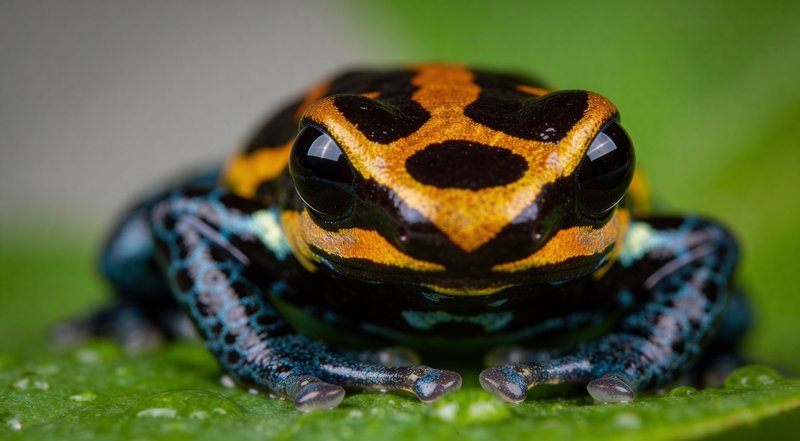
The golden poison frog, about the size of a paperclip, carries enough batrachotoxin to kill several adults, and it’s among the most poisonous animals known. The frogs don’t make it themselves. They absorb alkaloids from the ants and mites they eat in the wild. Captive-bred dart frogs fed crickets are harmless.
8. Frogs shed their skin, then eat it
Frogs molt every few weeks, depending on the species. The old skin often comes off in one piece, and the frog commonly pulls it into its mouth and swallows it. Scientists think it recovers nutrients and also hides evidence from predators.
Life cycle
9. A tadpole can take days or years to become a frog
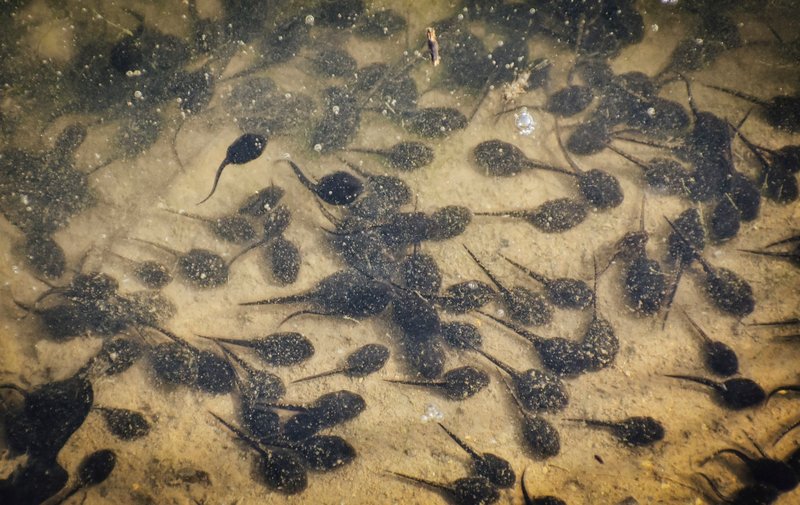
The standard sequence is egg, tadpole, froglet, adult. The timing swings wildly. Wood frog tadpoles can finish in two to three months. American bullfrog tadpoles in cold northern ponds can stay tadpoles through two or three winters. During metamorphosis the tail is reabsorbed and used as fuel while the legs grow in.
10. Some frogs skip the tadpole stage
The Puerto Rican coquí lays eggs on land, and the young develop inside the egg and hatch as tiny frogs. It’s called direct development, and it’s common among frogs in the tropics. No pond required.
11. Darwin’s frog dads raise tadpoles in their throats
The male Darwin’s frog of Chile and Argentina guards the eggs on the ground, then scoops them into his vocal sac just before they hatch. The tadpoles develop inside, and he spits out finished froglets a few weeks later. A relative that did something even stranger, the Australian gastric-brooding frog, raised young in its stomach before it went extinct in the 1980s.
12. Frogs can live longer than you’d guess
Most small wild frogs live a few years. Larger species and animals in captivity do much better: a White’s tree frog commonly reaches 15 to 20 years in a good home. The same frog in the wild faces predators, disease, and drying ponds, so numbers drop fast.
Habitat and survival
13. Wood frogs freeze solid every winter
North America’s wood frog, which ranges north of the Arctic Circle, survives being frozen. As much as two-thirds of its body water turns to ice. Its heart stops, it stops breathing, and it looks dead. Its liver floods its cells with glucose, which works like antifreeze and keeps the cells from rupturing. When temperatures rise, the heart restarts.
14. Some frogs wait out droughts in a cocoon
The Australian water-holding frog burrows underground in dry seasons, stores water in its bladder, and wraps itself in a cocoon of shed skin layers. It can stay buried for a year or longer until heavy rain wakes it up. Aboriginal Australians have dug up these frogs as an emergency water source.
15. Some frogs glide
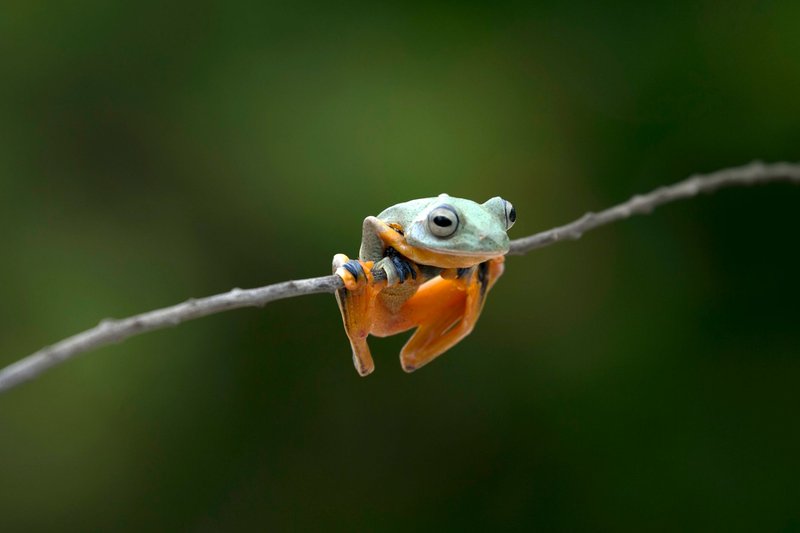
Wallace’s flying frog, from the rainforests of Malaysia and Borneo, has enormous webbed feet. It spreads them wide, flattens its body, and glides from tree to tree. It’s a controlled glide, not true flight, and it lets the frog skip the ground, where predators wait.
Record-holders
16. The Goliath frog weighs as much as a house cat
The Goliath frog of Cameroon and Equatorial Guinea grows to about 30 cm (a foot) from nose to rump and can weigh more than 3 kg (over 6.5 lb). That’s the largest frog on Earth.
17. One frog is smaller than a dime is wide
Paedophryne amauensis, from Papua New Guinea, averages about 7.7 mm (0.3 in) long. Two would fit side by side across a US dime. When it was described in 2012, it was the smallest known vertebrate. It lives in leaf litter, and it also develops directly with no tadpole stage.
18. The coquí is loud enough to cause noise complaints
The two-note call of the male coquí can reach roughly 90 decibels at close range, about the level of a lawn mower. Coquís introduced to Hawaii have become a nuisance in some neighborhoods because of exactly that. Males call at night to claim territory and attract females.
Myths and threats
19. The “boiling frog” story is a myth
The idea is that a frog dropped into slowly heated water won’t notice and will cook. It does notice. A frog jumps out once the water gets uncomfortably hot, as nearly any animal does. The story survives as a metaphor, not as biology.
20. A fungus has pushed hundreds of amphibian species toward extinction
The chytrid fungus Batrachochytrium dendrobatidis attacks the skin, which interferes with the frog’s ability to take in water and salts and can stop the heart. A 2019 review in Science linked it to declines in at least 501 amphibian species, with 90 presumed extinct. The IUCN Red List rates roughly four in ten amphibian species as threatened, a worse rate than for birds or mammals. Habitat loss and climate change add to the pressure.
Frog vs toad
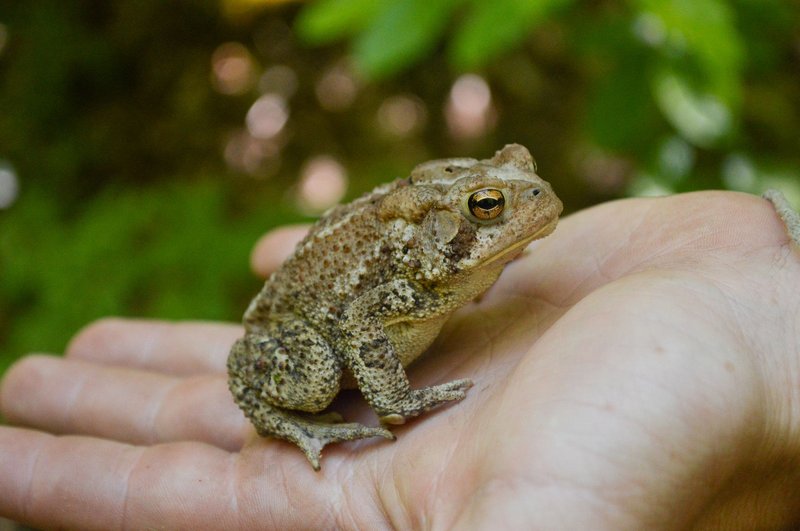
All toads are technically frogs. “Toad” is a common name for members of the family Bufonidae (true toads) and some other frog groups that evolved similar traits, so the split isn’t a hard scientific line. In practice, these rules of thumb work for most species you’ll meet:
| Feature | Typical frog | Typical toad |
|---|---|---|
| Skin | Smooth, moist | Dry, bumpy |
| Legs | Long, built for jumping | Shorter, built for hopping and walking |
| Habitat | Near or in water | More time on land |
| Eggs | Laid in clumps | Often laid in long strings |
| Glands | Few or none | Large parotoid glands behind the eyes that produce toxin |
The line about warts is a myth. Touching a toad doesn’t give you warts. Human warts come from the human papillomavirus. A toad’s parotoid secretions can irritate your eyes and mouth, so wash your hands after handling one.
FAQ
How many species of frogs are there?
More than 7,500 are described, and new ones are named every year. The number moves, which is why you’ll see different totals depending on the source and the date.
How long do frogs live?
Most wild frogs live 2 to 10 years, depending on species. Some captive frogs, such as White’s tree frogs, reach 15 to 20 years or more.
Are all frogs poisonous?
No. Many frogs have mild skin secretions that taste bad to predators, and a few groups, such as poison dart frogs, carry potent toxins. Most frogs pose no danger to people, though wild frogs should be handled with wet hands or not at all, since oils and soaps on human skin can harm them.
What do frogs eat?
Adult frogs eat living prey, mostly insects, spiders, and worms. Larger species eat small mammals, birds, and other frogs. Most tadpoles eat algae and plant matter, though some are predators.
Do frogs have teeth?
Most do, in a row along the upper jaw. They’re small and used to hold prey, not chew it. Toads in the family Bufonidae have none.
Where do frogs live?
On every continent except Antarctica, from rainforest canopies to deserts to the Arctic Circle.