Six categories, twelve people, one organization, and a year that quietly seeded three of the biggest science and policy stories of the next three decades. The 1997 Nobel Prizes went to the physicists who figured out how to catch atoms with light, the biochemists who cracked open how cells actually generate power, the man who proved a protein alone could cause disease, a playwright who spent his career needling the powerful, the campaign that got most of the world to ban landmines, and the economists whose own pricing model helped blow up a hedge fund a year later.
Here’s who won, what they did, and why it’s still worth knowing in 2026.
Quick Answer: The 1997 Nobel Prize Winners
| Category | Laureate(s) | Country | What They Won For |
|---|---|---|---|
| Physics | Steven Chu, Claude Cohen-Tannoudji, William D. Phillips | US, France, US | Cooling and trapping atoms with laser light |
| Chemistry | Paul D. Boyer, John E. Walker, Jens C. Skou | US, UK, Denmark | Discovering how cells manufacture and move energy at the molecular level |
| Physiology or Medicine | Stanley B. Prusiner | US | Discovery of prions, infectious proteins with no DNA or RNA |
| Literature | Dario Fo | Italy | Satirical theater in the tradition of medieval jesters, aimed at power |
| Peace | Jody Williams and the International Campaign to Ban Landmines | US / International | Leading the global campaign that produced the Ottawa Treaty |
| Economic Sciences | Robert C. Merton, Myron S. Scholes | US | A new method for pricing derivatives (the Black-Scholes-Merton model) |
Table of Contents
- Physics: Steven Chu, Claude Cohen-Tannoudji, William D. Phillips
- Chemistry: Paul D. Boyer, John E. Walker, Jens C. Skou
- Medicine: Stanley B. Prusiner
- Literature: Dario Fo
- Peace: Jody Williams and the ICBL
- Economic Sciences: Robert Merton and Myron Scholes
- Why 1997 Still Shows Up in the News
Physics: Steven Chu, Claude Cohen-Tannoudji, William D. Phillips {#physics}
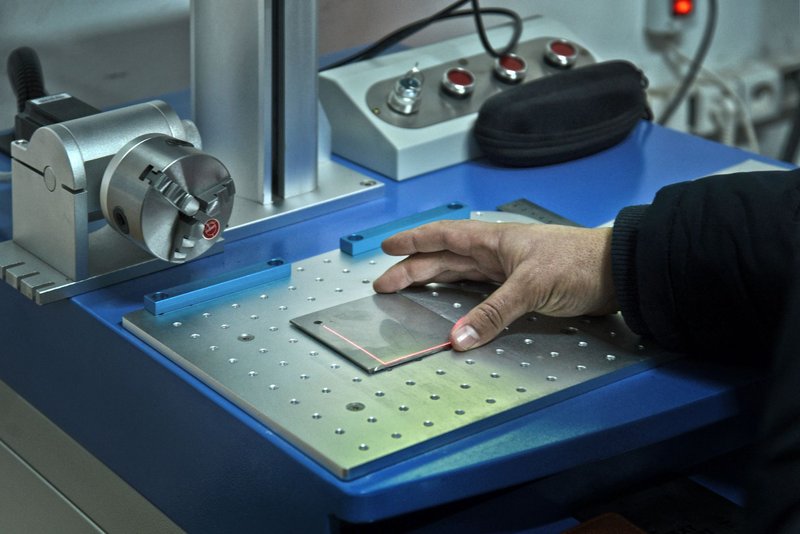
At room temperature, atoms move fast — hundreds of meters per second, bouncing around too quickly to study in detail. Chu, Cohen-Tannoudji, and Phillips, working independently through the 1980s, developed a way to slow atoms down almost to a standstill using laser light aimed from multiple directions. The lasers don’t push the atoms like a fan pushes air; they’re tuned so that a moving atom absorbs more photons head-on than from behind, which acts as a drag force. Slow the atom enough and you can hold it in place with a magnetic trap.
The technique, later nicknamed “optical molasses,” pushed atomic temperatures down to microkelvin levels — a millionth of a degree above absolute zero. That precision is why your phone’s GPS works to within a few meters: atomic clocks built on laser-cooled atoms are the timekeeping backbone of the entire satellite navigation system. The same cooling methods are now standard equipment in labs building quantum computers, where individual laser-trapped atoms or ions serve as qubits.
Chemistry: Paul D. Boyer, John E. Walker, Jens C. Skou {#chemistry}
The 1997 Chemistry prize actually split across two separate discoveries about how cells handle energy. Boyer and Walker shared half for explaining how an enzyme called ATP synthase manufactures adenosine triphosphate — the molecule that powers essentially every process in every cell in your body. Boyer worked out the rotating mechanism by which the enzyme spins like a tiny turbine to bond phosphate onto ADP; Walker used X-ray crystallography to map the enzyme’s structure and confirm it.
Skou took the other half, for a discovery decades earlier: he identified the sodium-potassium pump, the enzyme that shoves sodium out of cells and potassium in, against their natural concentration gradients. That pump is why your neurons can fire, your heart can beat on a rhythm, and why the heart drug digoxin (derived from foxglove) works at all — it targets that exact enzyme. Between them, the three laureates explained the two core engines of cellular life: how cells make energy, and how they move it around.
Medicine: Stanley B. Prusiner {#medicine}
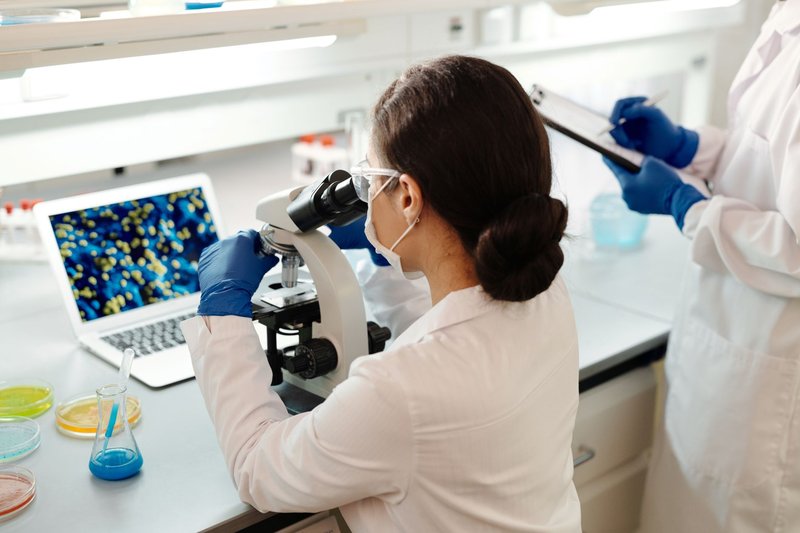
Prusiner’s prize was the most controversial of the year, and it stayed that way for a while. His claim, first published in 1982, was that a disease could be caused by a misfolded protein alone — no virus, no bacteria, no genetic material required. The prion, as he named it, was simply a normal brain protein that had folded into the wrong shape, and that wrong shape was contagious: it could force other, correctly folded copies of the same protein to misfold too, like a chain reaction moving through brain tissue.
Most of the field thought this was impossible. Biology’s central dogma said infectious agents needed nucleic acid to replicate. But the mid-1990s “mad cow” (BSE) crisis in the UK, and the human deaths from variant Creutzfeldt-Jakob disease that followed, made prions impossible to dismiss as a fringe theory. The CDC still tracks prion diseases as a distinct category, and Prusiner’s misfolding framework has since become central to research on Alzheimer’s and Parkinson’s, where misfolded tau, amyloid-beta, and alpha-synuclein proteins spread through the brain in a strikingly similar way. Chronic wasting disease, the prion illness now spreading through North American deer and elk populations, is the reason wildlife agencies started prion surveillance programs that didn’t exist when Prusiner won.
Literature: Dario Fo {#literature}
Dario Fo was, by his own description, a jester — and he meant it as a job title, not a joke. The Italian playwright and performer built a career out of political satire aimed squarely at the Catholic Church, corrupt officials, and the Italian state, most famously in “Accidental Death of an Anarchist,” a farce built around a real 1969 death in police custody that was officially ruled a suicide despite the anarchist being handcuffed.
The Swedish Academy’s choice raised eyebrows because Fo wasn’t a novelist or poet in the traditional Nobel mold — he was a working performer whose scripts were built for improvisation and audience interaction, closer to commedia dell’arte than to literary fiction. The Vatican newspaper reportedly objected to the pick. That reaction was, in a way, Fo’s whole career working exactly as designed.
Peace: Jody Williams and the International Campaign to Ban Landmines {#peace}
Williams coordinated the International Campaign to Ban Landmines (ICBL), a coalition of grassroots groups that had, by 1997, pushed more than 100 governments to sign the Ottawa Treaty banning the production, stockpiling, and use of anti-personnel landmines. It’s still considered one of the fastest, most effective disarmament campaigns in modern diplomatic history — from a scattered coalition of NGOs to a binding international treaty in about five years.
The treaty’s legacy has gotten complicated. Major military powers — the US, Russia, and China among them — never signed it, and by 2025 several NATO members bordering Russia, citing the war in Ukraine and the scale of landmine use there, had begun the process of withdrawing from it. That’s not a footnote; it’s a direct test of whether a 1997 disarmament win holds up under 2020s security pressure. The ICBL still publishes an annual Landmine Monitor tracking clearance progress and new use, and the numbers cut both ways: dozens of countries have been declared mine-free since the treaty took effect, even as new minefields have opened in Ukraine.
Economic Sciences: Robert Merton and Myron Scholes {#economics}
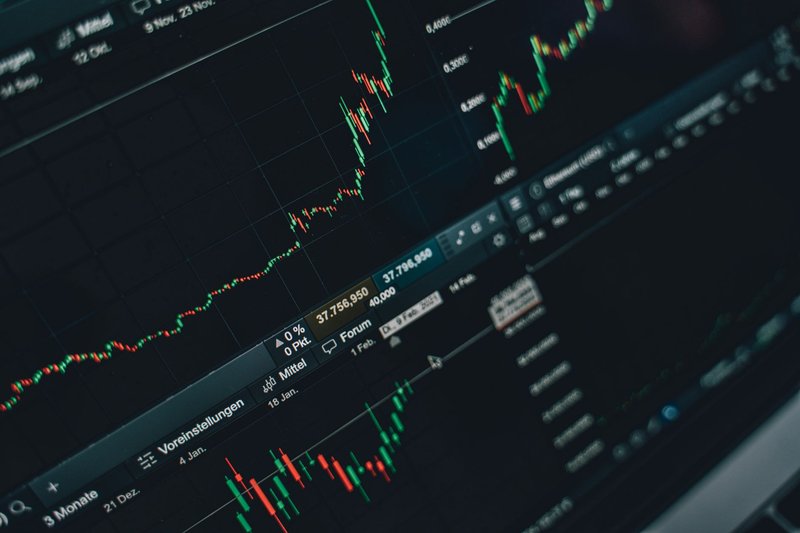
Merton and Scholes won for extending and formalizing what’s now called the Black-Scholes-Merton model, a formula for calculating the fair price of a stock option based on the underlying asset’s price, volatility, time to expiration, and interest rates. Fischer Black, the third name usually attached to the model, had died in 1995 and Nobel Prizes aren’t awarded posthumously, so he missed the recognition despite doing the foundational work.
The model is genuinely one of the most consequential pieces of applied math in modern finance — it’s the reason options markets could scale into the trillion-dollar business they are today, because traders finally had a shared, defensible way to price risk. The irony arrived fast: both Merton and Scholes sat on the board of Long-Term Capital Management, the hedge fund that used heavily leveraged derivatives strategies and collapsed spectacularly in 1998, needing a Federal Reserve-brokered bailout to avoid dragging down the broader financial system. The model wasn’t wrong, exactly — the fund’s leverage and its assumptions about market correlation were. It’s still the textbook cautionary tale about the gap between an elegant formula and how markets actually behave under stress.
Why 1997 Still Shows Up in the News {#why-it-matters}
What’s striking about this particular Nobel year isn’t any single prize — it’s how many of them turned out to be origin stories rather than finish lines. Laser cooling became the atomic clock in your phone. Prion research became the framework scientists now use to think about Alzheimer’s. The landmine ban became a live diplomatic fight as Russia’s war in Ukraine reshapes what European countries are willing to sign onto. And a pricing formula built to make markets safer became the model implicated in one of the first major hedge fund collapses that needed a government-orchestrated rescue.
Nobel committees pick research and work that already matters. What 1997 shows is how unpredictable the second half of that story can get.