Open a bottle of soda and the fizzing stops eventually — that’s not equilibrium, that’s just the CO2 escaping into a room that can’t hold it. Chemical equilibrium is stranger than that. It’s what happens when a reaction looks finished from the outside while, underneath, molecules are still converting back and forth, millions of times a second, with no net change you could ever measure. Most students meet this idea and assume it means the reaction stopped. It didn’t. It just stopped picking a side.
Quick Answer
Chemical equilibrium is the point where the forward and reverse rates of a reaction become equal, so the concentrations of reactants and products stop changing — even though both reactions keep running. The equilibrium constant (Kc for concentrations, Kp for gas pressures) tells you where that balance point sits. Add a stress — more reactant, less pressure, a change in temperature — and Le Chatelier’s principle predicts which way the system shifts to compensate. Catalysts speed up the trip to equilibrium; they don’t move where it ends up.
Table of Contents
- Dynamic Equilibrium: The Reaction That Never Actually Stops
- The Equilibrium Constant: Kc and Kp
- Homogeneous vs. Heterogeneous Equilibria
- Le Chatelier’s Principle: How Systems Respond to Stress
- The Haber Process: Equilibrium at Industrial Scale
- Practice Problem: Solving for Equilibrium Concentrations
- Common Mistakes Students Make With Equilibrium
Dynamic Equilibrium: The Reaction That Never Actually Stops
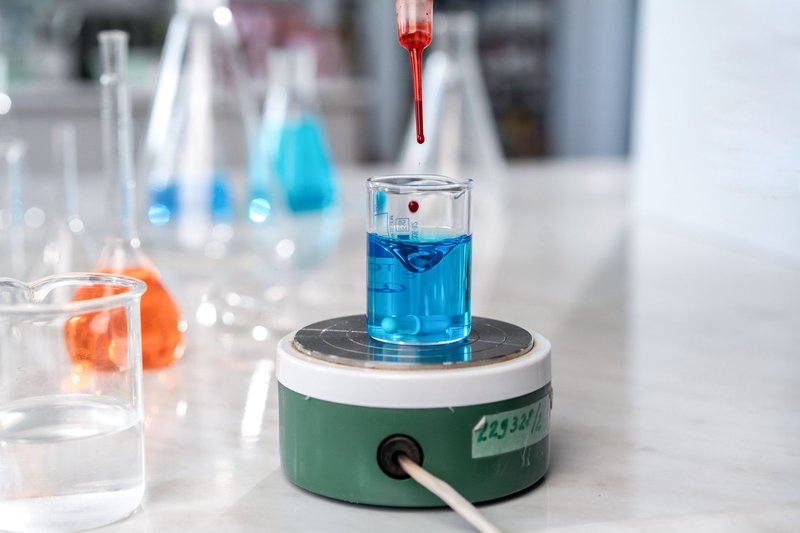
Picture two people on opposite escalators, one going up and one going down, both moving at exactly the same speed. From across the room, it looks like nobody’s going anywhere. That’s dynamic equilibrium — not stillness, but two opposing processes cancelling out.
Static equilibrium is the thing people usually picture when they hear the word: a book resting on a table, nothing happening at all. Chemical equilibrium is almost never that. In a closed system, the forward reaction (reactants turning into products) and the reverse reaction (products turning back into reactants) both keep happening after equilibrium is reached. What stops is the net change — the rate forward equals the rate backward, so concentrations hold steady.
This is why equilibrium requires a closed system. Open a flask to the air and let a gaseous product escape, and the reverse reaction has nothing to work with. There’s no balance to strike because one side of the scale keeps getting lighter.
The Equilibrium Constant: Kc and Kp
For a general reaction aA + bB ⇌ cC + dD, the equilibrium constant expression is:
Kc = [C]^c[D]^d / [A]^a[B]^b
Products on top, reactants on bottom, each raised to its coefficient. Kc uses molar concentrations; Kp uses partial pressures for gas-phase reactions, and the two are related by Kp = Kc(RT)^Δn, where Δn is the change in moles of gas from reactants to products. A large Kc (much greater than 1) means the equilibrium mixture favors products. A small one (much less than 1) means it favors reactants. Neither value tells you how fast the reaction gets there — Kc is about position, not speed.
Here’s a real, worked calculation, the classic H2 + I2 ⇌ 2HI system at 448°C:
You start with 1.000 mol of H2 and 1.000 mol of I2 in a 1.00 L flask. At equilibrium, the flask contains 1.564 mol of HI. Find Kc.
- Set up an ICE table (Initial, Change, Equilibrium) in mol/L, since the volume is 1.00 L.
- Initial: [H2] = 1.000, [I2] = 1.000, [HI] = 0.
- Change: HI forms in a 2:1 ratio to H2 and I2 consumed, so if x mol/L of H2 reacts, [HI] increases by 2x. Since [HI] at equilibrium is 1.564, 2x = 1.564, so x = 0.782.
- Equilibrium: [H2] = 1.000 − 0.782 = 0.218, [I2] = 0.218, [HI] = 1.564.
- Plug into the expression: Kc = (1.564)² / (0.218 × 0.218) = 2.446 / 0.0475 ≈ 51.5.
That 51.5 isn’t a rounding convenience — it’s the textbook value chemists actually report for this reaction at 448°C, and it’s large enough to tell you the equilibrium mixture is mostly HI, not leftover H2 and I2. The NIST Chemistry WebBook catalogs measured equilibrium and thermodynamic data like this for thousands of reactions, if you want to see how far the numbers extend beyond a textbook problem.
Homogeneous vs. Heterogeneous Equilibria
A homogeneous equilibrium has every reactant and product in the same phase — usually all gases, like N2(g) + 3H2(g) ⇌ 2NH3(g). Every species shows up in the Kc expression.
A heterogeneous equilibrium mixes phases, and that changes the math. Take the decomposition of calcium carbonate: CaCO3(s) ⇌ CaO(s) + CO2(g). Pure solids and pure liquids have essentially constant “concentrations” — their amount doesn’t affect the position of equilibrium — so they’re left out of the expression entirely. Here, Kc = [CO2]. Not [CaCO3]/[CaO], not anything involving the solids. Just the one gas. Students who carry solids into the expression out of habit get equilibrium problems wrong even when their algebra is fine.
Le Chatelier’s Principle: How Systems Respond to Stress
Le Chatelier’s principle says a system at equilibrium, when disturbed, shifts in whichever direction partially undoes the disturbance. It’s not a new law of nature — it falls straight out of the math of Kc — but it’s the version of equilibrium that actually gets used on the job and in the lab, because it lets you predict a shift without doing a calculation.
| Stress applied | System shifts toward | Value of K |
|---|---|---|
| Add reactant | Products (forward) | Unchanged |
| Remove reactant | Reactants (reverse) | Unchanged |
| Add product | Reactants (reverse) | Unchanged |
| Decrease volume / increase pressure | Side with fewer gas moles | Unchanged |
| Increase volume / decrease pressure | Side with more gas moles | Unchanged |
| Increase temperature | Endothermic direction | Changes |
| Decrease temperature | Exothermic direction | Changes |
| Add a catalyst | No shift — both rates speed up equally | Unchanged |
Temperature is the odd one out in that table, and it’s the detail that trips people up. Every other stress just rearranges concentrations around the same Kc. Temperature actually changes the value of Kc itself, because it changes the underlying rate constants for the forward and reverse reactions by different amounts.
The Haber Process: Equilibrium at Industrial Scale
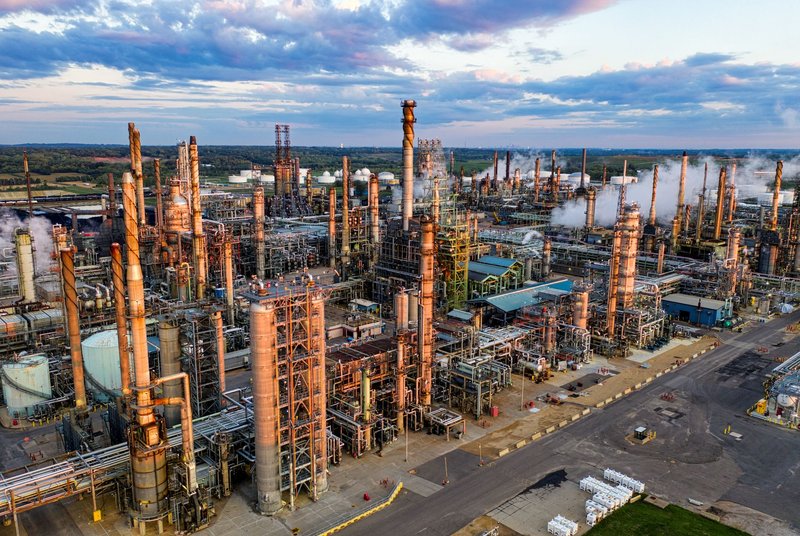
N2(g) + 3H2(g) ⇌ 2NH3(g), ΔH = −92 kJ/mol. This single equilibrium, worked out by Fritz Haber in 1909 and scaled up by Carl Bosch, is why synthetic fertilizer exists — and why roughly half the nitrogen atoms in a typical human body today trace back to a factory rather than a farm field’s natural nitrogen cycle. Haber won the 1918 Nobel Prize in Chemistry for it.
The reaction is a textbook fight between rate and yield. It’s exothermic, so Le Chatelier’s principle says low temperature pushes the equilibrium toward ammonia — more product. This behavior is opposite to endothermic reactions, where higher temperatures push toward products instead. But at low temperature, the reaction crawls; you’d wait years for a usable yield. Run it hot enough to react at a useful speed, and the equilibrium swings back toward N2 and H2. Industrial plants split the difference: roughly 400–450°C, hot enough to react in seconds with an iron catalyst, accepting that the equilibrium constant is smaller than it would be at room temperature.
Pressure is the more cooperative lever. Four moles of gas (1 N2 + 3 H2) become two moles of gas (2 NH3), so squeezing the system — 150 to 300 atmospheres in a real plant — shifts equilibrium toward the side with fewer moles, meaning more ammonia. That’s expensive, high-pressure engineering, but it’s directly predictable from the same table above. The iron catalyst doesn’t touch the equilibrium position at all; it just gets the system there fast enough to be worth running. Even optimized, only about 10–15% of the gas converts to ammonia per pass through the reactor — the rest gets cooled, separated, and recycled back through.
Practice Problem: Solving for Equilibrium Concentrations
Try the reverse direction: instead of calculating Kc from measured equilibrium amounts, use a known Kc to predict them.
Problem: For the reaction A(g) ⇌ B(g), Kc = 0.25 at a given temperature. You place 2.00 M of A into a sealed flask with no B present. What are the concentrations of A and B at equilibrium?
- Build the ICE table. Initial: [A] = 2.00, [B] = 0. Change: [A] decreases by x, [B] increases by x (1:1 stoichiometry, so no coefficients to square or cube). Equilibrium: [A] = 2.00 − x, [B] = x.
- Write the Kc expression: Kc = [B] / [A] = x / (2.00 − x).
- Substitute the known Kc: 0.25 = x / (2.00 − x).
- Solve algebraically: 0.25(2.00 − x) = x → 0.50 − 0.25x = x → 0.50 = 1.25x → x = 0.40.
- Report the equilibrium concentrations: [A] = 2.00 − 0.40 = 1.60 M, [B] = 0.40 M.
- Check the work: 0.40 / 1.60 = 0.25. Matches the given Kc.
Notice that equilibrium here sits nowhere near equal concentrations — 1.60 M versus 0.40 M, a 4:1 split. That’s the whole point of doing the algebra instead of guessing: equilibrium is wherever the math says it is, not the halfway point.
Common Mistakes Students Make With Equilibrium
Equilibrium does not mean equal concentrations. This is the single most common mix-up, and the worked problem above shows why: Kc = 0.25 puts the system at 1.60 M and 0.40 M, not 1.00 M and 1.00 M. “Equilibrium” describes rates, not amounts.
A catalyst does not shift equilibrium. It lowers the activation energy for both the forward and reverse reactions equally, so the system reaches the same Kc — just faster. If a stress “shifts” equilibrium and a catalyst doesn’t, that’s the test: does it change where the system settles, or just how quickly it gets there.
Adding an inert gas at constant volume changes nothing. It raises total pressure, but it doesn’t change any reactant or product’s partial pressure or concentration, so there’s no shift. This one only matters if the container’s volume also changes.
Solids and pure liquids don’t belong in the Kc expression. Covered above, worth repeating: their “concentration” is constant and gets absorbed into the K value itself.
Le Chatelier’s principle is a prediction tool, not a proof. It tells you the direction of a shift, not the magnitude, and not the new equilibrium concentrations. For an actual number, you need the ICE table and the algebra — there’s no shortcut around it.
Get those five straight and most exam-style equilibrium questions stop being about chemistry and start being about careful bookkeeping.
Sources: