TLDR: Wisconsin doesn’t have much in the way of true endemic species, and there’s a specific geological reason for that. The last ice sheet scraped the state down to bedrock roughly 11,000 years ago, which is nowhere near enough time for isolated evolution to produce species found only here. The confirmed exceptions are Fassett’s locoweed, a lakeshore wildflower restricted to three counties, and the Wisconsin well amphipod, a blind crustacean known only from the state’s groundwater. Everything else commonly lumped into “Wisconsin’s unique wildlife” — the Karner blue butterfly, the Iowa Pleistocene snail, northern monkshood — is endangered, threatened, or a glacial relict shared with neighboring states, not endemic in the strict sense.
Table of Contents
- Why Wisconsin Barely Has Any Endemic Species
- Endemic vs. Endangered vs. Threatened vs. Special Concern
- The Actual Endemics: A Plant and an Amphipod
- The Driftless Area’s Ice Age Holdouts
- Rare, But Not Endemic: Karner Blues and Deepwater Ciscoes
- Wisconsin’s Rare and Unique Species at a Glance
Why Wisconsin Barely Has Any Endemic Species
Search “endemic species of Wisconsin” and you’ll mostly get lists of endangered and threatened species, not endemics. That’s not a content gap — it’s an accurate reflection of the state’s biology. Endemism usually needs one of two things: geographic isolation (an island, an isolated mountain range) or enough time for a population to genetically diverge from its relatives. Wisconsin has had neither.
Roughly 21,000 years ago, the Laurentide ice sheet covered nearly the entire state under thousands of feet of ice. It didn’t fully retreat until about 11,000 years ago. Every plant and animal community in the glaciated two-thirds of Wisconsin is, geologically speaking, brand new — recolonized from refuges to the south after the ice left. Eleven thousand years is nothing on an evolutionary clock. It’s not enough time to grow a new species from scratch, which is why Wisconsin’s glaciated landscape produced almost no endemics of its own.
The exception is the Driftless Area, the hilly, unglaciated corner of southwestern Wisconsin (spilling into Iowa, Minnesota, and Illinois) that the ice sheets flowed around rather than over, twice in a row. Because that region was never scraped clean, it preserved older ecosystems and, in a few isolated microhabitats, species that vanished everywhere else after the ice retreated.
Endemic vs. Endangered vs. Threatened vs. Special Concern
These four words get used interchangeably in casual conversation, and almost none of the government pages that rank for Wisconsin species searches actually define them side by side. They mean different things:
- Endemic — found naturally in one place and nowhere else on Earth. Has nothing to do with population size; a species can be endemic and abundant.
- Endangered — at serious risk of extinction across all or most of its range, regardless of whether it’s endemic anywhere.
- Threatened — likely to become endangered in the foreseeable future if current trends continue.
- Special concern — an advisory category Wisconsin’s Natural Heritage Inventory uses for species that need monitoring but don’t yet meet the legal bar for threatened or endangered status.
A species can be all four things at once, some of them, or none. The Karner blue butterfly is endangered but not endemic — it’s just down to a handful of states, and Wisconsin happens to hold most of what’s left. Fassett’s locoweed is both endemic and endangered: rare everywhere, because “everywhere” is three counties.
The Actual Endemics: A Plant and an Amphipod
Strip out everything that’s merely rare and you’re left with two species that are genuinely, verifiably found only in Wisconsin.
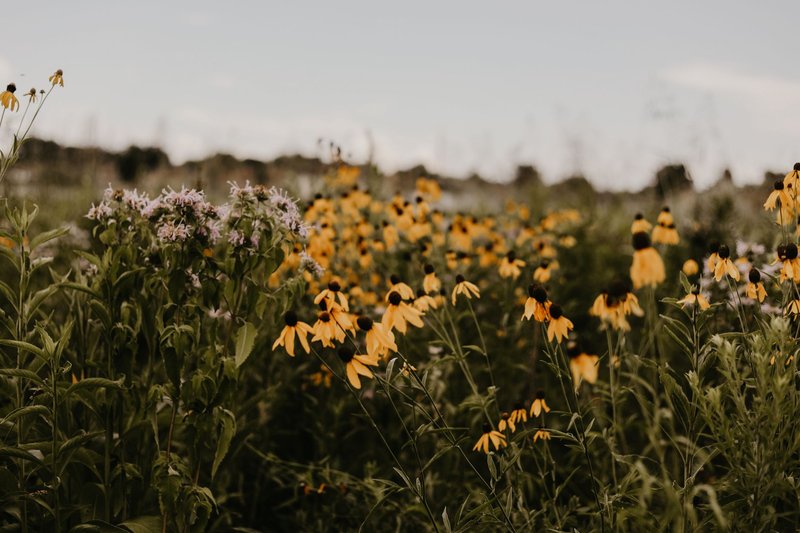
Fassett’s locoweed (Oxytropis campestris var. chartacea) is a low, silvery-haired member of the pea family that grows on sand-and-gravel lakeshores in Bayfield, Portage, and Waushara counties, and nowhere else on the planet. It flowers rose-purple from mid-May into June and depends on lake levels dropping low enough, periodically, to expose bare sand for its seedlings. When shoreline development or stable water levels let woody plants take over, the locoweed loses its foothold, which is why the U.S. Fish and Wildlife Service lists it as federally threatened.
The second true endemic doesn’t have flowers, eyes, or pigment. The Wisconsin well amphipod (Stygobromus putealis) is a blind, colorless crustacean that lives exclusively in groundwater — wells and aquifers, mostly in the southeastern part of the state — and has never been documented anywhere else. According to the Fish and Wildlife Service’s species profile, it’s likely a relict of a once-wider group of groundwater amphipods that ranged across the ancient Great Plains before Pleistocene glaciation and increasing aridity wiped out its relatives, leaving this one species stranded in Wisconsin’s aquifers. It’s the kind of species nobody photographs for a wildlife calendar, but it’s a stronger endemism claim than almost anything else in the state.
The Driftless Area’s Ice Age Holdouts
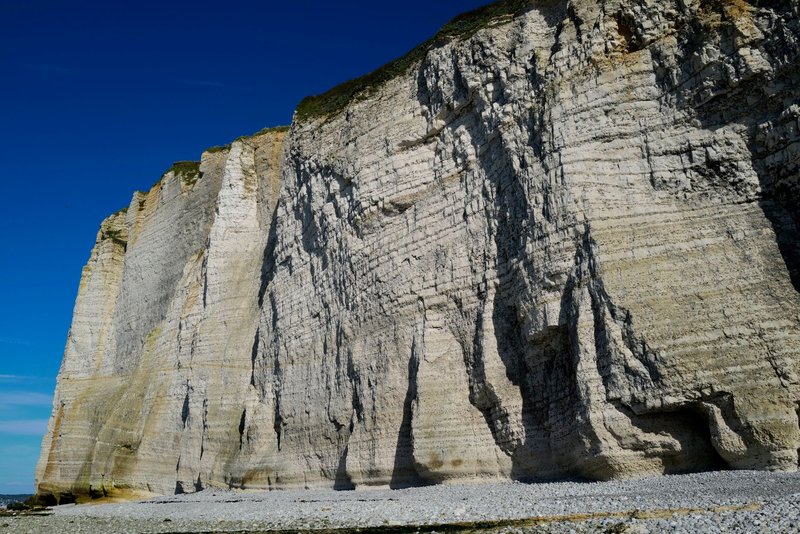
The Driftless Area’s unglaciated hills hide something called algific talus slopes: rocky hillsides vented by air rising from underground ice, keeping ground temperatures near 50°F even in July. These cold pockets function like tiny refrigerated islands, and a handful of species have survived in them since the last glaciation without needing to migrate anywhere.
The Iowa Pleistocene snail (Discus macclintocki) is the textbook example. Fossil evidence traces the species back roughly 400,000 years, and it’s now confined to a scattering of algific talus slopes across the Driftless Area of Iowa, Wisconsin, and Illinois. It’s federally endangered, not endemic to Wisconsin specifically, but its Wisconsin populations are part of the entire known range of the species on Earth — there’s no version of this snail’s story that doesn’t include this state, according to its Fish and Wildlife Service profile.
Northern monkshood (Aconitum noveboracense) shares the same cool, shaded talus habitat and the same federally threatened status. Its total range is three disjunct pockets: the Wisconsin-Iowa Driftless border, a spot in northeastern Ohio, and the Catskills of New York. That’s a genuinely strange distribution for a single species, and it only makes sense once you know all three sites are cold-groundwater refuges left over from the ice age.
Neither species is a Wisconsin endemic in the strict sense. Both are glacial relicts — living evidence that the Driftless Area functioned as a biological lifeboat while the rest of the Midwest was under ice.
Rare, But Not Endemic: Karner Blues and Deepwater Ciscoes
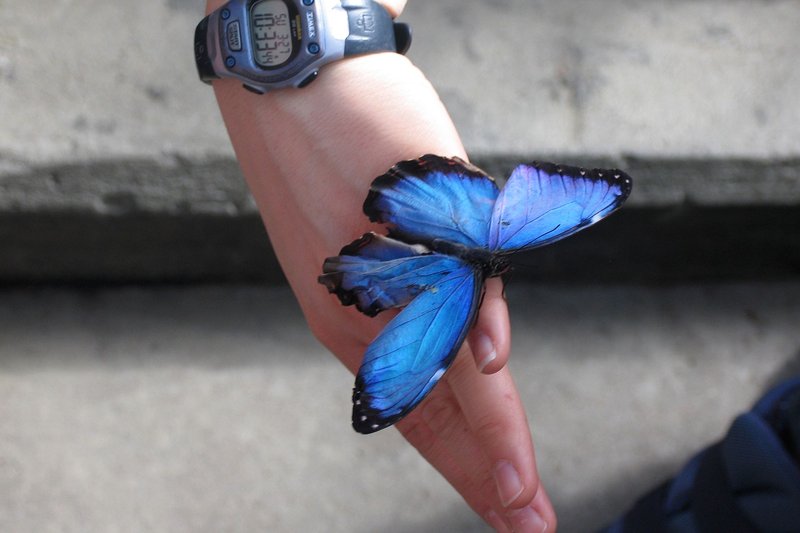
Wisconsin holds the largest surviving population of the Karner blue butterfly (Lycaeides melissa samuelis) on Earth. The species once ranged across a dozen states from Minnesota to Maine, but it collapsed as pine barrens and oak savanna gave way to development and fire suppression; it was listed as federally endangered in 1992. Its caterpillars eat only wild lupine, nothing else, which ties its fate directly to a specific habitat type. Restoration work at sites like the Sandhill Wildlife Area has paid off dramatically — one count there jumped from roughly 4,000 butterflies to 58,000 in a single year, accounting for nearly 80 percent of the entire statewide population that season. It’s not a Wisconsin endemic; Michigan, Ohio, New Hampshire, and New York all still have populations. But most of the species’ future runs through Wisconsin barrens, which is arguably more consequential than endemism would be.
Less famous, and easy to miss entirely, are the cisco populations in a handful of deep, cold northern lakes — Whitefish Lake in Douglas County, another Whitefish Lake in Sawyer County, and Cisco Lake and Lake Owen in Bayfield County among them. These lake trout relatives need cold, oxygen-rich water year-round, a requirement that’s disappearing under warming water temperatures and nutrient runoff. Genetic surveys have found these populations carry distinct lineages worth conserving in their own right, not just interchangeable stock of the same widespread species. They’re not classified as separate endemic species, but losing any one of these lake populations would be a permanent, un-recoverable loss, the same way losing an endemic would be.
Wisconsin’s Rare and Unique Species at a Glance
| Species | Category | Status | Wisconsin Endemic? | Where to Find It |
|---|---|---|---|---|
| Fassett’s locoweed | Plant | Federally threatened | Yes | Lakeshores in Bayfield, Portage, Waushara counties |
| Wisconsin well amphipod | Invertebrate | Special concern | Yes | Groundwater wells and aquifers, mostly SE Wisconsin |
| Iowa Pleistocene snail | Invertebrate | Federally endangered | No (shared with IA, IL) | Algific talus slopes, Driftless Area |
| Northern monkshood | Plant | Federally threatened | No (shared with IA, disjunct OH/NY) | Cool talus slopes, Driftless Area |
| Karner blue butterfly | Insect | Federally endangered | No (WI holds largest population) | Pine barrens and savanna with wild lupine |
| Deepwater cisco populations | Fish | Special concern (population-level) | No (genetically distinct populations) | Cold, deep lakes in Bayfield, Douglas, Sawyer counties |
| Mammals and birds | — | — | None confirmed | Too little time since glaciation for isolated evolution |
That last row is worth sitting with. It’s not an oversight — no bird or mammal endemic to Wisconsin has ever been documented, and given the state’s glacial history, none is expected. The endemism story here belongs to a wildflower that needs its feet wet on the right schedule and a blind crustacean nobody’s ever going to see. For a full, continuously updated accounting of everything tracked in the state, the Wisconsin DNR’s endangered and threatened species list is the primary source these numbers come from.