An elementary particle is a particle with no known internal structure. Nothing smaller has been found inside it, and every experiment so far treats it as a single, indivisible thing. The Standard Model of particle physics lists 17 of them, and everything you’ve ever touched is built from just three: the up quark, the down quark and the electron.
Table of Contents
- TLDR
- The 17 Elementary Particles at a Glance
- Quarks: The Building Blocks Inside Protons
- Leptons: Electrons and Their Relatives
- Gauge Bosons: The Force Carriers
- The Higgs Boson
- Fermions vs. Bosons
- Why Protons and Neutrons Aren’t Elementary
- Why Sources Disagree on the Count
- How We Know: Accelerators and the 2012 Higgs Discovery
- What the Standard Model Leaves Out
TLDR
- Elementary particles have no known internal structure. The Standard Model has 17: 6 quarks, 6 leptons, 4 gauge bosons and the Higgs boson.
- Quarks and leptons make up matter. Gauge bosons carry forces. The Higgs is tied to how other particles get their mass.
- Protons and neutrons are not elementary. Each is made of three quarks held together by gluons.
- The count changes between sources (12, 17, 61 and more) because they count different things. Antiparticles and color variants account for most of the gap.
- The model leaves out gravity, dark matter, the origin of neutrino mass and why the universe contains more matter than antimatter.
The 17 Elementary Particles at a Glance
Matter particles come in three “generations.” Generation one is the stuff of ordinary atoms. Generations two and three are heavier copies that appear in cosmic rays and collider debris and decay in a fraction of a second. Nobody knows why nature made three copies. For a shorter tour of these families with more examples, see examples of elementary particles, explained simply.
Masses below use two energy units. An MeV is a million electronvolts and a GeV is a billion. Physicists quote mass as energy through E = mc², and for scale, a proton weighs about 938 MeV. Values come from the Particle Data Group, which maintains the standard reference tables, and are rounded.
Quarks: The Building Blocks Inside Protons
Quarks feel all four forces we know about, including the strong force, which binds them together. They carry fractional electric charge, either +2/3 or −1/3 of a proton’s charge.
| Quark | Generation | Charge | Approx. mass |
|---|---|---|---|
| Up | 1 | +2/3 | 2.2 MeV |
| Down | 1 | −1/3 | 4.7 MeV |
| Charm | 2 | +2/3 | 1.27 GeV |
| Strange | 2 | −1/3 | 93 MeV |
| Top | 3 | +2/3 | 173 GeV |
| Bottom | 3 | −1/3 | 4.18 GeV |
The top quark is the oddball. At roughly 173 GeV it’s nearly as heavy as a gold atom, yet it’s a single point-like particle. It also decays in about 5 × 10⁻²⁵ seconds, too fast to even form a bound state with other quarks. We only see its decay products.
No one has ever caught a free quark. The strong force grows stronger as quarks move apart, so pulling one out of a proton just creates new quark pairs from the energy you put in. Physicists call this confinement.
Leptons: Electrons and Their Relatives
Leptons don’t feel the strong force. Three are charged and three are neutral neutrinos.
| Lepton | Generation | Charge | Approx. mass |
|---|---|---|---|
| Electron | 1 | −1 | 0.511 MeV |
| Electron neutrino | 1 | 0 | under 1 eV |
| Muon | 2 | −1 | 105.7 MeV |
| Muon neutrino | 2 | 0 | under 1 eV |
| Tau | 3 | −1 | 1,777 MeV |
| Tau neutrino | 3 | 0 | under 1 eV |
The muon is the electron’s heavier cousin, about 207 times its mass. It lives roughly 2.2 microseconds, which is long enough for cosmic-ray muons made in the upper atmosphere to reach the ground. A few hundred of them pass through your body every minute.
Neutrinos barely interact with anything. Trillions of them pass through you each second, almost all from the Sun, and nearly all go straight through the planet too. Their masses are so small that experiments have only set upper limits, all below one electronvolt, which is millions of times lighter than the electron.
Gauge Bosons: The Force Carriers
In the Standard Model, forces work by exchanging particles. Each force has its own carrier.
| Boson | Force | Charge | Approx. mass |
|---|---|---|---|
| Photon | Electromagnetism | 0 | 0 |
| Gluon | Strong force | 0 | 0 |
| W (W⁺ and W⁻) | Weak force | ±1 | 80.4 GeV |
| Z | Weak force | 0 | 91.2 GeV |
The photon is light itself. Gluons glue quarks together. The W and Z bosons handle the weak force, which drives radioactive beta decay and the nuclear reactions that power the Sun. Because W and Z are heavy, the weak force only works over tiny distances, about 0.1% of a proton’s width. Standard lists count W⁺ and W⁻ as one particle type, which is how four gauge bosons come out of five or more distinct objects.
The Higgs Boson
The seventeenth particle is the Higgs boson, with a mass of about 125 GeV and no spin, charge or color. It’s the visible ripple of the Higgs field, which fills all of space. Particles that interact with this field gain mass. The stronger the interaction, the heavier the particle. The top quark couples strongly, the electron weakly, and the photon not at all.
One common misconception is worth clearing up. The Higgs field doesn’t supply most of the mass of everyday matter. The three quarks in a proton have masses that sum to roughly 9 MeV, about 1% of the proton’s 938 MeV. The rest comes from the energy of the strong force binding them. CERN’s Higgs page explains the mechanism and its role in the electroweak force.
Fermions vs. Bosons
Every elementary particle falls into one of two families, determined by a property called spin. Spin is a quantum quantity, loosely like an intrinsic angular momentum, that comes in fixed units.
Fermions have half-integer spin (1/2). All 12 quarks and leptons are fermions. They obey the Pauli exclusion principle: no two identical fermions can occupy the same quantum state. Think of seats in a theater, where each person needs their own. This rule is why atoms have electron shells instead of all electrons collapsing into the lowest level, and so it’s the reason chemistry exists.
Bosons have integer spin: 1 for the gauge bosons and 0 for the Higgs. They have no such restriction, so any number can pile into the same state, like people packing the same standing-room section. A laser works because huge numbers of photons share one state. For a closer look at the particles that carry nature’s forces, read Bosons Explained: The Particles That Carry Nature’s Forces.
Short version: fermions make up matter and take up space, while bosons carry forces and can stack.
Why Protons and Neutrons Aren’t Elementary
Protons and neutrons are what physicists call composite particles. A proton contains two up quarks and one down quark (charge +2/3 + 2/3 − 1/3 = +1). A neutron has one up and two down (+2/3 − 1/3 − 1/3 = 0).
The best everyday comparison is a bag of marbles held shut with rubber bands. The bag is one thing, but you’d be wrong to call the marbles “the bag.” Inside a proton, the quarks and gluons are in constant motion and the particle also holds short-lived quark-antiquark pairs that flicker in and out of existence. Scattering experiments in the late 1960s at SLAC fired high-energy electrons at protons and saw them bounce off hard, pointlike things inside. That was the first direct evidence of quarks.
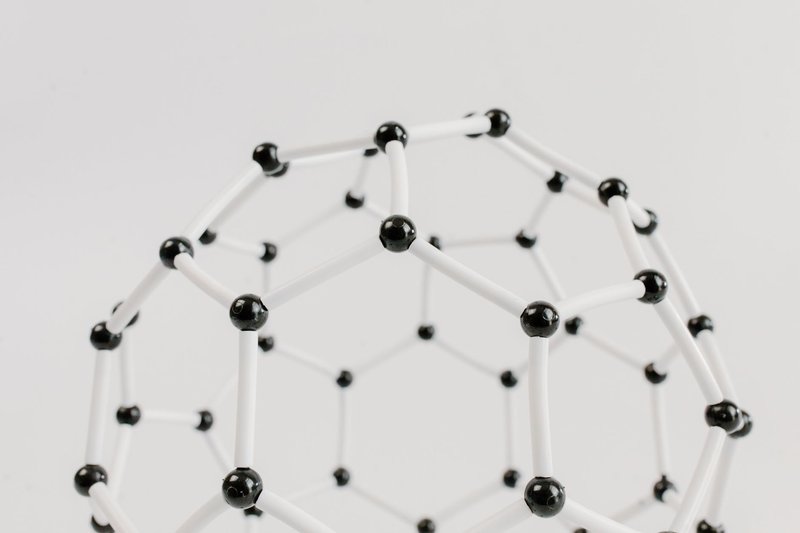
Atoms are composite too: electrons around a nucleus of protons and neutrons. Atoms, nuclei, protons and neutrons are all built up from the elementary list above. The electron is the one everyday particle that is elementary on its own. Popular pictures of it are often wrong, and seven myths and misconceptions about electrons cover the common ones.
Why Sources Disagree on the Count
Search for the number of elementary particles and you’ll see 12, 16, 17, 61 and more. Nobody is wrong. They count different things.
- 12 counts only matter particles: 6 quarks and 6 leptons.
- 16 leaves out the Higgs.
- 17 is the standard summary: 12 matter particles, 4 gauge boson types and the Higgs.
- 61 counts every distinct variant. Each quark comes in 3 color charges (18 quarks), and each has an antiparticle (36 total). The 6 leptons have 6 antiparticles (12 total). Add 8 gluons, W⁺, W⁻, Z, the photon and the Higgs. 36 + 12 + 8 + 2 + 1 + 1 + 1 = 61.
Older textbooks used shorter lists because the top quark (found in 1995 at Fermilab), the tau neutrino (2000) and the Higgs (2012) hadn’t been observed yet. The 17 count only completed in the last decade and a half.
How We Know: Accelerators and the 2012 Higgs Discovery
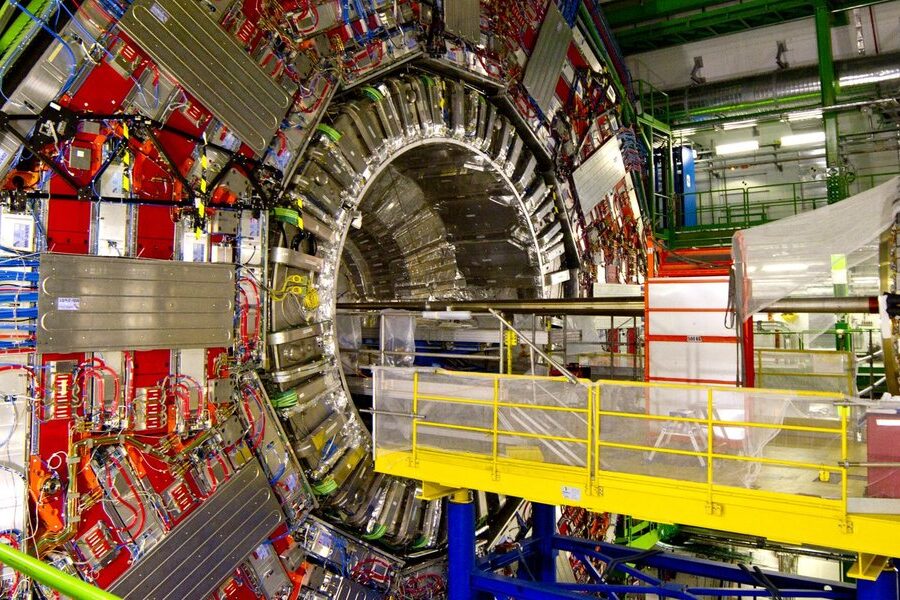
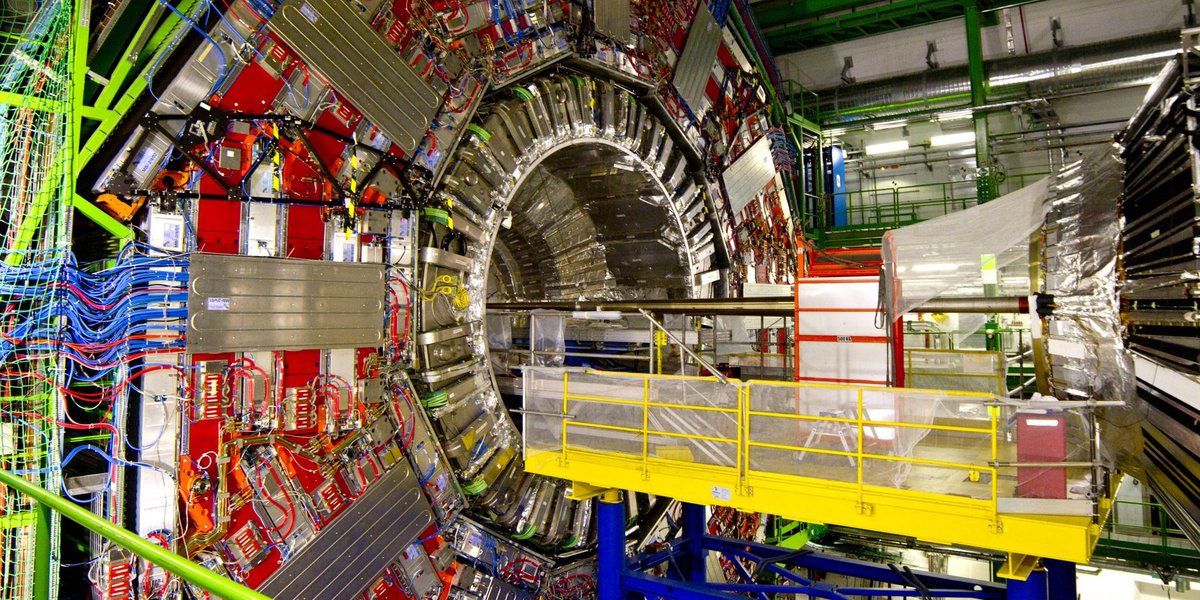
You can’t look at a quark with a microscope. Physicists smash particles together at near light speed and study what comes out. Because energy converts to mass, a collision with enough energy can produce heavy particles that don’t exist in ordinary matter. They show up for a moment and decay into lighter, detectable ones.
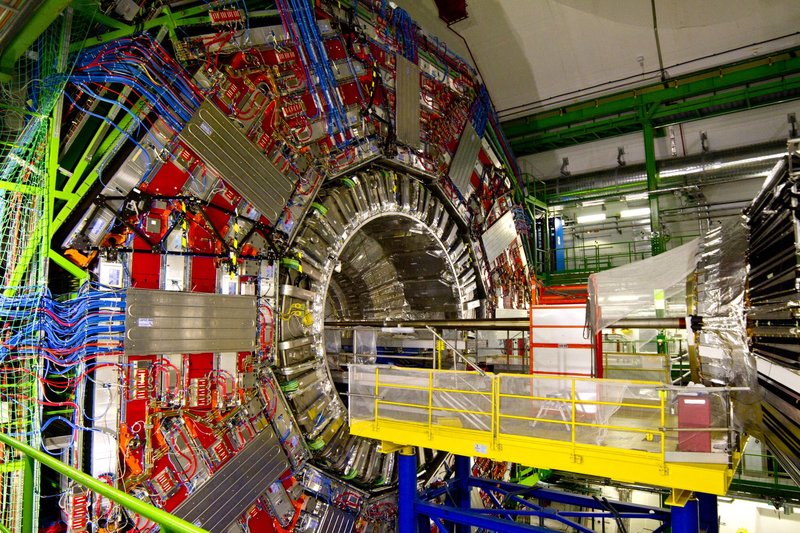
On 4 July 2012, the ATLAS and CMS experiments at CERN’s Large Hadron Collider announced a new particle at about 125 GeV, with properties matching the Higgs boson predicted in 1964. It took trillions of proton collisions, because a Higgs appears in only about one in a few billion. Peter Higgs and François Englert shared the 2013 Nobel Prize in Physics for the theory.
This is also a story about prediction. The W and Z bosons were predicted in the 1960s and found at CERN in 1983. The top quark was expected for years before its discovery. The Standard Model has been tested to a very high degree of precision, which is why its gaps are taken seriously.
What the Standard Model Leaves Out
The model works. It also leaves out things we know exist.
- Gravity. The model has no place for it. A hypothetical particle called the graviton would carry gravity, but no one has detected one and no consistent quantum theory of gravity is established.
- Dark matter. Galaxies rotate as if surrounded by far more mass than we can see. According to NASA, dark matter makes up about 27% of the universe, compared with roughly 5% for the ordinary matter the Standard Model describes. None of the 17 particles fits as the explanation.
- Neutrino mass. The original model gave neutrinos zero mass. Experiments showed that neutrinos change type as they travel, which requires mass, and that work earned the 2015 Nobel Prize in Physics. The model needs an extension to explain where those tiny masses come from.
- Matter vs. antimatter. The Big Bang should have made equal amounts of each, which would have annihilated. The universe is made of matter. The Standard Model’s known asymmetry is far too small to explain why.
- Dark energy. The accelerating expansion of the universe has no explanation within the model.
- The pattern itself. Why three generations? Why do the masses span a range of more than 10 orders of magnitude, from neutrinos to the top quark? The model takes these as inputs and doesn’t derive them.
Proposed fixes include supersymmetry, which would double the particle list, and string theory. The Large Hadron Collider hasn’t found evidence for supersymmetric particles so far. The list of elementary particles stands at 17, but it’s probably not final.