As an Amazon Associate we earn from qualifying purchases. Disclosure
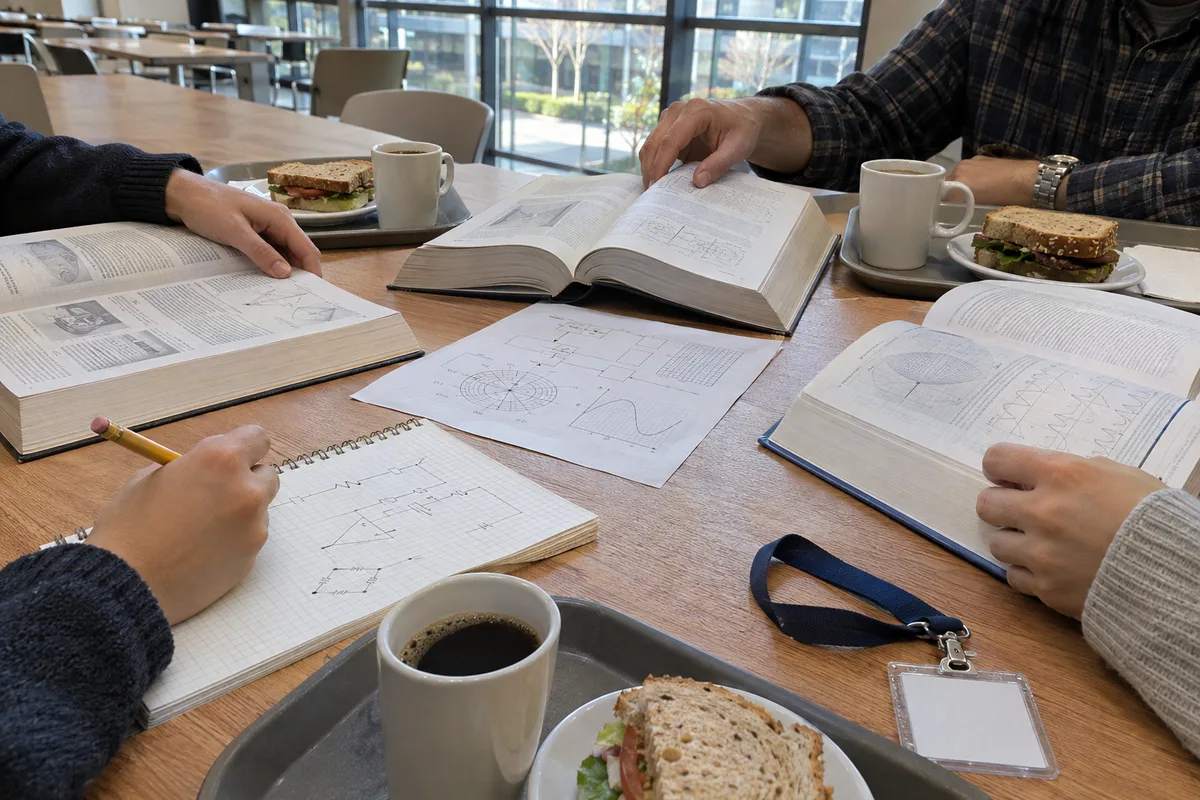
In 2020, when CERN launched its Quantum Technology Initiative, five of us from the detector group started a lunchtime reading group on quantum computing. Two were software engineers, two were physicists and one was a data analyst who had not touched a matrix since university. We picked the standard graduate textbook because everyone online called it the bible of the field. By week three only the two physicists were still reading. The engineers had not given up on quantum computing. They had run out of linear algebra on page 60, where the book expects you to be fluent in complex vector spaces, inner products and tensor products. When we restarted with a gentler book and spent two lunches on matrices first, all five of us finished it.
That is the whole problem with most quantum computing book lists. They recommend good books in the wrong order. Quantum computing is not hard because of the physics. You need almost none. It is hard because it is written in linear algebra, and a beginner book is one that teaches you that math as it goes.
The best quantum computing book for beginners is Quantum Computing for Everyone by Chris Bernhardt. It assumes only high school math, teaches the vectors and matrices it needs in the first chapters and ends with Grover’s and Shor’s algorithms. If you want a textbook you can study from with exercises, use Thomas Wong’s Introduction to Classical and Quantum Computing, which is also free as a PDF. Programmers should start with Quantum Computing: From Concepts to Code by Andrew Glassner, which takes you from “what is a qubit” to running code on real quantum hardware.
I have a PhD in particle physics from Imperial College London, taught first-year undergraduate labs for three years and spent five years at CERN calibrating particle detectors. The quantum computing books for beginners below are sorted by background: no math, some math, programmers and people ready for a real textbook. Each one has the edition to buy, what it assumes you already know and what the Reddit community of quantum computing researchers and students recommends.
Quick picks
| Pick | Best for | Math needed |
|---|---|---|
| Quantum Computing for Everyone | Best overall for beginners | High school algebra |
| Q is for Quantum | No math at all | Arithmetic |
| Introduction to Classical and Quantum Computing | Best textbook for self-study (free PDF) | Trigonometry |
| Quantum Computing: From Concepts to Code | Best for programmers | High school algebra |
| Dancing with Qubits | The most complete beginner textbook | Taught in the book |
| Essential Mathematics for Quantum Computing | Learning the math first | High school algebra |
| Quantum Computing for Computer Scientists | Computer science students | Taught in the book |
| Programming Quantum Computers | Learning by running code | Very little |
| Quantum Computation and Quantum Information | The standard reference, after a first book | Linear algebra |
| Quantum Computing for Babies | Young kids | None |
What you need to know before you start
A quantum computer stores information in qubits. A classical bit is either 0 or 1. A qubit can be in a superposition of both, described by two complex numbers that say how much of each it holds. Gates change those numbers, and measurement turns them into an ordinary 0 or 1 with probabilities set by the numbers. Two or more qubits can be entangled, so that their measurement results are linked in a way no classical system can copy. Quantum algorithms arrange gates so that wrong answers cancel out and right answers add up, a process called interference.
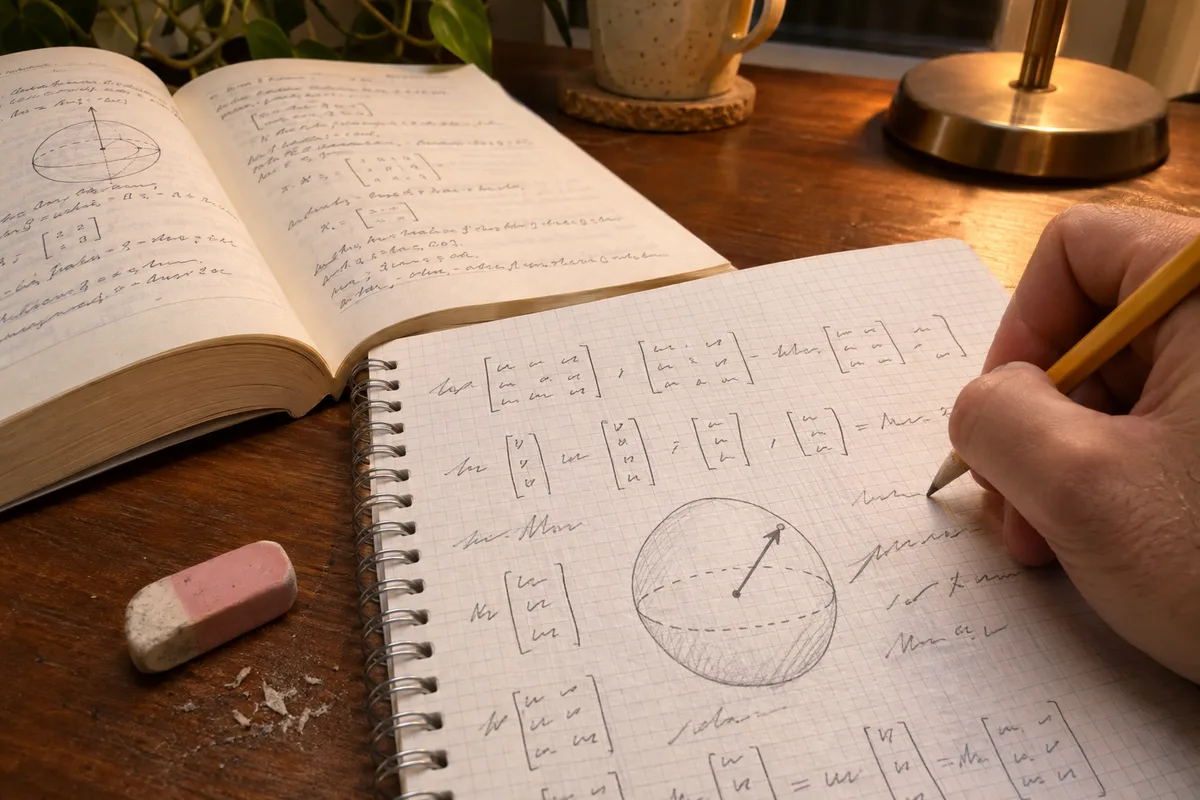
Every one of those sentences is a statement about vectors and matrices. A qubit is a vector with two entries. A gate is a matrix. Applying a gate is matrix multiplication. Two qubits together are a tensor product of two vectors. So the real prerequisite list is short:
- Complex numbers. Adding, multiplying, the complex conjugate and the magnitude. Our page on complex numbers with worked examples covers all of it.
- Vectors and matrices. Multiplying a matrix by a vector, multiplying two matrices, the inner product of two vectors and the idea of a unit vector.
- Basic probability. Probabilities between 0 and 1 that add up to 1.
- Later: eigenvalues, unitary matrices and tensor products. The better beginner books teach these when they come up.
You do not need quantum mechanics. Quantum computing uses a small, clean corner of it: two-level systems and the rules for combining them. You do not need calculus for the first books either. Programming helps if you want to run circuits, but every book in the first two sections works without a computer.
What separates a good self-study book from a bad one is how it handles that math. A book written for a classroom can assume a linear algebra course and let the lecturer fill gaps. A book you read alone has to either teach the math or tell you exactly what to learn first. The books in this guide do one or the other.
Where to start, by background
The right first book depends on how much math you have and whether you want to write code. These are the six situations people ask me about most.
| Your background | Start with | Then |
|---|---|---|
| Curious, no math since school | Q is for Quantum or Quantum in Pictures | Quantum Computing for Everyone |
| Comfortable with high school algebra | Quantum Computing for Everyone | Wong’s textbook |
| Software developer | From Concepts to Code | Programming Quantum Computers or Hidary |
| Computer science student | Yanofsky and Mannucci | Nielsen and Chuang |
| Already know linear algebra | Mermin or Kaye, Laflamme and Mosca | Nielsen and Chuang |
| Want the business and industry view | WIRED guide | Quantum Computing For Dummies |
If your linear algebra is rusty, add Essential Mathematics for Quantum Computing before or alongside your first textbook. It is the fix for exactly what stopped half of our reading group.
Best quantum computing books with little or no math
These five explain what a quantum computer does and why it is different, without asking you to calculate much. The first one goes further than the others and is the one I give to most beginners.
Best overall for beginners
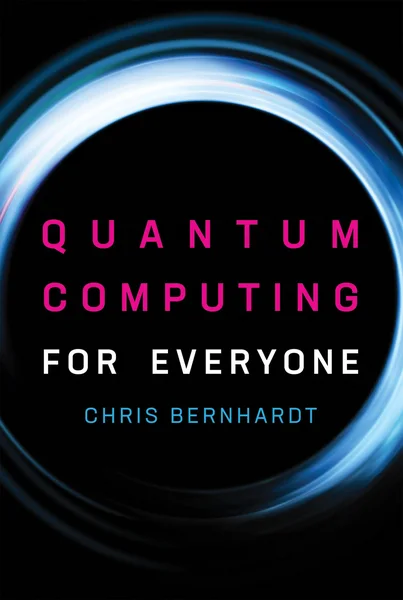
1. Quantum Computing for Everyone
Chris Bernhardt is a mathematics professor, and he wrote this for readers who remember high school algebra and nothing more. It is the shortest honest route from zero to real quantum algorithms. He introduces vectors and matrices only when he needs them, uses the spin of an electron to make a qubit concrete and then builds up to entanglement, Bell’s inequality, quantum gates and the classical logic gates they replace.
The last chapters cover the algorithms that made the field famous: Deutsch’s, Simon’s, Grover’s search and Shor’s factoring algorithm, with enough math that you see why they work instead of being told they do. Most popular books stop at “superposition means it tries every answer at once,” which is wrong. Bernhardt shows why it is wrong.
- Chris Bernhardt
- MIT Press, paperback 2020 (first published 2019), 216 pages
- Over 700 Amazon ratings at 4.5 stars
Good: real math at a gentle pace, ending with Shor’s algorithm. Not great: no exercises, and no programming at all.
Check on Amazon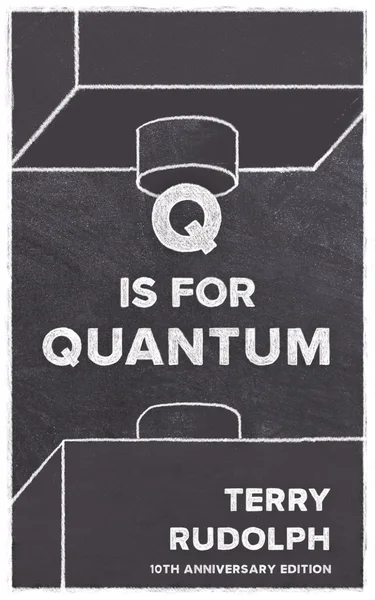
Best with no math at all
2. Q is for Quantum
Terry Rudolph is a quantum physicist at Imperial College London and a co-founder of the quantum computing company PsiQuantum. He replaces the math with black and white balls going through boxes, and somehow keeps it accurate. By the end of part one you have built quantum gates, seen interference and understood what a quantum computer can do that an ordinary one cannot, using nothing beyond counting.
Parts two and three move from computing to entanglement and to what quantum theory says about reality. It is the book for someone who wants the ideas right before deciding whether to learn the math. Readers who finish it find Bernhardt much easier, because the logic is already familiar.
- Terry Rudolph
- Self-published, 2017, paperback, 164 pages
- Written for readers with no math or physics background
Good: correct ideas with zero equations. Not great: the ball notation does not carry over to other books, so you will learn the standard notation later anyway.
Check on Amazon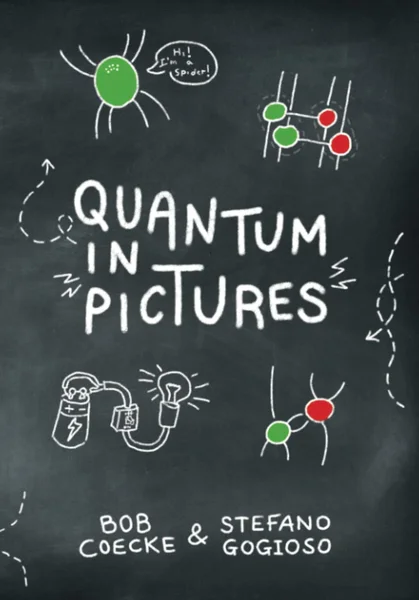
Best visual introduction
3. Quantum in Pictures
Bob Coecke and Stefano Gogioso teach quantum theory with diagrams instead of matrices: wires for systems, boxes for processes and rules for redrawing them. The diagrams are not illustrations. They are a rigorous mathematics called the ZX calculus, which quantum computing companies now use to simplify and compile circuits. That makes this the only no-math book that teaches you a working tool of the field.
It covers entanglement, teleportation, measurement, quantum circuits, measurement-based quantum computing and quantum key distribution. Some readers love the approach and some find it hard to connect to the matrix version every other book uses. If you think in pictures, try it first.
- Bob Coecke and Stefano Gogioso
- Cambridge Quantum, 2023, paperback, 216 pages
- Its big companion text for university courses is Picturing Quantum Processes
Good: real proofs done with diagrams, and the ZX calculus is used in industry. Not great: you will still need the standard matrix notation to read anything else.
Check on Amazon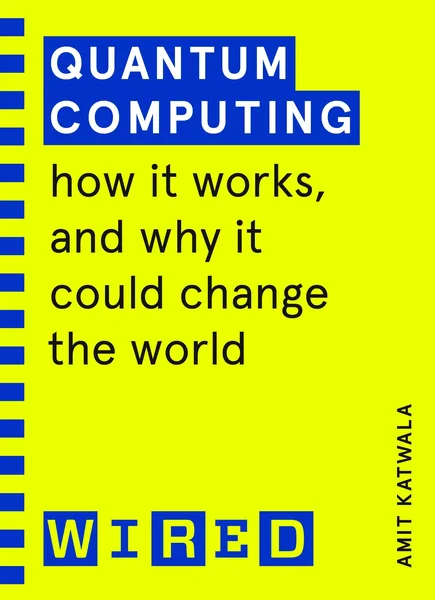
Best short overview
4. Quantum Computing (WIRED guides)
Amit Katwala is a WIRED journalist, and this is the book to read on a train in two evenings. It explains the history from Feynman’s 1981 proposal to Google’s 2019 Sycamore experiment, the competing hardware (superconducting circuits, trapped ions, photons), what quantum computers are expected to be good at and why encryption is the application everyone worries about.
It teaches no math and no algorithms. Read it for context, then pick a real book. It is a good choice for managers, investors and anyone who needs to follow quantum computing news without studying it.
- Amit Katwala
- Random House Business, 2021, paperback, 112 pages
- Part of the WIRED guides series
Good: clear, accurate and short. Not great: an overview, not a course, and hardware news since 2021 is missing.
Check on Amazon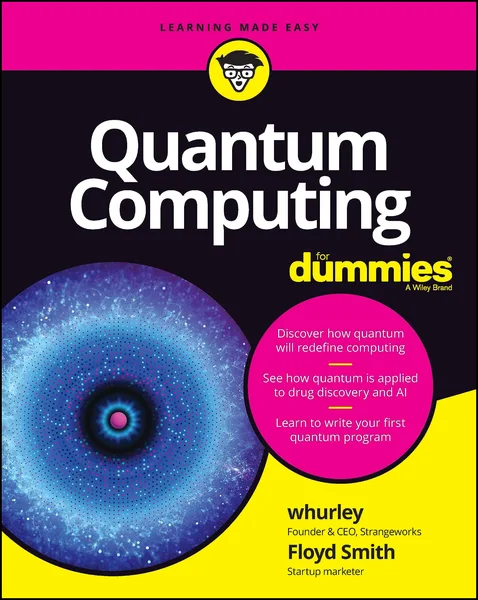
Best for the industry view
5. Quantum Computing For Dummies
whurley founded the quantum software company Strangeworks, and his book reads like it: half explanation, half map of the industry. It explains the difference between classical and quantum computers, the main hardware types, where quantum computing is expected to matter (cryptography, chemistry, optimization, machine learning) and how businesses are getting ready for it.
It is the right book if your interest is professional rather than technical: you work in IT, security or strategy and need to talk sensibly about it. If you want to understand how a quantum algorithm works, Bernhardt does that better in fewer pages.
- whurley and Floyd Earl Smith
- For Dummies, 2023, paperback, 400 pages
- Covers hardware, applications, security and careers
Good: the broadest view of the industry and its jargon. Not great: light on how algorithms work, and parts will date quickly.
Check on AmazonThe math for quantum computing
If you want one book that teaches the math and nothing else, this is it. If you prefer a general linear algebra book, our guide to the best linear algebra books for self-study has several, and Grant Sanderson’s free Essence of Linear Algebra videos give you the geometric picture in about three hours.
Best for learning the math first
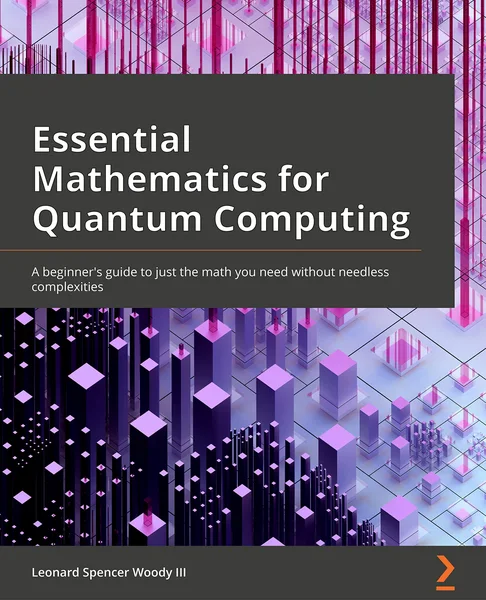
6. Essential Mathematics for Quantum Computing
Leonard Woody wrote this for engineers and programmers who want just the math that quantum computing uses, without a full linear algebra course. It starts with two-dimensional vectors drawn as arrows, then matrix multiplication, vector spaces, inner products, complex numbers, eigenvalues, tensor products, Dirac notation and the probability behind measurement. Each chapter connects back to qubits and gates.
Read the first half before your first textbook and keep the second half for when a book mentions unitary or Hermitian matrices and you need a refresher. It is also the best answer to the most common beginner question: “what math do I need for quantum computing?”
- Leonard S. Woody III
- Packt, 2022, paperback, 252 pages
- Over 100 Amazon ratings at 4.6 stars
Good: exactly the math quantum computing needs, explained plainly. Not great: few worked exercises, so pair it with practice from another source.
Check on AmazonBest quantum computing textbooks for beginners
A textbook is what you need to actually learn quantum computing rather than read about it: a full course, in order, with exercises. These six are written for undergraduates or self-learners. The first two teach all the math they use. The others expect some linear algebra.
Best textbook for self-study
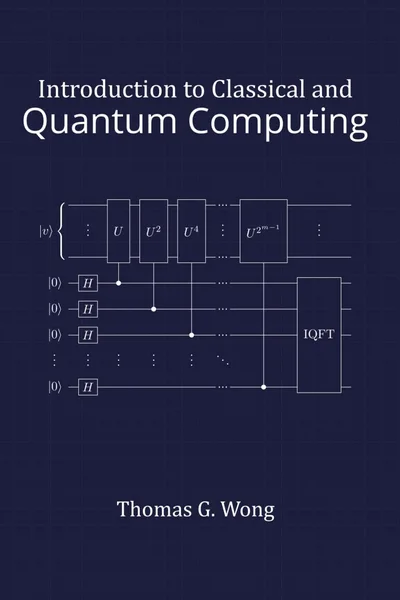
7. Introduction to Classical and Quantum Computing
Thomas Wong teaches the introductory quantum computing course at Creighton University, and he turned his lecture notes into a textbook that assumes only trigonometry. It is the most patient real textbook in the field. The first chapter covers classical computing (how a computer adds numbers, logic gates, reversible computing), so that every quantum idea later has a classical version to compare against.
Then it starts with one qubit using geometry and simple algebra, adds linear algebra only once you have a feel for the qubit, and moves on to multiple qubits, quantum adders, error correction, entanglement, quantum protocols and algorithms up to Shor’s. You run circuits in the free Quirk simulator throughout and on real IBM hardware in one chapter. Every section ends with exercises. Wong offers the complete book as a free PDF on his website. The print copy is for people who prefer paper.
- Thomas G. Wong
- Rooted Grove, 2022, paperback, 400 pages
- Nearly 300 Amazon ratings at 4.7 stars; free PDF from the author
Good: teaches all the math and has exercises throughout. It is also free. Not great: its code examples use Mathematica and SageMath rather than Python.
Check on Amazon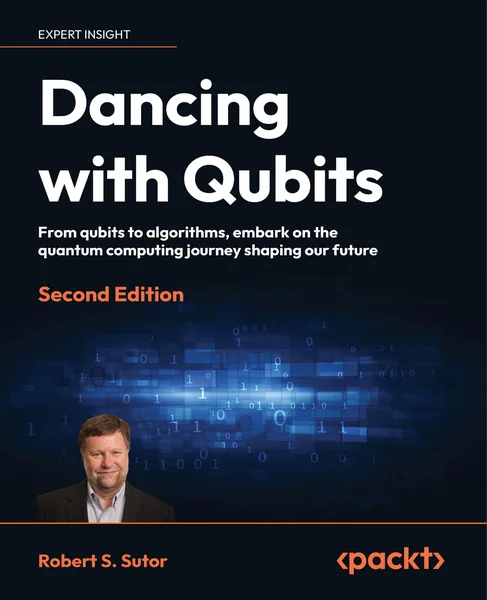
Most complete beginner textbook
8. Dancing with Qubits
Robert Sutor led IBM’s quantum computing ecosystem work for years, and the second edition of his textbook is the longest and most complete book here. It starts further back than any other textbook: numbers, sets, functions, then a full treatment of the linear algebra and probability that quantum computing uses. Only then does it move to qubits, gates, circuits and algorithms, from the simple ones to phase estimation and Shor’s.
The 2024 edition adds chapters on the algorithms people run on today’s noisy machines (variational methods and quantum machine learning) and over 100 new exercises. On Reddit it is the book people suggest when someone finds Nielsen and Chuang too hard: same ground, much gentler. Its length is the only real problem.
- Robert S. Sutor
- Packt, 2nd edition (2024), paperback, 684 pages
- Buy the second edition; the 2019 first edition lacks the newer chapters
Good: teaches every piece of math from the start, with exercises. Not great: 684 pages, and the math chapters are long before you see your first qubit.
Check on Amazon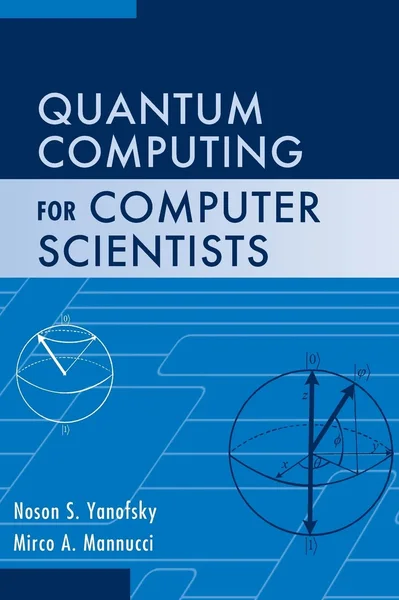
Best for computer science students
9. Quantum Computing for Computer Scientists
Noson Yanofsky and Mirco Mannucci wrote this for computer science students with no physics. The first two chapters are a self-contained course on complex numbers and complex vector spaces, and the preface says plainly that the book is meant to prepare you for Nielsen and Chuang. It does that job well.
After the math it covers the basics of quantum theory, the architecture of a quantum computer, the main algorithms, quantum programming languages, quantum cryptography, information theory and the hardware. There are exercises throughout, and the programming drills ask you to write small simulators in a language you know, which is the fastest way to make the math stick. It was the second most named textbook in the Reddit threads below.
- Noson S. Yanofsky and Mirco A. Mannucci
- Cambridge University Press, 2008, paperback, 402 pages
- Designed as a bridge to Nielsen and Chuang
Good: the clearest math chapters of any textbook here, with programming drills. Not great: from 2008, so nothing on current hardware or software.
Check on Amazon
Best for worked examples
10. Quantum Computing Explained
David McMahon is the author of several Demystified physics books, and this one works the same way: every idea comes with a fully worked example, step by step, with nothing skipped. Where most textbooks write “it is easy to show that,” McMahon shows it. For someone studying alone, that matters more than elegance.
It covers qubits, the tensor product, density operators, measurement, entanglement, the main algorithms, quantum Fourier transform, error correction and quantum information theory. Use it beside a more readable book, as the place you go to see a calculation done in full when you cannot finish one yourself.
- David McMahon
- Wiley-IEEE Computer Society Press, 2007, hardcover, 352 pages
- Solved examples in every chapter
Good: the most worked calculations of any book here. Not great: dry to read straight through, and from 2007, so nothing on current hardware.
Check on Amazon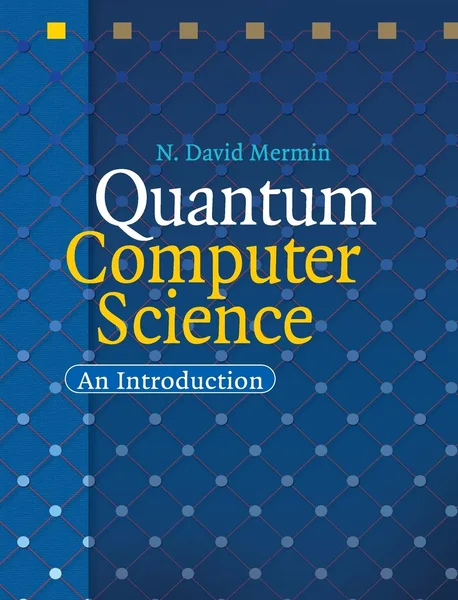
Best short textbook
11. Quantum Computer Science: An Introduction
David Mermin is a Cornell physicist known for writing clearly about hard ideas, and this book comes from the course he taught there for computer scientists, mathematicians and physicists together. It strips quantum mechanics down to exactly what a quantum computer needs, then covers the core algorithms, error correction and protocols in 233 pages. Physicists and computer scientists both find it a pleasure to read.
It assumes you are comfortable with linear algebra and does not teach it. Mermin also uses some notation of his own that differs from Nielsen and Chuang. Read it after Bernhardt or Wong, or first if you already have a math or physics degree.
- N. David Mermin
- Cambridge University Press, 2007, hardcover, 233 pages
- Based on a Cornell course for mixed audiences
Good: short, precise and beautifully written. Not great: needs linear algebra, and its notation differs from other books.
Check on Amazon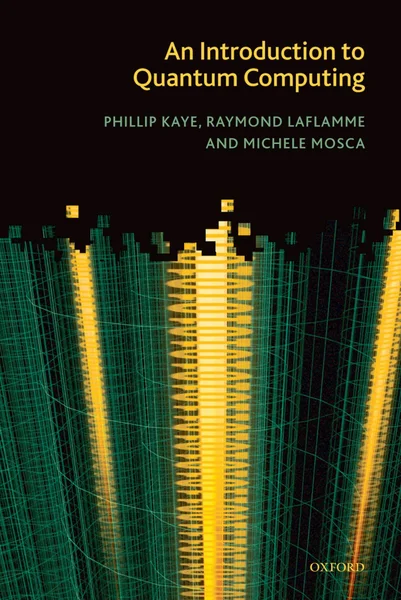
Best focus on algorithms
12. An Introduction to Quantum Computing
Phillip Kaye, Raymond Laflamme and Michele Mosca come from the Institute for Quantum Computing at the University of Waterloo, which Laflamme directed and Mosca co-founded. Their book is a careful, algorithm-first course: the circuit model, then a long and clear treatment of the algorithms (Deutsch, Simon, phase estimation, Shor, Grover, amplitude amplification) and finally error correction.
It assumes linear algebra but reviews what it uses. Where Nielsen and Chuang cover everything, this book covers algorithms more slowly and more completely. Use it if you finish a beginner book and want a deeper second one before the big reference.
- Phillip Kaye, Raymond Laflamme and Michele Mosca
- Oxford University Press, 2007, paperback, 274 pages
- Exercises in every chapter
Good: the clearest derivations of the main algorithms. Not great: little on hardware or programming.
Check on Amazon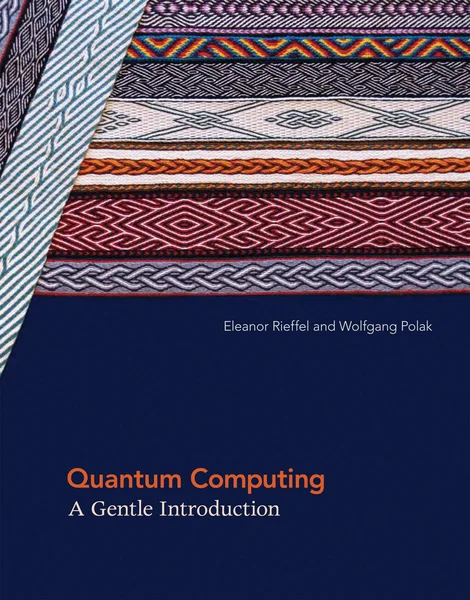
Most thorough introduction for computer scientists
13. Quantum Computing: A Gentle Introduction
Eleanor Rieffel leads quantum computing research at NASA Ames, and she wrote this with Wolfgang Polak for computer scientists and engineers. Despite the title, it is not the gentlest book here. It is the most thorough of the introductions: careful definitions, complete treatments of entanglement, the standard algorithms, error correction, fault tolerance and a chapter on what quantum computers can and cannot do.
It assumes linear algebra and builds the rest. Readers who want rigor like it. Readers looking for an easy start do not, which explains the lower Amazon rating. Choose it over Mermin if you want more pages on each topic.
- Eleanor G. Rieffel and Wolfgang H. Polak
- MIT Press, paperback 2014 (first published 2011), 388 pages
- Exercises in every chapter
Good: rigorous and complete for a first textbook. Not great: not gentle for true beginners, and dense in places.
Check on AmazonQuantum computing books for programmers
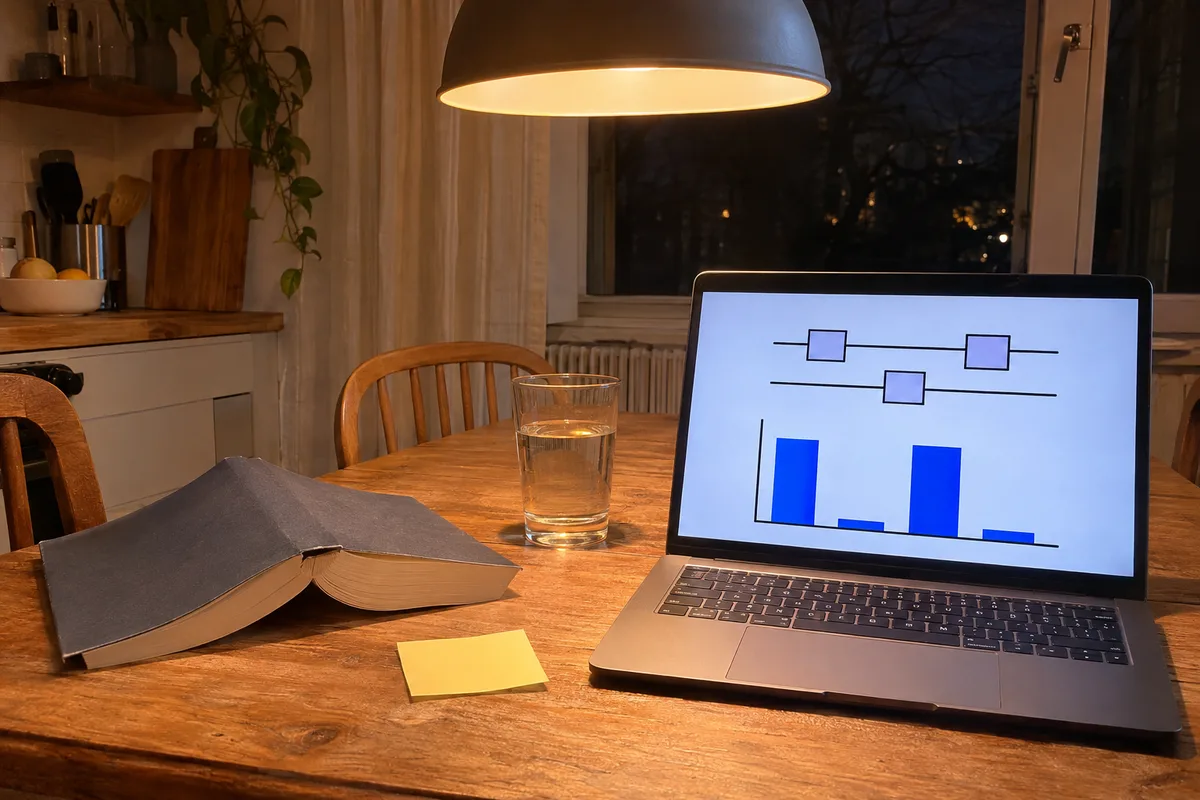
If you write code for a living, the fastest way in is to build circuits and run them. Every major quantum company offers a free simulator, and IBM gives anyone with an account a monthly allowance of time on real quantum processors. The first program in almost every book is the same: two qubits, a Hadamard gate on the first and a CNOT gate between them, which creates an entangled Bell state. When I ran it on a real IBM machine for the first time, about 48 percent of the 1,000 shots came back 00, about 48 percent came back 11 and the rest came back 01 or 10. Those few percent are the noise that current hardware has to fight, and seeing them taught me more about where the field stands than any news story.
One warning for these books: the software changes faster than books do. Qiskit, IBM’s toolkit and the most used, reached version 1.0 in February 2024 and removed several functions older books rely on. Expect to adapt code from books published before 2024, and check each book’s GitHub repository for updated examples.
Best for programmers
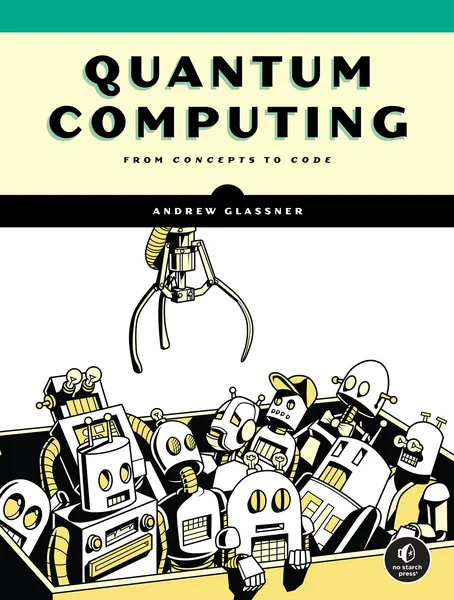
14. Quantum Computing: From Concepts to Code
Andrew Glassner spent decades explaining computer graphics to programmers, and this 2025 book applies the same visual, step-by-step style to quantum computing. It assumes you can program and nothing else. Superposition, gates, interference, entanglement and measurement are built up slowly with diagrams, and the math arrives a little at a time so you never hit a wall.
It then covers Simon’s, Grover’s and Shor’s algorithms and has you write and run your own quantum programs on free simulators and real hardware. It is the newest book here, so its code matches current tools. If you are a developer and want one book, buy this one.
- Andrew Glassner
- No Starch Press, 2025, paperback, 424 pages
- Self-contained: builds every idea and all the math from the start
Good: the clearest path from no background to running real code. Not great: few reviews yet, and it does not replace a textbook for theory.
Check on Amazon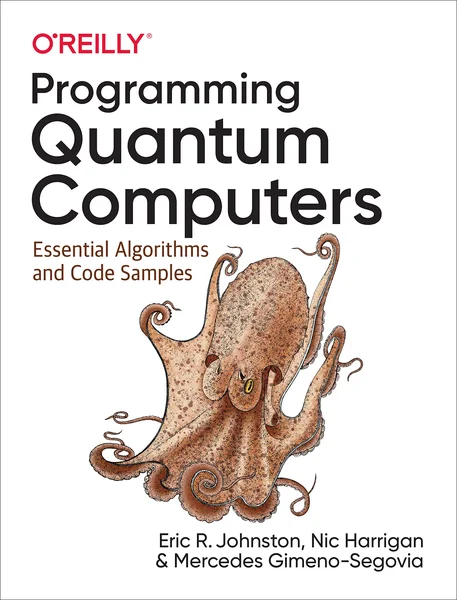
Best for learning by running code
15. Programming Quantum Computers
Eric Johnston, Nic Harrigan and Mercedes Gimeno-Segovia teach quantum computing almost without equations. Instead of matrices they use “circle notation,” a visual way to show each state’s amplitude and phase, and every example runs in QCEngine, a free simulator in your web browser. You change a gate and watch the circles change.
The book moves from single qubits to teleportation, amplitude amplification, the quantum Fourier transform, phase estimation and applications in search, simulation and machine learning. The examples are also on the book’s GitHub in Qiskit, Q# and Cirq. It builds intuition faster than any textbook, which is why many people pair it with one.
- Eric R. Johnston, Nic Harrigan and Mercedes Gimeno-Segovia
- O’Reilly, 2019, paperback, 336 pages
- All examples run in the browser
Good: intuition through code you can change and rerun. Not great: circle notation is unique to this book, and the Qiskit ports predate Qiskit 1.0.
Check on Amazon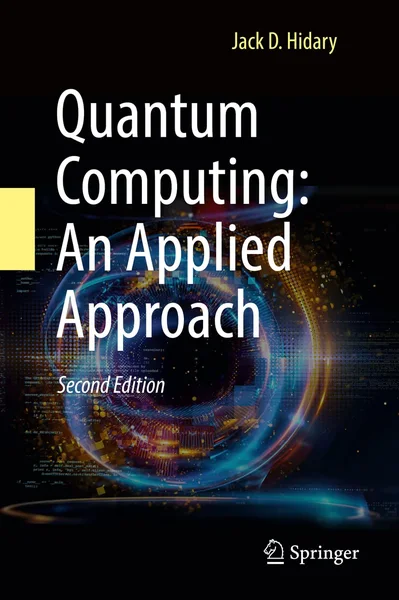
Best theory plus code in one book
16. Quantum Computing: An Applied Approach
Jack Hidary wrote this while doing quantum research at Alphabet X, and it is three books in one. Part one covers the foundations and quantum circuits. Part two walks through the standard algorithms with code, mostly in Google’s Cirq. Part three is a math reference covering the linear algebra, Dirac notation and group theory the rest uses.
The second edition adds quantum machine learning, error correction and a longer Dirac notation section, and the code lives in a companion GitHub repository. It suits someone who wants code and proofs side by side. Read the math part first if your linear algebra is weak.
- Jack D. Hidary
- Springer, 2nd edition (2021), hardcover, 445 pages
- Over 150 Amazon ratings at 4.6 stars
Good: theory, code and math reference under one cover. Not great: moves fast for true beginners, and Cirq is less common than Qiskit.
Check on Amazon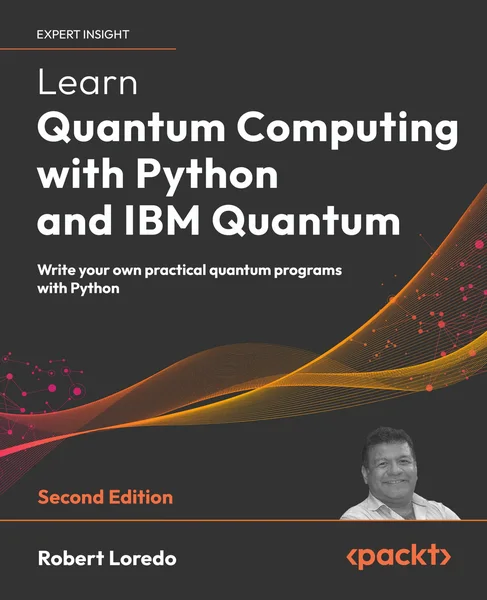
Best for IBM Quantum and Qiskit
17. Learn Quantum Computing with Python and IBM Quantum
Robert Loredo works at IBM Quantum, and his book is a guided tour of IBM’s tools: the IBM Quantum Platform, the drag-and-drop Composer and the Qiskit SDK. You build circuits, run them on IBM’s real machines and learn the basics of qubits, gates, superposition, interference, entanglement and noise mitigation along the way.
The 2025 second edition is updated for the current platform and Qiskit 1.x, which makes it the safest choice if you want examples that run as printed. It teaches less theory than a textbook. Pair it with Wong or Bernhardt for the why.
- Robert Loredo
- Packt, 2nd edition (2025), paperback, 420 pages
- Buy the 2025 edition; the 2020 first edition uses retired tools
Good: current code that runs on real IBM hardware. Not great: tied to IBM’s platform, with light theory.
Check on Amazon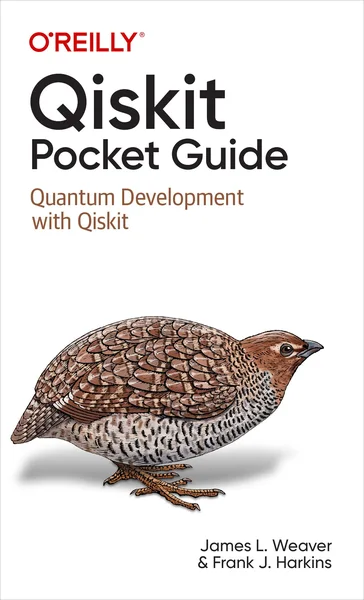
Best Qiskit reference
18. Qiskit Pocket Guide
James Weaver and Frank Harkins, both from IBM, wrote a compact reference for developers: how to create circuits, define gates, use the transpiler, run on simulators and hardware and use OpenQASM, the assembly language for quantum circuits. It is a book to keep next to the keyboard, not one to learn from.
It was written for Qiskit before version 1.0, so some calls have changed. It is still useful for the concepts and the structure of the library. Buy it once you know the basics and use Qiskit often.
- James Weaver and Frank J. Harkins
- O’Reilly, 2022, paperback, 218 pages
- Quick reference, tables and short examples
Good: fast answers to “how do I do X in Qiskit.” Not great: predates Qiskit 1.0, and teaches no theory.
Check on Amazon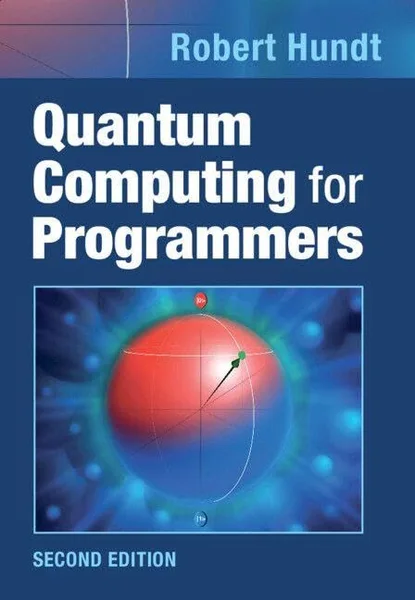
Best for building a simulator
19. Quantum Computing for Programmers
Robert Hundt is a Google engineer, and his book teaches quantum computing the way a programmer learns a system: by building one. You write a quantum simulator in Python and C++, then implement more than 50 algorithms on it, each with its derivation and code. The list runs from teleportation and Deutsch’s algorithm through Grover, Shor, phase estimation, quantum walks and the HHL algorithm.
The 2025 second edition adds quantum machine learning and state preparation chapters and covers noise, error correction, compilers and transpilation. It assumes you are comfortable with code and willing to follow derivations. It is the second programmer book to buy, after Glassner or Johnston.
- Robert Hundt
- Cambridge University Press, 2nd edition (2025), hardcover, 444 pages
- Open-source code base in Python and C++
Good: you understand an algorithm once you have coded it yourself. Not great: not a first book, and the hardcover is expensive.
Check on AmazonAfter your first book
These two are where people go once a beginner book is done. One is the reference every researcher uses. The other is a book of ideas you can read for pleasure.
The standard reference
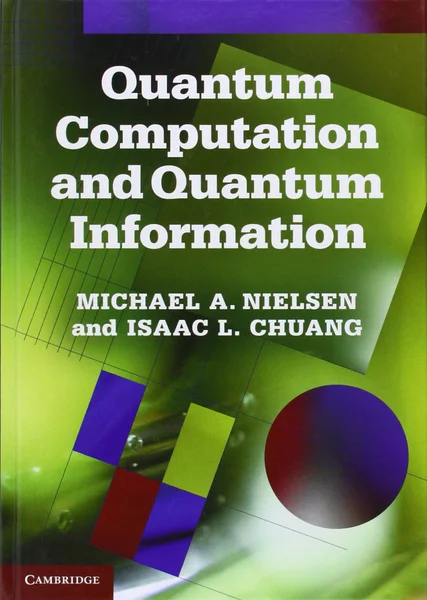
20. Quantum Computation and Quantum Information
Michael Nielsen and Isaac Chuang’s book, known as “Mike and Ike,” has been the standard text of the field since 2000. It appeared in 36 of the 48 Reddit threads I read, far more than any other book. It covers everything: the linear algebra and quantum mechanics you need, the circuit model, the quantum Fourier transform, Shor’s and Grover’s algorithms, physical implementations, noise, error correction, entropy and quantum information theory.
It is not a beginner book, and most of the people who recommend it say so. The first chapters review the math quickly and assume you have seen it before. Read it second, after Bernhardt, Wong or Sutor, and it becomes clear and complete. Read it first and you may end up where our reading group’s engineers did in week three.
- Michael A. Nielsen and Isaac L. Chuang
- Cambridge University Press, 10th anniversary edition (2010), hardcover, 702 pages
- Over 400 Amazon ratings at 4.7 stars
Good: the most complete book on the subject, and every paper cites it. Not great: too steep as a first book, and no answers to exercises.
Check on Amazon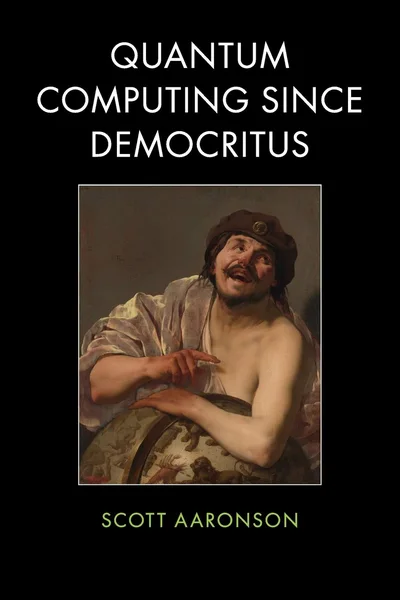
Best book of ideas
21. Quantum Computing Since Democritus
Scott Aaronson is a theoretical computer scientist at the University of Texas at Austin and the field’s best-known public skeptic of overhyped claims. This book grew from lectures he gave at the University of Waterloo in 2006, and it covers far more than quantum computing: logic, computability, complexity classes, cryptography, quantum mechanics as a theory of probability, free will and time travel.
It explains what quantum computers can and cannot do in terms of complexity theory, which is the honest answer to “will it break everything?” It is funny and full of opinions. It is also not an introduction. You will enjoy it most after a first book and with some comfort with proofs.
- Scott Aaronson
- Cambridge University Press, 2013, paperback, 398 pages
- Based on his 2006 Waterloo lecture course
Good: the best explanation of the limits of quantum computing. Not great: jumps between topics and assumes math and computer science maturity.
Check on AmazonQuantum computing books for kids
For curious teens, Q is for Quantum teaches the real ideas with no math, and the free Quantum Computing for the Quantum Curious was written for high school students. For the youngest readers there is one obvious pick.
Best for young kids
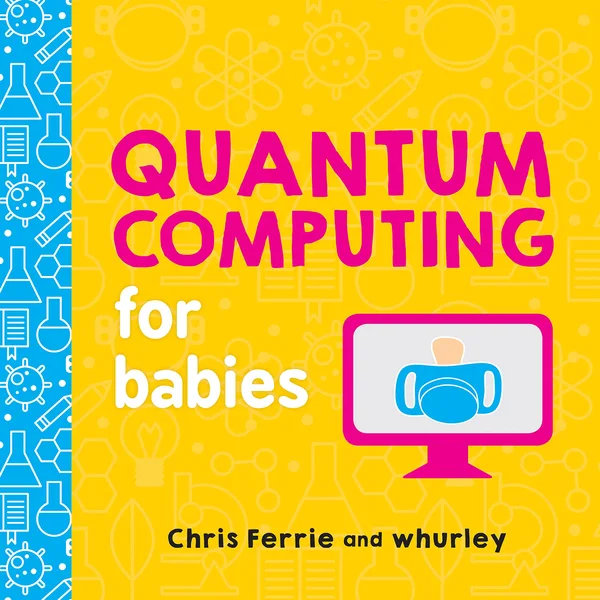
22. Quantum Computing for Babies
Chris Ferrie is a quantum physicist at the University of Technology Sydney and the author of the Baby University series. This board book, written with whurley, explains bits, qubits and the idea that a qubit can be in more than one state, in a few simple sentences per page with bold pictures. Adults reading it aloud often find it a decent first explanation too.
- Chris Ferrie and whurley
- Sourcebooks Explore, 2018, board book, 24 pages
- Over 500 Amazon ratings at 4.6 stars
Good: a fun gift for a family with a physicist or programmer in it. Not great: it is a board book; it teaches the word “qubit” and not much more.
Check on AmazonWhat Reddit recommends
I read 48 Reddit threads from 2009 to 2024 in which someone asked how to learn quantum computing or which book to start with, 40 of them on r/QuantumComputing and the rest on r/AskPhysics, r/quantum, r/Physics and computer science subreddits. Together they had 401 comments. The table counts in how many threads each book or resource was mentioned.
| Book or resource | Threads (of 48) | What people said |
|---|---|---|
| Nielsen and Chuang | 36 | The reference, usually with “needs linear algebra first” |
| Learn linear algebra first | 23 | The most common advice of all |
| Qiskit and IBM’s free courses | 21 | For hands-on practice |
| John Preskill’s Caltech lecture notes | 12 | Free, for physics-minded readers |
| Yanofsky and Mannucci | 9 | “Preparation for Nielsen and Chuang” |
| Aaronson, Democritus | 9 | For ideas, not as a textbook |
| Dancing with Qubits | 8 | “An easier version of Nielsen and Chuang” |
| Mermin | 8 | Short and clear, needs linear algebra |
| Quantum Computing for Everyone | 6 | “Really good for a beginner” |
| Thomas Wong | 6 | “A little bit of everything,” free PDF |
| Kaye, Laflamme and Mosca | 6 | Clear algorithms textbook |
| Quantum Country | 5 | Free online essay with built-in review |
The pattern is consistent across 15 years. People who already work in the field name Nielsen and Chuang because it is the book they learned from, then add that a beginner should not start there. The books recommended specifically for beginners are Bernhardt, Sutor, Yanofsky and Mannucci and, since 2022, Wong. Newer books such as Glassner and Hundt’s second edition came out after most of these threads, so they are undercounted. The second most repeated piece of advice was not a book at all. It was “learn linear algebra first.”
Free quantum computing books and courses
Quantum computing has unusually good free material, much of it written by the same people who wrote the books above.
- Introduction to Classical and Quantum Computing by Thomas Wong: the complete textbook as a free PDF, with exercises.
- Basics of Quantum Information on IBM Quantum Learning: a free course by John Watrous, one of the field’s best teachers, with video lessons and Qiskit code. The other IBM courses continue from it.
- Quantum Country by Andy Matuschak and Michael Nielsen (the Nielsen of Nielsen and Chuang): an online essay series that asks you review questions as you read and again days later, so you remember it.
- Quantum Computing for the Quantum Curious by Ciaran Hughes and colleagues: an open-access Springer book written for high school students and beginners, free to download.
- Quirk: a free drag-and-drop circuit simulator in your browser by Craig Gidney. Wong’s textbook uses it throughout.
- John Preskill’s lecture notes for his Caltech course Physics 219 on quantum computation: free, physics-oriented and widely recommended after a first book.
If you want to follow the research side, CERN’s Quantum Technology Initiative publishes its projects in quantum computing for physics, and our overview of the benefits of quantum computing explains which applications are realistic.
A six-month self-study plan
This plan assumes four to five hours a week and high school algebra. It is the order our reading group followed the second time, with the math moved to the front.
| Month | Read | Do |
|---|---|---|
| 1 | Essential Mathematics for Quantum Computing, chapters on vectors, matrices and complex numbers | Multiply 2×2 matrices by hand until it is boring |
| 2 | Quantum Computing for Everyone | Redo every calculation in the book on paper |
| 3 and 4 | Wong, from classical computing through multiple qubits | Build every circuit in Quirk; do the exercises |
| 5 | Wong, entanglement, protocols and algorithms, or Glassner if you program | Run a Bell state and Grover’s search on real IBM hardware |
| 6 | Nielsen and Chuang, chapters 1, 2 and 4 | Pick one algorithm and explain it to someone else |
Programmers can swap months 3 to 5 for Glassner and then Programming Quantum Computers. If you already know linear algebra, skip month 1 and replace Bernhardt with Mermin.
How to learn quantum computing on your own
- Do the math by hand first. Apply a Hadamard gate to the state 0 on paper before you do it in code. Software hides exactly the step you need to understand.
- Use a simulator for every circuit you read about. Quirk shows the state of each qubit as you add gates. Seeing amplitudes change makes interference obvious in a way text does not.
- Learn Dirac notation early. Kets, bras and inner products look strange for about a week and then save you pages. Every book past the beginner level uses them.
- Do not start with Shor’s algorithm. It needs the quantum Fourier transform, phase estimation and some number theory. Learn Deutsch-Jozsa, Bernstein-Vazirani and Grover first. They teach the same tricks with less machinery.
- Ignore “it tries every answer at once.” A quantum computer does not check every answer in parallel and read off the right one. Measurement gives you one result. Algorithms work by interference. Any book that says otherwise is the wrong book.
- Find one other person. Our lunchtime group finished books none of us would have finished alone. A friend, a forum or the IBM Quantum community all work.
If quantum computing makes you want the physics behind it, our guide to the best physics books for self-study covers quantum mechanics in the order a physics degree teaches it, and the best science books for non-scientists has lighter reading. For the security side, our explainer on encryption methods covers why Shor’s algorithm matters for RSA and what post-quantum cryptography replaces it with.
FAQ
Quantum Computing for Everyone by Chris Bernhardt is the best quantum computing book for beginners. It needs only high school math, teaches the linear algebra it uses and ends with Grover’s and Shor’s algorithms. For a full textbook with exercises, use Thomas Wong’s Introduction to Classical and Quantum Computing, which is free as a PDF.
Yes. Quantum computing uses only a small part of quantum mechanics, and the beginner books explain it from scratch. What you do need is linear algebra: vectors, matrices and complex numbers. Most people who stall are missing the math, not the physics.
Complex numbers, vectors, matrix multiplication, inner products and basic probability get you through the beginner books. Later you need eigenvalues, unitary matrices and tensor products. Essential Mathematics for Quantum Computing by Leonard Woody covers exactly that list.
Not as a first book. Quantum Computation and Quantum Information by Nielsen and Chuang is the standard reference and is excellent, but it assumes you are comfortable with linear algebra. Read Bernhardt, Wong or Dancing with Qubits first, then use Nielsen and Chuang as your second book.
Quantum Computing: From Concepts to Code by Andrew Glassner (No Starch Press, 2025) is the best quantum computing book for programmers. It assumes programming but no physics and takes you to running code on real quantum hardware. Programming Quantum Computers from O’Reilly is a good second book with browser-based examples.
It is good for the industry view: hardware types, applications, security and the companies involved. It does not teach you how quantum algorithms work. For that, Quantum Computing for Everyone is shorter and clearer.
With high school algebra and four to five hours a week, you can understand the main algorithms and run your own circuits in about six months. Reaching the level of a graduate course, through Nielsen and Chuang, usually takes another year.
Yes. Thomas Wong’s Introduction to Classical and Quantum Computing is a free PDF from the author, Quantum Computing for the Quantum Curious is open access from Springer and IBM Quantum Learning has free courses with code. Quantum Country is a free online introduction co-written by Michael Nielsen.
Quantum Computing for Babies by Chris Ferrie and whurley for young children. For curious teens, Q is for Quantum by Terry Rudolph teaches the real ideas with no math. Teens with algebra can read Quantum Computing for the Quantum Curious, which was written for high school students.
Qiskit, because it is the most widely used, has the most tutorials and runs on IBM’s free real hardware. The concepts carry over to Cirq, Q# and the rest. Use books or code written for Qiskit 1.0 or later, released in 2024, or be ready to update older examples.
Sources
- Amazon product pages for each book, checked November 2026 (editions, page counts, publishers and ratings).
- 48 Reddit threads asking for quantum computing books and resources, summarized in the What Reddit recommends section.
- Thomas G. Wong, Introduction to Classical and Quantum Computing, free edition.
- IBM Quantum Learning, Basics of Quantum Information.
- IBM, Qiskit SDK v1.0 release summary, February 2024.
- Arute et al., Quantum supremacy using a programmable superconducting processor, Nature, 2019.
- Google Quantum AI, Quantum error correction below the surface code threshold, Nature, 2024.
- CERN, Quantum Technology Initiative.