TLDR
Nucleic acids split into two natural families — DNA (A-DNA, B-DNA, Z-DNA) and RNA (mRNA, tRNA, rRNA, snRNA, siRNA, miRNA) — plus a growing set of lab-made cousins (PNA, LNA, XNA) engineered to do jobs neither original molecule handles well. Every PCR test, mRNA vaccine, and courtroom DNA match runs on one of these.
Table of Contents
- What Actually Counts as a Nucleic Acid
- DNA and Its Three Structural Forms
- RNA: Six Types That Do Six Different Jobs
- DNA vs. RNA at a Glance
- Synthetic Nucleic Acids: PNA, LNA, and XNA
- Where You’ve Already Met These Molecules
- FAQ
What Actually Counts as a Nucleic Acid
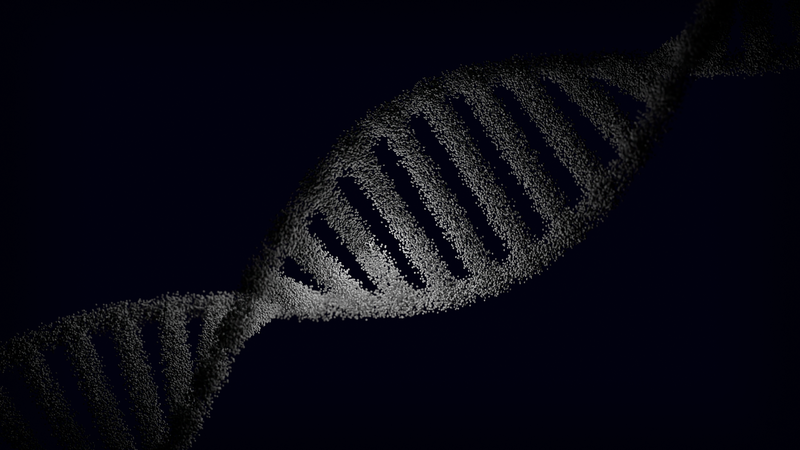
A nucleic acid is a polymer built from repeating units called nucleotides, and each nucleotide breaks down into three pieces: a five-carbon sugar, a phosphate group, and a nitrogenous base. String enough of those together and you get one of two families — deoxyribonucleic acid (DNA) or ribonucleic acid (RNA) — depending on which sugar shows up.
That’s the whole test-taking definition. What it leaves out is how much variety hides inside those two families. DNA isn’t one shape; it’s at least three depending on hydration and the proteins nearby. RNA isn’t one job; it’s a half-dozen molecules doing completely different work in the same cell. And in the last two decades, chemists have built versions of both that don’t occur in nature at all, because natural DNA and RNA break down too fast for some lab and clinical applications.
DNA and Its Three Structural Forms
Deoxyribonucleic acid carries the genetic blueprint in nearly every living cell, using the sugar deoxyribose and four bases — adenine, thymine, guanine, cytosine. But “DNA” as a single example undersells it. The molecule twists into three distinct conformations, and which one shows up depends on the surrounding chemistry.
- B-DNA — the right-handed double helix from every textbook diagram, and the dominant form inside a hydrated, living cell. This is the shape James Watson and Francis Crick modeled in 1953.
- A-DNA — a shorter, wider right-handed helix that appears under dehydrated conditions, such as in DNA-protein complexes and some RNA-DNA hybrids. Lab crystallography samples often show this form simply because the crystallization process dries the sample out.
- Z-DNA — a left-handed, zigzagging helix (hence the “Z”) that forms in alternating purine-pyrimidine sequences under high salt concentration. It’s rarer, but it’s been linked to gene regulation and even immune response, since certain proteins specifically recognize the Z-form and bind to it.
Most exam questions only need B-DNA, but if a question mentions “left-handed helix,” it’s pointing at Z-DNA specifically — that’s the detail that trips people up.
RNA: Six Types That Do Six Different Jobs
RNA uses ribose instead of deoxyribose and swaps thymine for uracil, but the bigger difference is functional: DNA mostly just stores information, while RNA’s various forms read it, transport it, edit it, and occasionally shut genes down entirely.
- Messenger RNA (mRNA) — carries the genetic code copied from DNA out of the nucleus to the ribosome, where it gets translated into protein. It’s a working copy, not the original.
- Transfer RNA (tRNA) — a small, cloverleaf-shaped molecule that reads the mRNA code three letters at a time and delivers the matching amino acid. Every cell needs dozens of tRNA types, one for each codon-amino acid pairing.
- Ribosomal RNA (rRNA) — makes up the structural core of the ribosome itself, the machine that actually builds the protein chain. In humans, rRNA accounts for roughly 80% of a cell’s total RNA.
- Small nuclear RNA (snRNA) — works inside the spliceosome, the complex that cuts non-coding introns out of freshly transcribed mRNA before it leaves the nucleus.
- Small interfering RNA (siRNA) — binds to a specific mRNA sequence and marks it for destruction, effectively silencing that gene. This mechanism is now a licensed drug platform — it’s how the cholesterol drug inclisiran works.
- MicroRNA (miRNA) — similar to siRNA but naturally encoded in the genome, fine-tuning gene expression by blocking translation rather than degrading the target outright.
If a question asks for “examples of RNA,” mRNA, tRNA, and rRNA are the safe core answer. snRNA, siRNA, and miRNA are the detail that separates a strong answer from a complete one.
DNA vs. RNA at a Glance
| Feature | DNA | RNA |
|---|---|---|
| Sugar | Deoxyribose | Ribose |
| Strand structure | Double-stranded helix | Usually single-stranded |
| Bases | Adenine, Thymine, Guanine, Cytosine | Adenine, Uracil, Guanine, Cytosine |
| Primary role | Long-term genetic storage | Gene expression, protein synthesis, regulation |
| Stability | Highly stable | Degrades faster (fewer repair mechanisms) |
| Location | Mostly nucleus (mitochondria too) | Nucleus and cytoplasm |
The stability gap explains a lot of downstream biology: it’s why DNA can survive for millennia in permafrost while RNA vaccines need cold-chain freezers just to reach a clinic intact.
Synthetic Nucleic Acids: PNA, LNA, and XNA
Competing study guides mention these three and move on. They’re worth a real look, because each one solves a specific problem natural DNA and RNA can’t.
- Peptide nucleic acid (PNA) — replaces the entire sugar-phosphate backbone with a peptide-like chain, keeping only the bases. That backbone swap makes PNA resistant to the enzymes (nucleases and proteases) that chew up regular DNA and RNA in the body, which is exactly why it shows up in antisense drug research and highly specific diagnostic probes.
- Locked nucleic acid (LNA) — a modified RNA nucleotide with an extra bridge locking the sugar ring into a fixed shape. That rigidity dramatically increases how tightly it binds to a complementary DNA or RNA strand, which is why LNA shows up in ultra-sensitive PCR probes and some FDA-approved antisense therapies.
- Xeno nucleic acid (XNA) — an umbrella term for nucleic acids built on entirely different sugar backbones (like HNA or CeNA) that don’t exist in any known organism. Researchers have engineered enzymes that can copy and evolve XNA the same way natural polymerases work on DNA, essentially building a parallel genetic system from scratch — a line of research published in Science that’s aimed partly at synthetic biology containment, since an organism built on XNA can’t exchange genetic material with anything on Earth.
None of these occur naturally. All three exist because chemists identified a specific weakness in DNA or RNA and re-engineered the backbone to fix it.
Where You’ve Already Met These Molecules
This is the part most study guides skip, and it’s the part that makes the definitions stick.
PCR tests work because DNA polymerase — the enzyme that copies DNA — can be tricked into amplifying a tiny target sequence millions of times over, turning an undetectable trace into something a machine can read. The NIH’s National Human Genome Research Institute has a plain-language rundown of how that amplification cycle works.
mRNA vaccines, including the COVID-19 shots from Pfizer-BioNTech and Moderna, deliver a lipid-wrapped strand of messenger RNA that instructs your own cells to briefly produce a viral protein, training your immune system without ever exposing you to the virus itself. The CDC’s overview of mRNA vaccine technology covers why that mRNA breaks down and clears the body within days.
DNA forensics relies on short tandem repeats — specific DNA regions that vary enough between individuals to work like a genetic fingerprint. Law enforcement labs compare 13 to 20 of these regions rather than sequencing an entire genome, which is fast enough to process casework at scale.
Three completely different fields, same handful of molecules underneath.
FAQ
What are five examples of nucleic acids? DNA, mRNA, tRNA, rRNA, and PNA cover both the natural and synthetic categories in one answer.
Is ATP a nucleic acid? No. ATP (adenosine triphosphate) contains a nucleotide-like structure — adenine, ribose, and phosphate groups — but it functions as an energy carrier, not a genetic polymer. It’s a nucleotide, not a nucleic acid.
What’s the most common nucleic acid in a cell? By sheer quantity, rRNA. It makes up the bulk of total cellular RNA because it’s built directly into every ribosome, and a cell can contain tens of thousands of ribosomes at once.
Are ribosomes themselves a nucleic acid? No — a ribosome is a ribonucleoprotein complex, meaning it’s built from both rRNA and dozens of proteins working together. The rRNA component is the nucleic acid; the ribosome as a whole is more than that.
Why don’t LNA and PNA occur in nature? Because natural selection never needed them. Cells already have DNA repair and RNA turnover systems tuned to natural backbones; the modified backbones in LNA and PNA were engineered specifically to dodge those systems, which is useful in a lab or a drug but has no evolutionary precedent.