Table of Contents
- TLDR
- Why Corsica Does Most of the Heavy Lifting
- The Corsican Endemics
- The Mainland Holdouts
- Where to Actually Go Look
TLDR
France has roughly 240 plant taxa that grow nowhere else on Earth, and the overwhelming majority of them are packed onto one island: Corsica. Its isolation and vertical terrain — sea level to 2,700 meters in under 50 kilometers — turned it into a factory for new species. The mainland adds a much shorter list: a pansy clinging to two chalk sites in Normandy, a knapweed once known from a single cliff in the Aude, a couple of cushion plants scattered across the Pyrenees. Close to a third of Corsica’s endemics are considered threatened, so several of the plants below aren’t guaranteed to still be there in twenty years.
Why Corsica Does Most of the Heavy Lifting
Corsica is 8,700 square kilometers, smaller than Connecticut, and it holds around 131 plant species found nowhere else on the planet, plus another 165 or so shared only with Sardinia. That’s a absurd concentration for an island this size, and it comes down to two things: isolation and altitude.
The island split from the mainland tens of millions of years ago and never reconnected long enough for plant populations to mix freely again. Meanwhile its interior stacks up fast — Monte Cinto tops out above 2,700 meters — which means a plant that gets stranded on a granite ridge can end up in a climate zone that has nothing to do with the coastline ten kilometers away. Populations get isolated by altitude the same way they get isolated by water, and each pocket evolves on its own.
The tradeoff is fragility. Close to a third of Corsica’s endemic flora is classified as threatened, concentrated in exactly the habitats you’d expect: coastal dunes getting developed, low-altitude wetlands drying out, and rocky grasslands where grazing and trail erosion do slow, steady damage. A study on the ecology of Corsican endemics found the risk isn’t evenly spread — it clusters hardest at low elevation, not on the dramatic peaks people assume are most at risk.
The Corsican Endemics
Seven species here, all restricted to the island or shared narrowly with Sardinia across the strait.
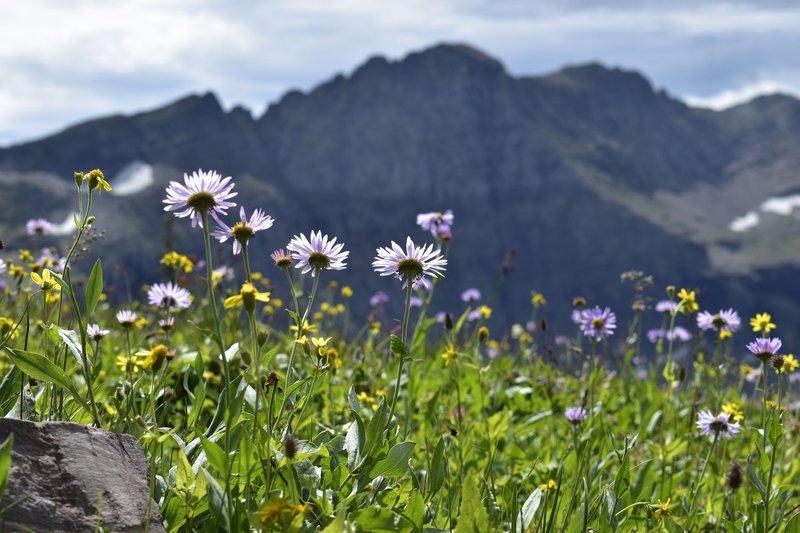
Doronicum corsicum — Corsican leopard’s-bane grows on granite scree above 1,800 meters in the Monte Cinto and Monte Rotondo massifs, nowhere lower. It looks like an ordinary yellow daisy from a distance, which is misleading — nothing else survives on that scree, so its presence is basically a marker for “true alpine zone, Corsica.”
Saxifraga cervicornis — This one grows straight out of vertical granite faces above 2,000 meters, roots wedged into cracks no soil should exist in. The species name means “deer-horned,” for the way its leaf lobes fork like antlers. Climbers on the GR20 pass within arm’s reach of it and mostly never notice.
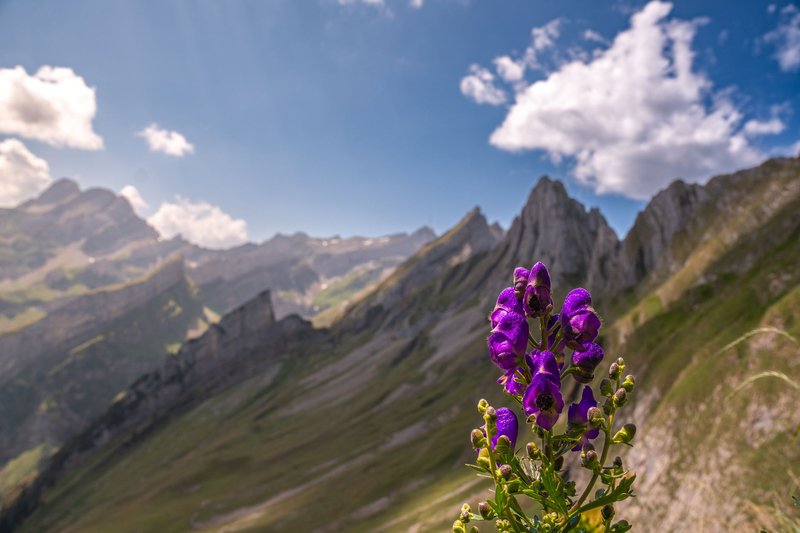
Helichrysum frigidum — A cushion-forming everlasting flower packed into scree fields above 2,000 meters. The leaves carry a dense silvery felt that isn’t decorative — it’s UV protection and insulation for a plant living at a latitude where the sun is intense but the ground still freezes overnight.
Crocus corsicus — Unlike most crocuses that show up with spring, this one flowers in October and November, before its leaves even appear, scattered through maquis and mountain pasture. The petals are purple with darker feathered veining, easy to miss against dead grass.
Cistus creticus subsp. corsicus — A narrow rockrose subspecies restricted to Corsican maquis, sticky-leaved and aromatic enough that you smell it before you see it on a hot afternoon. Brush past one on a hike and the resin stays on your hands.
Viola corsica — A compact violet under 15 centimeters tall, indigo-blue flowers on limestone and schist slopes. It’s shared with Sardinia, so calling it purely Corsican is a stretch, but the Corsica–Sardinia landmass is treated as its own botanical region precisely because so little of what grows there shows up anywhere else.
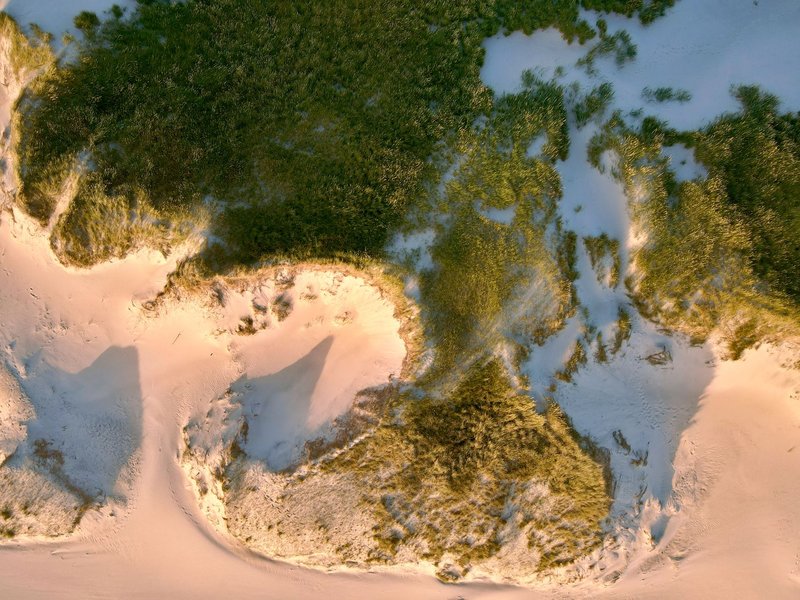
Anchusa crispa — Corsican bugloss is one of the rarest plants on this list, restricted to a handful of coastal dune systems shared between Corsica and Sardinia. It’s critically endangered, with populations small enough that a single storm surge or a new beachfront development could wipe out a meaningful fraction of what’s left. The flowers are a small, intense blue, forget-me-not shaped.
The Mainland Holdouts
The rest of France has nothing like Corsica’s numbers, but it has a handful of endemics with stories just as sharp — several of them hanging on by a thread.
Viola hispida — The Rouen pansy survives on calcareous scree in the Seine valley near Rouen, and as of recent counts it exists at only two Natura 2000 sites total. It’s about as endangered as a wildflower gets. A EU LIFE conservation program spent years hand-clearing vegetation and scorching scree to keep the ground loose enough for seedlings, and it worked: the population climbed from roughly 1,136 individuals in 2007 to 4,323 by 2012. That’s a rare case of a French endemic actually recovering instead of just being documented on its way out.
Saxifraga cebennensis — The Cévennes saxifrage wedges itself into granite and schist cliff crevices in south-central France, one of the few French endemics that has nothing to do with either Corsica or the high Alps. It’s a reminder that endemism in France isn’t only an island-and-mountain story.
Cytisus ardoinoi — Ardoino’s broom is a low, spreading shrub with small yellow pea-flowers, restricted to limestone screes in the Maritime Alps around the Mercantour. Historically it’s been rare in the wild for a mundane reason: grazing animals eat the flowering shoots before the seeds ripen, which limits how well it reseeds itself year over year, according to Kew’s Plants of the World Online.
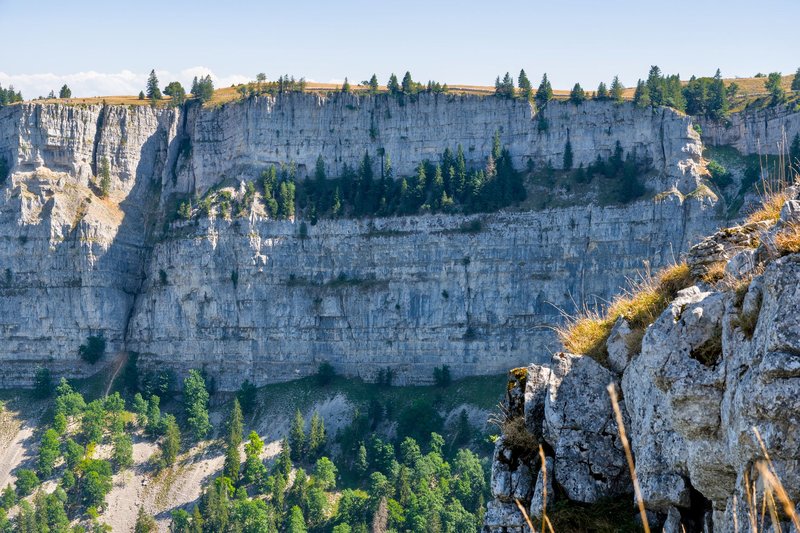
Centaurea corymbosa — This knapweed was known for years from essentially a single wild population on a limestone cliff in the Hautes-Corbières, in the Aude. That kind of extreme narrowness — one cliff, one population — makes it a frequent subject in French plant conservation genetics research, since losing that one site would mean losing the species outright. Its population has since been tracked and partly diversified, but the margin for error stays thin.
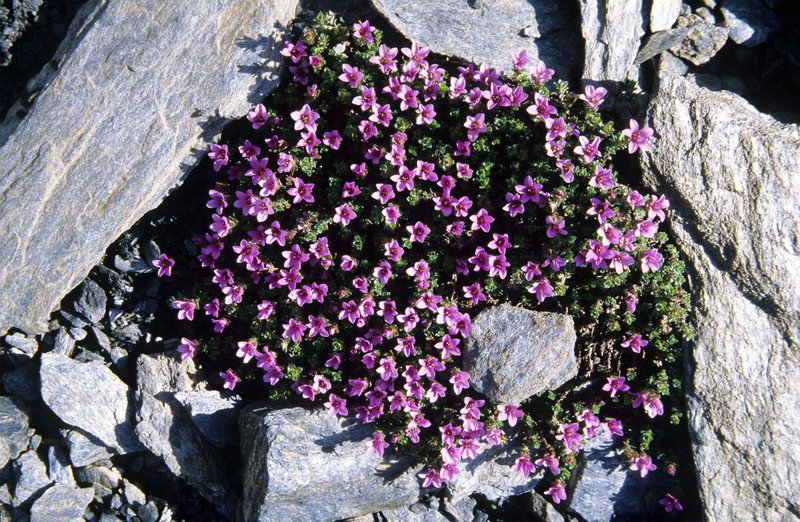
Androsace pyrenaica — Pyrenean rock-jasmine forms tight cushions on siliceous rock in the Pyrenees’ high alpine zone, tucked into crevices where soil never really accumulates.
Androsace cylindrica — A close relative restricted to limestone cliffs rather than the acidic rock Androsace pyrenaica prefers. The two species split the same mountain range by rock chemistry alone, which is the kind of fine-grained specialization you only get with enough isolated time on a cliff face.
Where to Actually Go Look
The Parc naturel régional de Corse covers close to 40% of the island and swallows most of the alpine endemics on this list — the GR20 trail runs directly through the granite and scree zones where Doronicum corsicum, Saxifraga cervicornis, and Helichrysum frigidum grow, though you’ll need to be there from mid-summer into early autumn to catch most of them in flower.
For the mainland species, the geography spreads out more. The Réserve Naturelle des Boucles de la Seine Normande protects the last chalk scree sites where Viola hispida survives, though access to the plant itself is restricted given how few individuals exist. Parc National du Mercantour covers the limestone terrain where Cytisus ardoinoi grows, and Parc National des Pyrénées is the place for both Androsace species, best found on early-summer alpine scrambles above the treeline. The Cévennes and the cliffs of the Hautes-Corbières, home to Saxifraga cebennensis and Centaurea corymbosa respectively, sit outside any single national park boundary, which is part of why both species have had a harder time getting sustained conservation attention.
None of these are garden-center plants. Most exist in small enough numbers that trampling a single slope during peak flowering season does real, measurable damage — which is worth remembering before stepping off a marked trail to get a closer photo.