Table of Contents
- Endemic, Native, Regional Endemic: Get the Words Right
- Southwest Montana’s Limestone Country
- The Pryor Mountains and Central Montana’s Limestone Breaks
- The Tri-State Limestone Cliffs
- The Beartooth Plateau’s Alpine Tundra
- The Missoula Valley’s Grasslands
- Reading a Rarity Rank Without a Biology Degree
- Where to See Them Without Loving Them to Death
Endemic, Native, Regional Endemic: Get the Words Right
Search “endemic plants of Montana” and most of what comes back is native plant lists — arrowleaf balsamroot, bitterroot, lupine, the greatest hits you’ll find from the Canadian border to the Colorado Front Range. Those are native. They’re not endemic. The difference matters, and almost nothing online bothers to draw the line.
Native means a plant evolved in a region and grows there without human help — but it can also grow in fifty other places with similar conditions. Endemic means the opposite of common: a species that exists in one place and nowhere else, full stop. If every wild population of a plant on Earth sits inside Montana’s borders, that’s a true endemic. If its whole range is a cluster of limestone outcrops that happens to straddle the Montana-Wyoming line, that’s a regional endemic — restricted to a small geographic pocket, even if the state line cuts through it.
This list sticks to real endemics and regional endemics: plants that evolved to survive one specific patch of ground and, as far as botanists can tell, never spread past it. Most of them are small, easy to walk over, and growing on rock most gardeners would call worthless. That’s the whole reason they exist.
Southwest Montana’s Limestone Country
The Beaverhead, Pioneer, and Sapphire Mountains sit on old marine limestone, laid down when this part of Montana was seafloor. Limestone breaks down into thin, alkaline, calcium-heavy soil that most plants can’t use. A handful learned how, and because that soil type barely exists anywhere else, they never left.
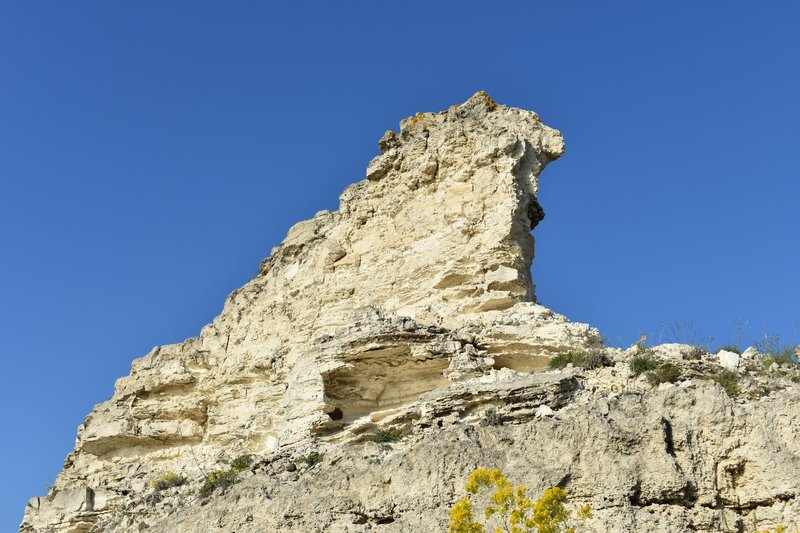
Precocious milkvetch (Astragalus proimanthus) grows only in a stretch of sagebrush steppe near Dillon, in Beaverhead County — nowhere else on the planet. It flowers absurdly early for a high-desert plant, often while there’s still snow in the draws, which is where the name comes from. The Montana Natural Heritage Program tracks it as globally imperiled (G2), meaning the entire world population fits inside a handful of Montana townships.
Lackschewitz’s milkvetch (Astragalus lackschewitzii) occupies a similarly narrow range across Beaverhead and Madison Counties, on dry, gravelly limestone benches. It was named for Klaus Lackschewitz, the University of Montana botanist who spent decades cataloging the state’s rare flora — several plants on this list exist in the record because he found them first.
Sapphire rockcress (Boechera fecunda, until recently classified as Arabis fecunda) grows on calcareous slopes in the Sapphire and Pioneer Mountains. It’s a mustard-family plant with small white flowers, easy to miss unless you already know the outcrop it favors. Like the milkvetches, its entire known range sits inside a few Montana counties, which is exactly what “endemic” is supposed to mean.
The Pryor Mountains and Central Montana’s Limestone Breaks
East of the Beaverhead range, the geology shifts to the Pryor Mountains and the limestone breaks of central Montana — badland country, cut by wind and old shorelines, where a different set of specialists took hold.
Williams’ wafer-parsnip (Cymopterus williamsii) is a low, cushion-forming member of the carrot family that grows on exposed limestone in central Montana’s breaks country. It’s one of the plants a general “native Montana plants” search will never surface, because it isn’t showy and it isn’t in anyone’s wildflower guide — it’s in the herbarium record and not much else.
Shoshone carpet (Shoshonea pulvinata) is the only species in its genus, a mat-forming plant restricted to limestone ledges in the Pryor Mountains and the adjoining Bighorn range just across the Wyoming line. A plant getting its own genus, with nowhere else to grow it, is about as clean a definition of endemism as botany offers.
Narrowleaf musineon (Musineon lineare) shares that same limestone habitat in the Pryors and central Montana’s breaks, tucked into cracks and thin soil pockets where competition from grasses can’t reach it. It’s a regional endemic in the strict sense — its whole world is a band of exposed rock a few hundred miles long.
The Tri-State Limestone Cliffs
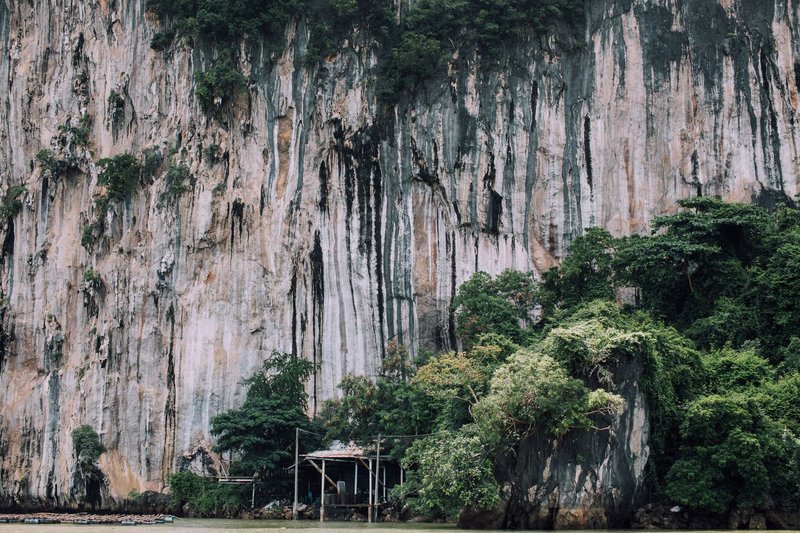
Kelseya (Kelseya uniflora) is the second monotypic genus on this list — another plant so distinct it got its own taxonomic category rather than being folded into an existing one. It grows as a dense, moss-like cushion wedged directly into cracks in vertical limestone cliffs across a small tri-state corner of Montana, Idaho, and Wyoming. You’ll find it on north-facing rock where almost nothing else can root, blooming pink in early spring before the cliff face gets exposed to a full summer of sun. Rock climbers in the region know it by sight; almost no one else does.
The Beartooth Plateau’s Alpine Tundra
Above treeline, the Beartooth Plateau runs a different experiment: instead of unusual rock chemistry, the pressure is elevation, wind, and a growing season that might last six weeks. Plants up here are endemic not because the chemistry is rare, but because so few species can survive the conditions at all.
Beartooth draba (Draba globosa) forms tight, ground-hugging cushions on rocky alpine tundra above 9,500 feet, restricted to the Beartooth-Absaroka high country straddling Montana and Wyoming. Its growth form is a direct answer to wind: anything taller gets scoured off the ridge.
Small rockcress (Boechera pusilla) occupies the same alpine zone, favoring scree and rock crevices where snowmelt lingers a little longer into summer. Both species are glacial relicts in the loosest sense — plants that likely had a wider range during colder climate periods and retreated upslope as the ice pulled back, stranding them on the few peaks still cold enough.
The Missoula Valley’s Grasslands
Not every endemic needs a mountain. Missoula phlox (Phlox kelseyi var. missoulensis) grows in dry grassland and open forest edges around the Missoula valley in western Montana — a low, mat-forming phlox with pale lavender flowers that blooms early, before the valley’s bunchgrasses green up and shade it out. It’s a variety rather than a full species, which is its own lesson: endemism isn’t always about a brand-new plant. Sometimes it’s a population that’s been isolated long enough to drift genetically from its relatives elsewhere, without yet becoming something taxonomists would call fully distinct.
Reading a Rarity Rank Without a Biology Degree
The Montana Natural Heritage Program, a partnership between the University of Montana and Montana Fish, Wildlife & Parks, ranks species on two scales worth knowing. The global rank (G1 through G5) measures how rare a species is across its entire range, everywhere it grows. The state rank (S1 through S5) measures rarity within Montana specifically. A plant ranked G2/S2, like several on this list, means fewer than a few dozen known populations exist anywhere on Earth, and most of them are in Montana.
That’s a different, and frankly more useful, framing than the IUCN Red List categories most people know from news coverage of endangered animals — G-ranks are built specifically to flag species whose entire genetic future depends on a small number of populations in one region. You can cross-check any of these plants yourself on the USDA PLANTS Database, which maps documented range down to the county level and makes it obvious just how small these footprints really are.
Where to See Them Without Loving Them to Death
None of these plants tolerate being picked, transplanted, or trampled, and several grow in habitat so thin that a single boot print can take years to recover. If you want to see them in the wild, go in late spring to early summer, when most bloom, and stay on established trails — the Beartooth Highway corridor gives legal access to alpine tundra habitat without requiring off-trail scrambling, and public land in the Pryor Mountains and the Beaverhead-Deerlodge National Forest covers most of the limestone habitat listed above.
Skip the urge to collect a sample or a cutting. As the National Geographic Society’s endemic species explainer puts it, endemic species are disproportionately vulnerable precisely because their entire population sits in one place — there’s no backup range for the species to retreat to if a local population gets damaged. Photograph them, note the GPS coordinates if you’re the type who logs sightings, and report anything that looks like a population you don’t see documented elsewhere to the Montana Natural Heritage Program. For plants this rare, a good photo does more for the species than a good specimen ever could.