Table of Contents
- TLDR
- Why India Barely Has Any Volcanoes
- Volcanoes in India at a Glance
- Barren Island
- Narcondam
- Baratang’s Mud Volcanoes
- The Deccan Traps
- Dhinodhar Hills
- Dhosi Hill
- Tosham Hills
- Loktak Lake — Volcano or Not?
- FAQ
TLDR
India has exactly one confirmed active volcano — Barren Island in the Andaman Sea, which erupted three times in 2025 alone. Everything else on the usual “volcanoes in India” list is either dormant (Narcondam), an active mud volcano rather than a magma one (Baratang), or extinct rock formed tens to hundreds of millions of years ago (the Deccan Traps, Dhinodhar Hills, Dhosi Hill, Tosham Hills). Loktak Lake in Manipur gets thrown into these lists too, but the “supervolcano caldera” claim behind it doesn’t hold up to the geology.
Why India Barely Has Any Volcanoes
Here’s the thing most lists skip: India sits on a tectonic plate that’s colliding, not subducting, and that distinction is why the mainland has no active volcanoes at all. When the Indian Plate rams into the Eurasian Plate, both are continental crust of similar density — neither one dives underneath the other and melts into magma. Instead the crust just crumples upward. That’s the Himalayas — the same collision process that explains why Bhutan remains volcanically inactive. Thick, folded, and volcanically dead.
Compare that to the Andaman Sea, 1,300 kilometers to the southeast, where the Indian Plate is being shoved underneath the Burma microplate along a proper subduction zone. That melting crust is what feeds Barren Island. It’s the same mechanism that powers Myanmar’s volcanoes and Indonesia’s volcanic arc next door — Barren Island is technically the northern tip of that Sumatra-to-Myanmar chain, just the one piece of it that happens to be Indian territory.
So the honest answer to “is India volcanically active” is: barely, and only at the edges. One live volcano, sitting alone, 1,300 km from the mainland it belongs to.
Volcanoes in India at a Glance
| Site | Type | Location | Status | Recent activity |
|---|---|---|---|---|
| Barren Island | Stratovolcano | Andaman Sea | Active | Erupted July, Sept 13, and Sept 20, 2025 |
| Narcondam | Stratovolcano | Andaman Sea | Dormant | No confirmed historical eruption |
| Baratang | Mud volcano | Andaman Islands | Active (mud) | Periodic gas/mud eruptions |
| Deccan Traps | Flood basalt province | Maharashtra, MP, Gujarat | Extinct | Formed ~66 million years ago |
| Dhinodhar Hills | Extinct volcanic hill | Kutch, Gujarat | Extinct | Precambrian-era activity |
| Dhosi Hill | Extinct volcano | Southern Haryana | Extinct | ~750 million years ago |
| Tosham Hills | Extinct volcano | Haryana | Extinct | ~732 million years ago |
| Loktak Lake | Disputed caldera claim | Manipur | Unconfirmed | No accepted volcanic record |
Barren Island
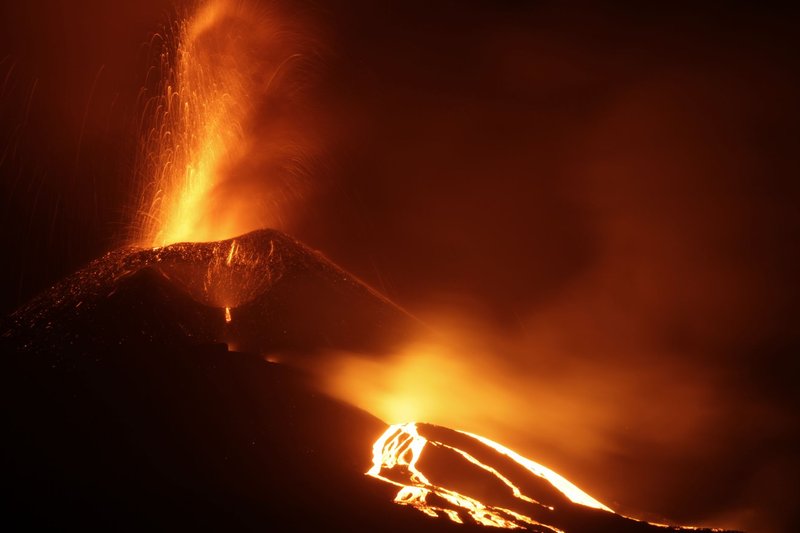
Barren Island earned its name honestly — nothing much lives on it except goats descended from a 19th-century shipwreck and colonies of seabirds that nest on the cliffs. The volcano itself sits in the middle, a 354-meter cone that’s been the only confirmed active volcano on Indian territory since records began.
2025 was a busy year for it. An eruption sent ash to 7,000 feet in late July, tracked by the Smithsonian’s Global Volcanism Program. Then in September it went off twice in eight days — first on the 13th, then again on the 20th, two days after a magnitude-4.2 earthquake shook the Andaman Sea. An Indian Navy warship happened to be close enough to film red lava tracking down the flank at night, which is the footage most people have now seen if they’ve heard of this place at all.
None of it threatened anyone. Barren Island is uninhabited, and the eruptions stayed well short of anything that would register outside the volcanology world. NASA’s Earth Observatory has been photographing its eruptions from orbit since the 1990s, which tells you this is a volcano with a track record, not a one-off surprise.
Visiting is possible but tightly controlled. Boat tours from Port Blair get you close enough to see the cone; landing on the island requires a permit from the Andaman and Nicobar Administration, and permits get pulled fast whenever activity picks up — which, this year, was often.
Narcondam
Narcondam sits about 130 km northeast of Port Blair and looks, from most angles, like a smaller, sleepier cousin of Barren Island. It isn’t extinct — the Geological Survey of India classifies it as dormant, meaning the geology says it could erupt again, but nobody has a written or oral record of it ever doing so.
What makes Narcondam interesting isn’t the volcano itself but what lives on it: the Narcondam hornbill, a bird found nowhere else on Earth, confined entirely to this one 6.8 km² island. Any future volcanic activity here would be a conservation story as much as a geological one.
Baratang’s Mud Volcanoes
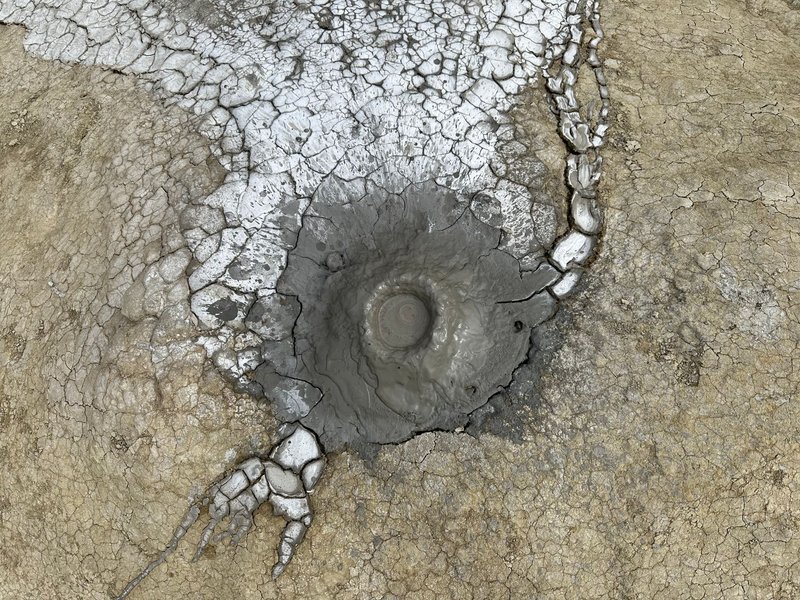
Baratang is where “volcano in India” starts meaning something different. These aren’t magma volcanoes — they’re mud volcanoes, formed when underground gas (mostly methane) pushes through layers of sediment and drags liquefied mud up with it. The result looks volcanic — a small cone, periodic burping eruptions, mud that spreads out in flows — but the mechanism underneath has nothing to do with molten rock.
They’re genuinely active, in the sense that eruptions still happen, usually minor and gas-driven rather than explosive. Baratang’s mud volcanoes are also one of the few volcanic features in India you can actually walk up to without a special permit, which is why they show up on every Andaman Islands tour itinerary.
The Deccan Traps
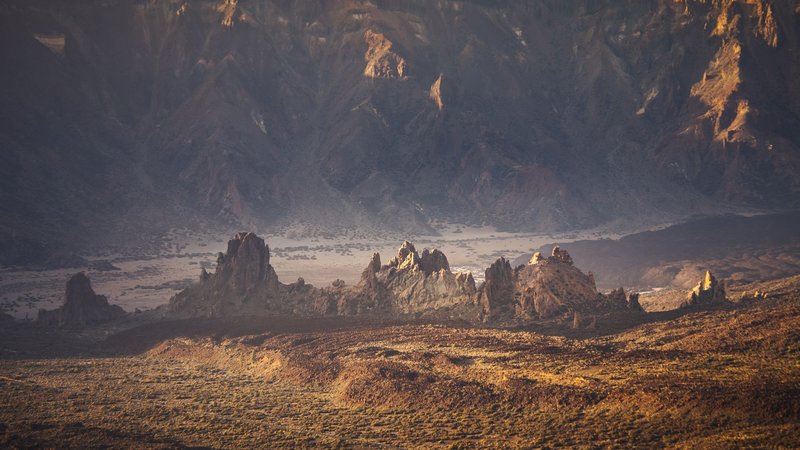
This is the one everyone’s heard of without necessarily knowing why. The Deccan Traps are flood basalt — not a single cone but a stack of lava layers up to 2,000 meters thick, laid down over roughly a million years starting around 66 million years ago. At their largest extent they covered close to 1.5 million square kilometers, close to half the landmass of modern India, across what’s now Maharashtra, Madhya Pradesh, and Gujarat.
The timing is the part that matters. That eruption sequence lines up almost exactly with the Cretaceous-Paleogene extinction — the event that killed the non-avian dinosaurs. For decades the debate was asteroid-versus-volcano, as if it had to be one or the other. Newer dating work out of UC Berkeley suggests the Chicxulub asteroid impact may have actually intensified the Deccan eruptions, doubling their output for hundreds of thousands of years afterward — meaning the two catastrophes weren’t competing causes so much as one triggering the other. Oregon State University’s volcano program has more on how the flow sequence was reconstructed.
Today the Traps aren’t a hazard — they’re bedrock. The black basalt terracing you see across the Western Ghats, including the stepped hills around places like Matheran and Lonavala, is Deccan Trap lava, cooled and weathered for 66 million years.
Dhinodhar Hills
Tucked into the Kutch region of Gujarat, Dhinodhar is a low hill of extinct volcanic rock, associated with a much older and much smaller episode of activity than the Deccan Traps. It’s more of a regional curiosity than a headline volcano — there’s a temple and a fort on the hill today, and most visitors have no idea they’re standing on cooled lava.
Dhosi Hill
Dhosi Hill rises alone at the northwestern tip of the Aravalli range in southern Haryana, and unlike most “extinct volcano” claims in India, this one has the visual evidence to back it up: a defined crater rim, exposed lava rock still visible at the surface, and a cone shape that’s obvious once you know what you’re looking at. Geologists date the activity here to roughly 750 million years ago — old enough that the Aravallis themselves, among the oldest mountain ranges on the planet, had already formed around it.
Tosham Hills
A short distance from Dhosi, also in Haryana and also part of the Aravalli Craton, the Tosham Hills mark another pocket of Precambrian volcanic activity, dated to around 732 million years ago. Tosham and Dhosi are frequently mentioned together for exactly that reason — same craton, same rough era, similar extinct-volcano geology, just a few kilometers apart.
Loktak Lake — Volcano or Not?
This is the entry that trips up most lists, including some school-project sources. The claim is that Loktak Lake, the largest freshwater lake in Northeast India and famous for its floating phumdi islands, sits inside a supervolcanic caldera that formed around 100 million years ago.
It’s a good story, and it circulates widely — but there’s no peer-reviewed geological survey confirming a caldera under Loktak. The lake’s actual formation is tied to tectonic subsidence and river damming in the Manipur valley, standard lake-forming processes with no volcanic mechanism required. Treat “Loktak is a volcano” the way you’d treat any unsourced factoid that sounds too good to fact-check: interesting, repeated often, not established science.
FAQ
Is India volcanically active? Barely. India has one confirmed active volcano — Barren Island — and it sits far from the mainland, in the Andaman Sea. The Indian mainland itself has no active volcanoes because the Indian and Eurasian plates are colliding rather than one sliding beneath the other, so there’s no subduction melt to feed a volcano.
Can you visit Barren Island? You can see it by boat from Port Blair without much trouble. Landing on the island requires a permit from the Andaman and Nicobar Administration, and that permit gets suspended whenever the volcano is actively erupting — which happened multiple times in 2025.
How many volcanoes does India have? It depends how you count. One confirmed active volcano (Barren Island), one dormant one (Narcondam), one active mud volcano site (Baratang), and several extinct formations from vastly different geological eras (the Deccan Traps, Dhinodhar Hills, Dhosi Hill, Tosham Hills). Loktak Lake’s volcanic origin isn’t confirmed, so it doesn’t really belong on the count.
Is the Deccan Traps eruption connected to the dinosaur extinction? The timing overlaps closely enough that most researchers now treat it as a contributing factor alongside the Chicxulub asteroid impact, rather than a coincidence. Some recent dating work even suggests the asteroid impact intensified the Deccan eruptions rather than the two events being unrelated.
What’s the difference between Barren Island and Baratang’s volcanoes? Barren Island is a true magma volcano — molten rock rising from a subduction zone. Baratang’s are mud volcanoes, driven by underground gas pushing liquefied sediment to the surface. They look superficially similar but form through completely different processes.