Potential energy is energy stored in a system because of the position or arrangement of its parts, and it’s measured in joules (J). A book on a shelf, a stretched rubber band, and a tank of gasoline are all examples of potential energy: each one holds energy that can be released and turned into motion, heat, or electricity.
Below are 14 examples of potential energy, grouped by the force that stores the energy. Each one names that force, says where the energy sits, and says what it becomes when released. Where the numbers are easy to calculate, you’ll get them.
Table of Contents
- The 14 examples at a glance
- Gravitational potential energy examples
- Elastic potential energy examples
- Chemical potential energy examples
- Electric potential energy example
- Nuclear potential energy example
- The two formulas, with a worked example
- Potential energy vs. kinetic energy
- Examples that get listed wrongly
- FAQ
The 14 examples at a glance
| # | Example | Type | What stores the energy |
|---|---|---|---|
| 1 | Book on a shelf | Gravitational | Book and Earth, separated by height |
| 2 | Roller coaster at the top of the lift hill | Gravitational | Train and Earth |
| 3 | Water behind a dam | Gravitational | Water and Earth |
| 4 | Diver on a 10 m platform | Gravitational | Diver and Earth |
| 5 | Apple on a branch | Gravitational | Apple and Earth |
| 6 | Skier at the top of a slope | Gravitational | Skier and Earth |
| 7 | Drawn bow | Elastic | Bent limbs of the bow |
| 8 | Compressed pogo stick spring | Elastic | Spring coils |
| 9 | Stretched rubber band | Elastic | Stretched polymer chains |
| 10 | Gasoline | Chemical | Bonds between carbon, hydrogen, and oxygen atoms |
| 11 | A banana | Chemical | Bonds in sugars and starch |
| 12 | AA battery | Chemical | Reactive chemicals inside the cell |
| 13 | Charge in a thundercloud | Electric | Separated positive and negative charge |
| 14 | Uranium-235 nucleus | Nuclear | Particles arranged in the nucleus |
Gravitational potential energy examples
Gravitational potential energy depends on mass, height, and the strength of gravity. Strictly, it belongs to the pair of objects (the thing you lifted and the Earth), though everyone says “the book’s energy” as shorthand. Lift something higher and you’ve added energy to the system. Let it fall and that energy becomes kinetic energy.
1. Book on a shelf

A 2 kg textbook sitting 1.5 m above the floor holds 29.4 J of gravitational potential energy, measured against the floor. Nudge it off the edge and that energy turns into motion, then into sound and a small amount of heat when it hits. The force involved is gravity. The number also changes if you pick a different zero point, such as a table instead of the floor, which is why physicists always say “relative to what.”
2. Roller coaster at the top of the lift hill
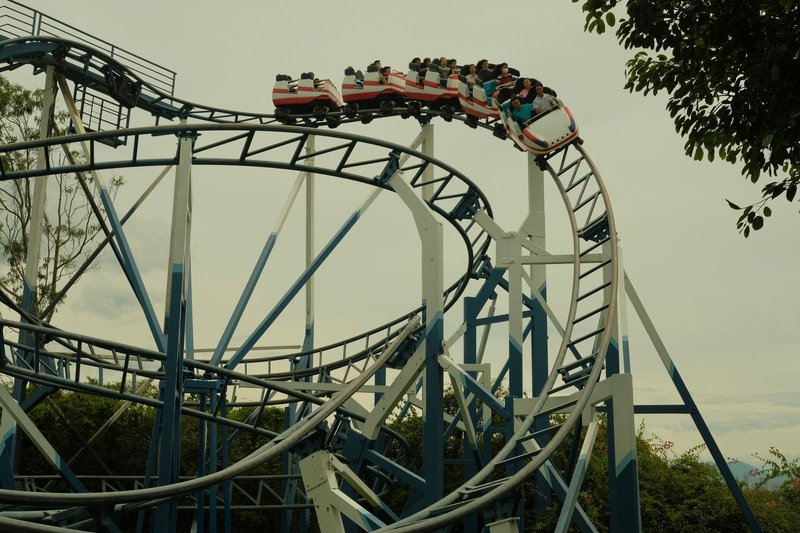
The lift hill is a machine for loading gravitational potential energy. A 5,000 kg train raised 50 m stores about 2,450,000 J (2.45 MJ). Every drop and loop afterward is that stored energy being traded for speed and traded back. The first hill is always the tallest because friction and air drag take a cut of the total on every trip around the track.
3. Water behind a dam
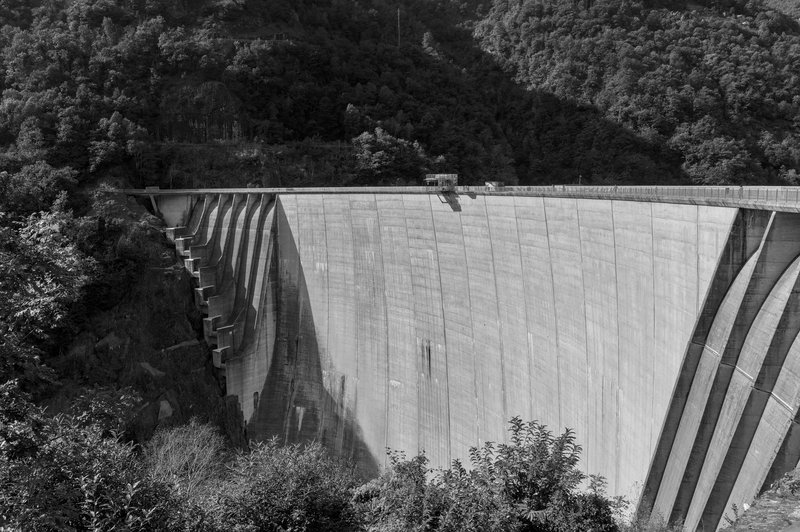
A cubic meter of water (1,000 kg) sitting 100 m above a turbine holds about 980,000 J. Release it through a pipe and gravity accelerates it into the turbine blades, which spin a generator. That’s the principle behind hydroelectric plants such as the Hoover Dam, where the height difference between the lake surface and the turbines does the work.
4. Diver on a 10 m platform
A 70 kg diver on a 10 m platform holds about 6,860 J relative to the water surface. During the fall, that converts almost entirely to kinetic energy, and the diver hits the water at roughly 14 m/s (about 50 km/h). The water absorbs the rest, which is why a bad entry hurts.
5. Apple on a branch
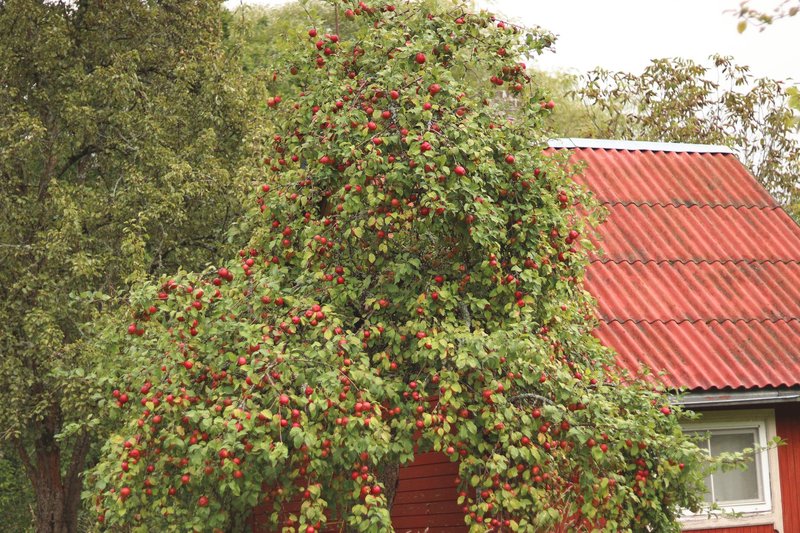
A 0.2 kg apple hanging 3 m up has about 5.9 J of gravitational potential energy. That’s small, but it’s the example behind the most famous story in physics. The stem is the only thing holding the energy in place. When it snaps, the apple trades height for speed.
6. Skier at the top of a slope

An 80 kg skier at the top of a run with 300 m of vertical drop has about 235,000 J relative to the bottom. Only the vertical height matters, not the length of the trail. A gentle 5 km run and a steep 1 km run from the same summit start with identical gravitational potential energy. The gentle one just spends more of it on friction and snow drag.
Elastic potential energy examples
Elastic potential energy is stored when a material is stretched, compressed, or bent, and the spring force of the material pushes back. Release it and the object snaps toward its original shape. The energy sits in the deformed material itself, in the stretched or squeezed bonds between its atoms. For more cases with the numbers worked out, see 15 examples of elastic potential energy.
7. Drawn bow

Drawing a bow bends the limbs, and the limbs store energy like a spring. A typical bow holds tens of joules at full draw. On release, the limbs straighten and hand that energy to the arrow as kinetic energy. A heavier draw weight means more stored energy and a faster arrow.
8. Compressed pogo stick spring

A pogo stick is a clean case of a spring doing exactly what the formula says. With a spring constant of 10,000 N/m compressed by 0.1 m, the spring holds 50 J. The rider’s weight compresses it on landing, it stores that energy for a fraction of a second, then it launches the rider back up. The spring force is the force involved.
9. Stretched rubber band

A rubber band stores a fraction of a joule when stretched, enough to sting a finger but not much more. Rubber is a slightly messier example than a metal spring. It doesn’t follow the simple ½kx² rule closely, because its tangled polymer chains behave differently at different stretch lengths. It’s still elastic potential energy, just harder to calculate.
Chemical potential energy examples
Chemical potential energy is stored in the arrangement of atoms and electrons in molecules. The force involved is the electric force between charged particles, which is what chemical bonds are. When a reaction rearranges the atoms into lower-energy products, the difference is released, usually as heat.
10. Gasoline
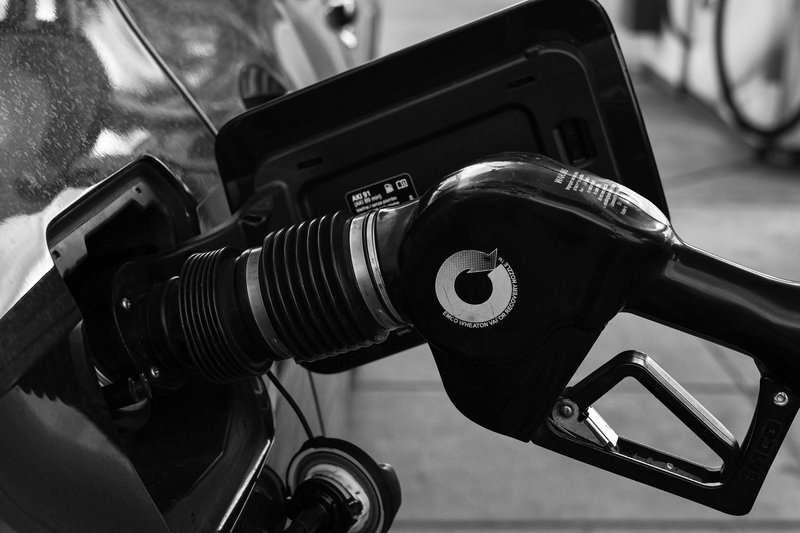
One liter of gasoline holds roughly 34 million joules (34 MJ). Combustion rearranges its hydrocarbon molecules into carbon dioxide and water, releasing the difference as heat, and a car engine turns part of that into motion. Most of it leaves as waste heat, which is why a typical engine is only around 25 to 35 percent efficient.
11. A banana
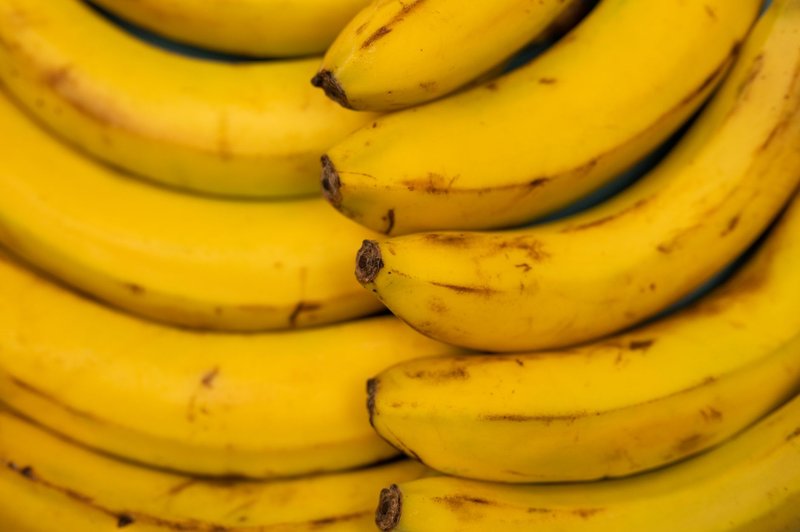
A medium banana contains about 105 kilocalories, or roughly 440,000 J, stored in the bonds of its sugars and starch. Your cells release that energy step by step through cellular respiration. Food labels use the “Calorie” (kilocalorie) because it’s a more manageable number than a joule, but both measure the same thing.
12. AA battery
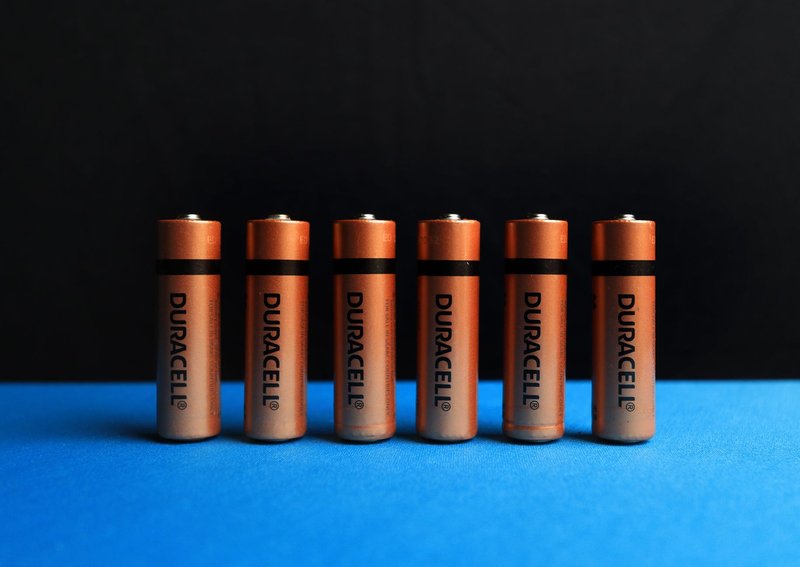
An alkaline AA cell holds roughly 10,000 J in its reactive chemicals. A battery is chemical potential energy waiting for a circuit. The same principle works with a potato battery, where a potato’s juice carries the charge between a nail and a copper wire. Closing the circuit lets the reaction proceed and pushes electrons through the wire, converting chemical energy directly into electrical energy.
Electric potential energy example
Electric potential energy exists when electric charges are held apart against the force between them, either pushing apart (like charges) or pulling together (opposite charges). Separate them and you’ve stored energy, the same way lifting a book stores energy against gravity.
13. Charge in a thundercloud
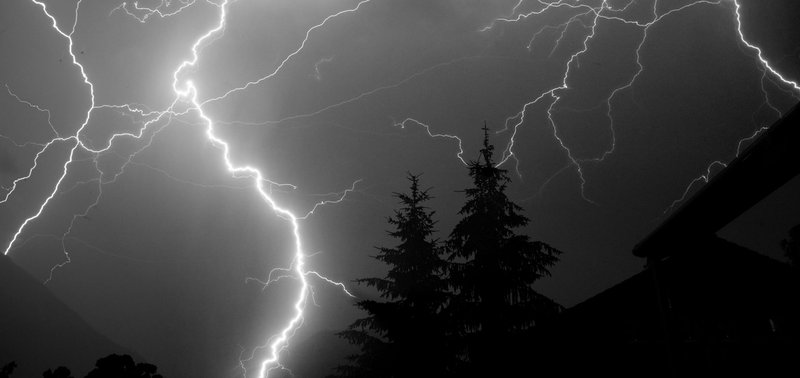
Inside a storm cloud, collisions between ice particles move negative charge toward the bottom of the cloud and positive charge toward the top. That separated charge is stored electric potential energy, and the electric force is pulling the two regions together. Lightning is the release. A single bolt carries on the order of a billion joules, though estimates vary widely from strike to strike.
Nuclear potential energy example
Nuclear energy is sometimes treated as its own category, but it fits the same definition: energy stored in the arrangement of a system’s parts. Here the parts are protons and neutrons inside a nucleus, held together by the strong nuclear force and pushed apart by electric repulsion between the protons.
14. Uranium-235 nucleus
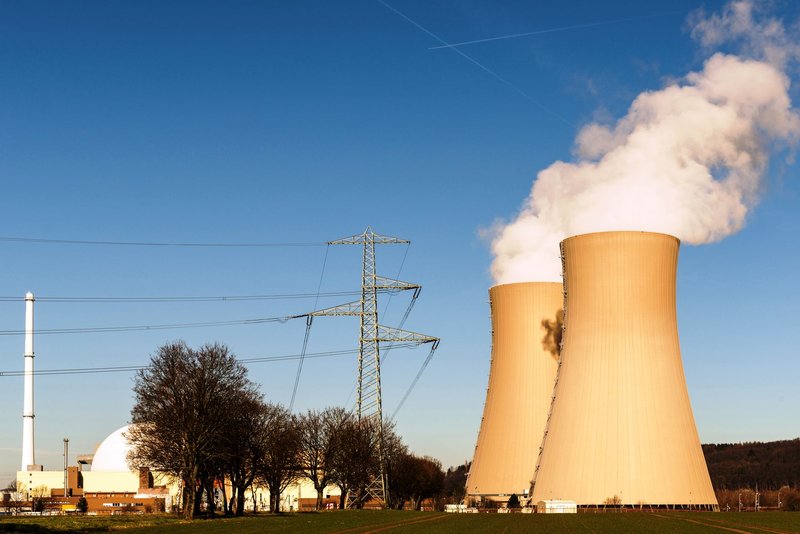
When a uranium-235 nucleus absorbs a neutron, it splits into two smaller nuclei and releases about 200 million electron volts, or roughly 3 × 10⁻¹¹ J, per atom. That’s a tiny number per nucleus but an enormous one in bulk. Fully fissioning 1 kg of uranium-235 would release about 8 × 10¹³ J, around 2.4 million times the energy in a kilogram of gasoline. The energy comes out as heat, which a power plant uses to boil water and drive turbines.
The two formulas, with a worked example
Most school problems use two formulas:
- Gravitational potential energy: PE = mgh
- Elastic potential energy: PE = ½kx²
In the first, m is mass in kilograms, g is 9.8 m/s² near Earth’s surface, and h is height in meters. In the second, k is the spring constant in newtons per meter (how stiff the spring is) and x is how far it’s stretched or compressed in meters. You can read more on both at Georgia State University’s HyperPhysics gravitational and spring energy pages.
Worked example. The 2 kg book on a 1.5 m shelf:
PE = mgh = 2 kg × 9.8 m/s² × 1.5 m = 29.4 J
Note that doubling the height doubles the energy, while doubling the stretch of a spring quadruples it, because x is squared. That squared term is why a spring that’s pulled twice as far is much harder to hold.
Potential energy vs. kinetic energy
Potential energy is stored energy. Kinetic energy is energy of motion, ½mv². The two trade places constantly, and in an ideal system with no friction their sum never changes. For how these two fit into the wider list of energy types, see examples of energy.
The roller coaster shows this best. At the top of the lift hill, the 5,000 kg train holds 2.45 MJ of potential energy and almost no kinetic energy. At the bottom of a 50 m drop, nearly all of it has become kinetic energy. Setting mgh equal to ½mv² and solving gives v = √(2gh) = √(2 × 9.8 × 50) ≈ 31 m/s, about 113 km/h. Mass cancels out of the equation, which is why a heavy train and a light one fall at the same rate in the ideal case. Real coasters come in a bit slower because of friction and air drag.
A pendulum works the same way on a smaller scale. At the highest point of each swing the bob is momentarily still and has maximum potential energy. At the lowest point it’s moving fastest and has maximum kinetic energy.
Examples that get listed wrongly
Several popular lists include examples that don’t hold up.
- Solar cells at night. A solar cell converts light into electricity. It has no stored electric potential energy waiting to be released. At night, nothing is stored and nothing flows.
- Spoons and “magnetic” household objects. A metal spoon isn’t magnetized. Magnetic potential energy requires magnets or magnetic fields, such as two magnets held apart against their attraction.
- Nuclear energy as a standalone category. It’s potential energy stored by the strong nuclear force, as in example 14. It isn’t a separate kind of thing.
A good check for any example is to name the force and the system. If you can’t say what’s pushing or pulling, it probably isn’t potential energy.
FAQ
What are three examples of potential energy? A book on a shelf (gravitational), a stretched rubber band (elastic), and gasoline (chemical).
What are examples of potential energy in everyday life? A glass on the edge of a table, a drawn bow, a charged phone battery, and the food on your plate. All of them hold energy that gets released when something changes.
What unit is potential energy measured in? Joules (J). One joule is the energy needed to lift a 100 g apple 1 m.
Can potential energy be negative? Yes. Potential energy is always measured against a chosen reference point. A book on the floor has zero gravitational potential energy relative to the floor, but negative energy relative to a table above it.
Is food potential energy? Yes. Food stores chemical potential energy in its molecular bonds, and your body releases it through metabolism.
Does potential energy belong to the object or the system? The system. The energy comes from the relationship between the objects, such as a book and the Earth, or the two ends of a spring. We say “the book has potential energy” as a convenient shortcut.