
Use a measured pressure instead of the standard atmosphere
- kPa83.428
- mbar / hPa834.28
- mmHg / Torr625.76
- inHg24.64
- psi (absolute)12.1
- atm0.8234
How the boiling point of water falls with altitude
Show the formula with your numbers
- Altitude in metresh = feet × 0.3048= 5,280 ft × 0.3048= 1,609.3 m
- Air pressure at that altitude (ISA)P = 101.325 × (1 − 2.25577×10⁻⁵ × h)^5.25588 kPa= 101.325 × (1 − 2.25577×10⁻⁵ × 1,609.3)^5.25588= 83.428 kPa (82.34% of sea-level pressure)
- Boiling temperature of water (IAPWS-IF97)T = Ts(P), the IF97 region 4 backward equation. beta = P^0.25 (P in MPa); E, F, G from beta and the n1..n10 coefficients; D = 2G / (−F − √(F² − 4EG)); T = [n10 + D − √((n10 + D)² − 4(n9 + n10 D))] / 2= P = 0.083428 MPa; beta = 0.53744; D = 367.769= 94.62 °C (367.77 K)
- Compare with the boiling point at sea leveldifference = T − T(101.325 kPa)= 94.62 − 99.97= −5.36 °C
- Convert the temperature°F = °C × 9/5 + 32, K = °C + 273.15= 94.62 × 9/5 + 32; 94.62 + 273.15= 202.31 °F, 367.77 K
Enter your altitude, a pressure or an amount of dissolved salt, and the calculator returns the boiling point in degrees Celsius, degrees Fahrenheit and kelvin. The altitude tab covers water for cooking. The pressure tab covers water and 15 lab solvents, from a pressure cooker down to a rotary evaporator under vacuum. The salt tab works out boiling point elevation for chemistry homework.
What is the boiling point of water?
Water boils at 100 °C (212 °F, 373.15 K) at sea level. That figure holds only at standard atmospheric pressure, 101.325 kPa (1 atm or 760 mmHg). The international steam tables (IAPWS-IF97) put the exact value at 99.97 °C, or 211.95 °F, because the Celsius scale was redefined in 1990 and 100 °C is now the rounded figure.
A liquid boils when its vapor pressure equals the pressure of the air above it. Lower the air pressure and water boils at a lower temperature. Raise it and water needs more heat. That is why the same pot of water boils at 94.6 °C (202.3 °F) in Denver and at 121 °C (250 °F) inside a pressure cooker.
| Scale | Boiling point of water at sea level | Exact (IAPWS-IF97) |
|---|---|---|
| Celsius | 100 °C | 99.97 °C |
| Fahrenheit | 212 °F | 211.95 °F |
| Kelvin | 373.15 K | 373.12 K |
Boiling point of water by altitude
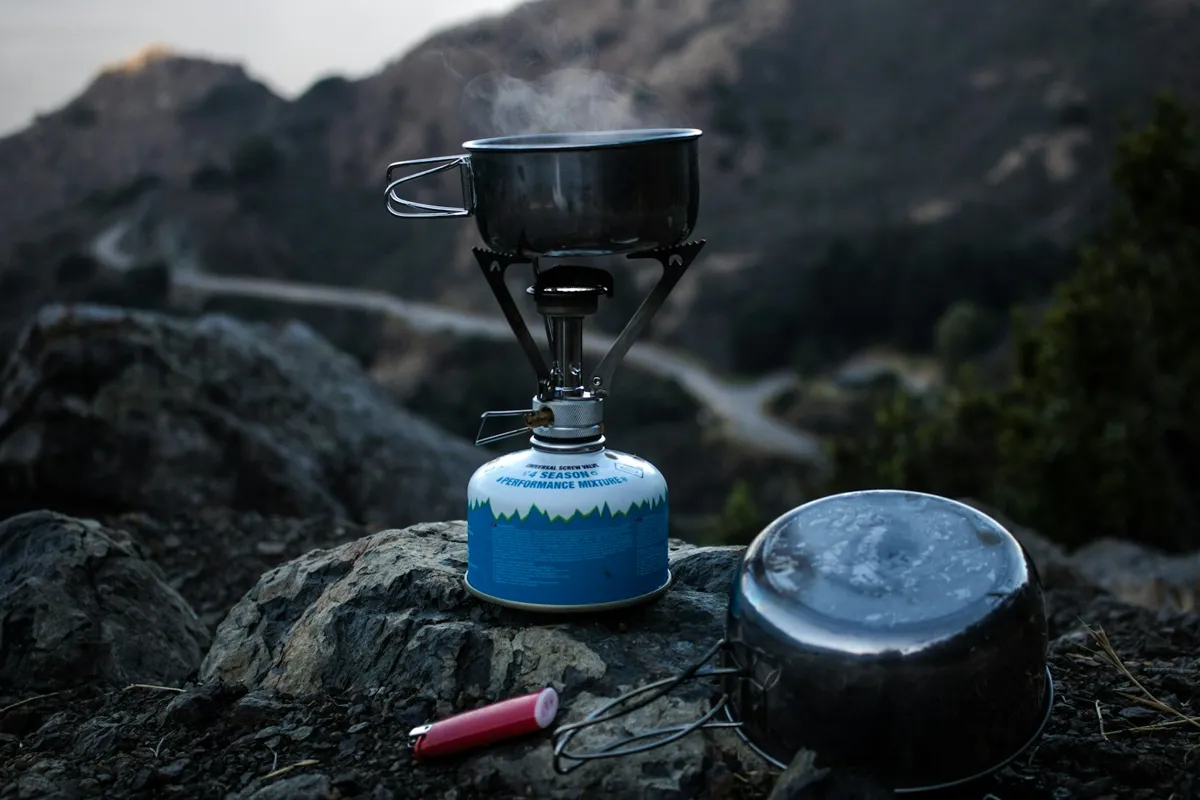
Air pressure falls as you climb, so the boiling point of water drops by about 1 °C for every 300 m, or about 1 °F for every 500 ft. The table uses the International Standard Atmosphere for the pressure at each height and the IAPWS-IF97 steam equations for the boiling point.
| Altitude | Boiling point (°F) | Boiling point (°C) | Air pressure (kPa) |
|---|---|---|---|
| 0 ft | 212.0 °F | 100.0 °C | 101.3 |
| 500 ft | 211.0 °F | 99.5 °C | 99.5 |
| 1,000 ft | 210.1 °F | 99.0 °C | 97.7 |
| 1,500 ft | 209.2 °F | 98.5 °C | 96.0 |
| 2,000 ft | 208.3 °F | 97.9 °C | 94.2 |
| 2,500 ft | 207.4 °F | 97.4 °C | 92.5 |
| 3,000 ft | 206.5 °F | 96.9 °C | 90.8 |
| 3,500 ft | 205.6 °F | 96.4 °C | 89.1 |
| 4,000 ft | 204.7 °F | 95.9 °C | 87.5 |
| 4,500 ft | 203.7 °F | 95.4 °C | 85.9 |
| 5,000 ft | 202.8 °F | 94.9 °C | 84.3 |
| 5,500 ft | 201.9 °F | 94.4 °C | 82.7 |
| 6,000 ft | 201.0 °F | 93.9 °C | 81.2 |
| 6,500 ft | 200.1 °F | 93.4 °C | 79.7 |
| 7,000 ft | 199.2 °F | 92.9 °C | 78.2 |
| 7,500 ft | 198.2 °F | 92.4 °C | 76.7 |
| 8,000 ft | 197.3 °F | 91.9 °C | 75.3 |
| 8,500 ft | 196.4 °F | 91.3 °C | 73.8 |
| 9,000 ft | 195.5 °F | 90.8 °C | 72.4 |
| 9,500 ft | 194.6 °F | 90.3 °C | 71.0 |
| 10,000 ft | 193.7 °F | 89.8 °C | 69.7 |
In metres:
| Altitude | Boiling point (°C) | Boiling point (°F) | Air pressure (kPa) |
|---|---|---|---|
| 0 m | 100.0 °C | 212.0 °F | 101.3 |
| 250 m | 99.1 °C | 210.5 °F | 98.4 |
| 500 m | 98.3 °C | 209.0 °F | 95.5 |
| 750 m | 97.5 °C | 207.5 °F | 92.6 |
| 1,000 m | 96.6 °C | 206.0 °F | 89.9 |
| 1,250 m | 95.8 °C | 204.5 °F | 87.2 |
| 1,500 m | 95.0 °C | 203.0 °F | 84.6 |
| 1,750 m | 94.1 °C | 201.5 °F | 82.0 |
| 2,000 m | 93.3 °C | 200.0 °F | 79.5 |
| 2,250 m | 92.5 °C | 198.5 °F | 77.1 |
| 2,500 m | 91.6 °C | 197.0 °F | 74.7 |
| 2,750 m | 90.8 °C | 195.5 °F | 72.4 |
| 3,000 m | 90.0 °C | 193.9 °F | 70.1 |
Boiling point of water in cities around the world
Pick any of these places in the calculator to see the full result and the pressure behind it.
| Place | Elevation | Water boils at (°C) | (°F) |
|---|---|---|---|
| Dead Sea shore | −1,411 ft / −430 m | 101.4 °C | 214.5 °F |
| Death Valley (Badwater) | −282 ft / −86 m | 100.3 °C | 212.5 °F |
| New York | 33 ft / 10 m | 99.9 °C | 211.9 °F |
| London | 36 ft / 11 m | 99.9 °C | 211.9 °F |
| Chicago | 594 ft / 181 m | 99.4 °C | 210.9 °F |
| Atlanta | 1,050 ft / 320 m | 98.9 °C | 210.0 °F |
| Phoenix | 1,086 ft / 331 m | 98.9 °C | 210.0 °F |
| Madrid | 2,188 ft / 667 m | 97.8 °C | 208.0 °F |
| Boise | 2,703 ft / 824 m | 97.2 °C | 207.0 °F |
| Calgary | 3,428 ft / 1,045 m | 96.5 °C | 205.7 °F |
| Tehran | 3,937 ft / 1,200 m | 96.0 °C | 204.8 °F |
| Salt Lake City | 4,226 ft / 1,288 m | 95.7 °C | 204.2 °F |
| Reno | 4,505 ft / 1,373 m | 95.4 °C | 203.7 °F |
| Kathmandu | 4,593 ft / 1,400 m | 95.3 °C | 203.6 °F |
| Guatemala City | 4,921 ft / 1,500 m | 95.0 °C | 203.0 °F |
| Denver | 5,279 ft / 1,609 m | 94.6 °C | 202.3 °F |
| Albuquerque | 5,312 ft / 1,619 m | 94.6 °C | 202.3 °F |
| Johannesburg | 5,751 ft / 1,753 m | 94.1 °C | 201.5 °F |
| Kabul | 5,873 ft / 1,790 m | 94.0 °C | 201.2 °F |
| Nairobi | 5,889 ft / 1,795 m | 94.0 °C | 201.2 °F |
| Colorado Springs | 6,033 ft / 1,839 m | 93.9 °C | 200.9 °F |
| Cheyenne | 6,063 ft / 1,848 m | 93.8 °C | 200.9 °F |
| Lake Tahoe | 6,224 ft / 1,897 m | 93.7 °C | 200.6 °F |
| Flagstaff | 6,909 ft / 2,106 m | 93.0 °C | 199.3 °F |
| Santa Fe | 7,198 ft / 2,194 m | 92.7 °C | 198.8 °F |
| Mexico City | 7,349 ft / 2,240 m | 92.5 °C | 198.5 °F |
| Shimla | 7,467 ft / 2,276 m | 92.4 °C | 198.3 °F |
| Addis Ababa | 7,726 ft / 2,355 m | 92.1 °C | 197.8 °F |
| Aspen | 7,907 ft / 2,410 m | 91.9 °C | 197.5 °F |
| Bogotá | 8,661 ft / 2,640 m | 91.2 °C | 196.1 °F |
| Quito | 9,350 ft / 2,850 m | 90.5 °C | 194.9 °F |
| Leadville | 10,151 ft / 3,094 m | 89.7 °C | 193.4 °F |
| Cusco | 11,152 ft / 3,399 m | 88.6 °C | 191.5 °F |
| La Paz | 11,942 ft / 3,640 m | 87.8 °C | 190.1 °F |
| Lhasa | 11,995 ft / 3,656 m | 87.8 °C | 190.0 °F |
| El Alto | 13,615 ft / 4,150 m | 86.1 °C | 187.0 °F |
| Pikes Peak summit | 14,114 ft / 4,302 m | 85.6 °C | 186.1 °F |
| Mont Blanc summit | 15,768 ft / 4,806 m | 83.9 °C | 183.0 °F |
| Everest Base Camp (south) | 17,598 ft / 5,364 m | 82.0 °C | 179.6 °F |
| Kilimanjaro (Uhuru Peak) | 19,341 ft / 5,895 m | 80.2 °C | 176.4 °F |
| Everest summit | 29,032 ft / 8,849 m | 70.2 °C | 158.3 °F |
Weather moves these numbers a little. A strong high-pressure system can push the boiling point up by about 0.5 °C and a deep storm can pull it down by about the same. To use the day’s real pressure, open “Use a measured pressure” in the altitude tab and enter the station pressure from a weather report. Most forecasts give sea-level-adjusted pressure, which is not the same thing at altitude.
How altitude changes cooking
Food in boiling water cooks at the temperature of the water, not the temperature of the burner. Turning up the heat at altitude makes the water boil harder but not hotter. At 94.6 °C in Denver, pasta, rice, dried beans and hard-boiled eggs all take longer than the package says.
- Pasta and rice: add a few minutes and taste before draining. Rice may need a little more water because more evaporates over the longer cooking time.
- Eggs: hard-boiled eggs need a few extra minutes. Cook one, cut it open and adjust the time for the rest of the batch.
- Dried beans: take much longer to soften at altitude. A pressure cooker brings the time back down.
- Candy and syrups: every sugar stage (soft ball, hard crack) is reached at a lower thermometer reading. Subtract the difference between 100 °C and your local boiling point from each stage temperature. Test your thermometer in boiling water at home first.
- Canning: the USDA requires longer processing times or higher pressure-canner settings above 1,000 ft, because boiling water and steam are cooler there. Follow the altitude chart for your recipe.
At the top of Everest water boils at about 70.2 °C (158.3 °F), too cool to cook pasta or boil an egg. Climbers melt snow for drinking water and rely on food that only needs rehydrating.
How pressure changes the boiling point
Altitude is only one way to change the pressure. Sealed vessels and vacuum pumps do it on purpose.
- Pressure cooker: 15 psi on the gauge means about 205 kPa absolute, and water boils at 121 °C (250 °F). Food cooks in roughly a third of the time.
- Autoclave: hospitals and labs sterilize instruments with steam at 121 °C, the same pressure as a pressure cooker, held for at least 15 minutes.
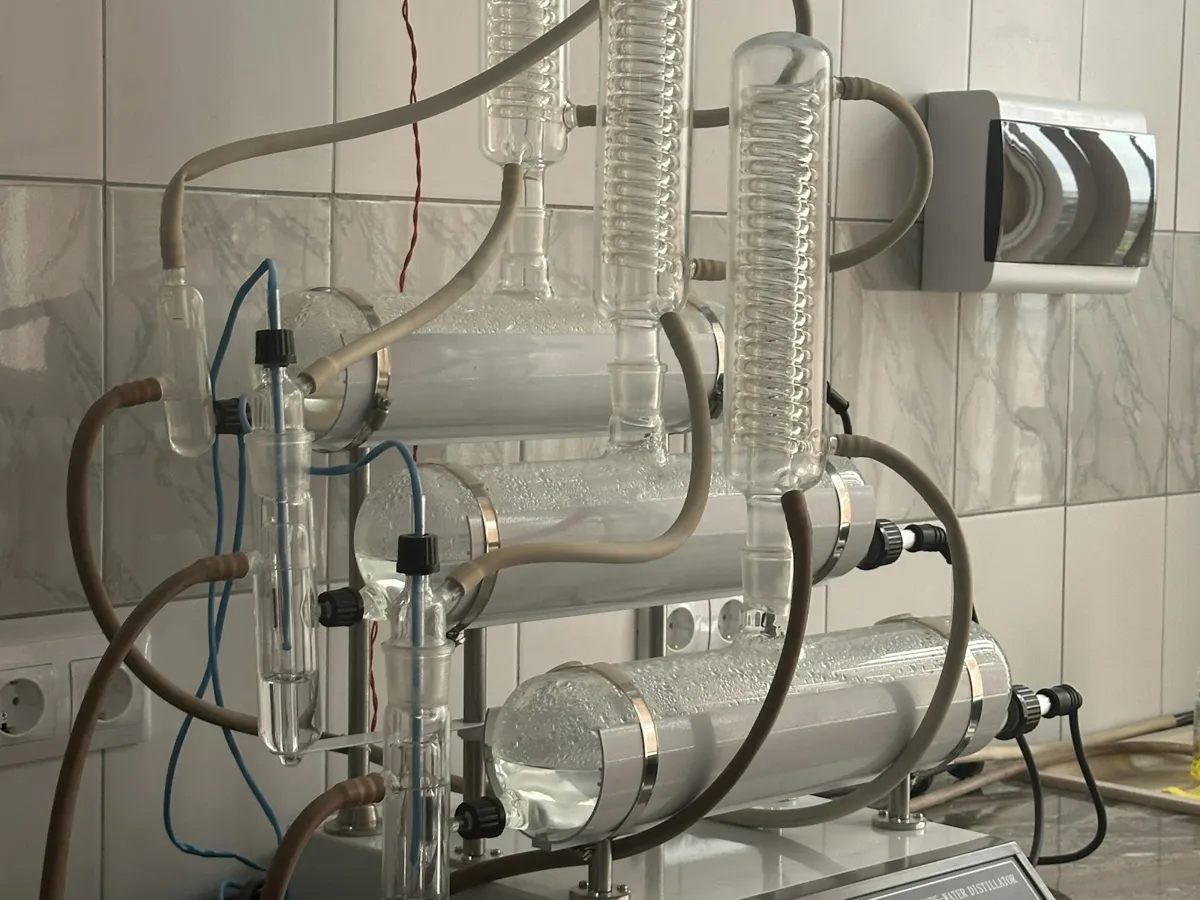
- Rotary evaporator: at 50 mbar water boils at 32.9 °C, so chemists can strip off a solvent without cooking the compound dissolved in it.
- Vacuum distillation: high-boiling liquids such as essential oils or crude oil fractions are distilled under vacuum so they boil before they decompose.
Gauges read in two ways. A vacuum gauge on lab equipment usually shows absolute pressure. A pressure cooker or tire gauge shows gauge pressure, the amount above the surrounding air. Pick “gauge” next to psi or bar in the calculator when the number comes from that kind of gauge.
The equations behind the calculator
For water the calculator uses the saturation-temperature equation from IAPWS-IF97, the industrial standard for steam, which is valid from 611 Pa to the critical point at 22.064 MPa. For the other liquids it uses the Antoine equation, log10 P = A − B / (C + T), with constants from The Properties of Gases and Liquids (Poling, Prausnitz and O’Connell). Each set of constants is only valid over a temperature range, and the calculator warns you when a result falls outside it.
If your liquid is not on the list, choose “Custom liquid” and enter its normal boiling point and heat of vaporization. The calculator then uses the Clausius-Clapeyron equation, ln(P2/P1) = (ΔHvap/R)(1/T1 − 1/T2). It assumes the heat of vaporization stays constant, so it works best close to the known boiling point.
Boiling points of common liquids
All values are at 1 atm (101.325 kPa). The 15 solvents marked with a dot are in the calculator, so you can find their boiling point at any pressure.
| Liquid | Boiling point (°C) | Boiling point (°F) | In the calculator |
|---|---|---|---|
| Liquid nitrogen | −195.8 °C | −320.4 °F | |
| Diethyl ether | 34.6 °C | 94.2 °F | Yes |
| Dichloromethane | 39.6 °C | 103.4 °F | Yes |
| Acetone | 56.1 °C | 133.0 °F | Yes |
| Chloroform | 61.2 °C | 142.1 °F | Yes |
| Methanol | 64.5 °C | 148.2 °F | Yes |
| Tetrahydrofuran (THF) | 66.0 °C | 150.7 °F | Yes |
| n-Hexane | 68.7 °C | 155.7 °F | Yes |
| Ethyl acetate | 77.1 °C | 170.7 °F | Yes |
| Ethanol | 78.3 °C | 172.9 °F | Yes |
| Benzene | 80.0 °C | 176.0 °F | Yes |
| Cyclohexane | 80.8 °C | 177.4 °F | Yes |
| Isopropanol (2-propanol) | 82.3 °C | 180.1 °F | Yes |
| n-Heptane | 98.4 °C | 209.1 °F | Yes |
| Water | 100.0 °C | 212.0 °F | Yes |
| Milk | 100.2 °C | 212.3 °F | |
| Toluene | 110.6 °C | 231.1 °F | Yes |
| Acetic acid | 118.0 °C | 244.4 °F | Yes |
| Glycerol | 290.0 °C | 554.0 °F | |
| Mercury | 356.7 °C | 674.1 °F |
Milk boils a fraction of a degree above water because of its dissolved sugars and salts. It boils over sooner because its proteins form a skin that traps the steam. Cooking oils have no practical boiling point in the kitchen: they start to smoke and break down at about 160 to 240 °C, well before they would boil. For the boiling point of any chemical element, open the interactive periodic table.
Boiling point elevation: how salt and sugar change the boiling point
Anything dissolved in a liquid raises its boiling point. The rise depends on how many particles are dissolved, not on what they are, which makes it a colligative property. The formula is:
ΔTb = i × Kb × m
- i is the van ‘t Hoff factor, the number of particles each unit of solute breaks into. Sugar stays whole (i = 1). Table salt splits into Na+ and Cl− (i = 2). Calcium chloride gives three ions (i = 3).
- Kb is the ebullioscopic constant of the solvent, 0.512 °C·kg/mol for water.
- m is the molality: moles of solute per kilogram of solvent.
Worked example. Dissolve 58.44 g of table salt (1 mol of NaCl) in 1 kg of water. The molality is 1 mol/kg, i is 2, so ΔTb = 2 × 0.512 × 1 = 1.024 °C. The salt water boils at about 101.0 °C. Real salts dissociate slightly less than the ideal factor says, so a lab measurement comes in a little under that.
| Solvent | Kb (°C·kg/mol) | Normal boiling point |
|---|---|---|
| Water | 0.512 | 100.0 °C |
| Ethanol | 1.22 | 78.4 °C |
| Benzene | 2.53 | 80.1 °C |
| Chloroform | 3.63 | 61.2 °C |
| Acetic acid | 3.07 | 118.1 °C |
| Carbon tetrachloride | 5.03 | 76.7 °C |
| Cyclohexane | 2.79 | 80.7 °C |
Does salt make water boil faster?
No. A tablespoon of salt (about 17 g) in 4 L of pasta water raises the boiling point by 0.07 °C. That is too small to notice and too small to change cooking time. Salt makes water boil very slightly later, not sooner. The burst of bubbles when salt hits hot water comes from the crystals giving dissolved air and steam a place to form bubbles. It is not a sign that the water got hotter. Seawater, at about 35 g of salt per kilogram, boils about 0.6 °C higher than fresh water.
Salt the water for flavor. The molar mass of water and the states of matter pages explain the chemistry behind these numbers in more depth.
Check it yourself: thermometers for boiling water
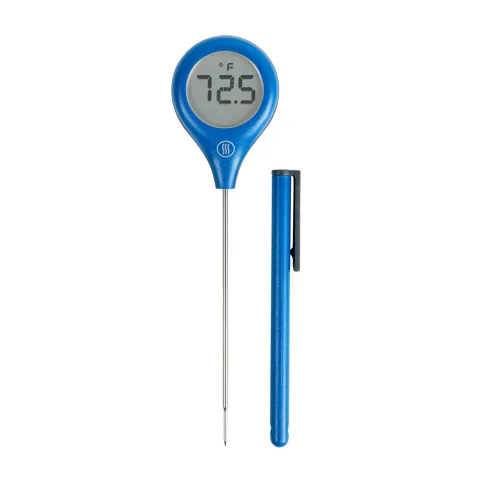
A good test of any kitchen or lab thermometer is a pot of boiling water. It should read your local boiling point from the table above, not 100 °C, unless you live near sea level. These three handle boiling water well.
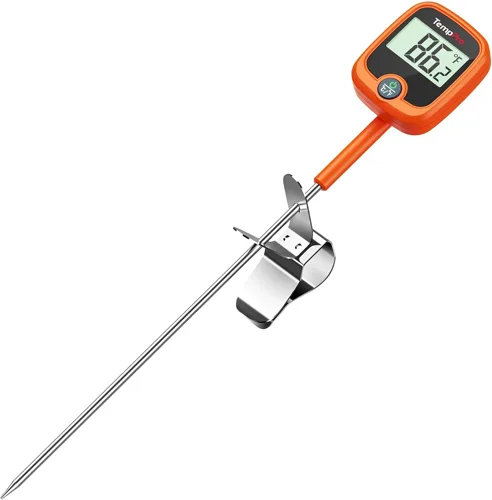
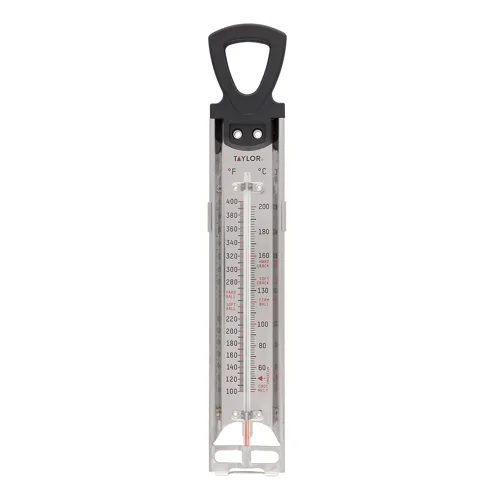
As an Amazon Associate 33Science earns from qualifying purchases.
Frequently asked questions
What is the boiling point of water in Fahrenheit?
Water boils at 212 °F at sea level. The boiling point drops by about 1 °F for every 500 ft of altitude, so it is about 202.3 °F in Denver and 193.7 °F at 10,000 ft.
What is the boiling point of water in Celsius and kelvin?
At sea level water boils at 100 °C, which is 373.15 K. The exact value from the international steam tables is 99.97 °C (373.12 K) at 101.325 kPa.
Does water boil faster at high altitude?
Water comes to a boil sooner at high altitude because it boils at a lower temperature, so it needs less heating. Food cooks more slowly in it, though, because the boiling water is cooler. At 5,000 ft water boils at about 94.9 °C instead of 100 °C.
What is the boiling point of water in Denver?
At Denver’s elevation of 5,280 ft (1,609 m), water boils at about 94.6 °C (202.3 °F) on a day with standard air pressure. Weather can move it by about half a degree either way.
What is the boiling point of water on Mount Everest?
On the summit, at 8,849 m (29,032 ft), water boils at about 70.2 °C (158.3 °F). At Everest Base Camp it boils at about 82.0 °C (179.6 °F).
Does salt raise the boiling point of water?
Yes, but only slightly at kitchen amounts. One mole of table salt per kilogram of water raises the boiling point by about 1.0 °C. A tablespoon of salt in a large pot of pasta water raises it by only 0.07 °C.
What is the boiling point of water in a pressure cooker?
At 15 psi above atmospheric pressure, the standard high setting, water boils at about 121 °C (250 °F). Electric pressure cookers usually run at a lower pressure, around 10 to 12 psi, and reach about 115 to 118 °C.
Does water boil at room temperature in a vacuum?
Yes. Water boils at 20 °C when the pressure falls to about 2.3 kPa, roughly 2% of normal air pressure. At 50 mbar it boils at 32.9 °C, the range used in rotary evaporators.
Is the boiling point the same as the evaporation point?
No. Water evaporates at any temperature, but only from its surface. Boiling starts when the vapor pressure of the whole liquid matches the air pressure and bubbles of vapor form inside it. That happens at one temperature for a given pressure.
What is the boiling point of alcohol?
Ethanol, the alcohol in drinks, boils at 78.3 °C (172.9 °F) at sea level. Isopropyl (rubbing) alcohol boils at 82.3 °C and methanol at 64.5 °C. A mixture of alcohol and water boils somewhere between the two liquids.
What is the boiling point of milk?
Milk boils at about 100.2 °C (212.3 °F) at sea level, a fraction of a degree above water because of the sugar, salts and proteins dissolved in it.