Table of Contents
- TLDR: The short list
- Why England is mineral-poor but resource-rich
- Energy resources: coal, gas and wind
- Minerals and aggregates
- Land, farming and timber
- Water
- Marine resources and fishing
- Natural resources of England at a glance
- From Industrial Revolution to net zero
- FAQ
TLDR: The short list
The main natural resources of England are farmland, water, wind, natural gas, limestone and chalk, salt, china clay, and timber. Coal was the foundation of the economy for two centuries, but England no longer mines it deep underground. Tin is gone too. What England has in bulk now is fertile land, a windy coastline, and rock that gets turned into roads and cement.
- Energy: North Sea gas, offshore wind off Yorkshire, Lincolnshire and Norfolk, and a coal legacy that ended in 2024.
- Minerals: china clay in Cornwall, rock salt in Cheshire, limestone in the Peak District, potash in North Yorkshire.
- Land: around 70% of England is farmed, with the best arable land in East Anglia.
- Water: plenty in the north and west, increasingly short in the south-east.
- Sea: fish, gravel and wind, in roughly that order of historical importance.
One caution before the detail. Most websites blur England with the whole United Kingdom. Where a figure below is UK-wide, it says so.
Why England is mineral-poor but resource-rich
Geologists draw an imaginary line from the mouth of the River Tees in the north-east to the mouth of the River Exe in the south-west. Northwest of it sit old, hard rocks: the granites of Cornwall and Dartmoor, the slates and volcanic rocks of the Lake District, the limestones and gritstones of the Pennines. Southeast of it, younger and softer rocks dominate: chalk, clay, sand.
That split explains most of the map. Old hard rocks are where metals, high ground and heavy rain are. Young soft rocks give flat land, deep soils and underground water stores. So England never had much in the way of metal ore, and what it did have (Cornish tin and copper, Cumbrian iron) is mostly exhausted. But it won a very good deal on land, coal-bearing rock from the Carboniferous period, and a shallow, windy sea. For the picture across the whole country, see natural resources of the United Kingdom.
Energy resources: coal, gas and wind
Coal: a finished chapter
Coal built industrial England. The coalfields ran through Yorkshire, Nottinghamshire, Derbyshire, Durham, Northumberland, Lancashire, Staffordshire and Kent, and at the UK’s peak in 1913 miners were digging roughly 287 million tonnes a year. By the 1920s more than a million people worked in the industry.
The decline was long and political. Kellingley Colliery in North Yorkshire, the last deep mine in the country, closed in December 2015. Then in September 2024 the Ratcliffe-on-Soar power station in Nottinghamshire shut, ending coal power generation in the UK after 142 years. Only small surface workings remain, and coal now makes up a rounding error in the electricity mix, as the government’s Energy Trends statistics show.
Natural gas and oil: mostly offshore
England’s gas comes largely from the southern North Sea, landing at terminals such as Easington in East Yorkshire and Bacton in Norfolk, plus the Morecambe Bay fields in the Irish Sea off Lancashire. The first North Sea gas came ashore at Easington in 1967. Production peaked around the turn of the millennium and has fallen since, so the UK now imports roughly half the gas it uses.
Onshore oil is a footnote with one famous exception: Wytch Farm in Dorset, the largest onshore oil field in western Europe, partly drilled out under Poole Harbour. Shale gas never got going. England paused fracking in 2019 after the Preston New Road site in Lancashire triggered tremors, briefly lifted the ban in 2022, then reimposed it.
Wind: the resource England actually has
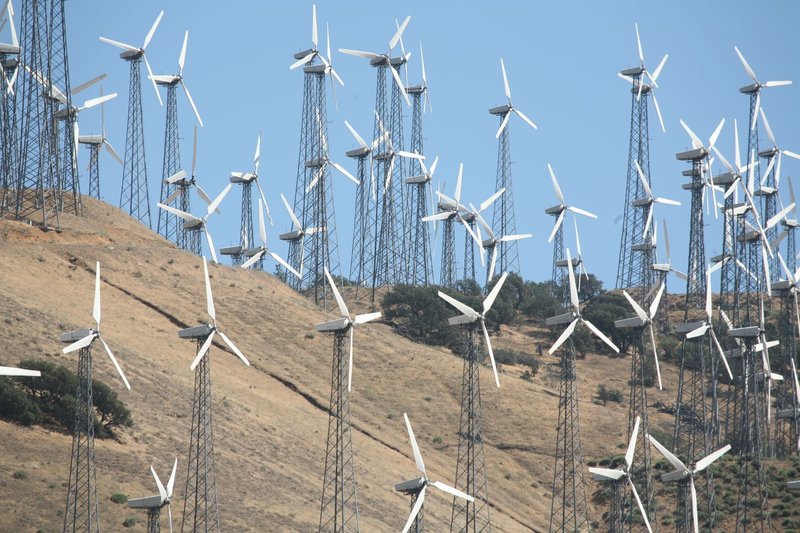
If one resource defines England’s future, it’s wind. The shallow, exposed North Sea is ideal for turbines fixed to the seabed, and the largest arrays sit off the east coast. Hornsea Two, roughly 100 km off the Yorkshire coast, has a capacity of about 1.3 gigawatts. Dogger Bank, further out, is being built in stages to become one of the largest offshore wind farms ever planned. Offshore turbines also stand off Lincolnshire, Norfolk, Kent, Cumbria and the Mersey estuary.
Wind now supplies close to a third of UK electricity in a good year. Biomass is the other big shift: Drax in North Yorkshire, once Britain’s largest coal plant, now burns mostly imported wood pellets. Whether that counts as sustainable is still argued over.
Minerals and aggregates
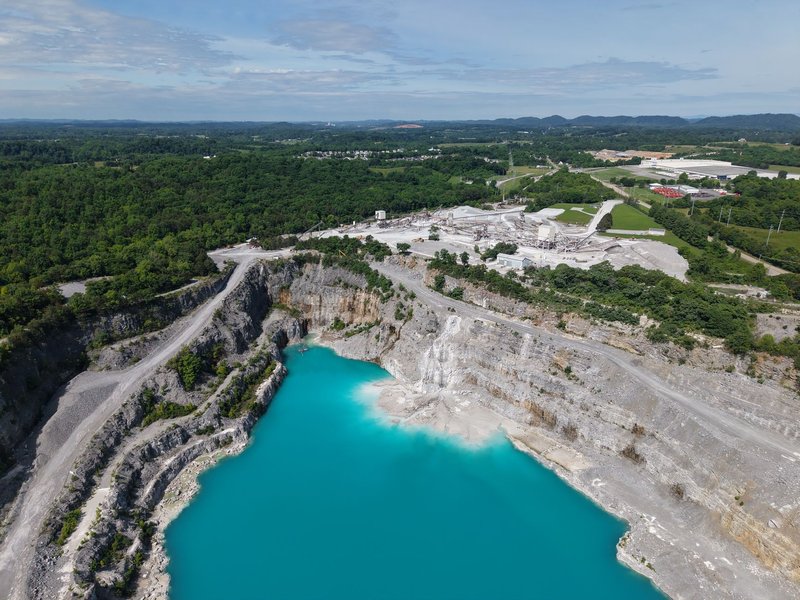
By weight, the biggest mineral output is not glamorous. It’s crushed rock, sand and gravel for construction. The British Geological Survey tracks these through its Minerals UK programme, and aggregates dwarf everything else dug out of the ground.
China clay in Cornwall
Around St Austell, granite has rotted in place into kaolin, the white clay used in porcelain, and, far more by volume, in glossy paper, paint and paper coatings. Cornish production runs on the order of a million tonnes a year. The pits are visible for miles as white spoil heaps, once nicknamed the Cornish Alps. The Eden Project sits in one exhausted pit.
Tin is the older story. Cornish miners worked it from the Bronze Age, and the area’s mining heritage is a UNESCO World Heritage Site. The last Cornish tin mine, South Crofty, closed in 1998. Today companies are surveying the same granite for lithium, held in hot underground brines.
Salt in Cheshire
About 220 million years ago a shallow sea evaporated across what is now Cheshire and left thick beds of salt. The salt is halite, one of the halide minerals, formed when sodium bonds with chlorine. Northwich and Winsford have been extracting it for centuries, and Winsford is still home to the largest rock salt mine in Britain, where the road-gritting salt for winter is dug. Old brine pumping caused the ground around Northwich to subside, leaving flooded hollows called flashes. On the North Yorkshire coast, Boulby mine works potash and polyhalite, used in fertiliser, more than a kilometre underground.
Limestone and chalk
Limestone has its home in the Peak District and the Yorkshire Dales. It goes into cement, steel-making and crushed road stone. Large quarries near Buxton supply much of the north’s construction industry. Chalk sweeps across the south and east, from the White Cliffs of Dover through the Downs and Chilterns to the Yorkshire Wolds. It’s quarried for cement and lime, but its bigger job is invisible: chalk holds water.
Land, farming and timber
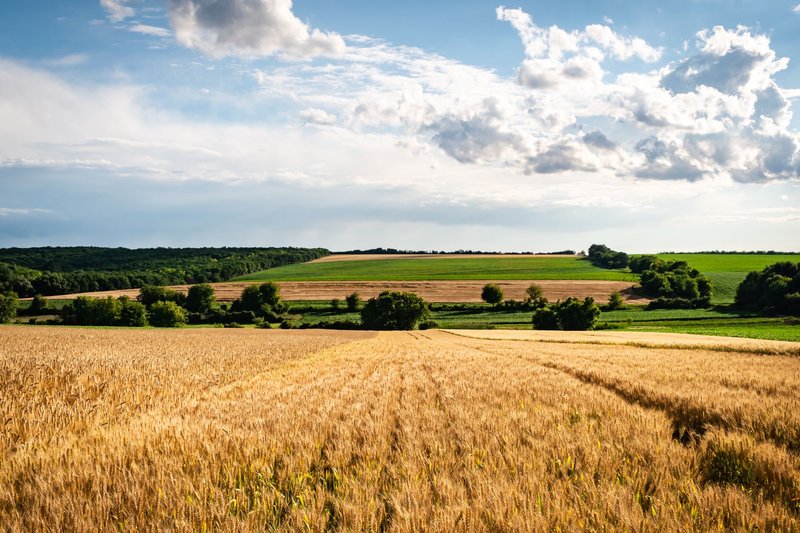
Farmland is England’s most extensive resource. Government land use statistics put agricultural land at about 70% of England’s area, with the rest taken up by woodland, towns and moors.
The best soils lie in the east. The Fens, drained from the 17th century onward, hold black peat and silt soils that produce a large share of the country’s vegetables and potatoes. Lincolnshire, Norfolk and Suffolk lead on wheat and sugar beet. The wetter west and the uplands turn to grass, so Devon, Cumbria and the Pennines are cattle and sheep country.
Draining the Fens created a problem it can’t escape. The exposed peat shrinks and oxidises, and the land surface has dropped by several metres in places. The resource is being used up as it’s farmed.
Timber is thinner. Woodland covers only about a tenth of England, one of the lowest shares in Europe, and the country imports most of the wood it uses. The largest forests are in the north (Kielder in Northumberland) and in Thetford, Norfolk, mostly planted conifers from the 20th century.
Water
England’s water problem is geography. Rain falls in the west and north, and people live in the south-east. The Lake District’s Seathwaite gets more than 3,000 mm in a typical year; parts of East Anglia get around 600 mm, less than Rome.
Supply falls into two types:
- Reservoirs and rivers: Kielder Water in Northumberland is the largest reservoir in the UK by volume and feeds the north-east. The Thames, Severn and Trent supply millions of people downstream.
- Groundwater: Chalk and other aquifers hold the water underneath the south and east. Boreholes into them provide roughly a third of public supply across England and Wales.
The Environment Agency classes much of the south-east and East Anglia as seriously water stressed, meaning demand is high compared with the water that’s reliably available. Hosepipe bans in dry summers such as 2022 are the visible result. New reservoirs, leakage cuts and transfers between regions are the standard responses.
Marine resources and fishing
England’s seas hold fish, seabed sand and gravel, and wind, with the last now worth the most. Fishing was once a major industry, and ports such as Grimsby and Hull were built on cod and haddock. Today Brixham in Devon and Newlyn in Cornwall are among the busiest landing ports, bringing in flatfish, scallops and crab. Quotas, the loss of distant-water access after the Cod Wars with Iceland, and stock declines have shrunk the fleet.
Marine aggregates (sand and gravel dredged from the seabed) supply a large share of the south coast’s and south-east’s construction needs, and also feed beach replenishment schemes.
Natural resources of England at a glance
| Resource | Where it’s found | Status today |
|---|---|---|
| Coal | Yorkshire, Nottinghamshire, Derbyshire, Durham, Northumberland | Deep mining ended 2015; coal power ended 2024 |
| Natural gas | Southern North Sea, Morecambe Bay | Declining; roughly half of UK gas now imported |
| Onshore oil | Dorset (Wytch Farm) | Small and mature |
| Offshore wind | Yorkshire, Lincolnshire, Norfolk coast; Dogger Bank | Expanding fast |
| China clay | St Austell, Cornwall | Active; paper, ceramics, coatings |
| Rock salt | Cheshire | Active; road salt and chemicals |
| Potash | Boulby, North Yorkshire | Active; fertiliser |
| Limestone | Peak District, Yorkshire Dales | Active; cement and aggregate |
| Chalk | South and east England | Active; cement, plus major aquifer |
| Tin | Cornwall | Mining ended 1998; exploration for revival |
| Farmland | East Anglia, Lincolnshire (arable); west and north (grass) | About 70% of land area |
| Timber | Kielder, Thetford, scattered woodland | Small; most timber imported |
| Water | Northern reservoirs; southern chalk aquifers | Stressed in south-east |
| Fish | Devon, Cornwall, North Sea ports | Reduced fleet, quota-limited |
From Industrial Revolution to net zero
- 1712: Thomas Newcomen’s steam engine pumps water from a coal mine near Dudley and opens up deeper seams.
- 1913: UK coal output peaks near 287 million tonnes.
- 1947: Coal mines are nationalised under the National Coal Board.
- 1965 to 1967: Gas is found under the North Sea, and the first comes ashore at Easington.
- 1984 to 1985: The miners’ strike precedes a wave of pit closures.
- 1990s: The “dash for gas” replaces coal in power stations.
- 2000: The first UK offshore wind farm opens off Blyth, Northumberland.
- 2015: Kellingley closes, ending deep coal mining.
- 2019: The UK legislates for net zero emissions by 2050.
- 2024: Ratcliffe-on-Soar, the last coal power station, shuts.
FAQ
What are the main natural resources of England?
Farmland, water, wind, natural gas, limestone, chalk, salt, china clay and timber. Coal and tin were once major resources but are no longer mined at scale.
What are the renewable and non-renewable resources in England?
Renewable: wind, water, timber, farmland (if soil is looked after), and solar. Non-renewable: coal, gas, oil, and all mined minerals including clay, salt, limestone and potash. Fish stocks are renewable only if catches stay below the rate of regrowth.
Where is coal found in England?
Mainly in the coalfields of Yorkshire, Nottinghamshire, Derbyshire, Durham, Northumberland, Lancashire, Staffordshire and Kent. These sit on Carboniferous rocks laid down about 300 million years ago.
Does England have oil?
A little. Wytch Farm in Dorset is the main onshore field. Most UK oil is in the northern North Sea, off Scotland, and production there has fallen from its peak around 1999.
Why is china clay important in Cornwall?
It’s the region’s main surviving mineral industry. The clay is a key ingredient in paper, ceramics, paint and plastics, and exported worldwide through Cornish ports.
Is England running out of natural resources?
Some. Coal, tin and most North Sea gas are largely depleted or declining, and peat soils in the Fens are shrinking. Wind, farmland and timber can be sustained with management, while water is a regional shortage in the south-east.