TLDR
Nickel is mostly an alloy metal. Roughly two-thirds of it goes into stainless steel, where it keeps steel from rusting and from turning brittle. The rest goes into heat-proof jet engine alloys, plating, rechargeable batteries, coins, chemical catalysts and a few specialty magnets and precision alloys. Very little nickel is used on its own.
Table of contents
- How the uses of nickel break down
- Stainless steel
- Superalloys for jet engines and chemical plants
- Batteries and EVs
- Plating
- Coins
- Catalysts
- Magnets and precision alloys
- Nickel in everyday life
- Nickel allergy
How the uses of nickel break down
Ask what nickel is used for and the honest answer is “making other metals better.” Pure nickel is a silvery, fairly hard metal that melts at 1,455 °C, resists corrosion and is one of only a handful of elements that are magnetic at room temperature. Those traits are useful, but they matter most when nickel is mixed into something else.
The commonly cited split of global nickel use looks like this:
| Use | Approximate share |
|---|---|
| Stainless steel | 68% |
| Nonferrous alloys and superalloys | 10% |
| Electroplating | 9% |
| Alloy steel | 7% |
| Foundry products | 3% |
| Everything else, including batteries | 4% |
The figures are rounded, so they add up to slightly over 100. The battery slice is the one to watch. It’s small today, but it’s the fastest-growing part of nickel demand, and the US Geological Survey’s nickel data tracks how much mine supply, now led by Indonesia, has shifted to meet it.
Stainless steel
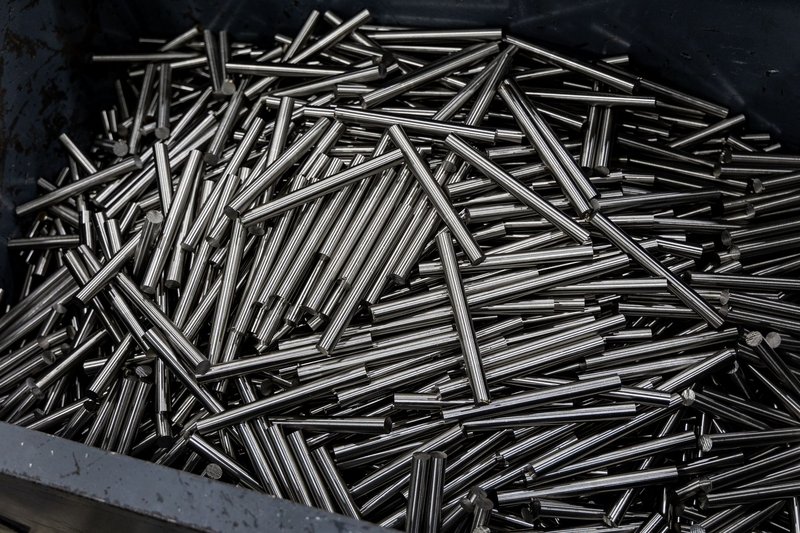
Stainless steel is where most nickel ends up, and the reason is chemistry. Iron plus chromium gives you a steel that resists rust, but that version is stiff and can be brittle. Adding nickel changes the crystal structure of the steel so it stays tough, easy to shape and weldable, even at very low temperatures.
The classic example is type 304 stainless, often labeled “18/8” because it’s about 18% chromium and 8% nickel. It’s the default grade for kitchen sinks, cookware, cutlery, food-processing tanks and brewery equipment. Step up to 316, which adds molybdenum and more nickel, and you get the grade used for surgical instruments, boat fittings and anything that sits in salt water.
That’s the whole story behind the 68% figure. A relatively small percentage of nickel in every tonne of stainless steel, multiplied by the enormous volume of stainless the world produces, outweighs every other use combined.
Superalloys for jet engines and chemical plants
Nickel-based superalloys are the second major use, and they’re the most impressive. Turbine blades in the hot section of a jet engine spin in gas hotter than their own melting point. They survive because they’re cast from nickel alloys that stay strong at extreme temperatures, often as single crystals with no grain boundaries to crack along, and because cooling air is pumped through tiny channels inside them.
Two names you’ll run into:
- Inconel, a nickel-chromium family used in jet engines, rocket components, nuclear reactors and exhaust systems. It forms a stable oxide layer when heated instead of flaking away.
- Monel, roughly two-thirds nickel and one-third copper, which shrugs off seawater and acids. It shows up in ship propeller shafts, valves and chemical processing equipment.
These alloys are expensive and hard to machine, so they’re used only where cheaper metals would fail.
Batteries and EVs
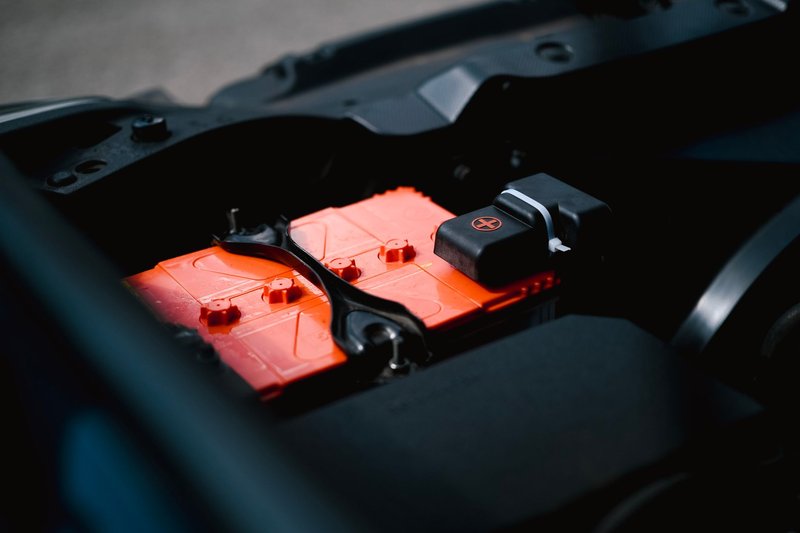
Nickel has been in rechargeable batteries for decades. Nickel-metal hydride (NiMH) cells power the rechargeable AA batteries in a drawer near you, and they powered early hybrids like the Toyota Prius.
The bigger story is lithium-ion. Many electric vehicle batteries use nickel-rich cathodes, such as nickel-manganese-cobalt (NMC) and nickel-cobalt-aluminum (NCA). The reason is energy density: more nickel in the cathode means more charge stored per kilogram, which means more range from the same pack weight. An “NMC 811” cathode is 80% nickel in its metal content, with 10% each of manganese and cobalt.
Not every EV battery uses it. Lithium iron phosphate (LFP) cells contain no nickel at all and are cheaper, which is why automakers use them in lower-cost models. The International Energy Agency’s critical minerals outlook covers how the split between nickel-rich and nickel-free chemistries shapes demand for the metal.
Plating

Electroplating takes about 9% of nickel supply. A thin nickel layer, usually a few micrometers thick, is deposited on steel, brass or plastic to protect it from corrosion and give it a hard, smooth surface.
Nickel plating is rarely the final look. The shiny chrome on a faucet or car trim is a very thin layer of chromium over nickel, and the nickel underneath does the real corrosion protection. Nickel is also plated onto electronic connectors, tools, and the steel cores of guitar strings.
Coins
The US five-cent coin is the one object that shares its name with the metal. Since 1866 it has been made of 75% copper and 25% nickel, and the “nickel” nickname stuck because the coin was the first to carry the metal in any quantity. Many other countries use copper-nickel for coins as well, because the alloy is hard-wearing, resists tarnish and is hard to counterfeit with cheap metals.
Coinage is a small share of total demand now. The 2-euro coin’s silvery outer ring is also a nickel-containing alloy.
Catalysts
In chemistry, nickel works as a catalyst. Raney nickel, a porous nickel powder invented by American engineer Murray Raney in 1926, is the standard catalyst for hydrogenation, the reduction reaction that adds hydrogen to carbon-carbon double bonds.
The best-known application is food. Hydrogenating liquid vegetable oils with a nickel catalyst turns them into semi-solid fats used in margarine and shortening. The same chemistry is used to make pharmaceuticals, fragrances and fuels, and the nickel is filtered out afterward.
Magnets and precision alloys
Nickel is one of three elements that are ferromagnetic at room temperature, along with iron and cobalt, and it lends that property to alloys:
- Alnico, an alloy of aluminum, nickel and cobalt, makes strong permanent magnets that keep their strength at high temperatures. It’s found in electric guitar pickups and some microphones and sensors.
- Invar, an iron alloy with about 36% nickel, barely expands when heated. French physicist Charles-Édouard Guillaume won the 1920 Nobel Prize in Physics for discovering it. It’s used in precision instruments, clock parts and surveying tapes where a fraction of a millimeter matters.
Nickel in everyday life
You handle nickel daily without noticing it:
- Kitchen sinks, pots and cutlery marked 18/8 or 18/10 stainless steel
- Coins, from the US nickel to euro coins
- Rechargeable batteries in remotes, cameras and cars
- Guitar strings, which are usually nickel-plated steel
- Zippers, buttons, watch cases and jewelry clasps
- The shiny finish on faucets and bathroom fixtures
- Margarine and shortening, made using a nickel catalyst
It also exists beyond the human world. Earth’s core is mostly iron with a significant amount of nickel, and iron meteorites are typically iron-nickel alloys. The name comes from German miners, who called a copper-colored ore that yielded no copper “Kupfernickel,” roughly “Old Nick’s copper,” and blamed a mischievous spirit.
Nickel allergy
Nickel is also the most common cause of contact allergy. It affects roughly one in ten people to some degree, and women more than men, largely because ear piercings and jewelry are the usual first exposure. Symptoms are an itchy, red rash where the skin touches the metal, which the NHS describes under contact dermatitis.
The allergy is triggered by nickel ions released from sweaty or wet skin contact, so a nickel-plated belt buckle is a bigger problem than a stainless steel sink. Items worn against the skin for long periods, such as earrings, watch backs and jeans buttons, are the usual culprits. The European Union limits how much nickel such items can release, and “nickel-free” or “hypoallergenic” jewelry is typically made of titanium, niobium or surgical stainless steel.