Table of Contents
- What Is a Reduction Reaction?
- Everyday Life Examples
- Industrial Examples
- Lab-Level Examples
- Organic Chemistry Examples
- Quick Reference Table
Reduction is one half of every redox reaction, and yet it’s the half students most often mix up. The simplest way to keep it straight: reduction is the gain of electrons (and in many reactions, the gain of hydrogen or the loss of oxygen). Whenever an atom’s oxidation state decreases, that atom has been reduced.
The examples below cover everyday life, industrial processes, and lab reactions. Each one includes a balanced chemical equation and shows the oxidation state change numerically — the part most textbooks skip, and the part that actually locks in comprehension.
What Is a Reduction Reaction?
A reduction reaction is a chemical process in which a species gains electrons. In a full redox (reduction-oxidation) reaction, one species is reduced while another is simultaneously oxidized. You can’t have one without the other.
Three equivalent definitions you’ll encounter:
- Gain of electrons — the most universal definition, applies to all redox reactions
- Gain of hydrogen — used frequently in organic chemistry
- Loss of oxygen — common in inorganic and combustion contexts
The species that gets reduced is called the oxidizing agent (it causes oxidation in something else by accepting electrons). The species that causes reduction is the reducing agent. Common oxidizing agents — oxygen, hydrogen peroxide, bleach — appear throughout the examples below; for a broader catalog, see this list of examples of oxidizing agents with their formulas and typical uses.
Everyday Life Examples
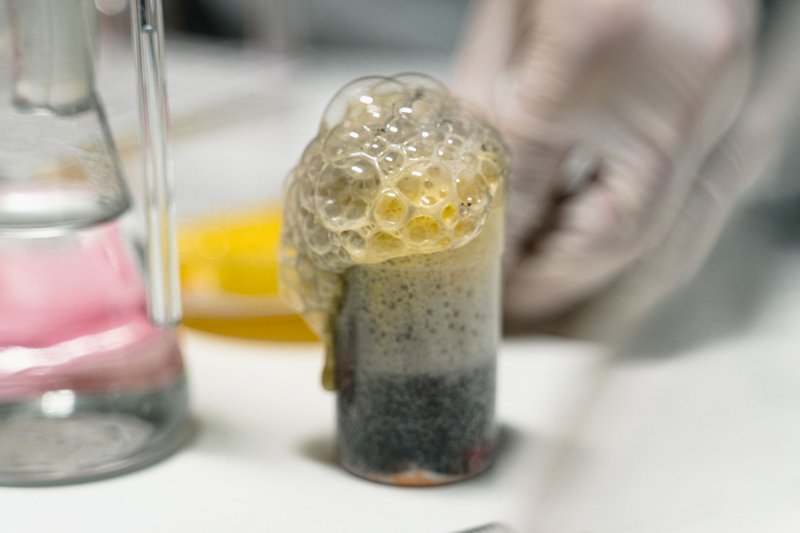
1. Iron Rusting (Reduction of Oxygen)
Rusting is a redox process. While iron is being oxidized, oxygen is simultaneously being reduced.
Equation:
O₂ + 4e⁻ + 2H₂O → 4OH⁻
Oxidation state change: O goes from 0 (in O₂) to −2 (in OH⁻)
Oxygen gains electrons from iron, making this the reduction half-reaction of the rusting process. The iron’s surface slowly corrodes because oxygen in humid air acts as the oxidizing agent.
2. Cellular Respiration
Every cell in your body runs on reduction. During aerobic respiration, oxygen is reduced inside the mitochondria as part of the electron transport chain.
Overall equation:
C₆H₁₂O₆ + 6O₂ → 6CO₂ + 6H₂O
Reduction half-reaction:
O₂ + 4H⁺ + 4e⁻ → 2H₂O
Oxidation state change: O goes from 0 to −2
The electron carriers NADH and FADH₂ donate electrons that ultimately reduce oxygen to water. This is the reduction step that drives ATP synthesis — literally what keeps you alive. Aerobic respiration is just one pathway in a much broader network; the types of cellular metabolism range from glycolysis and the citric acid cycle to fermentation and beta-oxidation, each with its own set of redox reactions.
3. Photosynthesis (Reduction of CO₂)
Plants do the reverse of respiration. Carbon dioxide is reduced to glucose using electrons ultimately sourced from water.
Overall equation:
6CO₂ + 6H₂O + light energy → C₆H₁₂O₆ + 6O₂
Reduction half-reaction:
CO₂ + 4H⁺ + 4e⁻ → (CH₂O) + H₂O
Oxidation state change: C goes from +4 (in CO₂) to 0 (in glucose)
This is the Calvin cycle in action. Carbon gets reduced from its maximum oxidation state (+4) all the way down to 0 — a gain of four electrons per carbon atom.
4. Combustion of Hydrogen
When hydrogen burns in oxygen, it gets oxidized — but oxygen gets reduced. It’s a classic example of simultaneous oxidation and reduction.
Equation:
2H₂ + O₂ → 2H₂O
Reduction half-reaction:
O₂ + 4e⁻ + 4H⁺ → 2H₂O
Oxidation state change: O goes from 0 to −2
Hydrogen fuel cells work on this exact reaction. The “burning” is electrochemical rather than thermal, but the chemistry is identical — oxygen accepts electrons and gets reduced.
5. Bleaching (Reduction of Color Compounds)
Household bleach works as an oxidizing agent, but the dye molecules it destroys are being reduced in the process of losing their chromophore structure. More precisely, hypochlorite (ClO⁻) is reduced as it oxidizes the colored compound.
Half-reaction for hypochlorite reduction:
ClO⁻ + H₂O + 2e⁻ → Cl⁻ + 2OH⁻
Oxidation state change: Cl goes from +1 to −1
Industrial Examples
6. Iron Smelting in a Blast Furnace
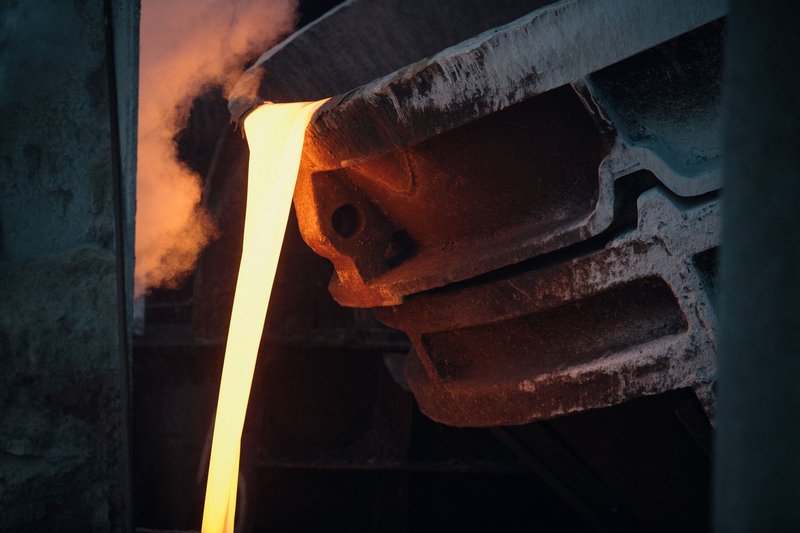
This is one of the largest-scale reduction reactions on Earth. Iron ore (mostly Fe₂O₃) is reduced to molten iron using carbon monoxide as the reducing agent.
Equation:
Fe₂O₃ + 3CO → 2Fe + 3CO₂
Oxidation state change: Fe goes from +3 to 0
Carbon monoxide is the reducing agent here — it donates electrons to Fe³⁺ ions, reducing them to neutral iron metal. The CO itself gets oxidized to CO₂. Blast furnace technology has used this reaction commercially for centuries.
7. The Haber–Bosch Process (Reduction of Nitrogen)
Nitrogen from the air is reduced to ammonia over an iron catalyst at high temperature and pressure. This reaction feeds roughly half the world’s population by enabling nitrogen-based fertilizers.
Equation:
N₂ + 3H₂ → 2NH₃
Oxidation state change: N goes from 0 to −3
Nitrogen is notoriously unreactive because the N≡N triple bond is one of the strongest in chemistry (945 kJ/mol). The Haber–Bosch process forces this reduction by using extreme conditions (150–300 atm, 400–500°C) and an iron catalyst.
8. Electroplating (Reduction at the Cathode)
When you plate a metal object with silver, copper, or chromium, the metal ions in solution are reduced at the cathode surface.
Example — copper electroplating:
Cu²⁺ + 2e⁻ → Cu
Oxidation state change: Cu goes from +2 to 0
The object being plated acts as the cathode. Electrons flow from the external circuit into the copper ions in solution, reducing them to solid copper that deposits onto the surface. This is why chromium-plated car parts don’t rust: a thin layer of reduced chromium metal sits on top.
9. Hall–Héroult Process (Reduction of Aluminum)
Aluminum doesn’t occur as a free metal in nature — it exists as Al₂O₃ in bauxite. The Hall–Héroult process uses electrolysis to reduce Al³⁺ to aluminum metal.
Reduction half-reaction:
Al³⁺ + 3e⁻ → Al
Oxidation state change: Al goes from +3 to 0
This is a high-energy reaction: producing one ton of aluminum takes roughly 14,000 kWh of electricity. That’s why aluminum recycling saves about 95% of the energy compared to primary smelting.
10. Chlor-Alkali Process (Reduction of Water)
In the industrial production of sodium hydroxide and chlorine gas, water is reduced at the cathode.
Cathode half-reaction:
2H₂O + 2e⁻ → H₂ + 2OH⁻
Oxidation state change: H goes from +1 to 0
The hydrogen gas produced is a byproduct that’s often used as fuel within the plant itself. The hydroxide ions accumulate to form sodium hydroxide (lye) in solution.
Lab-Level Examples
11. Copper Displacement by Zinc (Zinc Reduces Copper)
Drop a piece of zinc into a blue copper sulfate solution and watch the color fade as copper metal coats the zinc. Copper ions are being reduced.
Equation:
Zn + CuSO₄ → ZnSO₄ + Cu
Ionic equation:
Zn + Cu²⁺ → Zn²⁺ + Cu
Oxidation state change: Cu goes from +2 to 0; Zn goes from 0 to +2
Zinc is a stronger reducing agent than copper — it gives up electrons more readily. This is a direct application of the activity series (electrochemical series), which ranks metals by their tendency to be oxidized.
12. Silver Mirror Reaction (Reduction of Silver Ions)
The Tollens’ test produces a silver mirror on the inside of a glass vessel. Silver ions in Tollens’ reagent are reduced to metallic silver by an aldehyde.
Half-reaction:
Ag⁺ + e⁻ → Ag
Oxidation state change: Ag goes from +1 to 0
The aldehyde is oxidized to a carboxylic acid, while Ag⁺ is reduced to silver metal. This reaction is so clean that it’s used industrially to silver coat mirrors and vacuum flasks (like Thermos bottles).
13. Reduction of Silver Bromide (Photography)
Photographic film works because silver bromide, when struck by light, partially reduces to silver metal. The light energy provides just enough to eject electrons and reduce Ag⁺.
Equation:
AgBr + hν → Ag + Br (in lattice)
Oxidation state change: Ag goes from +1 to 0
This latent image is then chemically amplified by developing agents (hydroquinone, etc.), which reduce more AgBr to metallic silver wherever light hit. Digital photography killed the medium, but the chemistry is elegant.
Organic Chemistry Examples
14. Reduction of a Ketone to an Alcohol (Hydrogenation)
Organic reduction typically involves adding hydrogen or removing oxygen. Reducing a ketone with sodium borohydride (NaBH₄) converts the carbonyl group to a hydroxyl group.
Example — acetone to isopropanol:
CH₃COCH₃ + 2[H] → CH₃CH(OH)CH₃
Oxidation state change: C in the carbonyl goes from +2 to 0 (gains hydrogen)
NaBH₄ acts as a source of hydride ions (H⁻), which deliver electrons and hydrogen to the carbonyl carbon. This type of reduction is fundamental in pharmaceutical synthesis — many drug molecules require precise control over which carbonyls get reduced.
15. Catalytic Hydrogenation of an Alkene
Unsaturated fats are converted to saturated fats by adding hydrogen across the double bond — a reduction reaction used in food manufacturing.
Example — ethylene to ethane:
CH₂=CH₂ + H₂ → CH₃CH₃
Oxidation state change: Each C goes from −1 to −2 (each gains one H)
This reaction requires a metal catalyst (palladium, platinum, or nickel) and moderate pressure. Margarine is made this way: liquid vegetable oil (polyunsaturated) gets partially hydrogenated to produce a semisolid spread. The same reaction in a lab can selectively reduce one double bond in a molecule while leaving others intact, depending on catalyst choice and conditions.
Quick Reference Table
| # | Reaction | Species Reduced | Oxidation State Change | Reducing Agent |
|---|---|---|---|---|
| 1 | Iron rusting | O₂ | 0 → −2 | Fe |
| 2 | Cellular respiration | O₂ | 0 → −2 | NADH/FADH₂ |
| 3 | Photosynthesis | CO₂ | +4 → 0 | H₂O |
| 4 | Hydrogen combustion | O₂ | 0 → −2 | H₂ |
| 5 | Bleaching | ClO⁻ | +1 → −1 | Dye molecule |
| 6 | Iron smelting | Fe₂O₃ | +3 → 0 | CO |
| 7 | Haber–Bosch | N₂ | 0 → −3 | H₂ |
| 8 | Electroplating | Cu²⁺ | +2 → 0 | External circuit |
| 9 | Hall–Héroult | Al³⁺ | +3 → 0 | External circuit |
| 10 | Chlor-alkali | H₂O | +1 → 0 | External circuit |
| 11 | Copper displacement | Cu²⁺ | +2 → 0 | Zn |
| 12 | Silver mirror | Ag⁺ | +1 → 0 | Aldehyde |
| 13 | Photography | AgBr | +1 → 0 | Light + developer |
| 14 | Ketone → alcohol | C=O | +2 → 0 | NaBH₄ |
| 15 | Alkene hydrogenation | C=C | −1 → −2 | H₂ |
The pattern across all 15 examples is consistent: something gains electrons, its oxidation state goes down, and something else loses electrons in exchange. Whether that’s happening inside a mitochondrion, a blast furnace, or a darkroom, the core chemistry is identical.
Track the oxidation numbers — especially the numerical change shown in the table above. Memorizing examples is fine for a quiz; understanding which atom’s oxidation state decreases and why is what carries you through a harder exam.