Table of Contents
- TLDR: The short answer
- Comparison table
- How to choose: hike, tour, or wild cave
- Hocking Hills: the free recess caves
- Show caverns: the paid underground tours
- Lake Erie islands: caves under a winery and a farmhouse
- Safety, temperature, and what to wear
Most “caves in Ohio” lists just alphabetize the same six attractions and call it a day. That’s fine if you already know you’re driving to West Liberty. It’s less useful if you’re trying to figure out whether to pay $24 for a guided tour, drive two hours to a free state park trail, or take a ferry to an island where the cave is underneath a winery.
Ohio actually has three distinct kinds of caves, and they don’t compete with each other so much as serve completely different trips. Hocking Hills gives you free, self-guided recess caves carved into sandstone cliffs — no ticket booth, no gift shop, just a trail. The show caverns (Ohio Caverns, Seneca Caverns, Olentangy Indian Caverns, Zane Shawnee Caverns) are true limestone caves you pay to walk through, formed the slow way: groundwater dissolving bedrock over hundreds of thousands of years, a process geologists call karst formation. And out on Lake Erie’s South Bass Island, two caves sit almost on top of each other — one under a working winery, one that was a Civil War-era tourist attraction before Ohio was even fully settled.
TLDR: The short answer
If you only read one section, read this one.
- Best overall for a first-timer: Ohio Caverns in West Liberty — the largest, most colorful, and best-maintained show cave in the state.
- Best free option: Ash Cave in Hocking Hills — a paved, wheelchair-accessible trail to the largest recess cave in Ohio.
- Best for kids: Perry’s Cave on South Bass Island, because the ticket also gets you a petting zoo, mini golf, and gemstone mining on the same property.
- Best for people who’ve already done Ohio Caverns: Seneca Caverns in Bellevue — rawer, mostly unlit in the connecting passages, and six levels deep to an underground stream.
- Best oddity: Crystal Cave in Put-in-Bay, the world’s largest known celestine geode, sitting under a family winery.
Comparison table
| Cave | Region | Type | Cost | Difficulty | Good for kids? |
|---|---|---|---|---|---|
| Old Man’s Cave | Hocking Hills | Free recess cave, self-guided | Free | Moderate (stairs, uneven ground) | Yes, with supervision |
| Ash Cave | Hocking Hills | Free recess cave, self-guided | Free | Easy, paved and ADA-friendly | Yes, including strollers |
| Rock House | Hocking Hills | Free true cave, self-guided | Free | Moderate (steep approach) | Yes, older kids |
| Cantwell Cliffs / Whispering Cave | Hocking Hills | Free recess caves, self-guided | Free | Harder, steeper and less crowded | Better for older kids |
| Ohio Caverns | West Liberty | Show cavern, guided tour | ~$20–$24 adult | Easy, paved underground path | Yes |
| Seneca Caverns | Bellevue | Show cavern, guided tour | ~$18–$22 adult | Moderate (uneven natural floor) | Yes, ages 6+ |
| Olentangy Indian Caverns | Delaware | Show cavern, self-guided with audio stations | ~$18–$20 adult | Easy | Yes |
| Zane Shawnee Caverns | Bellefontaine | Show cavern, guided, reservation required | ~$15–$18 adult | Easy | Yes |
| Crystal Cave | Put-in-Bay | Geode cave, guided tour | ~$14–$16 adult | Easy, requires ferry to island | Yes |
| Perry’s Cave | Put-in-Bay | Show cavern, guided tour | $8 adult / $5 child / free under 6 | Easy, requires ferry to island | Yes |
Prices and hours shift year to year and by season, so treat this table as a planning starting point and confirm on each attraction’s site before you drive out.
How to choose: hike, tour, or wild cave
There are really three ways to see a cave in Ohio, and picking the wrong one is the most common regret people report after a cave trip.
Self-guided hiking (Hocking Hills) costs nothing and rewards people who like trails as much as the destination. You’re not going underground in the traditional sense — these are recess caves, meaning a cliff overhang rather than a tunnel — so there’s no darkness, no dripping ceiling, no guide. The tradeoff is crowds. Old Man’s Cave draws over half a million visitors a year, and on a July Saturday the gorge trail can feel more like a line than a hike.
Paid guided tours (the show caverns) get you actual underground passages: darkness, formations, a guide narrating the geology. These are the closest thing Ohio has to the caves you’d see in Kentucky or Missouri, just smaller — a quality that becomes apparent when reviewing caves elsewhere in the United States. Expect a fixed schedule, a ticket price, and a walkway — you won’t be crawling through anything.
Wild caving (unofficial) means finding an undeveloped cave and exploring it without a guide, a railing, or a gift shop at the end. Ohio has real wild caves, mostly on private land, and the National Speleological Society maintains a regional directory (called a “grotto” network) for people who want to do this properly, with the training and permission it actually requires. This isn’t a category for a family day trip. If wild caving interests you, start with a grotto, not a solo attempt.
Hocking Hills: the free recess caves
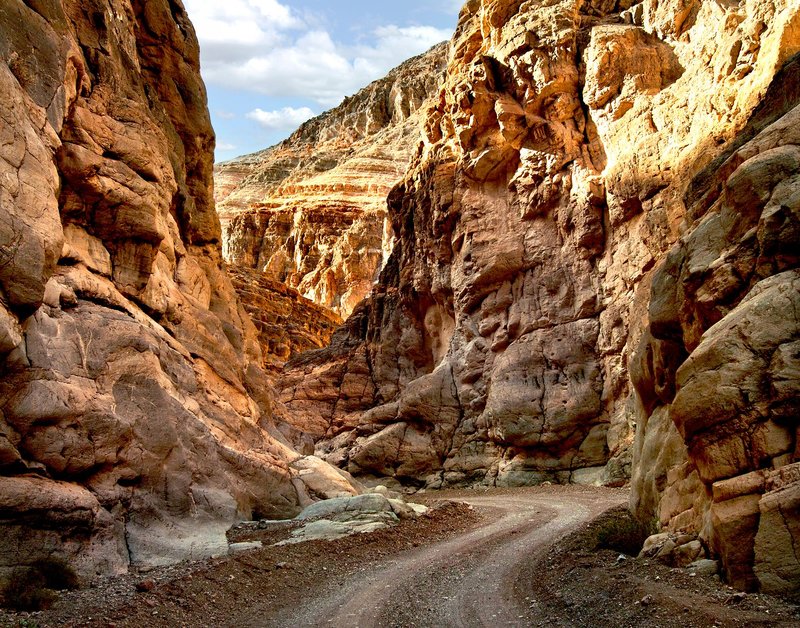
Hocking Hills State Park, about an hour southeast of Columbus, is where “cave” gets used loosely — most of what’s labeled a cave here is a recess cave, a cliff overhang cut by a waterfall that’s since moved or dried up. That distinction matters less once you’re standing under one. The park has seven named hiking areas, and four of them center on a cave.
Old Man’s Cave is the one everyone photographs. It’s a recess cave named for Richard Rowe, a hermit reportedly buried near its entrance in the late 1700s, and it anchors the six-mile Grandma Gatewood Trail, which also passes Cedar Falls and ends at Ash Cave. Expect stone steps, a narrow gorge, and, on a busy weekend, other people in every photo you take.
Ash Cave is the largest recess cave in Ohio and the easiest to reach — a quarter-mile paved path gets you to a horseshoe-shaped overhang roughly 700 feet across, with a seasonal waterfall dropping through the middle after rain. It’s also the most accessible cave on this list: the Ohio Department of Natural Resources lists the Ash Cave trail as ADA-compliant, which none of the other Hocking Hills caves are.
Rock House is the odd one out structurally — it’s the only true cave (a real tunnel through rock, not an overhang) in the entire park. Blackhand sandstone forms a corridor with window-like openings punched through the walls by erosion, and small recesses along the interior are believed to have been used as ovens by people sheltering there.
Cantwell Cliffs and Whispering Cave sit in the park’s more remote northern section and see a fraction of the traffic of Old Man’s Cave. Cantwell Cliffs has its own recess cave and a narrower, steeper trail; go here if the crowds at the main trailhead are the reason you’re hesitating on Hocking Hills at all.
Show caverns: the paid underground tours
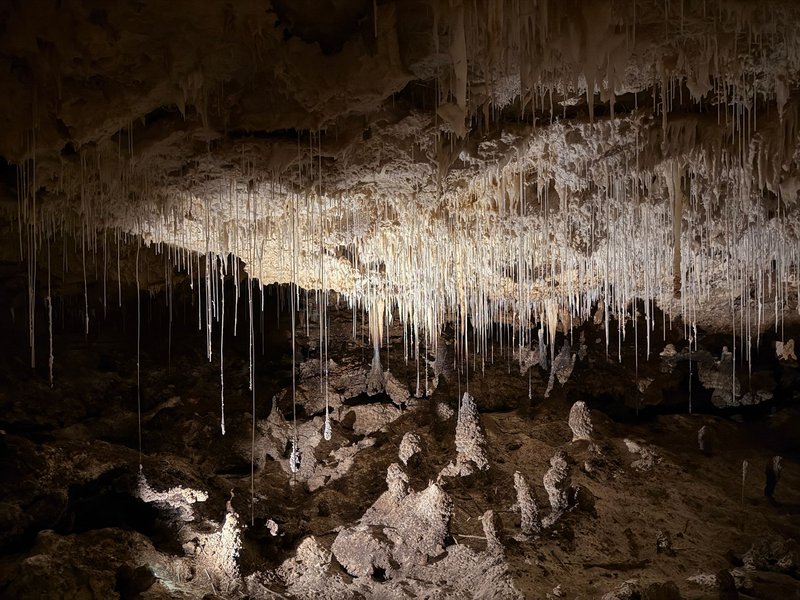
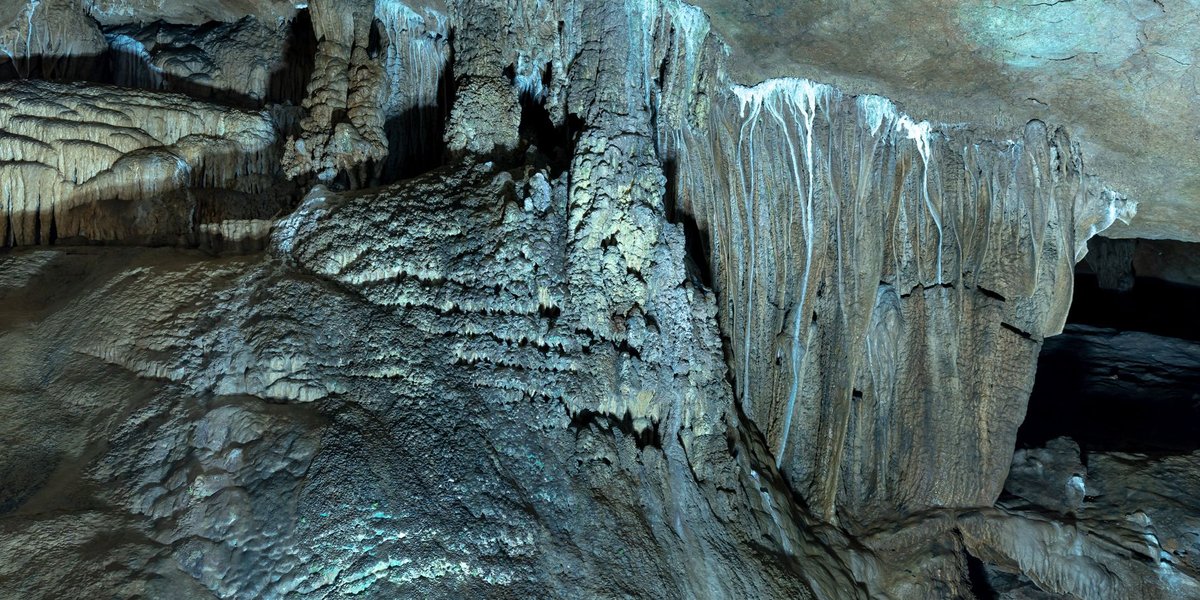
These four are true limestone caverns, formed by acidic groundwater slowly dissolving bedrock, and they’re where Ohio’s actual cave formations live — stalactites, stalagmites, flowstone, the kind of geology recess caves don’t produce.
Ohio Caverns, in West Liberty, is the largest cave system in the state and the one most first-time visitors should book. It runs two separate tours: the Historic Tour follows the original 1897 route, and the Natural Wonder Tour covers passages discovered later, including the Crystal King, the tallest stalactite in Ohio. The cave holds a constant temperature in the low 50s Fahrenheit year-round, so bring a light jacket regardless of the season outside.
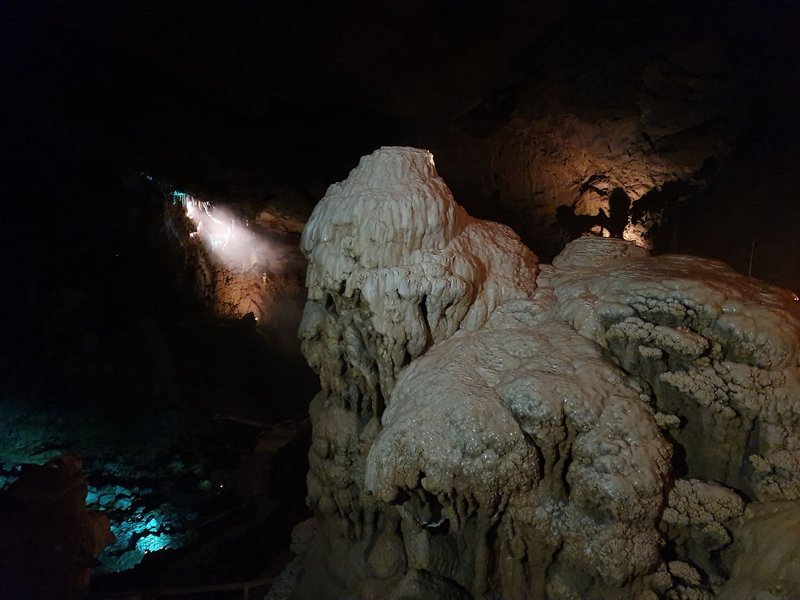
Seneca Caverns, near Bellevue, is rougher and more geologically dramatic — it formed along an earthquake fault rather than through the kind of steady dissolution that shaped Ohio Caverns, which is why its passages feel more jagged and less symmetrical. The tour descends six levels to an underground stream, and unlike Ohio Caverns, several sections are left naturally dark between lit chambers. If you’ve already done Ohio Caverns and want something that feels less polished, this is the one.
Olentangy Indian Caverns, just north of Columbus in Delaware, runs a self-guided tour with audio stations rather than a live guide, moving through named chambers like the Cathedral Hall and a stretch with a long natural echo. The property doubles as a small family entertainment complex on the surface, with mini golf, a maze, and gem panning, which makes it an easy add-on if you’re already spending the day nearby.
Zane Shawnee Caverns, near Bellefontaine, is owned and operated by the United Remnant Band of the Shawnee Nation and pairs the cave tour with a museum on Shawnee history and culture. It’s the one cave on this list you can’t just show up to — tours require a reservation, so call or book ahead rather than driving out on spec.
Lake Erie islands: caves under a winery and a farmhouse
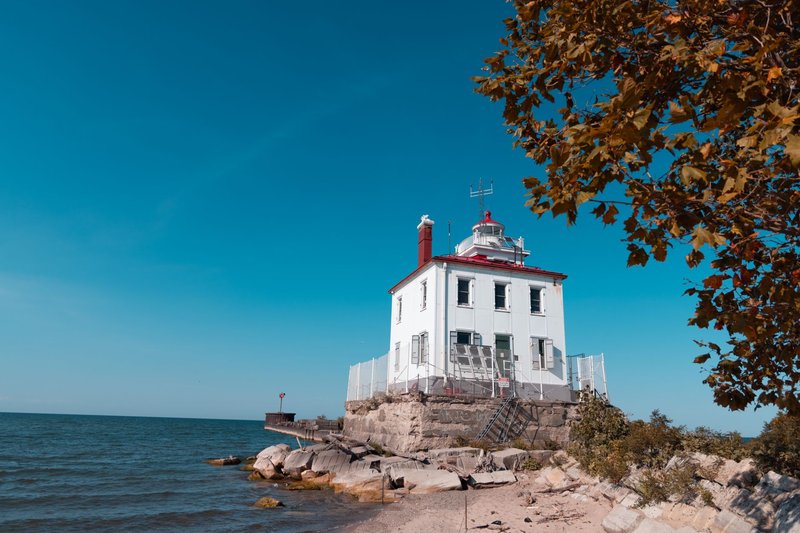
South Bass Island, reachable by ferry from Catawba Point or Port Clinton, has two caves within a mile of each other and both worth the crossing if you’re already headed to Put-in-Bay.
Crystal Cave sits beneath Heineman’s Winery and holds the distinction of being the world’s largest known geode — its walls are lined floor to ceiling with blue-tinted celestine crystals (strontium sulfate), discovered in 1897 while workers were digging a well. Tours run short and often end with a wine tasting upstairs, since the winery still operates on the property.
Perry’s Cave, a short walk away, is a limestone cave 52 feet below the surface, discovered in 1813 and named for Commodore Oliver Hazard Perry, who reportedly used it to store ammunition during the War of 1812 — a claim repeated on-site more as local lore than settled history. The cave itself is modest compared to Ohio Caverns or Seneca Caverns, but the surrounding property has a gemstone mining sluice, a petting zoo, and mini golf, which is why it edges out Crystal Cave as the better stop if you’re traveling with young kids who’ll want more than fifteen minutes underground.
Safety, temperature, and what to wear
Every cave on this list stays in a narrow temperature band, usually the mid-to-high 40s to low 50s Fahrenheit no matter what it’s like outside — that consistency is one of the reasons caves formed the way they did in the first place, insulated from surface weather swings. Bring a layer even on a 90-degree August day. Cave floors are often wet or uneven, so skip sandals; sneakers or hiking shoes are enough for every attraction here except true wild caving.
Don’t touch formations in the show caverns. Skin oil stops mineral deposits from continuing to grow, and a stalactite that took thousands of years to form can have its growth halted by a single handprint — the National Speleological Society’s conservation guidance covers this in more detail if you want the full reasoning. For the Hocking Hills recess caves, the bigger risk is footing: wet sandstone gets slick, and the steps around Old Man’s Cave and Ash Cave have no railings in several stretches.
If you’re bringing a stroller or have mobility limitations, Ash Cave is your best bet among the free options, and Olentangy Indian Caverns is the easiest of the paid tours since it’s self-guided at your own pace rather than following a moving group.