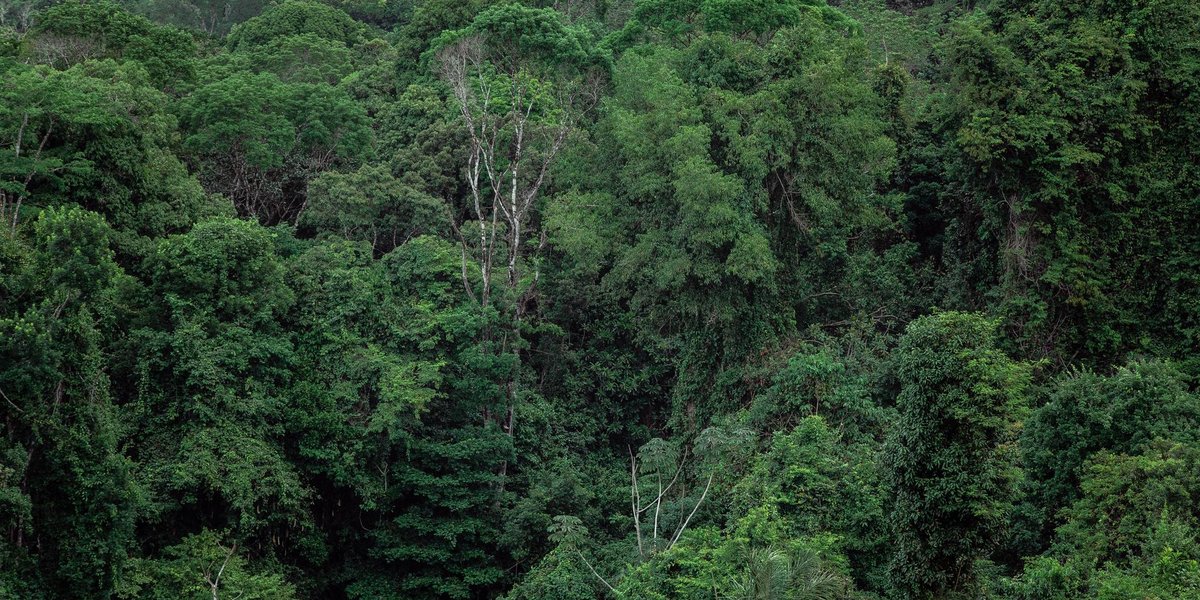
Trinidad and Tobago has 59 endemic vascular plants. That’s the number a taxonomic review left standing after earlier estimates put the figure as high as 222. Of the 59, 39 grow only on Trinidad, 12 only on Tobago, and 6 on both islands. They belong to 34 plant families and make up less than 3% of the islands’ flora.
Most of them live in just three places: the Northern Range ridge-tops, a few Trinidad savannas, and Tobago’s Main Ridge. Below are 12 worth knowing, grouped by where you’d find them.
Contents
- Why so few endemics?
- Northern Range ridge-top species
- Savanna species
- Tobago’s Main Ridge species
- Species at a glance
- How threatened are they?
- Where to see endemic plants
Why so few endemics?
Both islands sit on the South American continental shelf. During the Pleistocene they were joined to the mainland, so plants could walk across, slowly, generation by generation. Tobago separated about 13,000 years ago. Trinidad separated only about 1,500 years ago.
That’s a blink in evolutionary time. A species needs isolation to diverge from its mainland relatives, and these islands barely had any. Compare that with Hawaii or the Galapagos, where isolation ran for millions of years and endemism is the norm.
The count also dropped because botanists got stricter. A review by Van den Eynden and colleagues checked the old list of roughly 222 supposed endemics against mainland records. Many turned out to grow in Venezuela or Guyana too. Only 59 passed.
Northern Range ridge-top species
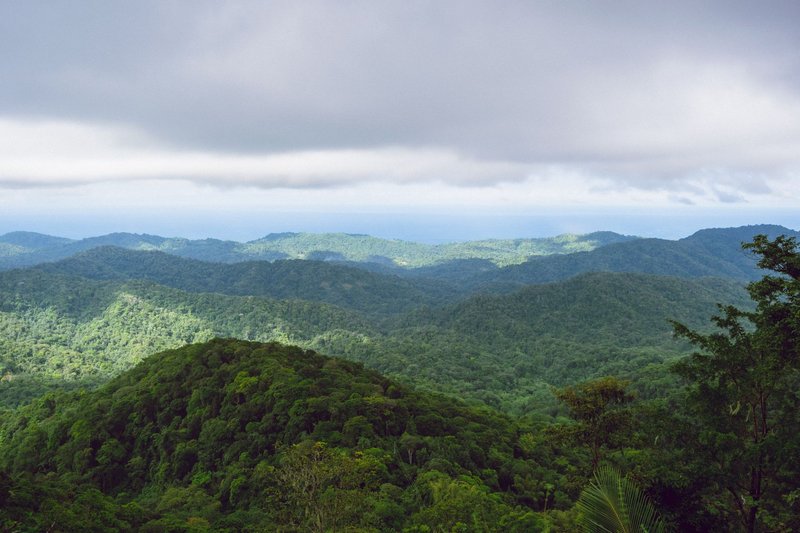
Trinidad’s Northern Range is the eastern tail of the Andes-Caribbean mountain system, and its high, cloud-wrapped ridges hold most of the island’s endemics. Thirty-odd of the 59 are listed as ridge-top specialists.
Dicliptera aripoensis
A member of the acanthus family named for the Aripo massif, the highest country in Trinidad’s Northern Range. It is listed as Critically Endangered on the IUCN Red List. Its range is tiny, and that’s the whole problem.
Aristolochia boosii
A Dutchman’s pipe vine, one of the genus with the odd pipe-shaped flowers. Endangered, and found on Trinidad only. The family is known for flowers built to trap pollinators briefly, then release them dusted with pollen.
Aechmea downsiana
A bromeliad, which means it holds its own water in a rosette of leaves. Critically Endangered. Bromeliads in these forests double as nurseries for tree frogs and insects, so losing one species of them removes more than one plant.
Begonia eciliata
A Critically Endangered begonia from Trinidad’s ridges. Begonias favor shaded, damp, rocky ground, the kind of microhabitat that disappears when forest edges dry out.
Philodendron simmondsii
Trinidad’s endemic philodendron, listed as Endangered. It belongs to the arum family, the same group as the houseplants people keep on windowsills. This one grows wild in the forest instead.
Podocarpus trinitensis
The outlier. This endemic conifer is rated Least Concern, one of only four endemics with that status. Podocarps are an ancient lineage, and finding one on a tropical island’s ridges is a reminder of how old the mountain flora is.
Savanna species
Trinidad has a few patches of open savanna, wet grassland on poor, acidic soil. They look nothing like the surrounding forest, and the endemics they hold are small, easy to overlook, and often sedges and grasses.
Eriocaulon caesium
A pipewort, one of those plants with tiny flowers packed into button-like heads on thin stalks. Critically Endangered and listed as a savanna endemic.
Rhynchospora aripoensis
A beaksedge from the Aripo savannas. Critically Endangered. Sedges rarely get attention, but a species found on one patch of savanna and nowhere else is an extinction waiting on a single event: a fire, a road, a quarry.
Tobago’s Main Ridge species
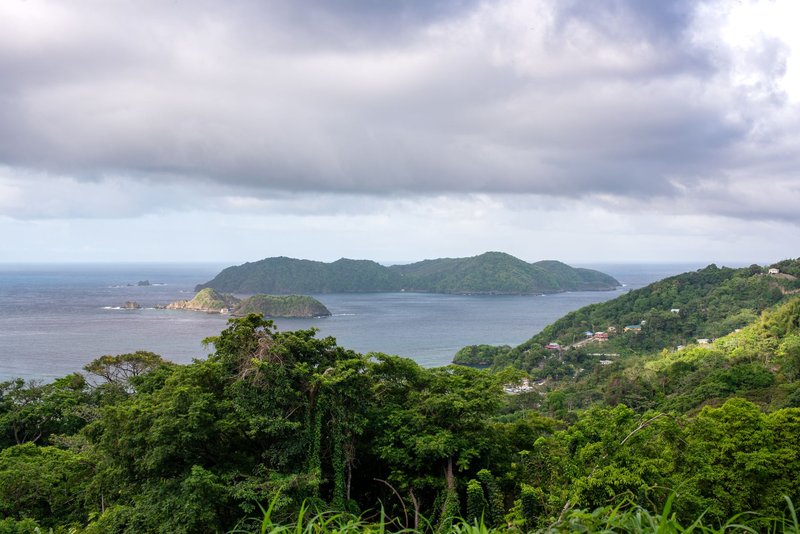
Tobago’s Main Ridge Forest Reserve was set aside in 1776, which makes it often cited as the oldest legally protected forest reserve in the Western Hemisphere. The twelve Tobago-only endemics concentrate here.
Roupala tobagensis
A tree in the Proteaceae, the family of banksias and macadamias. Critically Endangered. Seeing a Proteaceae on a Caribbean-adjacent island is unusual, since most of the family is Australian or South African.
Duguetia tobagensis
A forest tree in the custard-apple family, listed as Vulnerable and recorded as a Main Ridge endemic.
Pilea tobagensis
A small, soft-stemmed member of the nettle family without the sting, rated Vulnerable. Pileas are understory plants, living in the shade under the Main Ridge canopy.
Species at a glance
| Species | Island | Habitat | IUCN status |
|---|---|---|---|
| Dicliptera aripoensis | Trinidad | Northern Range ridge-tops | Critically Endangered |
| Aristolochia boosii | Trinidad | Northern Range ridge-tops | Endangered |
| Aechmea downsiana | Trinidad | Northern Range ridge-tops | Critically Endangered |
| Begonia eciliata | Trinidad | Northern Range ridge-tops | Critically Endangered |
| Philodendron simmondsii | Trinidad | Northern Range ridge-tops | Endangered |
| Podocarpus trinitensis | Trinidad | Northern Range ridge-tops | Least Concern |
| Eriocaulon caesium | Trinidad | Savanna | Critically Endangered |
| Rhynchospora aripoensis | Trinidad | Savanna | Critically Endangered |
| Roupala tobagensis | Tobago | Main Ridge | Critically Endangered |
| Duguetia tobagensis | Tobago | Main Ridge | Vulnerable |
| Pilea tobagensis | Tobago | Main Ridge | Vulnerable |
How threatened are they?
Badly. About 58% of the 59 endemics are Endangered or Critically Endangered, and only four are rated Least Concern. Twenty-two species haven’t been recorded since 1958. One hasn’t been seen since the late 1780s.
“Not recorded” doesn’t mean extinct. Ridge-top forests are steep and hard to survey, and some species may persist unseen. But a plant nobody has found in 65 years is a plant nobody is monitoring.
The pressures are familiar: forest clearing, quarrying, fire on savannas, and the sheer smallness of each population. A species restricted to one ridge can be wiped out by one landslide or one season of burning. You can check each species’ current assessment in the IUCN Red List, and Kew’s Plants of the World Online lists accepted names and distributions.
Where to see endemic plants
You won’t spot most of these from a trail. Many are small, high, or flowering for a short window. But the places they grow are accessible.
- Northern Range, Trinidad: The ridge forests around Aripo and the surrounding mountains hold the highest concentration. Go with a local naturalist guide, since the endemics are hard to identify unaided.
- Aripo savannas, Trinidad: Open wet grassland, best visited with an authorized guide because the habitat is fragile.
- Main Ridge Forest Reserve, Tobago: Guided walks run along established trails through the reserve’s rainforest.
Take photos, not cuttings. Collecting wild plants from these sites is both illegal and the last thing a population of a few dozen individuals needs.
Summary
Trinidad and Tobago’s endemic flora is small, concentrated, and at risk. Fifty-nine species, three main habitats, and a recent geological history that explains why there aren’t more. If you’re picking where to start, start with the ridge-tops of the Northern Range and the Main Ridge of Tobago. Those two places hold nearly everything on the list.