June gave the world a steam-engine theorist, the person who proved light is an electromagnetic wave, the woman who invented the first test every newborn takes, and the man who put the web on the internet. The scientists born in June below are listed by birthday, so you can find who shares yours or scan the month from June 1 to June 28.
Each entry gives the birthplace, the field and one concrete thing the person did. Six of the sixteen won a Nobel Prize, and the rest changed their fields without one (in two cases because the prize didn’t exist yet).
Jump to a date
- June 1: Sadi Carnot
- June 3: Otto Loewi
- June 5: John Couch Adams
- June 7: Virginia Apgar
- June 8: Francis Crick
- June 8: Tim Berners-Lee
- June 11: Jacques Cousteau
- June 13: James Clerk Maxwell
- June 13: John Nash
- June 14: Karl Landsteiner
- June 19: Blaise Pascal
- June 22: Konrad Zuse
- June 23: Alan Turing
- June 24: Victor Hess
- June 26: Lord Kelvin
- June 28: Maria Goeppert Mayer
Famous scientists born in June at a glance
| Date | Scientist | Born in | Field | Nobel Prize |
|---|---|---|---|---|
| June 1, 1796 | Sadi Carnot | Paris, France | Thermodynamics | No |
| June 3, 1873 | Otto Loewi | Frankfurt, Germany | Pharmacology, neuroscience | Yes (1936) |
| June 5, 1819 | John Couch Adams | Laneast, England | Astronomy | No |
| June 7, 1909 | Virginia Apgar | Westfield, New Jersey, USA | Anesthesiology | No |
| June 8, 1916 | Francis Crick | Northampton, England | Molecular biology | Yes (1962) |
| June 8, 1955 | Tim Berners-Lee | London, England | Computer science | No |
| June 11, 1910 | Jacques Cousteau | Saint-André-de-Cubzac, France | Oceanography | No |
| June 13, 1831 | James Clerk Maxwell | Edinburgh, Scotland | Physics | No |
| June 13, 1928 | John Nash | Bluefield, West Virginia, USA | Mathematics, game theory | Yes (Economics, 1994) |
| June 14, 1868 | Karl Landsteiner | Baden bei Wien, Austria | Immunology | Yes (1930) |
| June 19, 1623 | Blaise Pascal | Clermont-Ferrand, France | Mathematics, physics | No |
| June 22, 1910 | Konrad Zuse | Berlin, Germany | Computer engineering | No |
| June 23, 1912 | Alan Turing | London, England | Mathematics, computer science | No |
| June 24, 1883 | Victor Hess | Schloss Waldstein, Austria | Physics | Yes (1936) |
| June 26, 1824 | Lord Kelvin | Belfast, Ireland | Physics | No |
| June 28, 1906 | Maria Goeppert Mayer | Kattowitz, Germany (now Katowice, Poland) | Physics | Yes (1963) |
June 1 to June 14
June 1: Sadi Carnot

Born in Paris in 1796, Carnot asked a question that engineers of his day weren’t asking: what limits how much work you can get from heat? His 1824 book, Reflections on the Motive Power of Fire, answered that the limit depends on the temperature difference between the hot and cold parts of an engine, not on the working fluid or the clever mechanism. That idea became the second law of thermodynamics once Clausius and Kelvin reworked it decades later.
Carnot died of cholera in 1832 at 36. Almost nobody had read his book yet.
June 3: Otto Loewi

Loewi was born in Frankfurt in 1873 and settled a long argument about whether nerves talk to organs electrically or chemically. In 1921 he stimulated the vagus nerve of one frog heart, which slowed it, then moved the fluid surrounding that heart to a second heart. The second heart slowed too. Something chemical had crossed the gap, and he called it Vagusstoff. We now call it acetylcholine.
He shared the 1936 Nobel Prize in Physiology or Medicine with Henry Dale. After the Nazi annexation of Austria in 1938 he was jailed, forced to give up his prize money, and eventually emigrated to the United States.
June 5: John Couch Adams
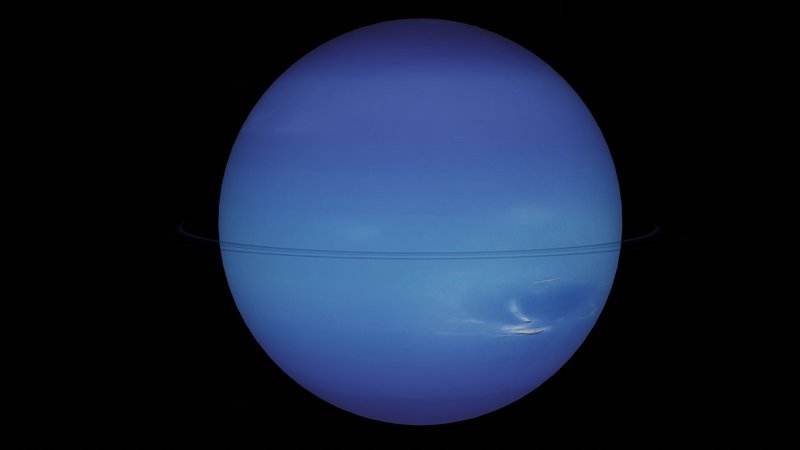
Adams, born in rural Cornwall in 1819, calculated where an unseen planet had to be to explain the odd wobbles in Uranus’s orbit. He finished in 1845. Nobody in a position to act on it looked hard enough, and in 1846 Johann Galle in Berlin found Neptune using the independent prediction of Urbain Le Verrier of France.
The credit was split between the two men for the rest of their lives. Adams’s calculation was correct, and his place in the story is that of the man who got there first and lost the telescope time.
June 7: Virginia Apgar
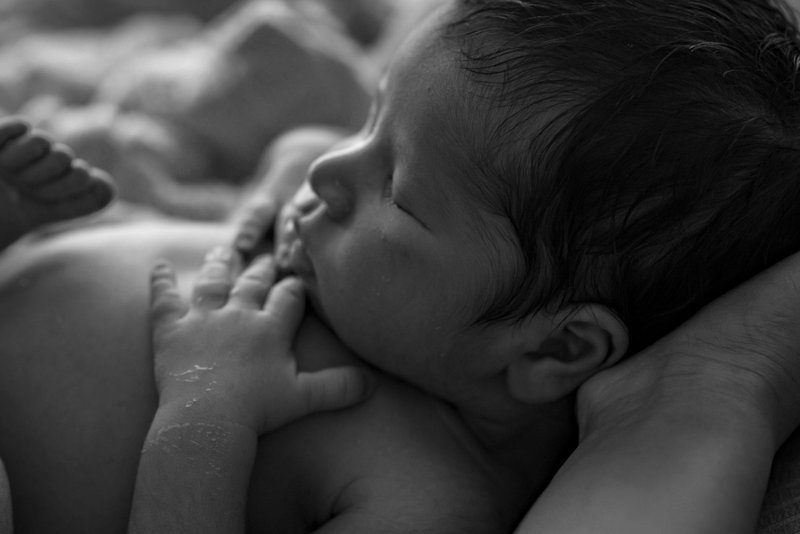
Apgar was born in Westfield, New Jersey, in 1909 and became the first woman to hold a full professorship at Columbia’s College of Physicians and Surgeons. In 1952 she proposed a quick scoring system for newborns: check heart rate, breathing, muscle tone, reflexes and skin color at one minute and again at five minutes, giving 0 to 2 points for each. A 10 is the top score.
The Apgar score takes about a minute, needs no equipment and is still used in delivery rooms worldwide. Doctors later made “APGAR” a backronym for the five criteria, but it was her surname first.
June 8: Francis Crick
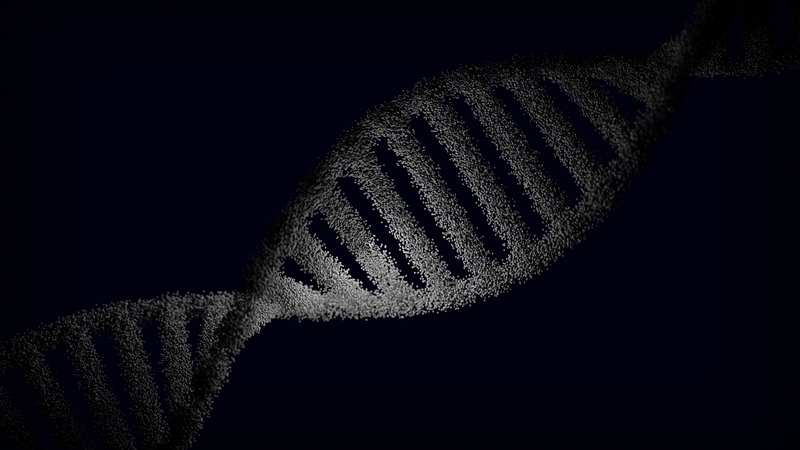
Crick was born in Northampton in 1916 and trained as a physicist before moving to biology. In 1953 he and James Watson built the double-helix model of DNA at Cambridge, using X-ray diffraction data from Rosalind Franklin and Maurice Wilkins. Crick, Watson and Wilkins shared the 1962 Nobel Prize in Physiology or Medicine.
He didn’t stop there. In 1958 he laid out the “central dogma” of molecular biology (information flows from DNA to RNA to protein), and in his later decades at the Salk Institute he turned to the neuroscience of consciousness.
June 8: Tim Berners-Lee

Berners-Lee, born in London in 1955, is one of the few people on this list who is still alive. In 1989, working at CERN, he wrote a proposal for linking documents across computers. He then wrote the three things the web still runs on: HTML, HTTP and the URL. CERN’s account of the birth of the web notes that the software was put in the public domain in 1993, which is a large part of why it spread.
No Nobel exists for his field. His equivalent is the 2016 Turing Award.
June 11: Jacques Cousteau
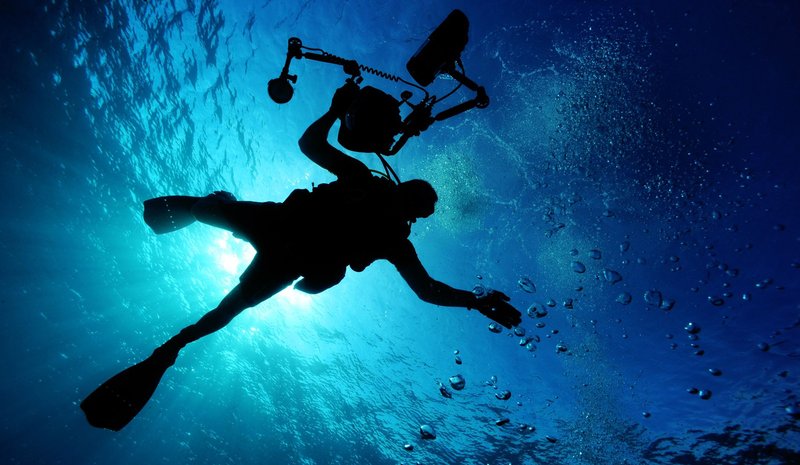
Cousteau was born in Saint-André-de-Cubzac, France, in 1910. In 1943 he and engineer Émile Gagnan developed the Aqua-Lung, the first open-circuit scuba regulator that worked reliably, which let divers breathe compressed air on demand rather than tethered to a surface pump. He then took the technology to sea aboard the research ship Calypso.
His 1956 documentary The Silent World won the Palme d’Or at Cannes and an Academy Award, and gave millions of people their first look at a coral reef.
June 13: James Clerk Maxwell

Maxwell, born in Edinburgh in 1831, condensed everything known about electricity and magnetism into a set of equations. When he worked out how fast the resulting electromagnetic waves should travel, the number matched the measured speed of light. His conclusion, in the 1860s: light is an electromagnetic wave.
He also produced the first durable color photograph in 1861, by photographing a tartan ribbon through red, green and blue filters. Einstein later kept a picture of Maxwell on his study wall. Maxwell died in 1879 at 48, so he never saw Hertz confirm radio waves.
June 13: John Nash
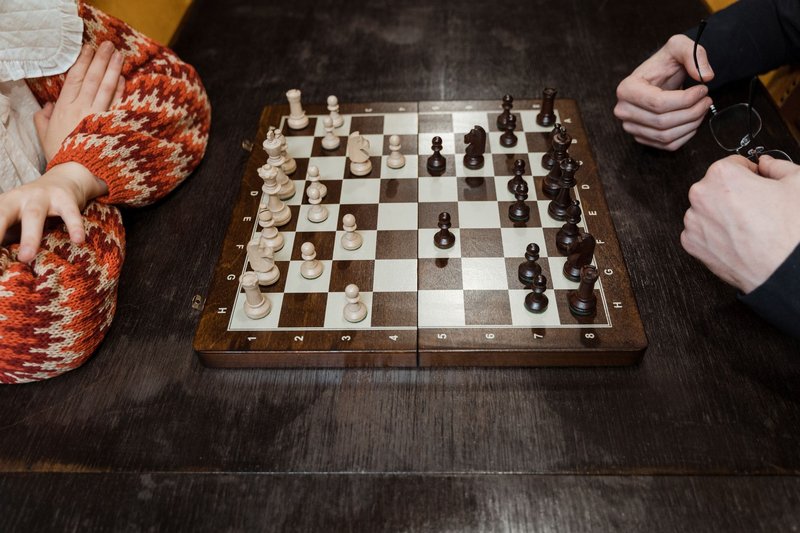
Nash was born in Bluefield, West Virginia, in 1928. His Princeton doctoral thesis, about 27 pages, introduced what we call the Nash equilibrium: a situation in which no player can do better by changing strategy alone, assuming everyone else stays put. It now underlies economics, evolutionary biology and the design of auctions.
He shared the 1994 Nobel Memorial Prize in Economic Sciences, and in 2015 received the Abel Prize in mathematics. He and his wife died in a taxi crash in New Jersey on the way home from Norway, days after the Abel ceremony.
June 14: Karl Landsteiner
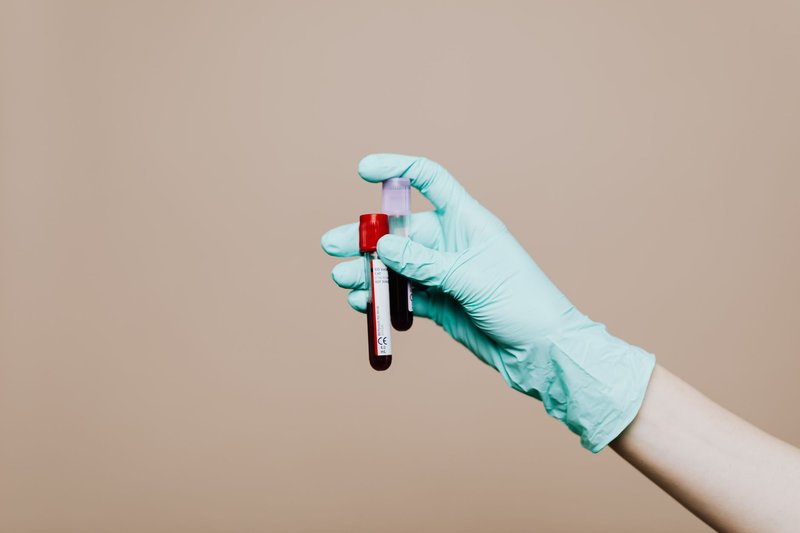
Landsteiner was born near Vienna in 1868. In 1901 he mixed blood from different people and saw that some combinations clumped, while others didn’t. That clumping pattern gave us the ABO blood groups and turned transfusion from a gamble into a procedure. He also helped identify the poliovirus (1908) and, with Alexander Wiener, the Rh factor (1940).
He won the 1930 Nobel Prize in Physiology or Medicine. His birthday is now World Blood Donor Day, designated by the WHO in his honor.
June 19 to June 28
June 19: Blaise Pascal
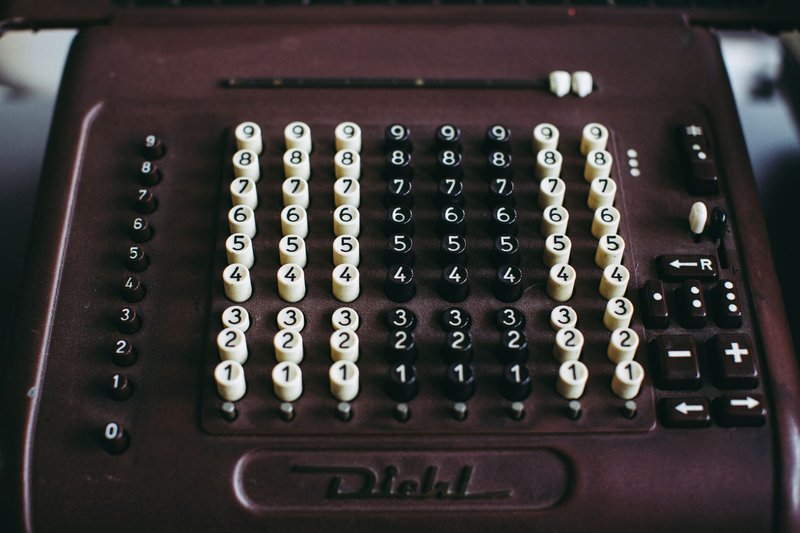
Pascal, born in Clermont-Ferrand in 1623, built a mechanical calculator as a teenager to help his father, a tax official, add long columns of figures. He also formulated Pascal’s law, which says pressure applied to a confined fluid spreads equally in all directions, the principle behind every hydraulic brake and jack. And in 1648 he had his brother-in-law carry a barometer up the Puy de Dôme to show that air pressure falls with altitude.
The SI unit of pressure, the pascal, is named for him. He died at 39.
June 22: Konrad Zuse
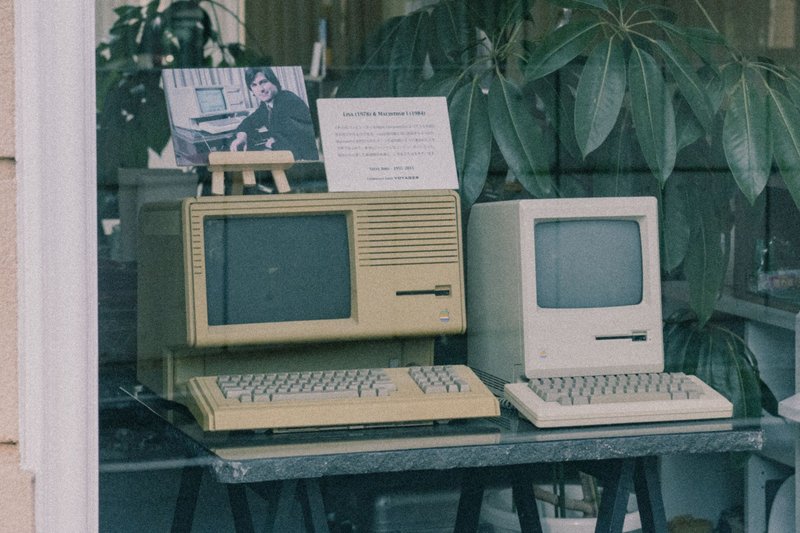
Zuse was born in Berlin in 1910 and was a civil engineer who got tired of repetitive structural calculations. He built his first machine, the Z1, in his parents’ living room. Its successor, the Z3, finished in 1941, is generally recognized as the first working programmable, fully automatic digital computer. It ran on telephone relays.
The original Z3 was destroyed in a bombing raid in 1943. Zuse also designed Plankalkül, an early high-level programming language, though it wasn’t implemented until decades later.
June 23: Alan Turing
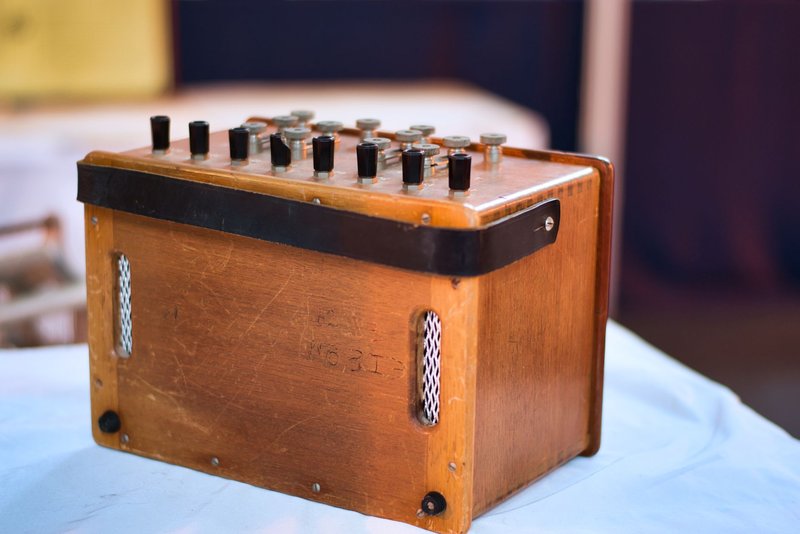
Turing was born in London in 1912. His 1936 paper on computable numbers defined an abstract machine that could carry out any calculation you could write as a procedure, which is the theoretical basis of every computer. During the Second World War he led the effort at Bletchley Park to break the German naval Enigma cipher.
In 1950 he asked whether machines can think and proposed a test for it. In 1952 he published a paper on how chemical patterns could produce a leopard’s spots. The ACM’s top prize is called the Turing Award. He received a posthumous royal pardon in 2013.
June 24: Victor Hess

Hess, born at Schloss Waldstein in Austria in 1883, wanted to know why electroscopes kept discharging even when shielded from radioactive rocks. Scientists assumed the cause was in the ground. In 1912 he took the instruments up in a hydrogen balloon, to roughly 5,300 meters, and found the radiation got stronger with altitude. It was coming from space.
Those were cosmic rays. He shared the 1936 Nobel Prize in Physics with Carl Anderson, who discovered the positron in cosmic-ray tracks. Hess and Loewi, both Austrian-born, won in the same year.
June 26: Lord Kelvin
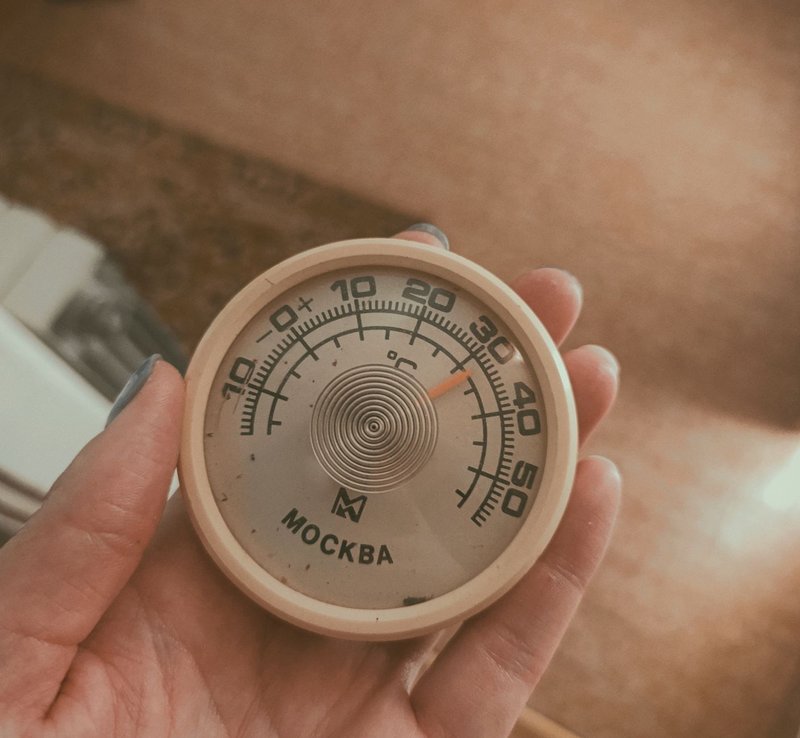
William Thomson was born in Belfast in 1824 and became Lord Kelvin in 1892. In 1848 he proposed an absolute temperature scale that starts at the point where molecular motion would stop, -273.15 degrees Celsius. The unit, the kelvin, is still the SI base unit of temperature.
He also helped lay the first successful transatlantic telegraph cable and was a main architect of the laws of thermodynamics. His estimate of the Earth’s age, tens of millions of years, was far too low because he didn’t know about radioactive heating, a reminder that even excellent physicists get a number wrong.
June 28: Maria Goeppert Mayer
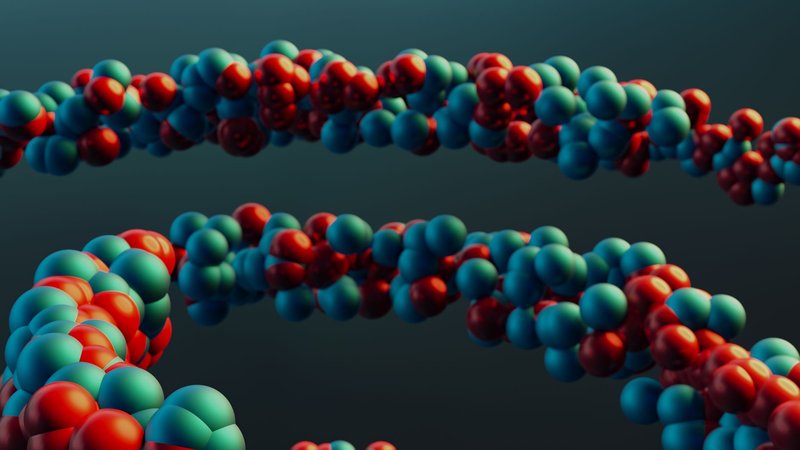
Goeppert Mayer was born in Kattowitz, then in Germany and now Katowice, Poland, in 1906. She moved to the US after marrying chemist Joseph Mayer and spent years in unpaid or volunteer academic posts because universities were reluctant to hire married women. During the war she worked on isotope separation for the Manhattan Project at Columbia.
Her breakthrough, in 1949, was the nuclear shell model. Nuclei with certain “magic numbers” of protons or neutrons (2, 8, 20, 28, 50, 82, 126) are unusually stable, and she showed this follows from how nucleons fill energy shells. She shared the 1963 Nobel Prize in Physics with Hans Jensen and Eugene Wigner, becoming the second woman to win the physics prize after Marie Curie. Her first full-time paid professorship came in 1960 at UC San Diego.
Shared birthdays and patterns
Two pairs share a date. Crick and Berners-Lee were both born on June 8, 39 years apart, and each built something that reorganized how people handle information: one decoded a molecule, the other connected computers. Maxwell and Nash were both born on June 13, a century and a bit apart, and both reduced messy systems (fields, strategies) to a few exact rules.
Among the physicists born in June, Maxwell, Kelvin, Hess and Goeppert Mayer cover classical field theory, thermodynamics, cosmic rays and nuclear structure. Among the Nobel Prize winners born in June, the six are Loewi, Crick, Landsteiner, Nash, Hess and Goeppert Mayer.
The list includes only two women, Apgar and Goeppert Mayer, which reflects who was allowed into laboratories and universities in the centuries covered, not who was doing the thinking.