March is the month that gave science Albert Einstein, the telephone, and the periodic table’s most stubborn defender. If you came here for the names, the exact birthdays, and the one thing each scientist is actually known for, that’s what this list delivers — ordered by date so you can find a specific March birthday fast.
We went past the usual five. Yes, Einstein is here (March 14, in case you were wondering). But so are the women and non-Western scientists who tend to get cut from these lists: Emmy Noether, Kalpana Chawla, Sameera Moussa, Caroline Herschel. Twenty scientists born in March, each with a real reason to remember them.
Table of Contents
- Quick Reference Table
- The Scientists, by Birthday
- Physicists Born in March
- Women Scientists Born in March
- Inventors Born in March
- Why March Is a Heavy Month for Science
- FAQ
Quick Reference Table

Listed in birthday order, the same order as the profiles below.
| Scientist | Birthday | Field | Known for |
|---|---|---|---|
| Alexander Graham Bell | March 3, 1847 | Invention | The telephone |
| Sameera Moussa | March 3, 1917 | Nuclear physics | Affordable medical radiation research |
| Dmitri Mendeleev | March 8, 1834 | Chemistry | The periodic table |
| Tim Berners-Lee | March 8, 1955 | Computer science | The World Wide Web |
| Percy Julian | March 11, 1899 | Chemistry | Synthesis of medicinal steroids |
| Vannevar Bush | March 11, 1890 | Engineering | The “memex,” NSF blueprint |
| Joseph Priestley | March 13, 1733 | Chemistry | Discovery of oxygen |
| Albert Einstein | March 14, 1879 | Physics | Relativity, E=mc² |
| Élie Metchnikoff | March 15, 1845 | Biology | Phagocytes, Nobel 1908 |
| Caroline Herschel | March 16, 1750 | Astronomy | First woman to discover a comet |
| Georg Ohm | March 16, 1789 | Physics | Ohm’s law |
| Kalpana Chawla | March 17, 1962 | Aerospace | First woman of Indian origin in space |
| Pierre-Simon Laplace | March 23, 1749 | Mathematics | Celestial mechanics, Laplace transform |
| Emmy Noether | March 23, 1882 | Mathematics | Noether’s theorem |
| Wilhelm Röntgen | March 27, 1845 | Physics | X-rays, first physics Nobel |
| William Hanford | March 28, 1908 | Chemistry | Polyurethane |
| Robert Bunsen | March 30, 1811 | Chemistry | Bunsen burner, spectroscopy |
| Akira Yoshino | March 30, 1948 | Chemistry | Lithium-ion battery, Nobel 2019 |
| John Pople | March 31, 1925 | Chemistry | Computational quantum chemistry |
| René Descartes | March 31, 1596 | Mathematics | Cartesian coordinate system |
One common mix-up worth flagging up front: Stephen Hawking was not born in March. He was born in January and died on March 14 — Einstein’s birthday — which is where the confusion starts.
The Scientists, by Birthday
1. Alexander Graham Bell — March 3, 1847
The telephone is the headline, but Bell spent most of his career on deaf education — his mother and wife were both deaf, and “telephone” was a side effect of his work on transmitting speech for people who couldn’t hear it. He filed the patent on February 14, 1876, hours before a competitor. The margin was that thin.
2. Sameera Moussa — March 3, 1917
Egypt’s first woman to earn a doctorate in atomic radiation, Moussa wanted nuclear medicine to be cheap enough for ordinary hospitals — “atoms for peace” before the slogan existed. She died in a car crash in California in 1952 at age 35, under circumstances that are still argued over.
3. Dmitri Mendeleev — March 8, 1834
Mendeleev’s periodic table didn’t just sort the known elements. It left gaps — and predicted the weight and properties of elements nobody had found yet, like gallium and germanium. When they turned up matching his numbers, the table stopped being a chart and became a law of nature.
4. Tim Berners-Lee — March 8, 1955
He invented the World Wide Web at CERN in 1989 and then did the thing almost nobody does: he gave it away. No patent, no royalties, no toll booth. According to CERN’s own history, the foundational web software was released into the public domain in 1993.
5. Percy Julian — March 11, 1899
Julian figured out how to synthesize cortisone and other steroids from soybeans, making drugs that had cost a fortune cheap enough to mass-produce. He did it as a Black chemist in early-20th-century America, barred from labs and faculty jobs for decades. He held more than 130 patents anyway.
6. Vannevar Bush — March 11, 1890
Before “hypertext” had a name, Bush described the “memex” in his 1945 essay As We May Think — a desk that stored documents and let you link between them on associative trails. It reads like a description of the web written 44 years before the web. He also built the organizational machine behind American wartime science.
7. Joseph Priestley — March 13, 1733
Priestley isolated oxygen in 1774 (he called it “dephlogisticated air” and never quite let go of the wrong theory). He also invented carbonated water, which makes him the patron saint of soda. A mob burned down his house for his political and religious views; he finished his life in Pennsylvania.
8. Albert Einstein — March 14, 1879
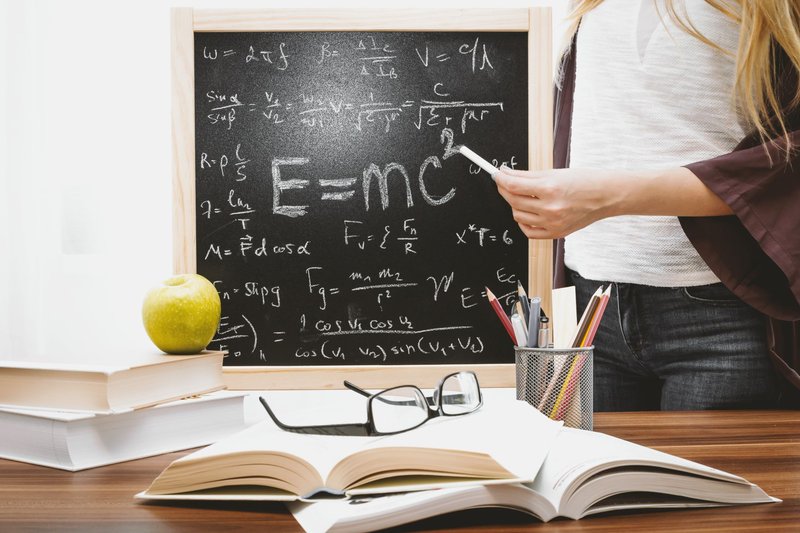
The March birthday everyone knows. 1905 was his “miracle year” — four papers, any one of which would have made a career: the photoelectric effect (which won him the Nobel, not relativity), Brownian motion, special relativity, and the mass-energy equivalence that gave us E=mc². General relativity came a decade later and bent starlight exactly where he said it would.
9. Élie Metchnikoff — March 15, 1845
The Ukrainian-born zoologist who discovered phagocytes — the white blood cells that swallow invaders — and founded the study of the immune system’s cellular defense. He shared the 1908 Nobel in Medicine. He was also convinced that gut bacteria from yogurt could extend life, which is half a century early on the microbiome.
10. Caroline Herschel — March 16, 1750
The first woman to discover a comet, and then she found seven more. Herschel started as her brother William’s assistant, grinding telescope mirrors and recording observations, and became an astronomer in her own right — comet-hunting sits within observational astronomy, one of the field’s main branches. She was among the first women paid a salary for scientific work — by the King of England, in 1787.
11. Georg Ohm — March 16, 1789
Ohm’s law — voltage equals current times resistance — is the first equation most electronics students ever memorize. When Ohm published it in 1827, German academics largely ignored him. The recognition (and the unit named after him) came late. Every multimeter on Earth now reads in ohms.
12. Kalpana Chawla — March 17, 1962
The first woman of Indian origin to fly in space, Chawla flew aboard Columbia in 1997 and again in 2003. She died with her six crewmates when Columbia broke apart on reentry on February 1, 2003. India named its first weather-monitoring satellite series after her, and NASA named a supercomputer in her honor.
13. Pierre-Simon Laplace — March 23, 1749
The mathematician who took Newton’s gravity and worked out, in five volumes, that the solar system is stable — the planets won’t fling each other out of orbit. The Laplace transform is still on every engineering exam, and “Laplace’s demon,” his thought experiment about a perfectly predictable universe, still anchors debates about determinism.
14. Emmy Noether — March 23, 1882

Noether’s theorem connects symmetries to conservation laws: because the laws of physics don’t change over time, energy is conserved. That single idea underpins modern theoretical physics. She worked years without pay or an official title because German universities wouldn’t hire a woman, lecturing under a male colleague’s name. Einstein called her the most important woman in the history of mathematics.
15. Wilhelm Röntgen — March 27, 1845
In 1895 Röntgen noticed a screen glowing across his lab while he worked with a covered tube. He’d stumbled onto a new kind of ray he couldn’t explain, so he called it “X.” Weeks later he photographed his wife’s hand — bones and wedding ring — and medicine changed. He won the first Nobel Prize in Physics in 1901 and refused to patent the discovery.
16. William Hanford — March 28, 1908
The American chemist who co-invented polyurethane in 1942 — the foam in your couch cushions, mattress, car seats, and running shoes. It’s one of those inventions so embedded in daily life that nobody thinks about it, which is exactly the point.
17. Robert Bunsen — March 30, 1811
The burner is named after him, though a lab assistant did much of the design work. Bunsen’s real contribution was bigger: with Gustav Kirchhoff, he founded spectroscopy — reading the chemical fingerprint of a glowing substance by its light. That’s how we now know what stars are made of. He also discovered two elements, cesium and rubidium.
18. Akira Yoshino — March 30, 1948
The Japanese chemist who built the first safe, commercial lithium-ion battery in 1985. It’s in your phone, your laptop, and every electric car on the road. He shared the 2019 Nobel in Chemistry for it, at age 71 — proof that the work that changes the world doesn’t always get its medal quickly.
19. John Pople — March 31, 1925
The British chemist who made quantum chemistry something you could actually compute. His GAUSSIAN software let chemists model molecules and reactions on a computer instead of only in a flask. He shared the 1998 Nobel in Chemistry. If you’ve ever seen a 3D molecule spin on a screen, thank Pople’s methods.
20. René Descartes — March 31, 1596
“I think, therefore I am” is the philosophy line, but Descartes was also a working mathematician. The Cartesian coordinate system — x and y axes, every graph you’ve ever plotted — is his. He fused algebra and geometry into one language, which is the move that made calculus possible a generation later.
Physicists Born in March
If you’re only here for the physics names, here’s the shortlist: Albert Einstein (March 14) for relativity, Georg Ohm (March 16) for Ohm’s law, Wilhelm Röntgen (March 27) for X-rays and the first-ever physics Nobel, and Sameera Moussa (March 3) for nuclear medicine research. Add Emmy Noether (March 23) — she was a mathematician by title, but her theorem is load-bearing for all of theoretical physics.
Women Scientists Born in March
The standard March list runs Einstein, Bell, Mendeleev and stops. Four women belong on it without rounding up:
- Caroline Herschel (March 16) — eight comets and the first salaried woman astronomer.
- Emmy Noether (March 23) — the symmetry-conservation link at the heart of modern physics.
- Kalpana Chawla (March 17) — first woman of Indian origin in space.
- Sameera Moussa (March 3) — Egypt’s pioneer of affordable medical radiation.
Different centuries, different fields, same problem: each one did frontline work while being told the front line wasn’t for her.
Inventors Born in March
For the inventors and applied-science crowd: Alexander Graham Bell (March 3, telephone), Robert Bunsen (March 30, the burner and spectroscopy), William Hanford (March 28, polyurethane), Akira Yoshino (March 30, lithium-ion battery), and Tim Berners-Lee (March 8, the World Wide Web). Two of those — the battery and the web — are running in the device you’re reading this on.
Why March Is a Heavy Month for Science
There’s no cosmic reason March produces scientists; birthdays don’t cluster by genius. But the month does carry an unusual density of names that show up in textbooks, and a few coincidences make it stick.
March 14 is the obvious one. It’s Einstein’s birthday and Pi Day (3.14) — and, since 2018, the day Stephen Hawking died. Schools lean into all three, which is part of why “scientists born in March” gets searched so often around exam season. The month also anchors a tidy span of chemistry: Priestley’s oxygen, Mendeleev’s table, Bunsen’s spectroscopy, and Yoshino’s battery span roughly 250 years of the field, all with March birthdays.
For students building a project or a quiz, March gives you range: a 16th-century philosopher-mathematician (Descartes), the discoverer of oxygen, the man who gave away the web, and a Nobel won at 71. That spread — old and modern, Western and not, men and women — is what most lists miss.
FAQ
Which famous scientist was born on March 14? Albert Einstein, born March 14, 1879, in Ulm, Germany. The date doubles as Pi Day (3.14), which is why his birthday gets extra attention every year.
Were any Nobel Prize winners born in March? Several. Wilhelm Röntgen (Physics, 1901), Élie Metchnikoff (Medicine, 1908), Akira Yoshino (Chemistry, 2019), and John Pople (Chemistry, 1998) were all born in March. Einstein won his Nobel in 1921 for the photoelectric effect.
Who are some women scientists born in March? Caroline Herschel (March 16), Emmy Noether (March 23), Kalpana Chawla (March 17), and Sameera Moussa (March 3) — covering astronomy, mathematics, spaceflight, and nuclear physics.
Was Dmitri Mendeleev really born in March? On the modern Gregorian calendar, yes — March 8, 1834. Russia used the older Julian calendar then, where his birthday fell on February 8, so you’ll see both dates cited.
Is Stephen Hawking a scientist born in March? No — that’s a common mix-up. Hawking was born on January 8, 1942. He died on March 14, 2018, which is also Einstein’s birthday, which is probably where the confusion comes from.