Table of Contents
- What Actually Makes a Material “Smart”
- 1. Piezoelectric Materials
- 2. Shape-Memory Alloys (Nitinol)
- 3. Shape-Memory Polymers
- 4. Thermochromic Materials
- 5. Photochromic Materials
- 6. Electrochromic Materials
- 7. Self-Healing Polymers
- 8. Self-Healing (Bio) Concrete
- 9. Hydrogels
- 10. Magnetorheological Fluids
- Where Each Material Shows Up, By Industry
- FAQ
What Actually Makes a Material “Smart”
A smart material changes a measurable property — shape, color, stiffness, conductivity — in response to a specific stimulus, and reverses that change when the stimulus goes away. Heat, light, an electric field, pH, magnetism, mechanical stress: pick the trigger, and there’s a material class built to respond to it. That reversibility is what separates a “smart” material from an ordinary one that just degrades or breaks under stress.
Most explainers stop at the taxonomy — piezoelectric, shape-memory, chromogenic — and leave you without a single named product to picture. This list pairs each mechanism with something you could actually go buy, order a sample of, or already own.
1. Piezoelectric Materials
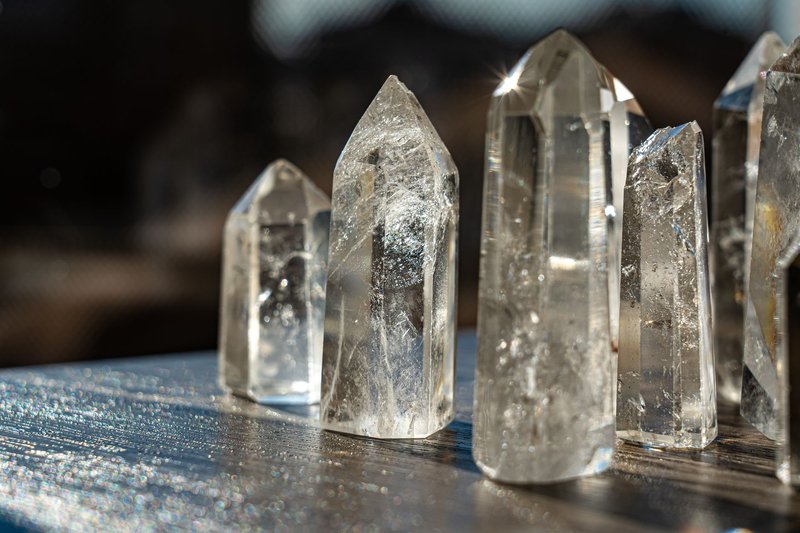
Squeeze certain crystals and ceramics — quartz, lead zirconate titanate (PZT), Rochelle salt — and they generate a small electric voltage. Run current through them instead, and they physically deform. It’s a two-way street, which is what makes the effect useful in both sensors and actuators.
Why it’s smart: mechanical stress in, electricity out, with no moving parts and no battery required to detect the stress in the first place.
You’ll find piezoelectric elements in gas grill igniters, ultrasound transducers, guitar pickups, and the knock sensors in a car engine. Newer applications embed piezo strips in shoe soles and roadways to harvest a trickle of electricity from footsteps and traffic — not enough to power a city, but enough to run a low-draw sensor without wiring it in.
2. Shape-Memory Alloys (Nitinol)
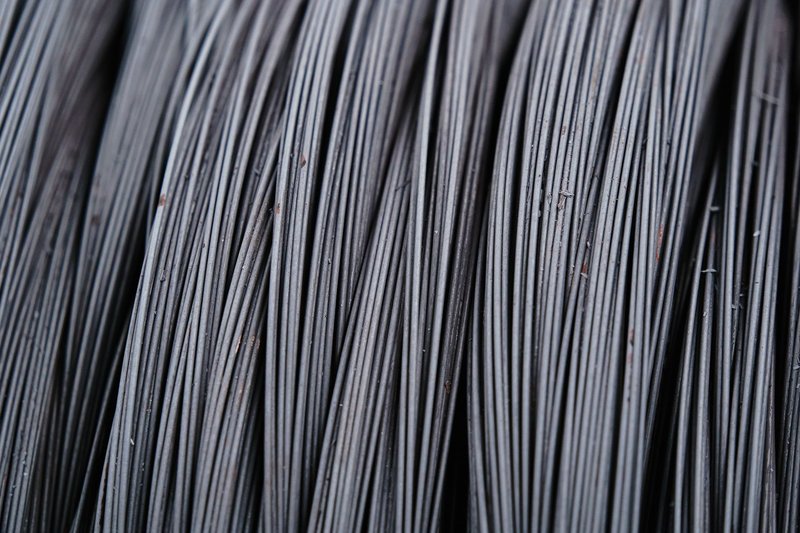
Nitinol — nickel-titanium, discovered at the U.S. Naval Ordnance Laboratory in the 1960s — can be bent, twisted, or crushed at room temperature and then snap back to its original shape the moment it’s warmed past a set transition temperature. The effect comes from a reversible shift between two crystal structures, austenite and martensite, not from any coating or mechanism layered on top.
Why it’s smart: it “remembers” a shape baked in during manufacturing and returns to it on cue, repeatedly, without fatigue cracking the way ordinary metal would after that many bends.
Nitinol shows up in eyeglass frames that survive being sat on, self-expanding vascular stents that unfurl to body temperature once inserted, and orthodontic wires that apply steady, gentle force as they try to return to their programmed shape. NASA has also tested it in shape-changing aircraft wing structures.
3. Shape-Memory Polymers
Same trick as Nitinol, different chemistry. Shape-memory polymers are plastics that hold a temporary, deformed shape until heat, light, or moisture triggers them to spring back to their molded form. They’re cheaper and lighter than shape-memory alloys, though generally slower to react and less forceful.
Why it’s smart: a flat sheet can be programmed to fold itself into a 3D structure on command — no motors, no hinges.
Self-tightening surgical sutures use them to snug down automatically at body temperature. Aerospace engineers use them for deployable structures — solar panels and antennas folded flat for launch that unfold once warmed by sunlight in orbit, saving the weight of a mechanical hinge system.
4. Thermochromic Materials
Thermochromic pigments change color at a specific temperature threshold, then change back as they cool. Two chemistries dominate: liquid crystals, which shift color across a narrow, precise temperature band (used where accuracy matters), and leuco dye systems, which shift more broadly and cheaply (used where a visual gimmick is the point).
Why it’s smart: it turns temperature into something you can read at a glance, with zero electronics.
Mood rings and Hypercolor T-shirts from the ’90s ran on leuco dyes reacting to body heat. More practically, the same chemistry shows up in baby spoons that flag food that’s too hot, forehead thermometer strips, and battery-testing strips that show charge level as a color gradient.
5. Photochromic Materials

Photochromic molecules undergo a reversible structural change when hit with UV light, absorbing more visible light in the process — which is what you perceive as the material darkening. Step out of the sun and the molecules relax back to their clear state.
Why it’s smart: it self-adjusts to ambient UV without a sensor, switch, or power source.
Transitions lenses are the household name here, but the same chemistry is used in security inks that reveal a hidden mark under UV light and in some novelty toys and fabrics that “develop” color outdoors.
6. Electrochromic Materials
Electrochromic materials change color or opacity when a small voltage is applied across them, and they stay in that state until the voltage is reversed — unlike photochromic materials, they don’t need to keep drawing power to hold their tint. That persistence is the whole appeal for architecture: tint a window once, and it stays tinted until someone (or an automated system) decides otherwise.
Why it’s smart: it gives a static material a controllable, on-demand state instead of a fixed one.
Boeing’s 787 Dreamliner replaced pull-down window shades with electrochromic windows passengers dim with a button. Building-integrated versions from manufacturers like SageGlass do the same job at the scale of an entire office façade, cutting cooling loads by blocking solar heat without blocking the view entirely.
7. Self-Healing Polymers
Self-healing polymers repair small cracks or scratches on their own, either by embedding microcapsules of liquid healing agent that rupture and fill a crack as it forms, or through reversible chemical bonds that reconnect after being broken by heat or light exposure. The microcapsule approach only heals a crack once per location; the reversible-bond approach can heal the same spot repeatedly.
Why it’s smart: it extends the useful life of a coating or composite without anyone noticing the damage happened, let alone repairing it manually.
Self-healing clear coats on some car finishes shrug off light swirl marks after a warm wash. In aerospace and wind-turbine composites, embedded microcapsule systems are used specifically to seal microcracks before they propagate into structural failures that are far more expensive to catch late.
8. Self-Healing (Bio) Concrete
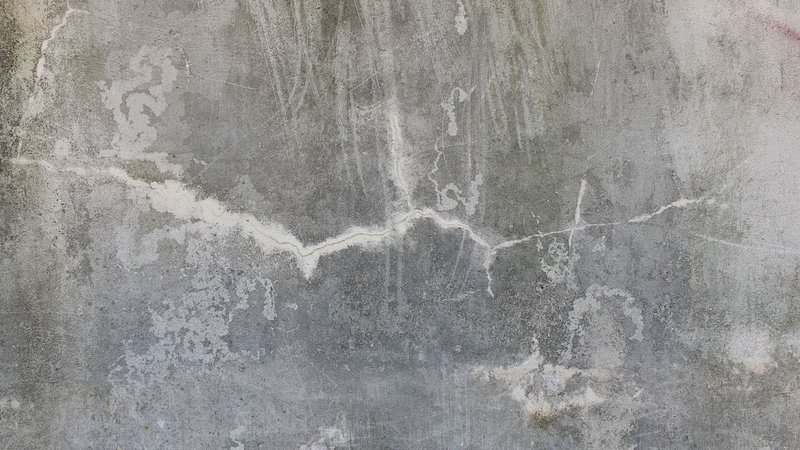
Bio-concrete mixes ordinary concrete with dormant bacterial spores (commonly Bacillus species) and a calcium-based food source, both encapsulated so they don’t activate during curing. When a crack lets water in, the bacteria wake up, consume the calcium source, and excrete calcite — essentially limestone — that fills the crack from the inside.
Why it’s smart: it turns concrete’s biggest weak point, hairline cracking that lets water and rebar-corroding chloride in, into a self-sealing process instead of a maintenance call.
Developed prominently by researchers at Delft University of Technology and commercialized under names like Basilisk, bio-concrete has been trialed in bridge repair, parking structures, and precast panels where crack maintenance is expensive to access.
9. Hydrogels
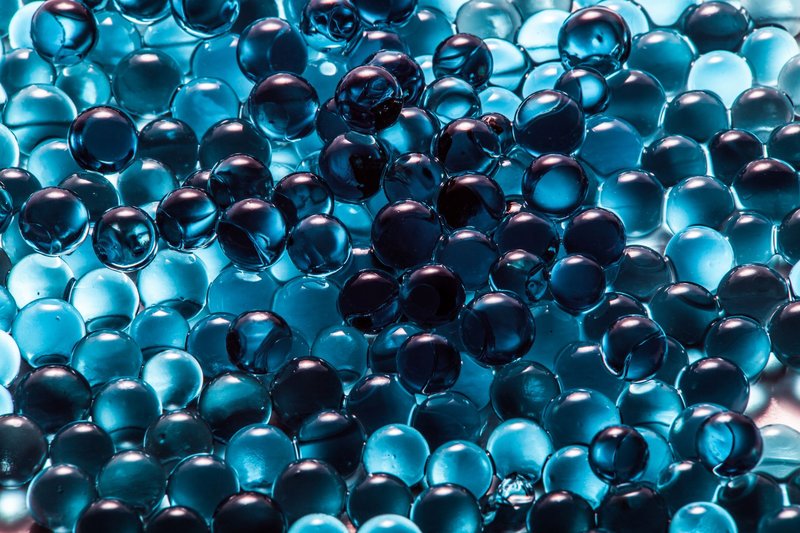
Hydrogels are polymer networks that absorb and hold enormous amounts of water — often hundreds of times their dry weight — and swell or shrink in response to pH, temperature, glucose level, or ionic concentration in their environment.
Why it’s smart: the swelling response can be tuned to trigger at a specific biological or chemical condition, turning the material into a passive sensor and actuator in one.
Superabsorbent hydrogel is the polymer inside disposable diapers. Soft contact lenses and wound dressings that keep a healing wound moist without sticking to it both rely on hydrogel chemistry. Research-stage hydrogels are also being developed as glucose-responsive drug-delivery systems that release insulin only when blood sugar rises.
10. Magnetorheological Fluids
Magnetorheological (MR) fluid is a liquid — usually oil — loaded with micron-scale iron particles that align into rigid chains the instant a magnetic field is applied, thickening the fluid from something like motor oil to something closer to a solid in milliseconds. Remove the field, and it goes liquid again just as fast.
Why it’s smart: damping force can be tuned electronically in real time, rather than fixed by a mechanical spring rate at the factory.
Cadillac’s MagneRide suspension uses MR dampers to adjust ride stiffness continuously as sensors read the road. The same fluid shows up in prosthetic knees that adapt resistance to walking speed, and in seismic dampers engineered into some earthquake-prone high-rises to stiffen against sudden lateral shock.
Where Each Material Shows Up, By Industry
| Material | Construction | Fashion / Wearables | Medicine | Aerospace / Auto |
|---|---|---|---|---|
| Piezoelectric | Traffic/floor energy harvesting | Footstep-powered wearables | Ultrasound imaging | Engine knock sensors |
| Shape-memory alloy | — | Flexible eyewear | Stents, orthodontic wire | Deployable structures |
| Shape-memory polymer | — | — | Self-tightening sutures | Foldable solar panels |
| Thermochromic | — | Mood rings, novelty apparel | Fever indicator strips | — |
| Photochromic | Smart security inks | Transitions lenses | — | — |
| Electrochromic | Smart building façades | — | — | Dimmable aircraft windows |
| Self-healing polymer | Protective coatings | Self-healing phone/car finishes | — | Composite wing skins |
| Self-healing (bio) concrete | Bridges, parking structures | — | — | — |
| Hydrogel | — | — | Wound dressings, drug delivery | — |
| Magnetorheological fluid | Seismic dampers | — | Adaptive prosthetics | Adaptive suspension |
FAQ
What’s the actual definition of a smart material? A material that reversibly changes a physical property — shape, color, viscosity, conductivity — in direct response to an external stimulus like heat, light, an electric or magnetic field, or pH, and returns to its original state when the stimulus is removed.
Are smart materials expensive? It depends heavily on the class. Thermochromic and photochromic pigments are cheap enough to appear in novelty products for a few dollars. Nitinol and MR fluid cost significantly more per unit and are reserved for applications where the performance justifies it, like medical devices or automotive suspensions.
Can hobbyists or makers get hold of any of these? Yes, several are DIY-accessible. Thermochromic and photochromic pigment powders are sold in small quantities for craft and coating projects. Nitinol wire is available in hobbyist gauges for makers building simple actuators. Hydrogel beads are cheap and widely sold. Bio-concrete and MR fluid are harder to source outside a lab or industrial supplier.
How is a smart material different from just an “advanced” or “high-performance” material? An advanced material like carbon fiber is defined by a fixed, superior property — high strength-to-weight ratio, for instance — that doesn’t change once manufactured. A smart material’s defining trait is that its properties change on command, in response to something in its environment.
Most of these materials aren’t lab curiosities. Nitinol is in the glasses on your face, thermochromic dye is in the mug on your desk, and hydrogel is in the diaper drawer if you’ve got a toddler. The line between “smart material” and “material” is thinner than the marketing around it suggests — it’s mostly a question of whether something reacts to its environment on purpose.