TLDR
No, Nevada doesn’t have any historically active (erupting) volcanoes — nobody has watched one blow in this state. But it’s sitting on more than 165 Quaternary-age volcanic features spread across seven volcanic fields, several of which the Nevada Bureau of Mines and Geology classifies as “active but low risk.” The youngest eruption, at Soda Lakes near Fallon, happened somewhere between 5,000 and 6,000 years ago. That’s a blink in geologic time. The state also hosts one of the hottest geothermal systems in the country, at Steamboat Springs south of Reno, which is basically a volcano’s plumbing still running hot with nothing on the surface to show for it.
Table of Contents
- What “Active” Actually Means
- Nevada’s Volcanic Fields at a Glance
- The Youngest Volcano in Nevada
- Steamboat Springs: The Heat Without the Eruption
- Why Nevada Has So Many Volcanoes and No Eruptions
- FAQ
What “Active” Actually Means
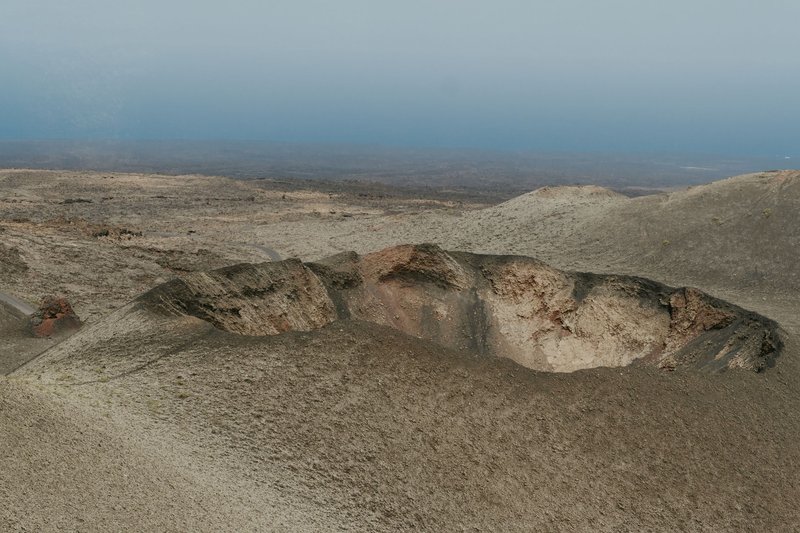
Volcanologists don’t use “active” the way you’d use it about a busy weekend. A volcano is generally considered active if it has erupted during the Holocene — the last roughly 11,700 years — or shows current signs of unrest: earthquakes, ground swelling, gas venting, heat. “Dormant” means it’s erupted before but not recently, with no current signals. “Extinct” means the magma source is gone for good.
By that standard, Nevada has zero volcanoes with a confirmed historical eruption — nothing anyone recorded firsthand. But several of its volcanic fields have erupted within the Holocene window, which is why state hazard assessments don’t file them under “extinct” and move on. The U.S. Geological Survey’s Volcano Hazards Program currently lists Soda Lakes as the one Nevada feature on its official watch list, added in 2018 with a moderate threat designation — not because an eruption looks imminent, but because the geologic evidence says it’s young enough to happen again.
Nevada’s Volcanic Fields at a Glance
Nevada Bureau of Mines and Geology hazard specialist Craig dePolo has grouped the state’s volcanic ground into distinct fields, each with its own risk tier based on eruption age and frequency. Here’s the shape of it:
| Volcanic Field | Location | Status | Most Recent Activity |
|---|---|---|---|
| Lahontan Valley (Soda Lakes) | Near Fallon | Moderately high risk | ~5,000–6,000 years ago |
| Lunar Crater | Pancake & Reveille Ranges, central NV | Low-to-moderate risk | Holocene-adjacent, one of ~150 vents |
| Crater Flat | Near Yucca Mountain | Active, low risk | ~80,000 years ago (Lathrop Wells cone) |
| Aurora | West-central NV, near CA border | Active, low risk | Pleistocene |
| Buffalo Valley | North-central NV | Inactive | Pleistocene, 18 vents mapped |
| Western Nevada | Scattered isolated vents | Inactive | Pleistocene |
| Clayton Valley / Sheldon-Antelope | Western/northern NV | Active, low risk | Pleistocene |
Two things jump out. First, the Lunar Crater field isn’t a single volcano — it’s a volcanic district roughly 100 square miles in size, packed with somewhere between 140 and 160 individual monogenetic vents, cinder cones, and maars. Second, the Lahontan Valley field carries the highest risk rating in the state, and it’s also the youngest, which is exactly why it’s the one on the USGS’s radar.
The Youngest Volcano in Nevada
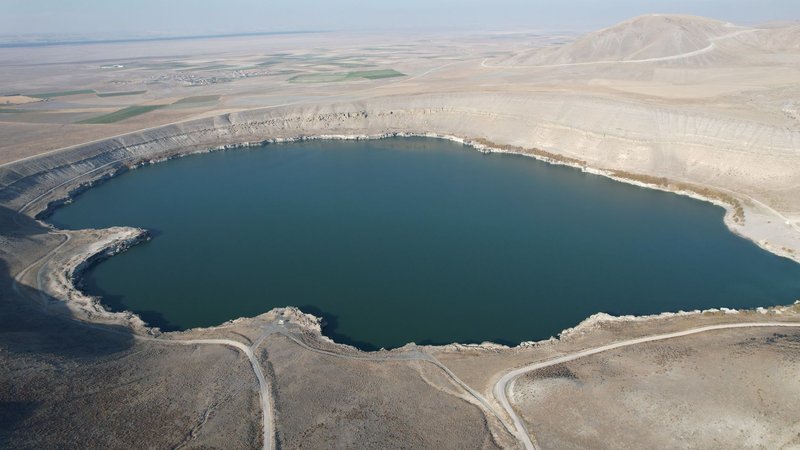
Soda Lakes, a pair of maar craters northwest of Fallon, is the answer if someone asks which Nevada volcano erupted most recently. The eruption was phreatomagmatic — rising magma hit groundwater and glacial Lake Lahontan sediment and flashed to steam, blasting out a crater instead of building a classic cone. Geologists date it to roughly 5,000 to 6,000 years ago, with some estimates for related maars in the area coming in even younger, possibly under 1,500 years.
That’s recent enough that Soda Lakes isn’t grouped with Nevada’s “probably done” volcanoes. It’s the reason the state’s only USGS-monitored volcanic feature sits a short drive from a working town rather than out in empty desert.
Steamboat Springs: The Heat Without the Eruption
South of Reno, the Steamboat Springs geothermal field tells a different version of the same story. The rhyolite domes and flows there erupted between about 2.5 million and 1.1 million years ago — old enough that nobody’s calling it an active volcano in the eruption sense. But the plumbing underneath never fully cooled. Subsurface temperatures exceed 200°C, feeding roughly 50 hot springs, fumaroles, and steam vents, plus a commercial geothermal power plant that’s been drawing on that heat for decades.
Steamboat Springs is a useful reminder that “volcanically active” and “erupting” aren’t the same claim. No lava has moved there in over a million years. The heat source that used to drive eruptions is still very much doing something — just not the dramatic part.
Why Nevada Has So Many Volcanoes and No Eruptions
Nevada sits almost entirely within the Basin and Range Province, a stretch of the American West where the earth’s crust has been slowly stretching apart for the last 15-plus million years. That stretching thins the crust, opens pathways for magma, and produces exactly the kind of small, scattered, basaltic eruptions Nevada’s fields are full of — not the towering stratovolcanoes you’d picture from Washington or Japan, but low cinder cones and maar craters that erupt once, briefly, and go quiet.
It’s a fundamentally different volcanic system than the Cascades. There’s no single magma chamber feeding a repeat eruption cycle at one cone; there’s a broad zone of crust where a new vent can open almost anywhere, erupt for a matter of months to years, and then shut down permanently while the surrounding field stays capable of producing another vent somewhere else centuries or millennia later. That’s the pattern behind Nevada’s 165-plus mapped Quaternary volcanoes and its complete absence of a recorded eruption.
FAQ
Does Nevada have any active volcanoes right now? No volcano in Nevada is currently erupting or showing signs of imminent eruption. The state does have volcanic fields classified as “active” in the sense that they’ve erupted within the last several thousand to tens of thousands of years and retain magma sources capable of erupting again.
What is the youngest volcano in Nevada? Soda Lakes, near Fallon in the Lahontan Valley volcanic field, erupted most recently — an estimated 5,000 to 6,000 years ago.
Is Nevada part of the Ring of Fire? No. Nevada’s volcanism comes from Basin and Range crustal extension, not subduction-zone volcanism like the Pacific Ring of Fire. It’s a geologically distinct process that produces small basaltic fields rather than large composite volcanoes.
Could Nevada have a volcanic eruption in the future? Geologically, yes — several of its volcanic fields are young enough and active enough by scientific definition that a future eruption isn’t ruled out. The Nevada Bureau of Mines and Geology rates that likelihood as low but non-zero for most fields, and moderately higher specifically for the Lahontan Valley field around Soda Lakes.
Are Nevada’s hot springs connected to volcanoes? Many are. Steamboat Springs near Reno sits directly on a former rhyolite volcanic field, and its hot springs are powered by residual heat from that system rather than any current eruption risk.