Jordan has almost no oil, but it sits on some of the most productive mineral ground in the Middle East. Phosphate rock, potash, and Dead Sea bromine carry the economy. Behind them is a long list of industrial minerals most people never hear about, from zeolites to glass sand.
This guide covers the main minerals in Jordan, where they come from, and what they end up in. It also covers the prospects the government is betting on next.
Contents
- TLDR
- The big three: phosphate, potash, and bromine
- Dead Sea minerals: salt, magnesium, and mud
- The industrial minerals nobody talks about
- Quick reference table
- What’s next: copper, gold, rare earths, and oil shale
- A short history: from Bronze Age copper to 1935
- The minerals you can see as a visitor
TLDR
- Phosphate rock, potash, and bromine lead Jordan’s mineral sector. Most of it goes to fertilizer and chemical markets abroad.
- Per USGS country data for 2024, Jordan ranked 2nd globally in bromine and pumice, 5th in phosphate rock, 8th in potash, and 12th in zeolites.
- Phosphate comes from the south and center of the country. Potash, bromine, magnesium, and salt come from the Dead Sea.
- Copper, gold, rare earths, uranium, and oil shale are the next wave, and a 2024-2033 national mining strategy is built around them.
The big three: phosphate, potash, and bromine
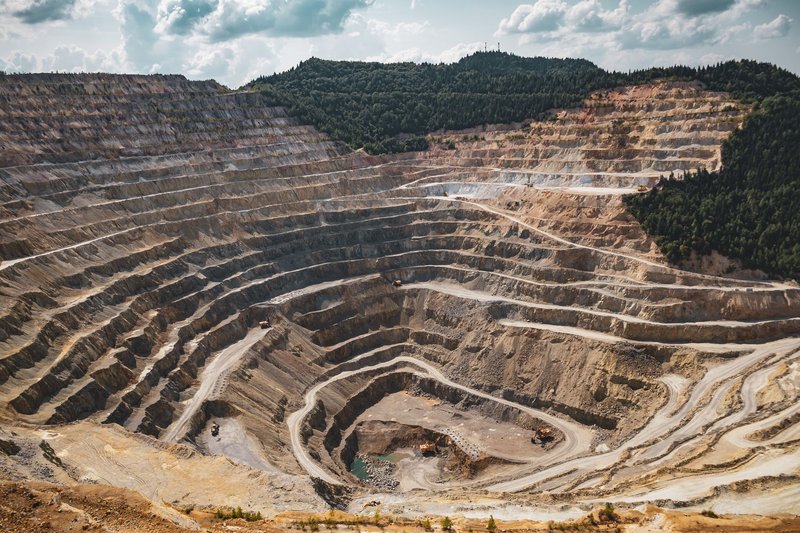
Phosphate rock
Phosphate is Jordan’s flagship mineral. It’s a sedimentary rock, laid down in ancient seabeds, that’s crushed and chemically processed into phosphoric acid and fertilizer. Every crop that needs phosphorus (which is all of them) depends on it.
The main mining areas are Al-Hasa and Al-Abyad in the center, Shidiya in the far south near the Saudi border, and the older Rusaifa mine east of Amman. At around fifth in the world, Jordan isn’t the biggest producer. But it’s a major exporter relative to its size, and its rock is valued for being fairly high grade.
Potash
Potash is a potassium salt, mostly potassium chloride, and it’s the other half of the fertilizer equation. Plants need nitrogen, phosphorus, and potassium; Jordan supplies two of the three.
Jordan’s potash isn’t mined from a hole in the ground. It’s harvested from the Dead Sea. Brine is pumped into huge evaporation ponds at the southern end, the sun does the work, and potassium salts crystallize out. At eighth in the world, Jordan’s output comes from a single operation, the Arab Potash Company, working from the Safi area.
Bromine
Bromine is the surprising one. Jordan ranks second worldwide, which is a startling position for a country that most people wouldn’t connect to the periodic table’s only liquid nonmetal besides mercury.
The Dead Sea holds far more bromide than ordinary seawater, so extracting it is cheap. Bromine goes into flame retardants, drilling fluids for oil and gas wells, and water treatment chemicals. Production is based at Safi, tied to the same potash operation.
Dead Sea minerals: salt, magnesium, and mud
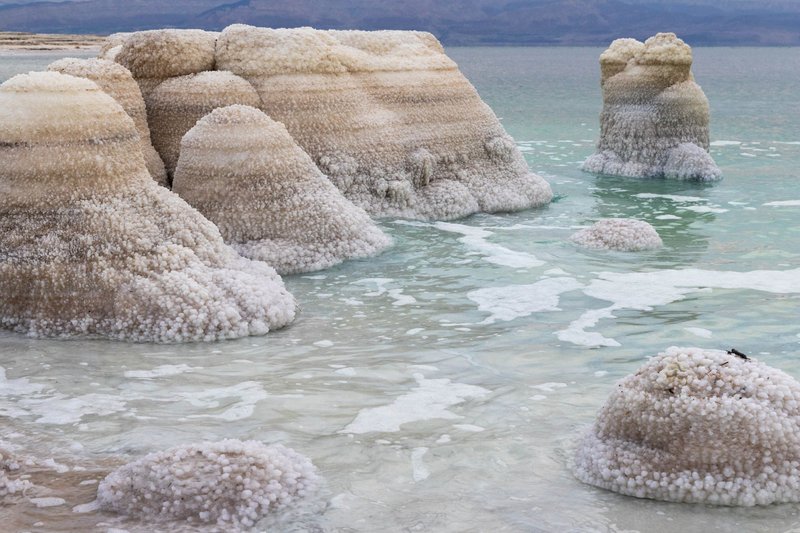
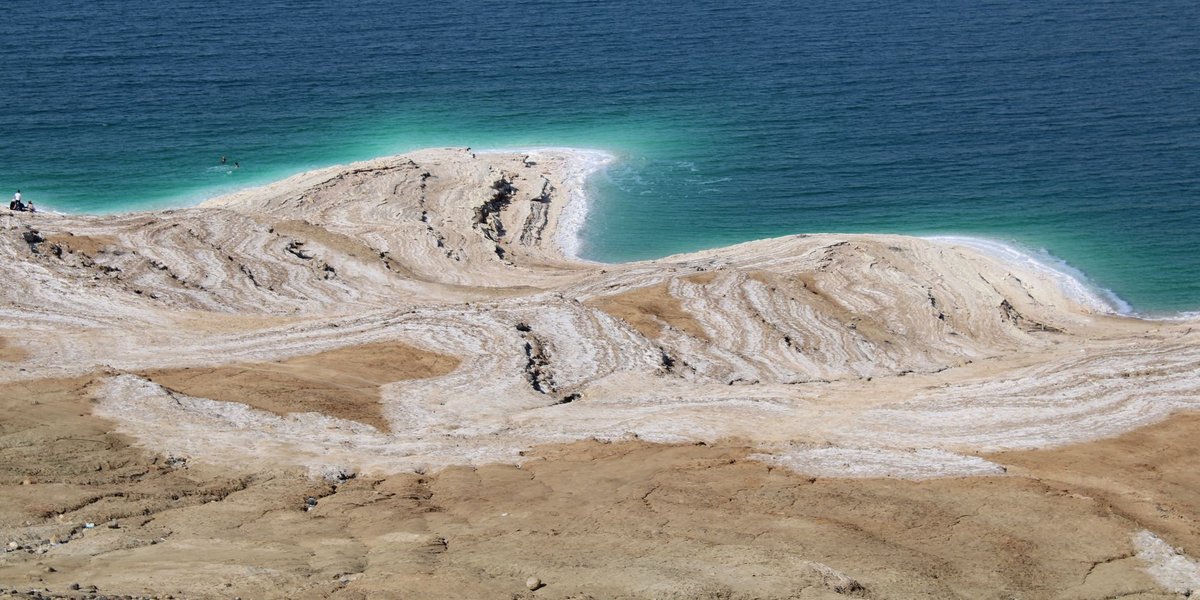
The Dead Sea is the single most valuable mineral deposit in Jordan, and it’s a liquid. The surface sits more than 430 meters below sea level, the lowest exposed land on Earth. With no outlet, water leaves only by evaporation, so salts concentrate. The salinity runs close to 10 times that of the ocean.
That brine is a mixed bag of dissolved minerals:
- Potassium becomes potash fertilizer.
- Bromine feeds the chemical industry, as above.
- Magnesium is recovered as magnesium chloride and magnesium compounds. These go into refractory bricks, chemicals, and industrial products.
- Common salt (sodium chloride) is the bulk of what’s dissolved, and it’s a byproduct of the evaporation process.
Then there’s the mud. Dead Sea mud is a fine, mineral-rich silt collected from the shoreline. It’s sold in cosmetics and spa products across the region. The marketing claims run well ahead of the clinical evidence, but the material is real, and the cosmetics trade built on it is a small but steady export.
The industrial minerals nobody talks about
Below the headline minerals sits a second tier. These don’t make news, but they keep factories, construction sites, and water plants running.
Zeolites. Jordan ranks 12th in the world. Zeolites are porous volcanic minerals that trap ions and molecules. They end up in water filters, animal feed, soil conditioners, and detergents. The deposits come from the volcanic fields in the north-east.
Pumice. Jordan sits second in the world. Pumice is volcanic glass full of gas bubbles, light enough to float. It’s used in lightweight concrete blocks and as an abrasive, and it comes from the same basalt country in the north.
Silica sand. The sandstone formations of the south, around Ras en-Naqab, supply high-purity quartz sand for glassmaking and ceramics.
Limestone, marble, and basalt. These are the construction workhorses. Limestone also feeds cement and lime production, and Jordan’s building stone is a regional export.
Kaolin, feldspar, and clays. White clays and feldspar from the southern desert go into ceramics, tiles, and paper.
Quick reference table
| Mineral | Main location | Main use |
|---|---|---|
| Phosphate rock | Al-Hasa, Al-Abyad, Shidiya, Rusaifa | Fertilizer, phosphoric acid |
| Potash | Dead Sea (Safi area) | Fertilizer |
| Bromine | Dead Sea (Safi area) | Flame retardants, drilling fluids |
| Magnesium compounds | Dead Sea | Refractories, chemicals |
| Salt | Dead Sea | Industrial and food-grade salt |
| Zeolites | North-east volcanic fields | Water filtration, feed, detergents |
| Pumice | North-east basalt fields | Lightweight concrete, abrasives |
| Silica sand | Ras en-Naqab (south) | Glass, ceramics |
| Limestone and marble | Throughout the country | Cement, construction stone |
| Oil shale | Attarat Um Ghudran (central) | Power generation |
Rankings in this post reflect USGS data for 2024. Production figures shift year to year, so check the latest USGS profile before quoting a number.
What’s next: copper, gold, rare earths, and oil shale
Jordan’s phosphate and potash are mature industries. The government wants a broader base, and the 2024-2033 mining strategy puts exploration at the center. The U.S. International Trade Administration’s overview of Jordan’s critical mineral and mining opportunities lays out why foreign companies are being courted.
Copper. The Dana and Wadi Feynan area in the south holds copper-bearing rock that people mined 5,000 years ago. Modern exploration is checking whether it’s worth mining again at scale.
Gold and precious metals. Exploration licenses have been issued, and the Jordanian press has reported on copper and gold survey work. This is early stage. No gold mine of significance is running yet.
Rare earths and uranium. Jordan’s phosphate beds and some central deposits carry trace uranium and rare earth elements. Extracting them as a byproduct of phosphate processing is the cheapest route, and it’s the one under study.
Lithium. It’s on the list of critical minerals the strategy wants to explore. Treat it as a prospect, not a deposit.
Oil shale. This one is already real. The Attarat Um Ghudran deposit in central Jordan feeds a power plant that burns oil shale to make electricity. For a country that imports most of its energy, it’s the clearest example of a mineral resource doubling as an energy source.
A short history: from Bronze Age copper to 1935
Jordan’s mining story starts earlier than almost anywhere. Archaeologists have found large-scale copper smelting at Khirbat en-Nahas in the Wadi Feynan region, dating back to the Bronze and Iron Ages. The copper from this valley moved across trade routes for thousands of years.
The modern industry is much younger. Phosphate mining began at Rusaifa in 1935, and the sector grew after that into a national company and a major export earner. The Dead Sea potash works came later and grew into the country’s chemical backbone.
The minerals you can see as a visitor
Not every mineral story in Jordan is about trade. Three are visible to anyone who travels there.
Wadi Rum. The red and orange desert sand gets its color from iron oxide coating the quartz grains. The cliffs around it are sandstone, and the shifting tones from pale yellow to deep red come from different iron content in the layers.
Petra. The city was carved into sandstone, and the swirls of pink, red, and cream in the rock face are bands of mineral staining. The Nabataeans picked the stone and the surfaces for exactly that effect.
The Dead Sea shoreline. White salt crusts on the rocks and a floating swim are what visitors come for. The black mud on sale along the shore comes from the same basin that supplies the potash plants.
Minerals in Jordan aren’t one story. Phosphate and potash pay the bills, bromine puts the country near the top of a global ranking, and a slate of new prospects will decide whether the next decade looks like the last. Everything else, from the glass in your window to the colors of Wadi Rum, comes from the same ground.