Something red flashes past the feeder, or a hawk parks itself on a fence post along I-40, and the question is always the same: what was that? Tennessee’s official checklist runs to 423 species, which is a fantastic resource if you’re a completist and a useless one if you just want to know what’s eating your sunflower seeds. This is the shorter, more useful list — the birds you’ll genuinely run into across the state, sorted by when and where you’ll see them, with the markings and sounds that actually separate one from another.
Table of Contents
- Tennessee’s Regions and Seasons, Fast
- Year-Round Residents
- Forest Specialists
- Water and Raptors
- Summer Arrivals
- Winter Visitors
- Quick Reference Table
Tennessee’s Regions and Seasons, Fast
The state stretches more than 460 miles east to west, and that distance matters more for birds than it does for driving times. East Tennessee climbs into the Appalachians, where Great Smoky Mountains National Park hosts over 200 recorded species across its elevation bands — warblers and thrushes that never bother with the lowlands. Middle Tennessee is rolling farmland and cedar glades centered on Nashville, with Radnor Lake as the reliable urban hotspot. West Tennessee flattens out into Mississippi River bottomland, and Reelfoot Lake — a flooded cypress forest formed by the 1811-1812 New Madrid earthquakes — pulls in hundreds of wintering bald eagles along with over 280 other species.
Season matters just as much as geography. Roughly a third of the birds on this list live in Tennessee year-round. Another chunk shows up only to breed, arriving in spring and clearing out by fall. A handful come the other direction — birds that summer in Canada and treat Tennessee as their winter home.
Year-Round Residents
These are the ones you can find in January and July alike. If you’re filling a feeder in Tennessee, this is most of what shows up.
1. Northern Cardinal
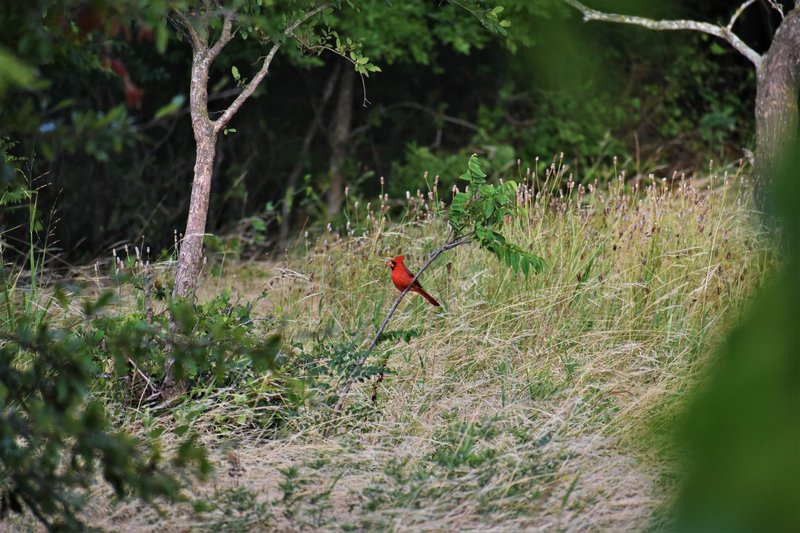
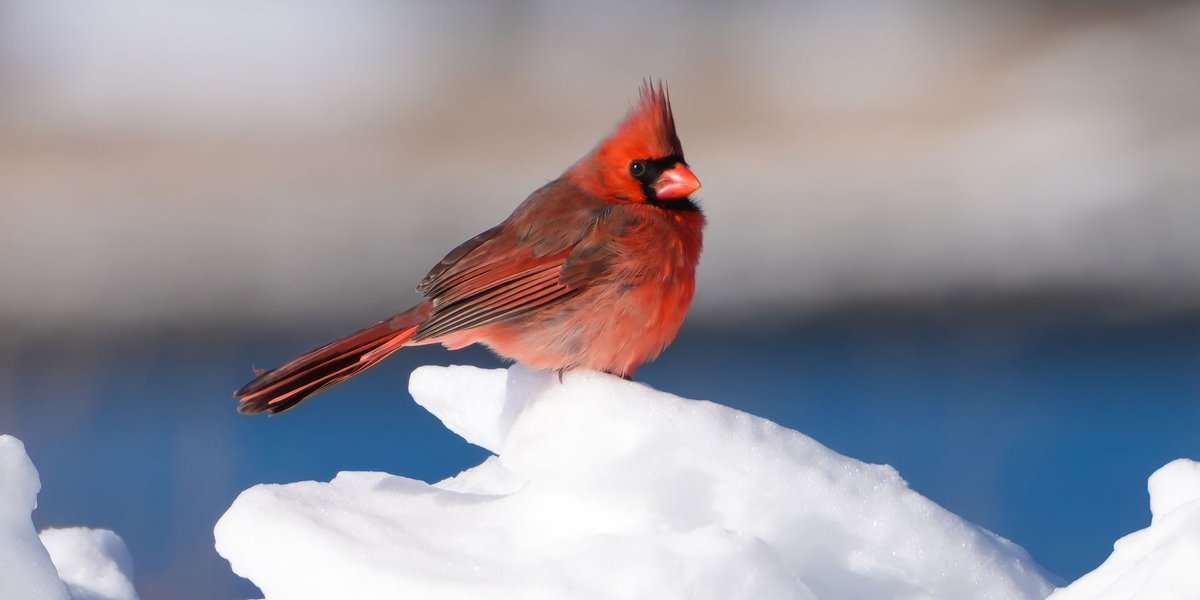
Males are unmistakable: full-body red, a black mask around a thick orange-red bill, and a pointed crest. Females trade the red for warm brown with red-tinged wings, tail, and crest — same silhouette, different palette. The song is a clear, whistled “cheer-cheer-cheer, purty-purty-purty,” and both sexes sing, which is unusual among North American songbirds. Statewide, every season, no exceptions.
2. Northern Mockingbird
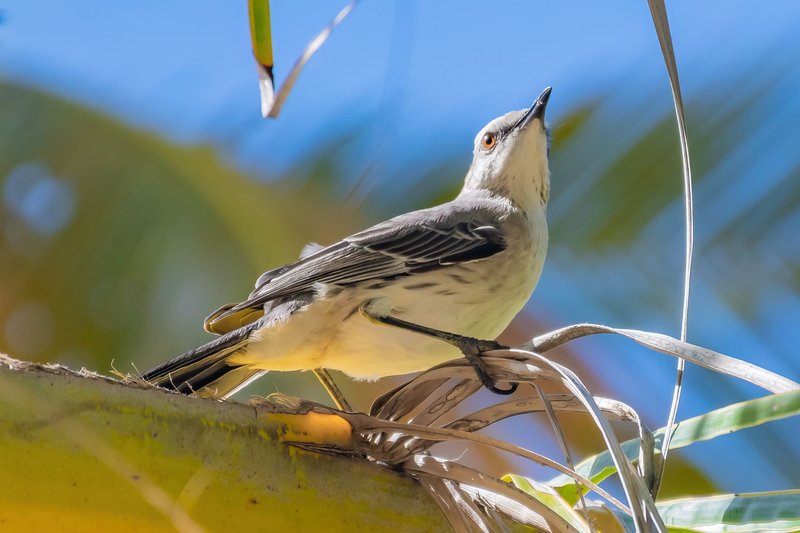
Tennessee’s state bird since 1933, chosen by a statewide vote the Tennessee Ornithological Society organized that April. About ten inches long, pale gray above, whiter below, with bold white wing patches that flash when it flies. It doesn’t have one song — it has up to 200, borrowed from other birds, insects, and occasionally car alarms or ringtones. The genus name, Mimus polyglottos, literally means “many-tongued mimic.” It’s also aggressively territorial and will dive-bomb cats, dogs, and the occasional homeowner who gets too close to a nest.
3. Carolina Chickadee
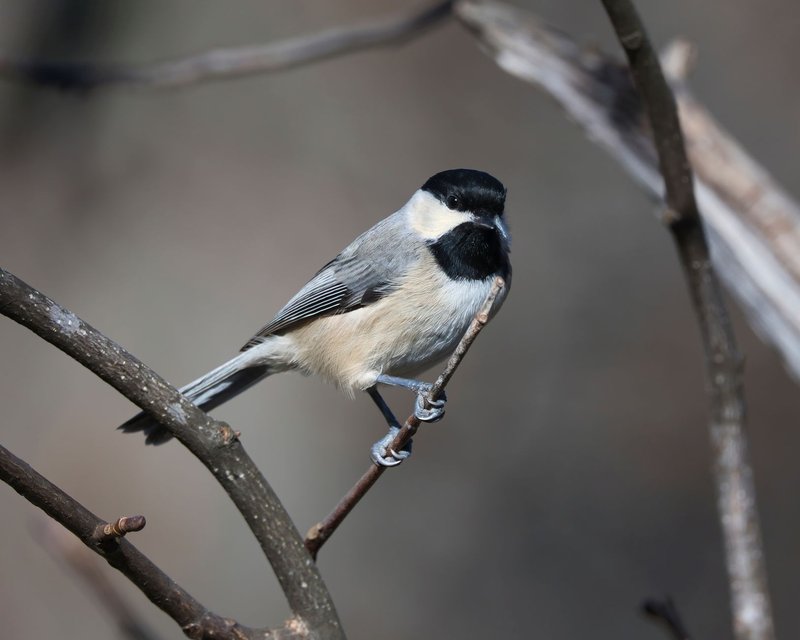
Small, round, black cap and bib with white cheeks and a gray back — easy to confuse with the Black-capped Chickadee, except Tennessee is solidly Carolina territory. The call is the reason it has a name: a buzzy “chick-a-dee-dee-dee,” with the number of “dee” notes reportedly scaling with how alarmed it is. Common at feeders year-round, especially where there’s suet.
4. Tufted Titmouse
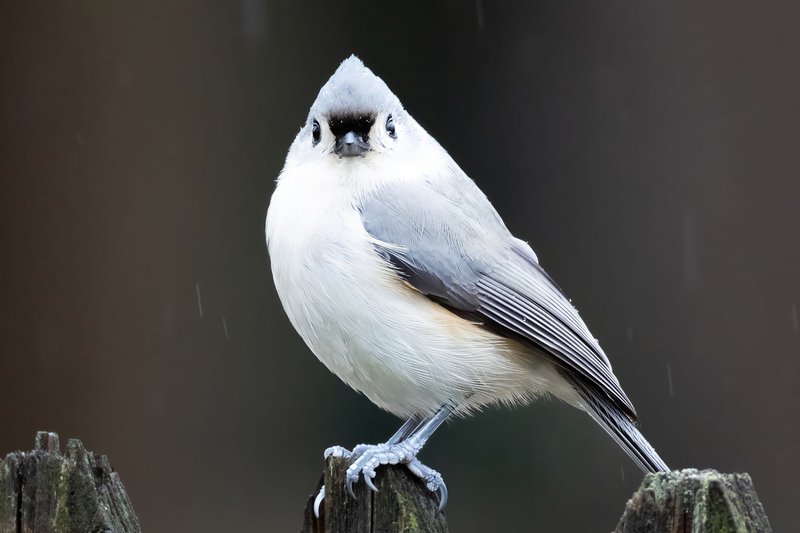
Soft gray overall with a peachy wash on the flanks and a pointed gray crest that gives it a slightly indignant look. The call is a loud, repeated “peter-peter-peter.” Titmice travel with chickadee flocks in winter, which makes them easy to spot together at the same feeder.
5. Carolina Wren
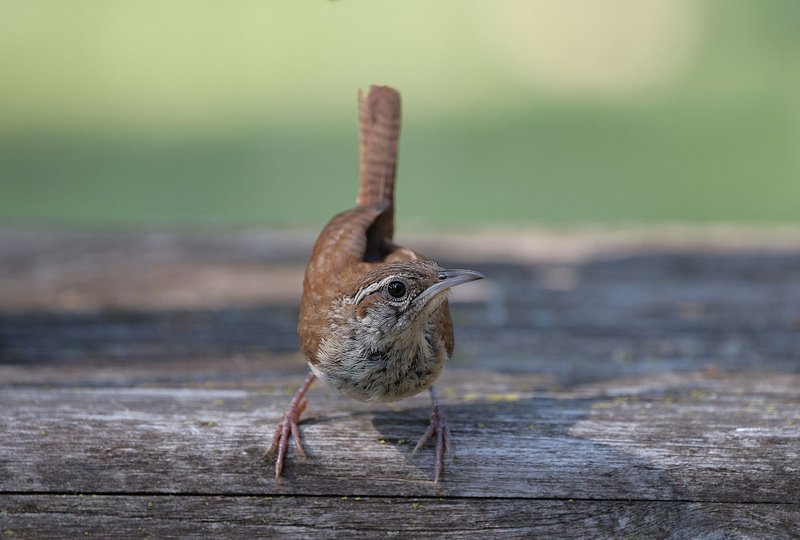
Rich rust-brown above, buffy below, with a bright white eyebrow stripe that’s the fastest way to ID it. For a bird under six inches long, the voice is absurd — a loud, rolling “teakettle-teakettle-teakettle” that carries well past the yard it’s coming from. Pairs stay together year-round and don’t migrate, which means a hard winter can hit local populations hard.
6. American Goldfinch
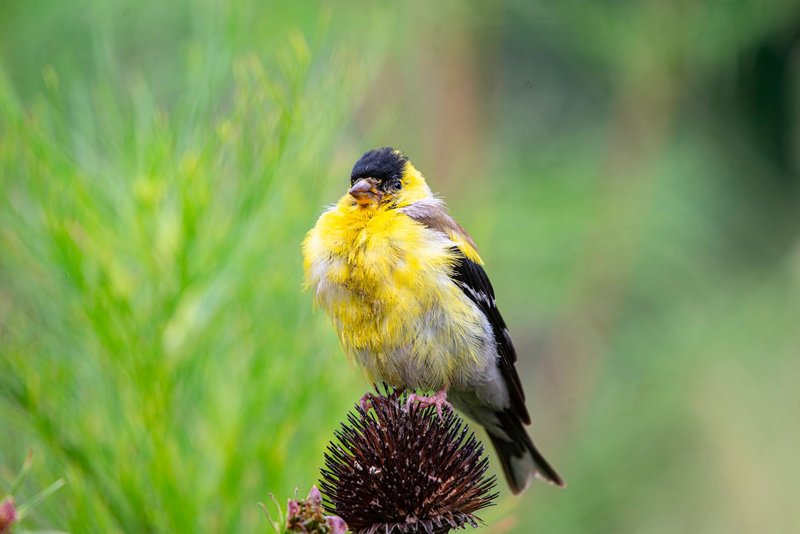
Breeding males in summer are bright lemon-yellow with a black cap and black wings edged in white — about as close to a canary as North America gets. Winter birds of both sexes fade to a drab olive-brown, which trips up a lot of backyard birders who assume they’ve left. They haven’t; they’ve just changed clothes. The flight call is a bouncy “po-ta-to-chip” delivered in an undulating flight pattern.
7. Blue Jay
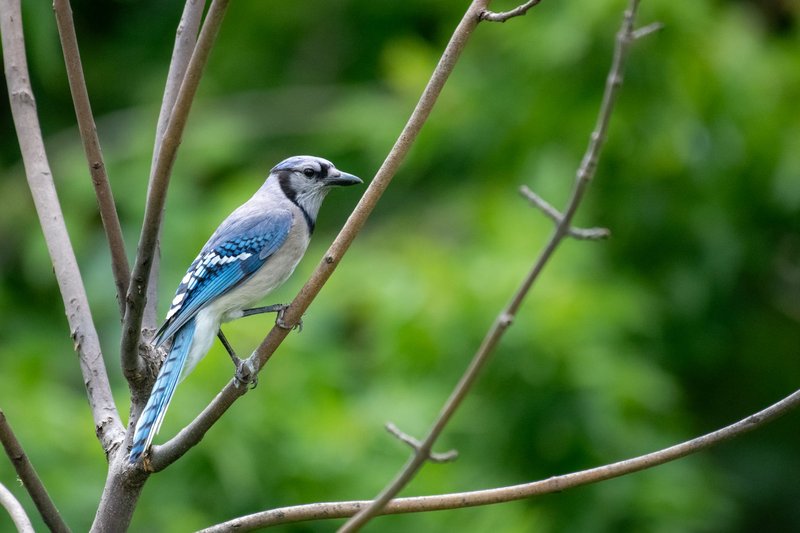
Bright blue above, white below, black necklace, and a crest that raises when it’s agitated — which is often. Blue Jays are loud, smart, and known for caching acorns by the thousands, a habit that’s helped reforest cleared land after glaciation events historically. The call is a harsh “jay-jay-jay,” but they also do a convincing red-shouldered hawk imitation to clear other birds off a feeder.
8. Mourning Dove
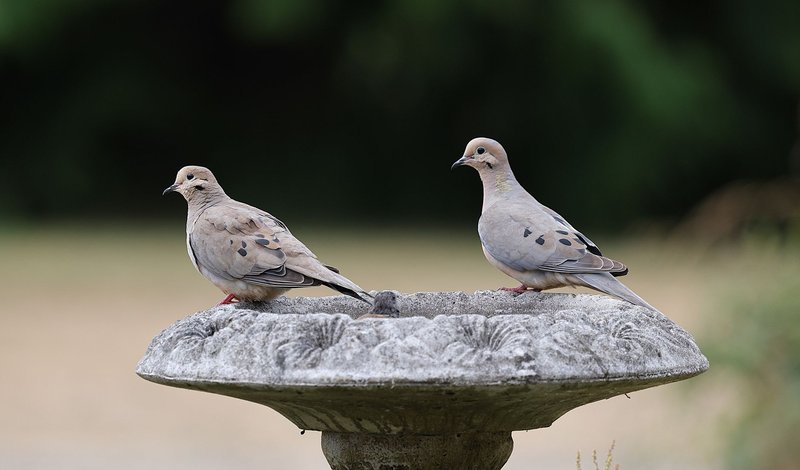
Soft grayish-tan, slim body, long pointed tail with white edges visible in flight. The name comes from the call — a low, mournful “coo-OO-oo-oo-oo” that sounds sadder than the bird actually is. Wings make a sharp whistling sound on takeoff, which startles more people than the bird itself does. One of the most commonly seen birds statewide, feeder or no feeder.
9. Red-bellied Woodpecker
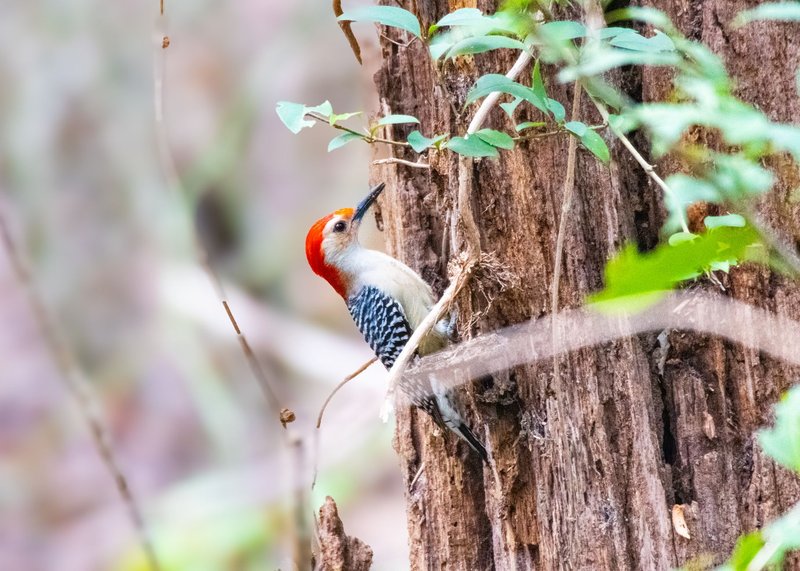
Confusingly named — the red is barely visible on the belly and the field mark that actually works is the zebra-striped black-and-white back paired with a red cap running from the bill to the nape (just the nape on females). The call is a rolling “churr” or “kwirr.” Among the most frequently reported feeder birds in the state, and one that’ll happily work a suet cage upside down.
10. White-breasted Nuthatch
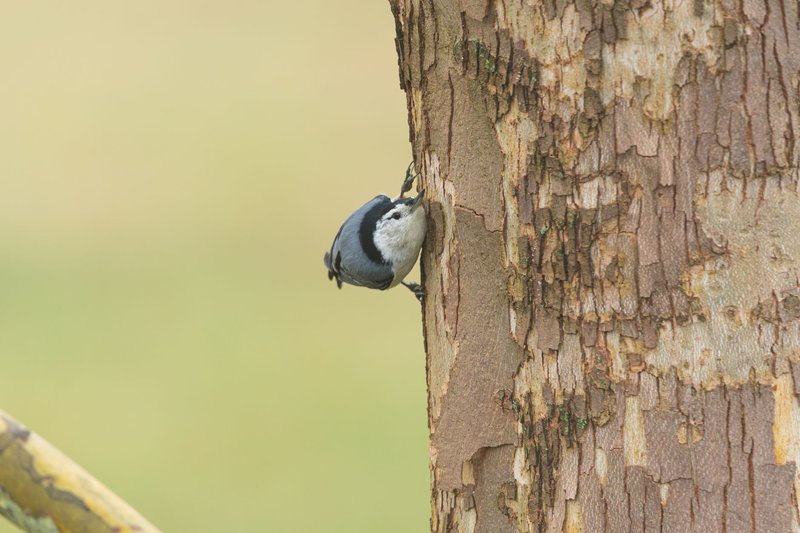
Blue-gray above, white face and belly, black cap. The behavior gives it away before the color does: nuthatches walk headfirst down tree trunks, which almost nothing else does. The call is a nasal “yank-yank,” sometimes described as sounding like a tiny tin horn.
Forest Specialists
Head into wooded areas — the Cumberland Plateau, the Smokies foothills, river bottomlands — and a different set of year-round residents shows up.
11. Pileated Woodpecker
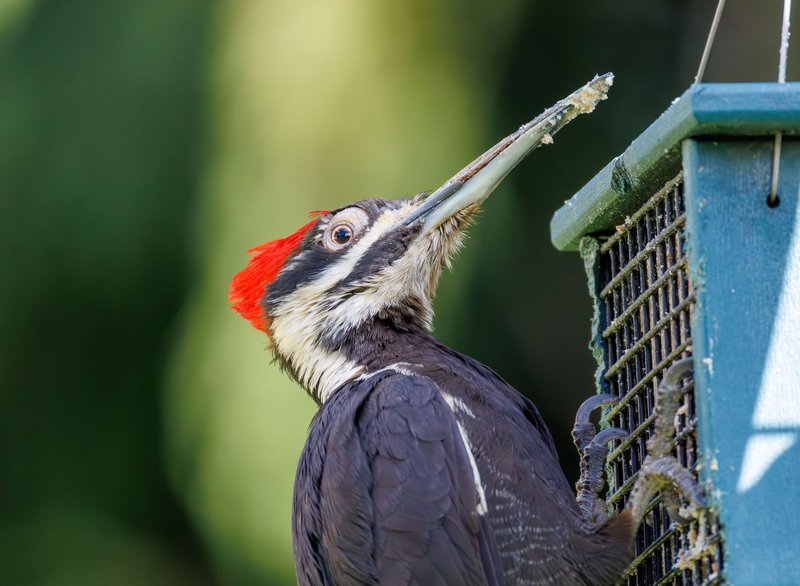
Crow-sized and unmistakable: mostly black body, white stripes down the neck, and a flaming red crest. This is the bird the rectangular holes in dead trees usually belong to — excavations big enough to fit a fist. The call is a loud, irregular “kuk-kuk-kuk-kuk,” and the drumming is deep and resonant enough to hear from well down a trail.
12. Downy Woodpecker
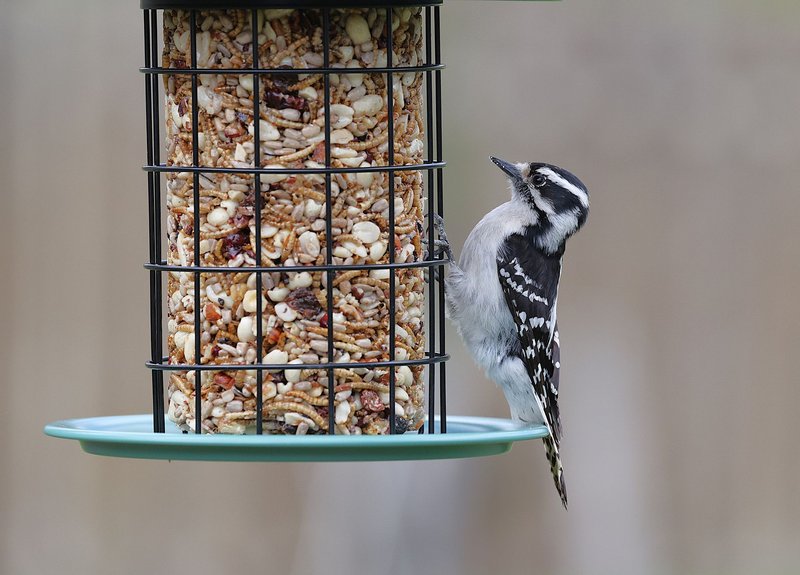
The smallest woodpecker in North America and the one most likely at a suburban feeder — black and white overall, males with a small red patch on the back of the head. Often confused with the larger, nearly identical Hairy Woodpecker; the bill is the tell, short and stubby on the Downy versus long and chisel-like on the Hairy. Call is a soft “pik,” descending into a whinnying rattle.
13. Barred Owl
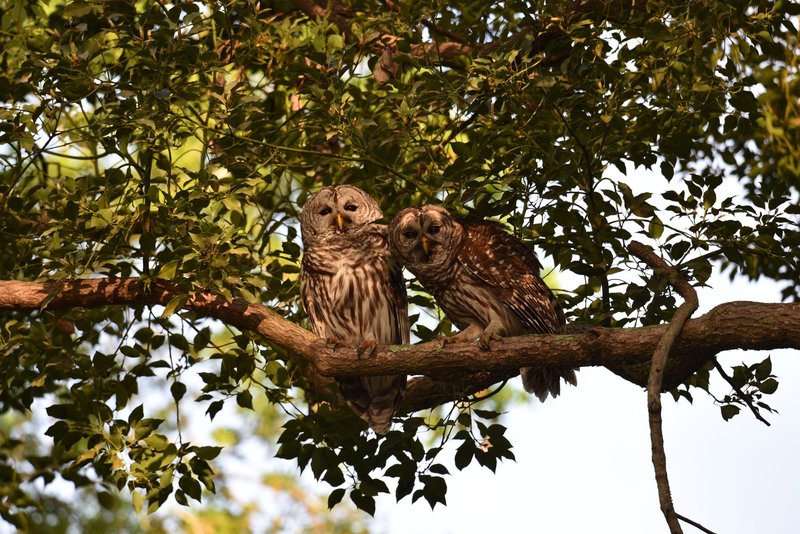
Large, round-headed, brown and white with vertical streaking on the belly and horizontal barring on the chest — hence the name. Dark eyes, unlike the yellow-eyed Great Horned Owl it’s sometimes confused with. The call is the giveaway even before you see it: “Who cooks for you? Who cooks for you-all?” echoing through bottomland hardwoods at dusk, present year-round in forested areas statewide.
Water and Raptors
14. Bald Eagle
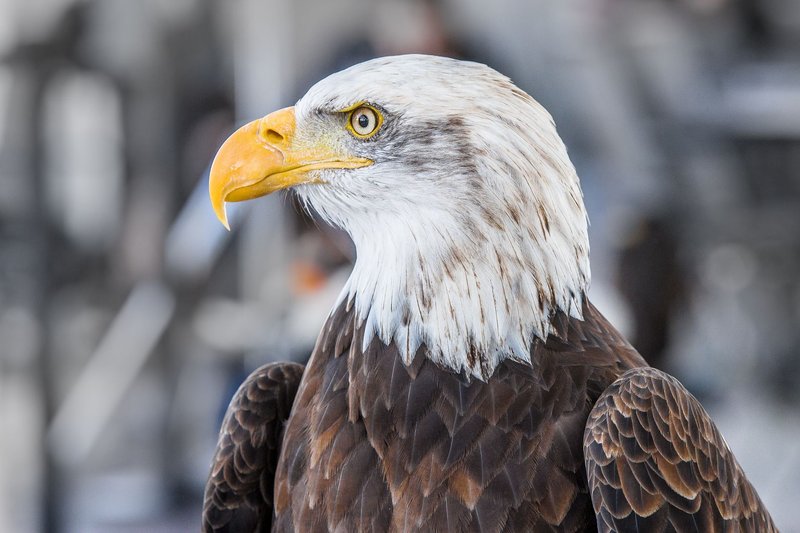
The white head and tail against a chocolate-brown body take four to five years to fully develop — younger birds are mottled brown and often misidentified as hawks or vultures. Tennessee has a growing year-round nesting population, but the number spikes dramatically in winter at Reelfoot Lake, where hundreds gather to fish open water while northern lakes freeze over. The call is a surprisingly weak, chattering whistle — nothing like the dramatic screech used in movies, which is usually dubbed from a red-tailed hawk.
15. Great Blue Heron
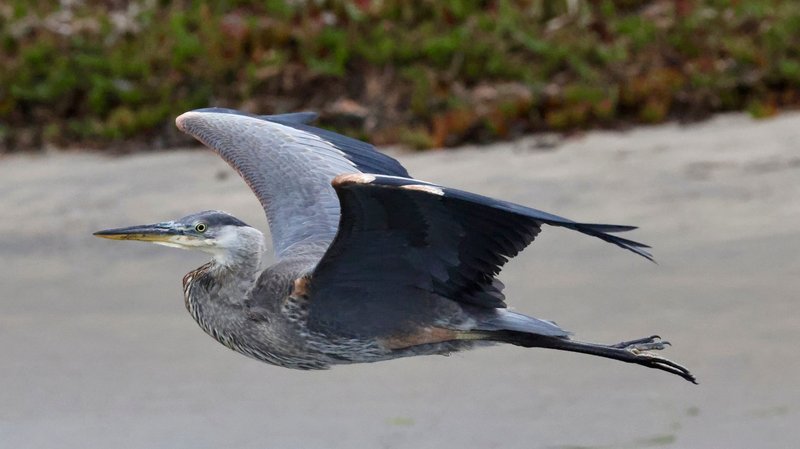
Tall, gray-blue, with a long S-curved neck it tucks in flight and a dagger bill built for spearing fish. Stands motionless at the edge of ponds, lakes, and slow rivers for minutes at a time before striking. Present year-round anywhere there’s shallow water, from farm ponds to the Mississippi bottomlands.
16. Red-tailed Hawk
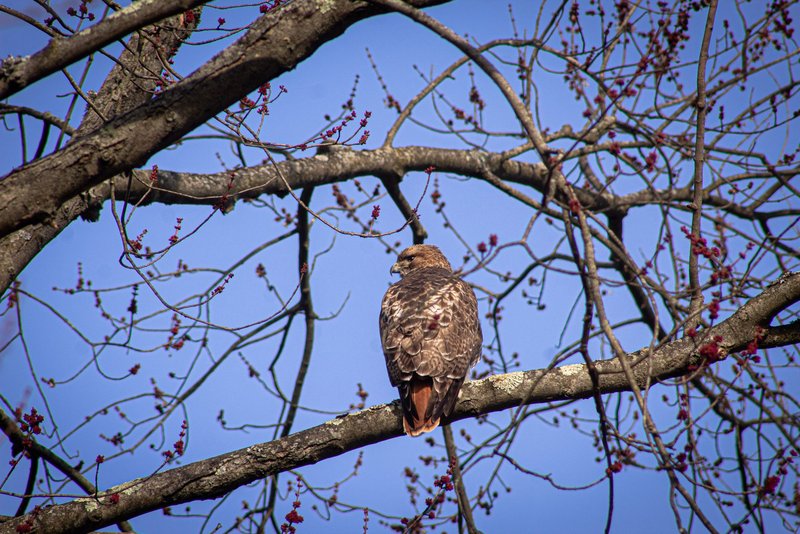
The hawk perched on interstate light poles and fence posts across the state, in every county, every month. Adults show the namesake rust-red tail from above, best seen when soaring; from below, look for a streaked belly band across an otherwise pale chest. The scream — a harsh, descending “kreeeeee” — is the sound movies borrow whenever an eagle is on screen.
Summer Arrivals
These clear out for winter but define a Tennessee summer while they’re here, arriving as early as March and gone by fall.
17. Ruby-throated Hummingbird
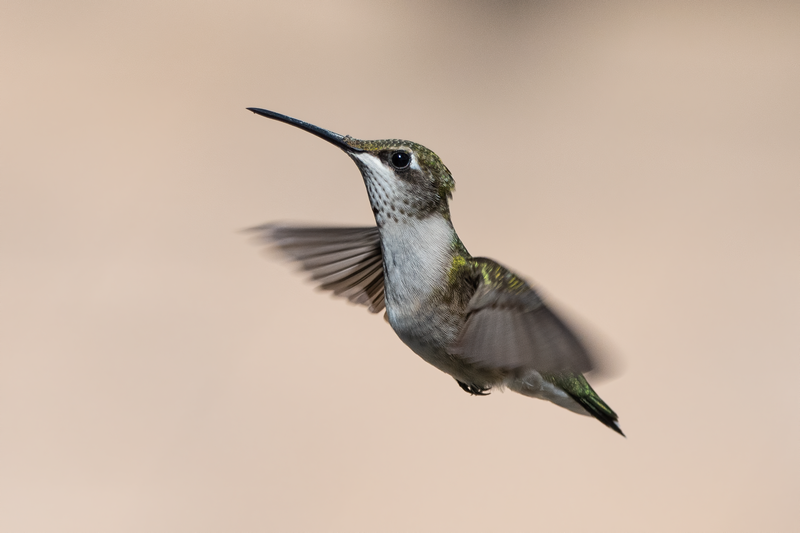
The only hummingbird species that regularly breeds east of the Mississippi, which makes it the only one most Tennesseans will see. Males have an iridescent red throat patch that can look black depending on the light angle; females lack it entirely. Spring migrants start showing up in late March, with the peak arrival running mid-to-late April and stragglers passing through into May. They’re gone again by October, having doubled their body weight in fat beforehand to cross the Gulf of Mexico in a single nonstop flight.
18. Summer Tanager
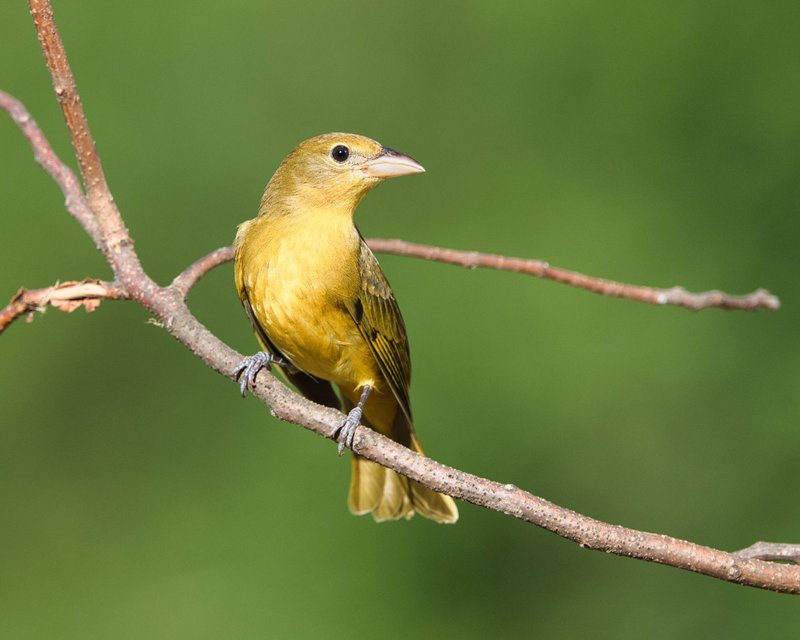
Males are the only entirely red bird in Tennessee — no black wings, no mask, just red head to tail, which separates them cleanly from the Northern Cardinal. Females are mustard-yellow. They specialize in eating bees and wasps, beating the stingers off against a branch before swallowing. A summer-only breeder, mostly in open woodlands and forest edges.
19. Indigo Bunting
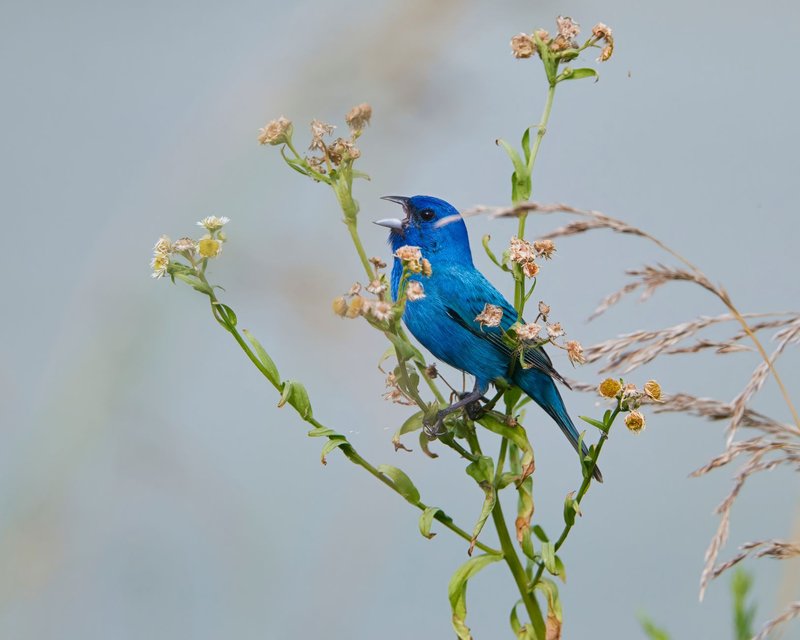
Breeding males are deep, saturated blue all over — a color that comes from light refraction in the feather structure rather than pigment, which is why they can look nearly black in shade and electric blue in direct sun. Females are plain brown, easy to overlook. Common along roadsides, brushy fields, and forest edges from late spring through summer.
20. Barn Swallow
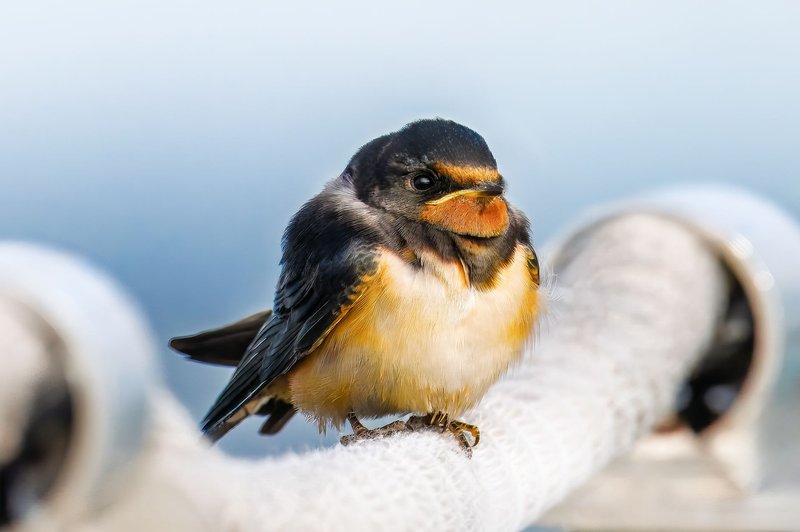
Steel-blue back, rusty-orange throat and belly, and a deeply forked tail that’s the fastest way to separate it from other swallow species at a glance. Builds cup-shaped mud nests under barn eaves, bridges, and porch overhangs — often the same nest, repaired and reused year after year. Arrives in spring, raises two broods some seasons, and heads for Central and South America by early fall.
Winter Visitors
Dark-eyed Junco
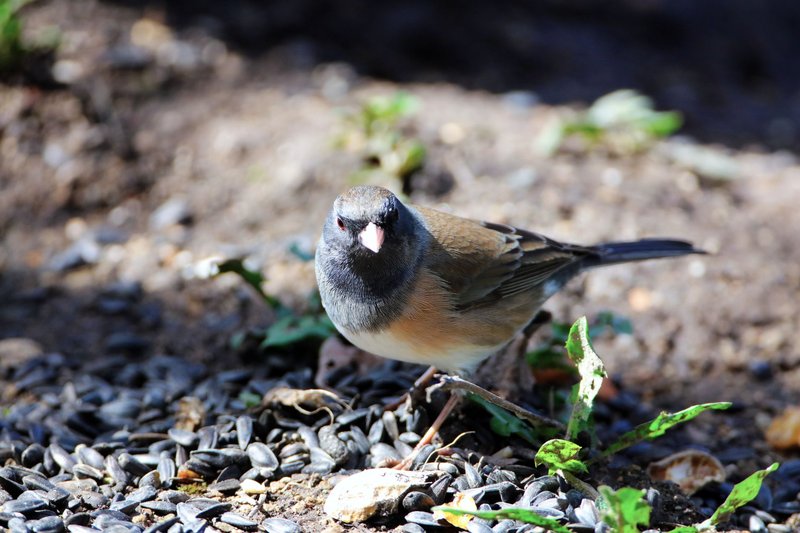
Slate-gray above, white belly, with a pink bill and white outer tail feathers that flash when it flies — old-timers still call it the “snowbird” because it shows up right as the weather turns. Juncos breed far to the north and spend winters in Tennessee, typically arriving in October and clearing out by April. A flock scratching around under a feeder in January is a reliable sign of a Dark-eyed Junco, not a sparrow.
Quick Reference Table
| Bird | Season | Where |
|---|---|---|
| Northern Cardinal | Year-round | Statewide |
| Northern Mockingbird | Year-round | Statewide |
| Carolina Chickadee | Year-round | Statewide |
| Tufted Titmouse | Year-round | Statewide |
| Carolina Wren | Year-round | Statewide |
| American Goldfinch | Year-round | Statewide |
| Blue Jay | Year-round | Statewide |
| Mourning Dove | Year-round | Statewide |
| Red-bellied Woodpecker | Year-round | Statewide |
| White-breasted Nuthatch | Year-round | Statewide |
| Pileated Woodpecker | Year-round | Forests, bottomlands |
| Downy Woodpecker | Year-round | Statewide, wooded areas |
| Barred Owl | Year-round | Forested bottomlands |
| Bald Eagle | Year-round, peaks in winter | Reelfoot Lake, major rivers |
| Great Blue Heron | Year-round | Ponds, lakes, rivers |
| Red-tailed Hawk | Year-round | Statewide, open country |
| Ruby-throated Hummingbird | Late March–October | Statewide |
| Summer Tanager | Spring–summer | Open woodlands, forest edges |
| Indigo Bunting | Spring–summer | Roadsides, brushy fields |
| Barn Swallow | Spring–early fall | Barns, bridges, open country |
| Dark-eyed Junco | October–April | Statewide, at feeders |
Print that table, tape it by the window, and most of what lands in a Tennessee yard over the course of a year will match something on it. The birds that don’t — a stray warbler passing through the Smokies in May, a shorebird blown off course to a West Tennessee mudflat — are the ones that turn casual feeder-watching into an actual hobby. That’s a good problem to have.