A living organism is any self-sustaining biological system made of one or more cells, capable of growing, reproducing, and responding to its environment using its own internal chemistry. That sounds tidy. It isn’t. Draw the line anywhere and something inconvenient sits right on top of it — a virus, a fungal network spanning acres, a colony of ants that behaves like a single animal.
Biologists don’t actually agree on a single airtight definition. What they agree on is a set of characteristics that, together, separate the living from the non-living. No single trait does the job alone. It’s the combination that counts, and knowing where that combination breaks down is where this gets interesting.
Table of Contents
- The Seven Characteristics of Life
- Unicellular vs. Multicellular Organisms
- Prokaryotic vs. Eukaryotic Organisms
- Examples Across the Tree of Life
- The Gray Areas: Colonies and Superorganisms
- Are Viruses Alive?
- Frequently Asked Questions
The Seven Characteristics of Life

Textbooks vary slightly on wording, but the working list biology courses use comes down to seven traits. An organism needs all seven to count — a fire “grows” and “consumes energy,” but it fails everywhere else on this list.
- Cellular organization. Every known organism is built from at least one cell, the smallest unit that can carry out life’s functions independently. A single amoeba manages this in one cell. You manage it in roughly 37 trillion.
- Reproduction. Organisms produce offspring, whether that’s a bacterium splitting in two every 20 minutes or an oak tree dropping acorns once a year.
- Metabolism. Living things convert energy from their environment into a usable form — plants through photosynthesis, animals through breaking down food. Stop the chemistry and the organism stops being alive, even if the body is still intact.
- Homeostasis. Internal conditions — temperature, pH, water balance — stay within a working range regardless of what’s happening outside. A desert lizard regulates its body heat by moving in and out of shade; your kidneys regulate blood chemistry without you thinking about it once.
- Growth and development. Organisms increase in size or complexity over their lifespan, following a pattern specific to their species, not just random accumulation of matter.
- Response to stimuli. A sunflower tracks light across the sky. A paramecium swims away from a chemical irritant. Responsiveness doesn’t require a nervous system, just some mechanism for detecting and reacting to change.
- Adaptation through evolution. Populations change over generations in response to their environment, via natural selection acting on genetic variation. This is a property of populations and lineages more than individuals, which is part of why definitions built only around a single organism tend to leave it out.
A virus can do a version of reproduction and adaptation. A crystal can grow. Fire consumes energy and releases heat. None of them clear all seven bars, and that’s the point of using seven instead of one.
Unicellular vs. Multicellular Organisms
Every organism falls into one of two structural categories, and the split explains a lot about how complex life is organized.
Unicellular organisms are a complete living system inside a single cell. Bacteria, archaea, and many protists — like amoebas and paramecia — fall here. One cell handles feeding, waste removal, reproduction, and response to the environment, with no division of labor. That’s not a limitation so much as a strategy: unicellular organisms reproduce fast, adapt fast, and outnumber every multicellular species on Earth combined. Bacteria alone are estimated to outweigh all animal life on the planet.
Multicellular organisms are made of many cells that specialize and cooperate — muscle cells, nerve cells, skin cells, each doing one job well instead of every job passably. This division of labor is what makes a body plan possible: circulatory systems, nervous systems, organs. The tradeoff is slower reproduction and a heavier metabolic cost to keep all those specialized parts coordinated.
Some organisms straddle the line. Slime molds spend part of their life cycle as independent single cells and part as a coordinated multicellular blob that can navigate a maze toward food. Where you’d file that on a worksheet depends on which life stage you catch it in.
Prokaryotic vs. Eukaryotic Organisms
This is a separate axis from unicellular/multicellular — it’s about what’s happening inside the cell itself, specifically whether the genetic material is enclosed in a nucleus.
| Prokaryotic | Eukaryotic | |
|---|---|---|
| Nucleus | None — DNA floats free in the cytoplasm | Yes — DNA enclosed in a membrane-bound nucleus |
| Cell size | Typically 0.1–5 micrometers | Typically 10–100 micrometers |
| Organelles | Few, none membrane-bound | Mitochondria, chloroplasts (in plants), Golgi apparatus, etc. |
| Examples | Bacteria, archaea | Animals, plants, fungi, protists |
| Cell count | Almost always unicellular | Unicellular or multicellular |
| Reproduction | Binary fission | Mitosis and meiosis |
Every prokaryote is a bacterium or an archaeon, full stop — those are the only two domains built this way. Every animal, plant, fungus, and protist is eukaryotic. The eukaryotic cell’s defining trick, membrane-bound organelles, is generally understood to trace back to one prokaryote engulfing another around two billion years ago, a partnership that stuck. That’s the endosymbiotic origin of the mitochondria in your own cells right now — they still carry their own separate loop of DNA, a leftover from when they were free-living bacteria.
Examples Across the Tree of Life
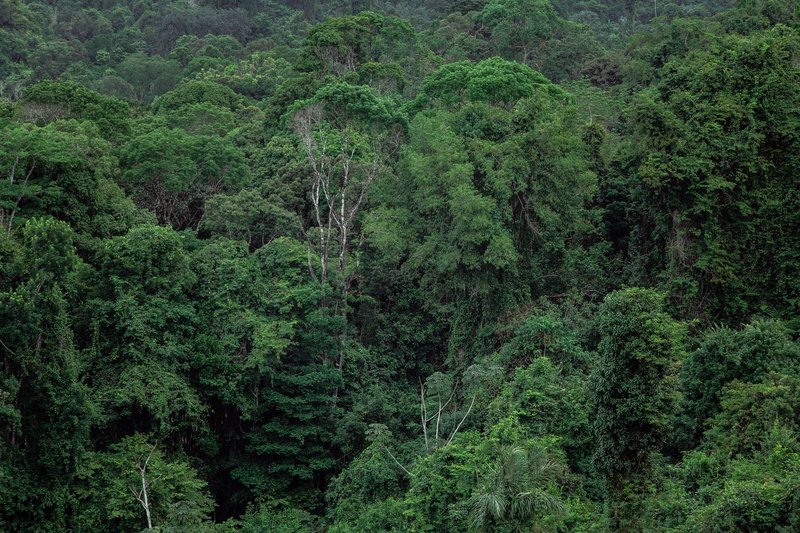
“Living organism” covers a wider range than the classic animal-plant divide most people learned in grade school. Modern classification splits life into several kingdoms, and each one solves the seven-characteristics problem differently.
- Animals — multicellular, eukaryotic, get energy by consuming other organisms. Everything from tardigrades to blue whales.
- Plants — multicellular, eukaryotic, produce their own energy via photosynthesis. Redwoods, moss, duckweed.
- Fungi — multicellular or unicellular, eukaryotic, absorb nutrients from their surroundings rather than consuming or producing. Mushrooms are just the fruiting body; the organism itself is often a mat of underground threads called mycelium that can spread for acres.
- Protists — mostly unicellular, eukaryotic, a catch-all group for organisms that don’t fit neatly into the other three. Amoebas, algae, paramecia.
- Bacteria and archaea — unicellular, prokaryotic, the oldest and most numerically dominant life on the planet. A single gram of soil can contain billions of them.
Tardigrades are worth a specific mention because they push every one of the seven characteristics to its limit without breaking them. In a dried-out survival state called cryptobiosis, a tardigrade’s metabolism drops to roughly 0.01% of normal — barely detectable — and it can sit that way for years before rehydrating and resuming its life. It has survived direct exposure to the vacuum of space during a European Space Agency experiment. It’s still classified as alive the entire time, because the capacity to resume metabolism is what counts, not whether it’s currently running.
The Gray Areas: Colonies and Superorganisms
Some of the hardest cases in biology aren’t single organisms at all — they’re collections that behave like one.
A Portuguese man o’ war looks like a jellyfish but isn’t a single animal. It’s a siphonophore: a colony of specialized, genetically identical individuals called zooids, each one incapable of surviving alone, that together form what looks and functions like a single creature. Is the man o’ war one organism or thousands? Biologists genuinely split on the answer.
Superorganisms raise the same question at a different scale. A honeybee colony reproduces (new queens and swarms), maintains homeostasis (bees fan their wings to cool the hive, cluster together to warm it), and responds to stimuli as a coordinated unit, even though no individual bee does all of that alone. Ant colonies and termite mounds work the same way. Some biologists argue the colony itself meets the seven characteristics of life; others insist that’s a metaphor stretched past its useful limit, and that only the individual insects are “alive” in the strict sense.
Then there’s the biggest gray area of all, arguably not gray so much as flatly outside the definition most people assume: is a colonial organism like Pando, the 106-acre quaking aspen grove in Utah that’s actually one genetic individual connected by a single root system, one organism or a forest of them? Genetically, it’s one tree. Structurally, it’s thousands of trunks that could each survive independently if severed.
Are Viruses Alive?
This is the question that breaks the definition cleanest, and it’s the one most competing explainers dodge entirely.
A virus reproduces — but only by hijacking a host cell’s machinery, since it has none of its own. It evolves via natural selection, sometimes faster than almost any cellular organism, which is why flu vaccines get reformulated every year. But outside a host, a virus does nothing. No metabolism. No response to stimuli. No homeostasis to maintain, because there’s no internal environment to regulate. It’s inert — essentially a packet of genetic instructions in a protein shell, chemically closer to a very sophisticated molecule than to a bacterium.
Virologist Luis P. Villarreal laid out the case for both sides directly, arguing that viruses occupy a genuine edge case rather than a clear failure of the definition: they don’t meet the cellular-organization or independent-metabolism bars, but they’ve driven evolution across every domain of life by swapping genes with their hosts, including chunks of viral DNA now embedded permanently in the human genome. Most biologists still land on “not alive” as the working answer, treating viruses as a distinct category — biological, but not organisms. A minority argue that a definition of life built entirely around what a host-dependent parasite can’t do on its own, when parasitism itself is a common life strategy, is drawing the line in the wrong place. Neither camp has settled it, and that’s a feature of the question, not a gap in the research.
Frequently Asked Questions
What are the 7 characteristics of a living organism? Cellular organization, reproduction, metabolism, homeostasis, growth and development, response to stimuli, and adaptation through evolution. An organism needs to meet all seven, not just one or two.
Is fire a living organism? No. Fire grows, consumes fuel for energy, and produces waste — three traits that make it a common trick question. It has no cells, doesn’t reproduce in the biological sense, and can’t adapt or maintain internal homeostasis.
Are viruses considered living organisms? Most biologists say no. Viruses reproduce and evolve, but they have no cells, no independent metabolism, and do nothing at all outside a host cell. They’re generally classified as a distinct biological entity rather than an organism.
What’s the difference between unicellular and multicellular organisms? Unicellular organisms carry out every life function inside a single cell. Multicellular organisms divide those functions across many specialized cells working together, which allows for bodies, organs, and greater complexity at the cost of slower reproduction.
Can something be alive without a nucleus? Yes. Bacteria and archaea are prokaryotes — no nucleus, no membrane-bound organelles — and they’re unambiguously alive by every one of the seven characteristics. The nucleus separates prokaryotic from eukaryotic cells; it isn’t a requirement for life itself.
The seven-characteristics framework holds up for the overwhelming majority of life on Earth, from the bacteria in a spoonful of soil to a blue whale. It’s the edge cases — viruses, colonial siphonophores, a 106-acre aspen grove that’s technically one tree — that keep biologists arguing about where exactly the definition should end. That argument isn’t a flaw in the science. It’s what happens when a category built for convenience runs into a few billion years of evolution finding every gap in the rule.