Table of Contents
- The Quick Answer
- Ferromagnetic Materials: The Strong, Obvious Ones
- Paramagnetic Materials: Weakly Attracted
- Diamagnetic Materials: The Ones That Push Back
- Ferrimagnetic Materials: Ferromagnetism’s Quieter Cousin
- Antiferromagnetic Materials: Cancelled Out at the Atomic Level
- Surprising Exceptions
- Where This Actually Shows Up
- FAQ
The Quick Answer
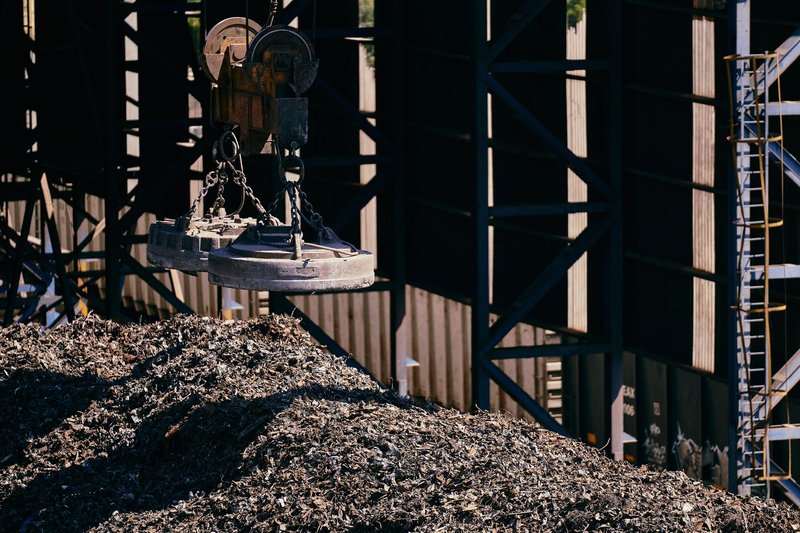
If you just need the list, here it is. These are the materials people mean when they say “magnetic,” ranked roughly by how strongly they respond to a magnetic field:
| Material | Category | Everyday example |
|---|---|---|
| Iron | Ferromagnetic | Nails, rebar, cast iron pans |
| Cobalt | Ferromagnetic | Jet engine alloys, magnets |
| Nickel | Ferromagnetic | Coins, plating, batteries |
| Neodymium (Nd₂Fe₁₄B) | Ferromagnetic | Headphones, hard drives, wind turbines |
| Steel (carbon/ferritic) | Ferromagnetic | Tools, appliances, car bodies |
| Gadolinium | Ferromagnetic | MRI contrast agents |
| Magnetite (Fe₃O₄) | Ferrimagnetic | Lodestone, compass needles |
| Ferrite ceramics | Ferrimagnetic | Fridge magnets, transformer cores |
| Aluminum | Paramagnetic (barely) | Not attracted enough to matter |
Everything below iron on a fridge-magnet test either doesn’t respond at all or actively resists the field. That’s not a footnote — it’s the whole reason chemists split “magnetic” into five distinct categories instead of one.
Ferromagnetic Materials: The Strongest Response
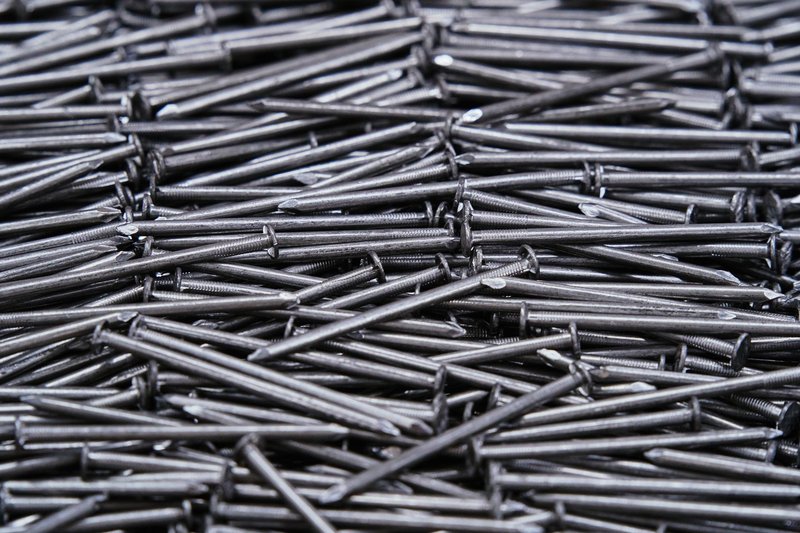
Ferromagnetism is what most people picture when they hear “magnet.” These materials don’t just respond to an external field — they can hold their own magnetization after the field is removed, which is why you can turn a screwdriver into a temporary magnet by rubbing it against a strong one.
The core examples:
- Iron — the reference material. Pure iron is soft magnetically, meaning it magnetizes and demagnetizes easily, which is why it’s used in transformer cores rather than permanent magnets.
- Cobalt — retains magnetization better than iron and holds up at higher temperatures, which is why it shows up in samarium-cobalt magnets used in aerospace and high-heat environments.
- Nickel — weaker than iron and cobalt but still fully ferromagnetic; you’ll find it in coins, electroplating, and rechargeable battery chemistries.
- Gadolinium — the only rare-earth element that’s ferromagnetic near room temperature; above about 20°C (68°F) it loses the property entirely, which makes it useful in some cooling technologies.
- Neodymium alloys (Nd₂Fe₁₄B) — not a pure element but the material behind the strongest commercially available permanent magnets, the ones you’ll find in earbuds, disk drives, and electric motors.
- Steel (most carbon and ferritic grades) — an iron alloy, so it inherits iron’s ferromagnetism, with the exact strength depending on carbon content and crystal structure.
The mechanism is electron spin alignment: in these elements, unpaired electrons in the outer shell line up in the same direction across small regions called magnetic domains. Apply an external field and the domains snap into alignment with each other. In iron, cobalt, and nickel specifically, that alignment is strong enough to persist after the field is gone — that’s the difference between “attracted to a magnet” and “is a magnet.”
Paramagnetic Materials: Weakly Attracted, Not Retained
Paramagnetic materials get pulled toward a magnetic field, but weakly, and they lose the effect the instant the field is removed. There’s no domain structure holding things in place — just individual atoms with unpaired electrons that align temporarily.
- Aluminum — technically paramagnetic, though the pull is so faint you’d never notice it with a household magnet. This is the material behind the classic “is aluminum magnetic?” search, and the honest answer is: barely, and not in any way you’d feel.
- Platinum — paramagnetic, which matters in jewelry and lab equipment where a truly non-magnetic metal is required for some applications.
- Magnesium and molybdenum — both mildly paramagnetic, used mostly in alloys rather than for any magnetic property.
- Oxygen — unusual for a gas: liquid oxygen is paramagnetic enough that it can be pulled between the poles of a strong magnet, a demonstration still used in physics classrooms.
Diamagnetic Materials: The Ones That Push Back
Diamagnetism is the opposite instinct: these materials are weakly repelled by a magnetic field. Every material has some diamagnetic response, but in most substances it’s masked by a stronger ferro- or paramagnetic effect. Diamagnetism only shows up clearly in materials where all the electrons are paired, leaving no net magnetic moment to align.
- Copper, gold, and silver — all diamagnetic, which is why a strong enough magnet dropped down a copper pipe visibly slows down, resisted by eddy currents rather than attraction.
- Bismuth — one of the most strongly diamagnetic elements, used in demonstrations where small bismuth objects visibly float above an array of magnets.
- Water — diamagnetic enough that scientists have used powerful electromagnets to levitate live frogs, which are mostly water. It won a real (if tongue-in-cheek) Ig Nobel Prize.
- Plastic and most organic material — diamagnetic by default, since carbon-based compounds rarely have unpaired electrons.
Ferrimagnetic Materials: Ferromagnetism’s Quieter Cousin

Ferrimagnetic materials look ferromagnetic from the outside — they hold magnetization and respond strongly to fields — but the underlying atomic structure is different. Their electron spins align in two opposing sub-lattices of unequal strength, so instead of fully cancelling out (as in antiferromagnetism), there’s a net magnetic moment left over.
- Magnetite (Fe₃O₄) — naturally occurring lodestone, the material ancient navigators used to build the first compasses. It’s still the textbook example of a naturally magnetic mineral.
- Ferrite ceramics (compounds like cobalt ferrite, CoFe₂O₄) — cheap, corrosion-resistant, and non-conductive, which is exactly why they’re used in the black ceramic magnets stuck to your fridge and in the cores of transformers and inductors, where a conductive material like iron would waste energy through eddy currents.
Antiferromagnetic Materials: Cancelled Out at the Atomic Level
In antiferromagnetic materials, neighboring atomic magnetic moments point in exactly opposite directions and cancel each other out almost completely, so the bulk material shows essentially no external magnetism at room temperature.
- Chromium — the standard textbook example, antiferromagnetic at room temperature.
- Manganese oxide (MnO) — orders antiferromagnetically at low temperature, a foundational case study in solid-state physics.
- Hematite (Fe₂O₃), in most conditions — a form of iron oxide that, despite containing iron, doesn’t behave like a magnet because of how its spins are arranged.
These materials aren’t useless for magnetism, though — they’re increasingly important in spintronics, a field of electronics that manipulates electron spin instead of charge, because their canceled-out state is stable and hard to disturb accidentally.
Surprising Exceptions
Not everything follows the pattern you’d guess from the periodic table:
- Not all stainless steel is magnetic. Austenitic grades like 304 and 316 — the ones used in kitchen sinks and most cookware — have a face-centered cubic crystal structure that suppresses ferromagnetism, even though they’re loaded with iron. Ferritic and martensitic grades, with a different crystal structure, are magnetic. Same base element, different atomic arrangement, opposite answer.
- Some rare earths are antiferromagnetic, not ferromagnetic, despite the “rare earth magnet” branding most people associate with the whole group. The famous strong magnets (neodymium, samarium-cobalt) are the exception within the rare earths, not the rule.
- Manganese is barely magnetic on its own despite sitting right next to iron, cobalt, and nickel on the periodic table — its electron configuration doesn’t support the same domain alignment, though it becomes strongly magnetic once alloyed into certain compounds.
- Gadolinium’s magnetism switches off with body heat. At just above room temperature it stops being ferromagnetic entirely, which is a strange property for an element that’s otherwise grouped with iron and cobalt.
Where This Actually Shows Up
The categories aren’t just classroom trivia — they dictate real design choices:
- MRI machines rely on paramagnetic and ferromagnetic contrast agents (often gadolinium-based) to make specific tissues show up more clearly on scans.
- Electric motors and generators depend on ferromagnetic cores (iron, steel) to concentrate magnetic flux, and increasingly on neodymium magnets for compact, high-torque designs in EVs.
- Hard drives and data storage use thin ferromagnetic films where the direction of magnetization encodes a bit of data.
- Transformers and inductors use ferrimagnetic ferrite cores specifically because they’re magnetic but electrically insulating, avoiding the energy losses a solid iron core would create at high frequency.
- Credit card strips are a ferrimagnetic iron-oxide coating, the same magnetite chemistry behind lodestone, just engineered into a thin recordable layer.
FAQ
Is aluminum magnetic? Only weakly, and not in any way a fridge magnet will demonstrate. Aluminum is paramagnetic, meaning it’s drawn very slightly toward a strong magnetic field, but it won’t stick to a magnet and won’t hold magnetization on its own.
Is stainless steel magnetic? It depends on the grade. Ferritic and martensitic stainless steels (common in knives and some appliances) are magnetic. Austenitic grades like 304 and 316 — the most common types in sinks, cookware, and appliance panels — generally are not, because of their crystal structure rather than their iron content.
What’s the strongest magnetic material? Neodymium alloy (Nd₂Fe₁₄B) produces the strongest commercially available permanent magnets, which is why it’s used anywhere you need serious magnetic force in a small package: in-ear headphones, cordless power tool motors, and wind turbine generators.
What are examples of non-magnetic materials? Wood, glass, plastic, most plumbing-grade copper and brass, gold, and austenitic stainless steel are all effectively non-magnetic in daily use — either diamagnetic or so weakly paramagnetic that no ordinary magnet will move them.
Why do some materials in the same family behave so differently? It comes down to two things: whether the atoms have unpaired electrons available to align, and how the crystal lattice arranges those atoms. Iron and its alloys can flip between magnetic and non-magnetic states depending on which of those two conditions is met — which is exactly why stainless steel splits into magnetic and non-magnetic grades despite sharing the same base element.