TLDR: Slovakia is the world’s largest producer of natural zeolite, supplying roughly 22% of global output from a single massive deposit in the east of the country. It also holds some of Europe’s biggest magnesite reserves, ranks among the top perlite producers globally, and has a gold-mining town — Kremnica — that struck coins from local ore for nearly 700 years. Add talc, bentonite, lignite, and a UNESCO-listed silver-mining town, and Slovakia punches well above its size (roughly that of West Virginia) in mineral output.
Table of Contents
- Why a Small Country Has This Much Underground
- Zeolite: Slovakia’s Global Monopoly
- Magnesite: The Reserves Nobody Talks About
- Gold, Silver, and the Mining Towns That Built Medieval Hungary
- Perlite, Talc, Bentonite, and the Rest of the Industrial Lineup
- Coal and Lignite: The Fading Fuel
- Current Production Snapshot
- Where to See It Yourself
Why a Small Country Has This Much Underground
Slovakia sits on the Western Carpathians, a mountain belt formed by the same tectonic collision that pushed up the Alps. That collision folded and stacked rock layers of wildly different ages and origins — volcanic tuffs from Miocene-era eruptions, Paleozoic ore bodies, and Mesozoic carbonate platforms — into a country you can drive across in a day. The result is a mineral inventory that’s disproportionate to Slovakia’s size: it’s smaller than West Virginia, yet it dominates a global commodity market and has mined precious metals continuously since the medieval period.
The two minerals worth knowing before anything else are zeolite and magnesite. Neither is a household name, but together they explain why Slovakia shows up in industrial mining reports next to countries many times its size.
Zeolite: Slovakia’s Global Monopoly
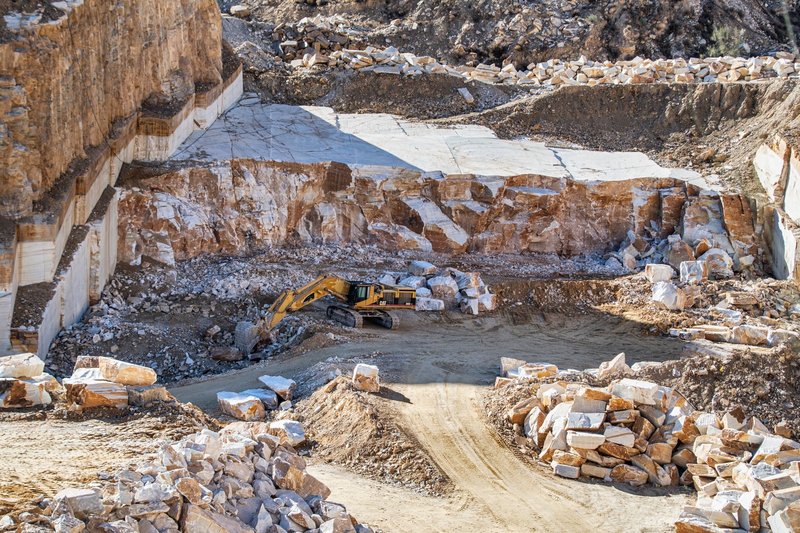
Zeolites are microporous minerals — their crystal structure is riddled with tiny cavities and channels that make them exceptional at filtering, absorbing, and exchanging ions. That’s why they end up in cat litter, water filtration, animal feed, and industrial catalysts. Slovakia produces more of the natural (as opposed to synthetically manufactured) form than any other country on Earth.
The entire industry runs on one deposit: Nižný Hrabovec, in the east of the country near Vranov nad Topľou. It’s one of the largest clinoptilolite-zeolite occurrences ever documented, holding an estimated 150 million tonnes of zeolite tuff, according to research published in Economic Geology. The deposit formed roughly 12 million years ago when volcanic ash settled into an alkaline lake and slowly altered into zeolite-rich tuff — a geological accident that happened to produce one of the purest, most commercially valuable zeolite bodies in the world.
A single company, Zeocem, holds the mining rights and exports the processed mineral across Europe and beyond. Slovakia’s output — around 220,000 tonnes in 2023 — puts it ahead of China, the next-largest producer, and accounts for roughly 22% of global supply, per the U.S. Geological Survey’s mineral commodity data. That’s an unusual position for any country to hold in a raw materials market: not the biggest reserve on paper, but the dominant global supplier because of how concentrated and accessible this particular deposit is.
Magnesite: The Reserves Nobody Talks About
Magnesite (magnesium carbonate) is the mineral Slovakia has mined longest at industrial scale, and its reserves in the Slovenské Rudohorie mountain range — the Ore Mountains of central and eastern Slovakia — are among the largest in Europe. The main deposits sit around Jelšava and Lubeník, where magnesite and dolomite formed within Paleozoic carbonate rock alongside talc and graphitic material.
The Jelšava works is the largest magnesite mining and processing operation in the country and one of the biggest dead-burnt magnesia producers worldwide — magnesia used mainly in refractory bricks and linings for steel furnaces, cement kilns, and other high-heat industrial equipment that has to survive temperatures most materials can’t. Slovmag’s plant at Lubeník, built starting in 1906 and still operating on the same site, adds a second major processing center to the same ore body.
Current annual output has slipped relative to global demand — Slovakia now ranks around eighth worldwide, at roughly 1.6% of global magnesite production — but that’s a function of reserve size versus extraction rate, not depletion. The deposits are large enough that Slovakia could mine at current rates for generations. The bigger story is regional: decades of open-pit extraction and processing around Jelšava-Lubeník left measurable soil contamination, and the area is documented in peer-reviewed research as one of the more environmentally affected mining regions in the country, per a study in Sustainability. It’s the tradeoff that comes with over a century of continuous heavy-mineral processing in one place.
Gold, Silver, and the Mining Towns That Built Medieval Hungary
Before Slovakia was an industrial minerals exporter, it was a precious-metals powerhouse — and the town of Kremnica is the clearest evidence. Gold mining there predates written records, but documented extraction goes back to at least the 13th century. When King Charles I of Hungary granted the town formal mining privileges in 1328, Kremnica was already sitting on some of the richest gold veins in the kingdom. By the 15th century it had grown into the second most important town in the Kingdom of Hungary, built almost entirely on ore pulled from the hills around it.
Kremnica’s mint turned that gold directly into currency, striking coins from local ore for nearly 700 consecutive years — a run of continuous minting few places in the world can match. Production held up remarkably late: postwar Kremnica was still yielding around 85 kilograms of gold a year. Underground mining finally stopped in 1970, and all extraction wound down by 2000, though renewed interest in the deposit has drawn modern exploration projects back to the area since.
Kremnica wasn’t alone. Roughly 50 kilometers south, Banská Štiavnica built its own fortune on silver, becoming the third-largest town in the entire Hungarian Empire at its peak and, in 1627, the site of the first recorded use of gunpowder in mining anywhere in the world. Iron and copper deposits scattered through the same Slovak Ore Mountains supported a smaller but centuries-long metals industry, most of which had wound down by the mid-20th century as easily accessible ore ran out.
Perlite, Talc, Bentonite, and the Rest of the Industrial Lineup
Beyond zeolite and magnesite, Slovakia runs a solid bench of industrial minerals, most tied to the same volcanic geology that produced its zeolite deposit.
Perlite — a volcanic glass that expands when heated and gets used in lightweight construction materials, horticulture, and insulation — comes from deposits at Lehôtka pod Brehmi and Jastrabá in central Slovakia, plus Byšta in the east. Output is modest in absolute terms (Slovakia ranks around seventh globally, near 0.9% of world production) but consistent enough to support a stable export market.
Talc is mined at Poloma, where reserves run at least 85 million tonnes. The mine has produced around 100,000 tonnes a year since ramping up in late 2017, feeding ceramics, paint, and cosmetics manufacturing.
Bentonite, a clay formed from volcanic ash alteration, rounds out the non-metallic mineral group — used domestically and regionally in drilling fluids, foundry sand binding, and industrial absorbents.
Coal and Lignite: The Fading Fuel
Slovakia’s fossil mineral resources are modest and shrinking in relevance. Lignite deposits around Handlová and Nováky once fed domestic power stations, but Slovakia has neither the reserves nor the production volume to matter on a global fossil fuel scale. The country’s energy mix has shifted decisively toward nuclear power over the past two decades, and lignite mining has followed the trajectory most of Western Europe’s coal industry took a generation earlier: a slow wind-down rather than a cliff-edge closure.
Current Production Snapshot
Most articles on this topic lean on figures from 2010–2019. Here’s where the numbers actually stand, based on recent USGS mineral commodity summaries:
| Mineral | Slovakia’s global rank | Share of world production |
|---|---|---|
| Natural zeolite | 1st | ~22% |
| Perlite | 7th | ~0.9% |
| Magnesite | 8th | ~1.6% |
Zeolite is the outlier and the headline. No other mineral commodity has Slovakia sitting at the top of the world ranking — but for a country with roughly 5.4 million people, having the global lead in any raw material at all is a notable outcome of geology working in its favor.
Where to See It Yourself
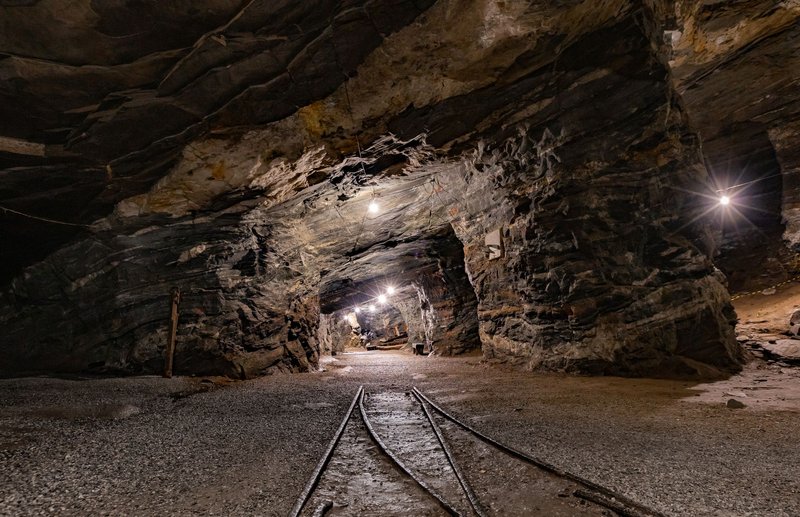
This is the angle most overviews skip entirely: you can walk into Slovakia’s mining history rather than just read about it. Banská Štiavnica, a UNESCO World Heritage town built on its silver wealth, houses the Slovak Mining Museum, including an open-air exhibit of original hoisting towers, forges, and mining trains, plus a guided underground tour through the Bartolomej Shaft where visitors suit up in a cloak, helmet, and lamp before heading in. Kremnica runs its own mining museum inside the historic Andrej’s Tunnel, alongside the town’s coin and medal museum documenting seven centuries of minting.
Neither town requires mining expertise to enjoy — both are set up for general visitors, and both sit within easy reach of Bratislava and the country’s other historic centers. For anyone who wants Slovakia’s mineral story as more than a list of production statistics, these two towns are where the numbers turn into something you can actually stand inside.