Table of Contents
- What Actually Counts as a Fossil
- Body Fossils: The Organism Itself, Preserved
- Trace Fossils: Evidence Without a Body
- Microfossils: Too Small to See Without Help
- Chemical Fossils: Fossils You Can’t See at All
- Five Fossils Famous Enough to Have Names
- Quick-Reference Table
TLDR
“Fossil” covers a lot more than dinosaur bones. Here’s the fast version:
- Body fossils — the organism itself, preserved: bones and teeth (Tyrannosaurus rex), shells (ammonites, trilobites), petrified wood, amber-trapped insects, deep-frozen woolly mammoths
- Trace fossils — evidence the organism left behind, not the organism: footprints, burrows, nests, coprolites (fossilized dung)
- Microfossils — visible only under a microscope: foraminifera, pollen, diatoms
- Chemical fossils — molecular traces of ancient life with no visible structure at all
- Named specimens worth knowing — Lucy, Sue the T. rex, and Archaeopteryx, each a textbook example of a different category above
Keep reading for what each one actually looks like, how it forms, and where the famous examples fit.
What Actually Counts as a Fossil
A fossil is any preserved evidence of ancient life older than roughly 10,000 years — and “evidence” is doing a lot of work in that sentence. It doesn’t have to be a skeleton. A footprint counts. A burrow counts. Fossilized dung counts. According to the National Park Service, fossils form when remains or traces get buried quickly enough to escape scavengers and decay, then get replaced or encased by minerals over thousands to millions of years.
Most fossilization stories follow the same arc: something dies or leaves a mark, sediment covers it before it rots or erodes away, and groundwater slowly swaps out the original material for minerals — or compresses it into rock, or simply hardens the mud around the impression it left. The differences between fossil types come down to what got preserved: the body, a trace of behavior, something microscopic, or nothing visible at all.
Body Fossils: The Organism Itself, Preserved
Body fossils are what most people picture — some physical part of the actual creature, turned to stone or otherwise locked in time.
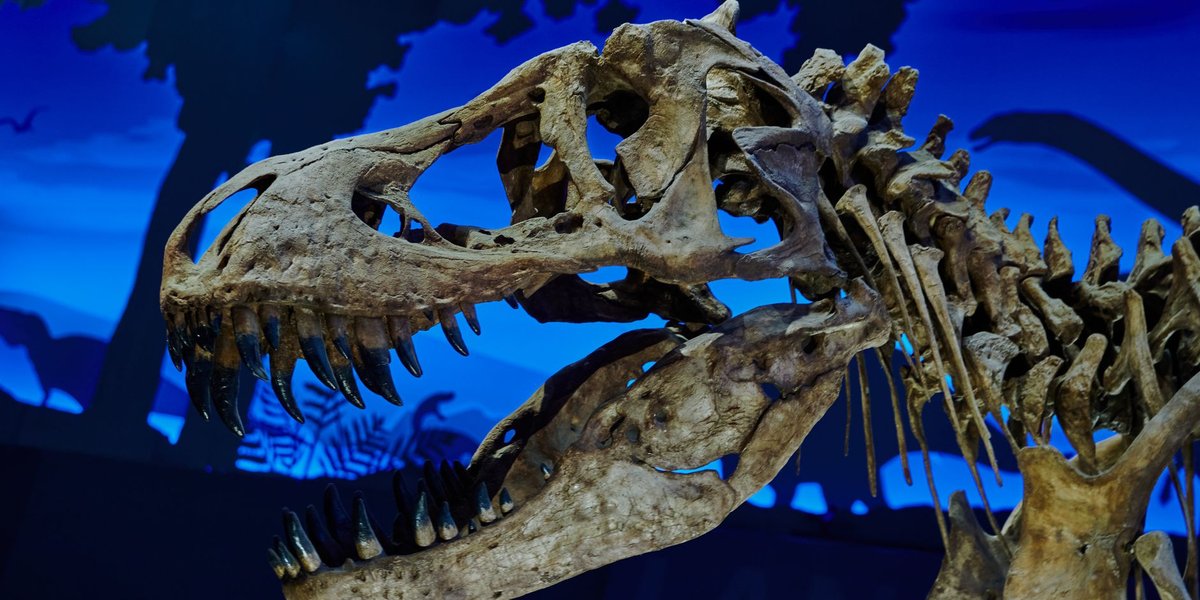
Bones and teeth. Hard tissue survives fossilization better than soft tissue, which is why museum halls are full of skeletons and jaws rather than skin and organs. Tyrannosaurus rex specimens like Sue, housed at the Field Museum in Chicago, are body fossils in their purest form: mineral-replaced bone that still holds the animal’s original shape, down to healed rib fractures and bite marks from other T. rexes.
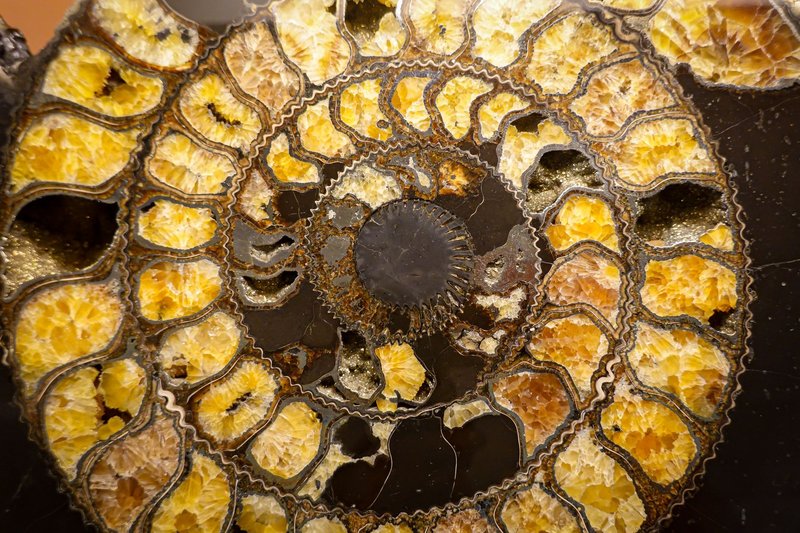
Shells. Ammonites and trilobites left behind some of the most recognizable fossils on Earth precisely because their exoskeletons and shells were already hard, mineral-rich structures before death — an easy head start for preservation. Ammonite shells spiral in a way that makes them instantly identifiable even to people who’ve never taken a geology class; trilobites, meanwhile, molted their exoskeletons repeatedly through life, meaning a single trilobite could leave behind several fossils without ever dying.
Petrified wood. Buried logs sitting in mineral-rich groundwater get their organic tissue replaced cell by cell with silica, a process slow enough that microscopic wood-grain detail survives in solid quartz. Petrified Forest National Park in Arizona holds Late Triassic logs that are around 200 million years old and still show tree rings.
Amber inclusions. Sticky tree resin occasionally trapped insects, spiders, and even small lizards before hardening into amber over millions of years. Baltic amber deposits are the best known source, and the insects inside are often preserved down to the wing veins — one of the only fossil types where you can see soft tissue instead of just hard structure.
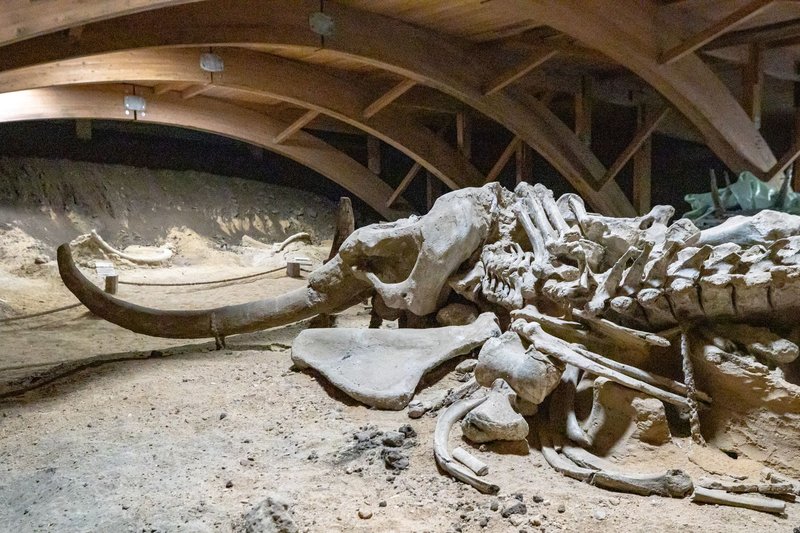
Frozen remains. Siberian permafrost has yielded woolly mammoths with hair, skin, and stomach contents still intact — no mineral replacement required, just extreme cold acting as a natural freezer. A baby mammoth nicknamed Lyuba, found in Siberia in 2007, was preserved well enough that scientists could examine her last meal.
Trace Fossils: Evidence Without a Body
Trace fossils record behavior, not anatomy. No bone, no shell — just the mark an animal left while it was alive.
Footprints and trackways. A dinosaur trackway can tell you something a skeleton can’t: how fast the animal moved, whether it walked alone or in a herd, even whether it was limping. Fossilized footprints form when an animal steps into soft mud or ash that hardens before the print erodes, then gets buried and preserved.
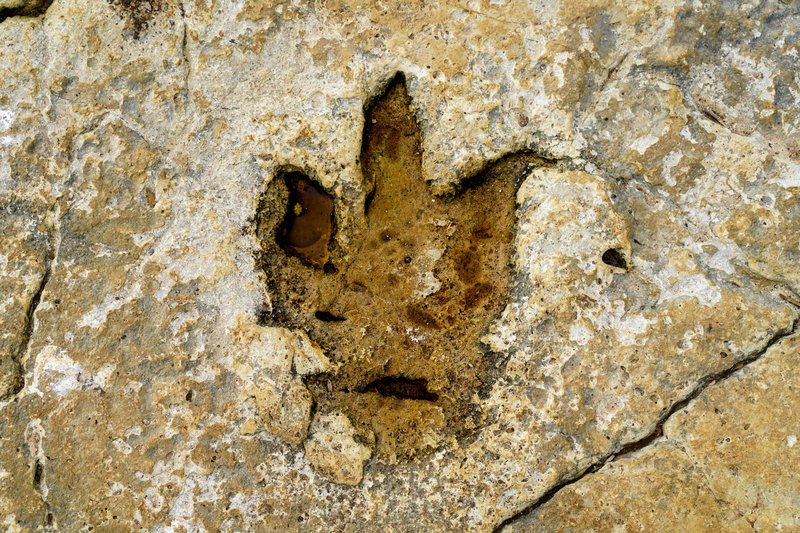
Burrows and nests. Ancient worm burrows, crab tunnels, and dinosaur nesting grounds all count as trace fossils. Some of the oldest trace fossils on record are simple worm burrows from over 500 million years ago — older than most body fossils of complex animals, since soft-bodied creatures rarely survive fossilization intact.
Coprolites. Fossilized dung, first formally named by geologist William Buckland in 1829, sounds like a novelty but it’s a genuine research goldmine — coprolites can contain undigested bone fragments, plant matter, and even parasite eggs, giving paleontologists a direct look at what an animal actually ate.
Microfossils: Too Small to See Without Help
Not every fossil needs a display case. Microfossils are preserved organisms — or parts of them — small enough to require a microscope, and they’re some of the most useful fossils in science because of how abundant and widespread they are.
Foraminifera are single-celled marine organisms with tiny mineral shells that pile up on the ocean floor by the billions. Their shell chemistry records the temperature and composition of ancient oceans, which is why they show up constantly in climate research and oil exploration.
Pollen and spores fossilize well because their outer walls are made of sporopollenin, one of the toughest organic materials in nature. Layers of fossilized pollen let scientists reconstruct what plants — and by extension, what climate — existed in a given place thousands of years ago.
Chemical Fossils: Fossils You Can’t See at All
The rarest category leaves no visible shape whatsoever. Chemical fossils, sometimes called molecular fossils or biomarkers, are organic compounds — degraded lipids and pigments, mostly — locked inside ancient rock that could only have come from a living organism. Certain steranes found in Precambrian rock are one of the strongest pieces of evidence for complex cellular life existing over a billion years before the first visible body fossils appear in the record.
Five Fossils Famous Enough to Have Names
Most fossils are catalog numbers. A handful earned actual names, and each one happens to be a clean example of a category above.
Lucy — a 3.2-million-year-old Australopithecus afarensis skeleton found in Hadar, Ethiopia, in 1974 by paleoanthropologist Donald Johanson. About 40% of her skeleton survived, which was remarkable for a hominin fossil of that age. Lucy is a body fossil, and she reshaped the timeline of when human ancestors started walking upright.
Sue the T. rex — discovered in South Dakota in 1990 by fossil hunter Sue Hendrickson, and now on permanent display at the Field Museum. Sue is one of the largest and most complete T. rex skeletons ever found, and the fossil bones themselves show evidence of injuries the animal survived, including healed fractures.
Archaeopteryx — found in the fine-grained Solnhofen limestone of Bavaria, Germany, starting in 1861. Roughly 150 million years old, it has feathers and wings alongside reptilian teeth and a long bony tail, making it one of the clearest transitional fossils linking dinosaurs and birds. It’s a body fossil so detailed that individual feather impressions survived in the limestone.
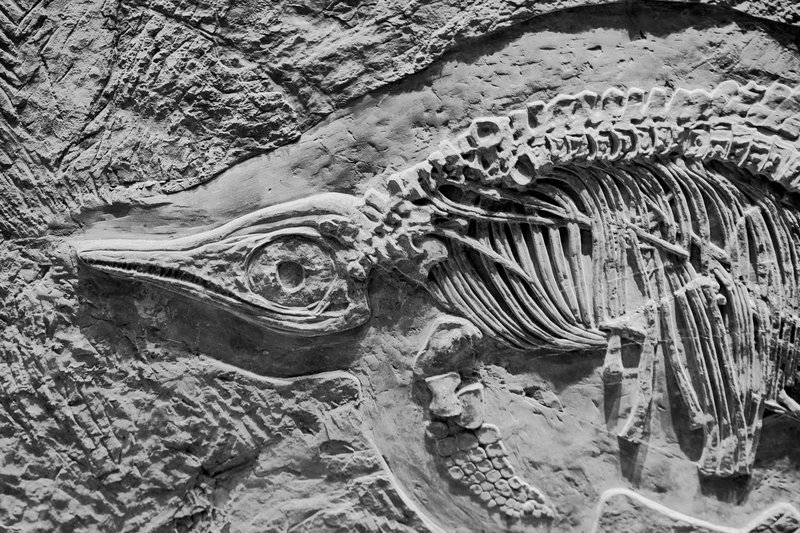
Mary Anning’s ichthyosaur — not a single specimen but the discovery that launched a field. In the early 1800s, English fossil collector Mary Anning found the first correctly identified ichthyosaur skeleton near Lyme Regis, followed later by one of the first plesiosaur skeletons. Both are on long-term display, and the Natural History Museum, London still credits her work as foundational to modern paleontology.
La Brea’s saber-toothed cats — the asphalt seeps at La Brea in Los Angeles trapped tens of thousands of Pleistocene animals over the last several thousand years, preserving an entire ecosystem of Smilodon (saber-toothed cats) and dire wolves in unusually dense concentration. It’s a rare case where the fossil record shows a whole predator community instead of one animal at a time.
Quick-Reference Table
| Fossil Type | Example | How It Forms |
|---|---|---|
| Body fossil (hard tissue) | T. rex bones, ammonite shells | Mineral replacement of original hard tissue over time |
| Body fossil (whole organism) | Amber-trapped insects, frozen mammoths | Encased in resin or ice before decay sets in |
| Body fossil (wood) | Petrified wood | Silica replaces organic tissue cell by cell |
| Trace fossil | Dinosaur footprints, burrows | An impression or structure hardens and gets buried |
| Trace fossil | Coprolites | Fossilized dung, mineralized like other body fossils |
| Microfossil | Foraminifera, pollen | Microscopic remains accumulate and mineralize in sediment |
| Chemical fossil | Steranes, ancient biomarkers | Degraded organic molecules preserved in rock chemistry |
The Pattern Behind All of It
Every fossil on this list survived the same basic filter: something had to happen fast enough, or under the right conditions, to beat decay. Hard tissue beats soft tissue. Quick burial beats slow exposure. Cold, resin, and mineral-rich water all do the same job from different angles — they stop time before it erases the evidence. That’s the thread connecting a T. rex femur, a trilobite molt, and a pile of 200-million-year-old dinosaur dung: all three are just different ways the past managed to leave a receipt.