The building you’re sitting in, the drywall behind your desk, the fertilizer that grew your breakfast — none of that runs on iron or copper. It runs on nonmetallic minerals, the quiet half of the mining industry that never makes headlines because nobody’s fighting wars over limestone.
Nonmetallic minerals are naturally occurring inorganic substances that lack the metallic properties of luster, conductivity, and malleability found in ores like iron or copper. They don’t get smelted into metal. Instead they get crushed, cut, ground, or used close to their raw form — as building stone, as chemical feedstock, as the calcium carbonate in your antacid tablet. If metallic minerals built the industrial age, nonmetallic minerals built pretty much everything else.
This guide breaks down what separates the two categories, walks through the ten nonmetallic minerals that show up most often in textbooks and construction sites alike, and gets into a part most explainers skip: what pulling all this rock out of the ground actually costs.
Table of Contents
- What Are Nonmetallic Minerals, Exactly?
- Metallic vs. Nonmetallic Minerals: The Real Differences
- The Ten Nonmetallic Minerals Worth Knowing
- How Nonmetallic Minerals Get Classified by Use
- The Quarrying Problem Nobody Puts in the Textbook
- Frequently Asked Questions
- The Short Version
What Are Nonmetallic Minerals, Exactly?
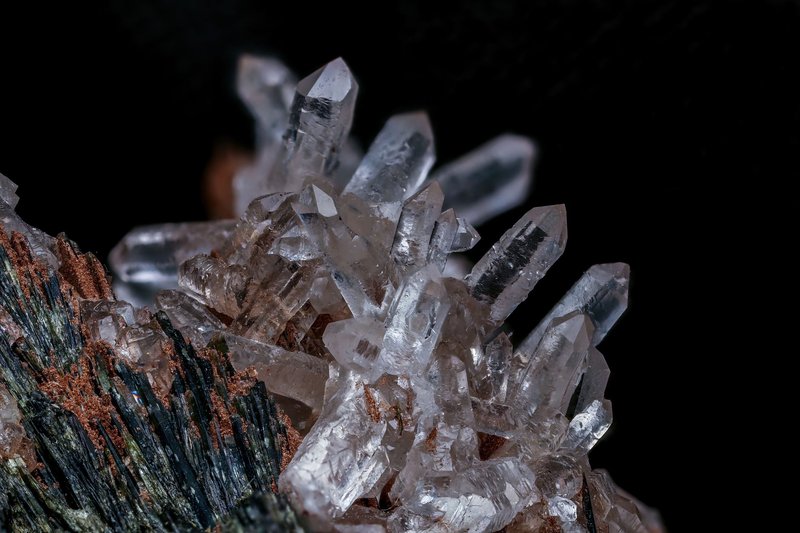
A mineral earns the “nonmetallic” label based on what it’s made of, not what it looks like. Metallic minerals are built around elements that conduct electricity and can be hammered into new shapes — think iron, copper, aluminum, gold. Nonmetallic minerals are built around silicates, carbonates, sulfates, and halides: compounds that snap or crumble under pressure instead of bending.
Geologically, most of them formed one of three ways. Sedimentary minerals like limestone and gypsum settled out of ancient seas and lakes, layer by layer, over millions of years. Metamorphic minerals like marble and kyanite formed when heat and pressure deep in the crust rearranged existing rock into something denser. And a handful, including granite’s component minerals, crystallized directly from cooling magma.
None of that history matters much to the industries that use them. What matters is function: mica insulates, gypsum hardens into wallboard, rock salt melts ice. The value is chemical and physical, not metallurgical.
Metallic vs. Nonmetallic Minerals: The Real Differences
The comparison shows up on every geology exam for a reason — it’s the fastest way to sort a mineral you’ve never heard of.
| Feature | Metallic Minerals | Nonmetallic Minerals |
|---|---|---|
| Composition | Metal elements — iron, copper, gold, bauxite | Silicates, carbonates, sulfates, halides |
| Luster | Metallic sheen, opaque | Dull, glassy, or pearly; often translucent |
| Conductivity | Conduct heat and electricity well | Generally poor conductors — many are insulators |
| Behavior under stress | Malleable and ductile; can be drawn into wire | Brittle; tend to fracture, split, or crush |
| Processing | Smelted and refined to extract pure metal | Used largely as mined, or after crushing/cutting |
| Examples | Hematite, chalcopyrite, bauxite | Limestone, gypsum, mica, marble, halite |
| Where value comes from | The metal locked inside the ore | The rock or mineral itself |
The malleability line is the one students miss most often on tests. A metallic mineral can be reshaped without breaking because its atoms sit in a lattice that lets metallic bonds slide past each other. Nonmetallic minerals are held together by ionic or covalent bonds that don’t have that give — bend gypsum too far and it snaps, it doesn’t stretch.
The Ten Nonmetallic Minerals Worth Knowing
These ten cover the range from construction site to chemistry lab. Each one shows up somewhere in daily life whether you’d recognize it or not.
1. Mica
Mica is a sheet silicate that splits into thin, flexible layers almost like pages in a book — a property called perfect basal cleavage. Muscovite mica is the pale, almost transparent variety; biotite is the darker, iron-and-magnesium-rich one that glints in granite countertops. Because mica resists heat and doesn’t conduct electricity, it ends up inside capacitors, insulation panels, and heating element components. The cosmetics industry uses ground mica for the shimmer in eyeshadow and highlighter. India accounts for a large share of global sheet mica production, concentrated in Jharkhand and Bihar.
2. Limestone
Limestone is calcium carbonate, usually built from the compressed shells and skeletons of marine organisms that lived and died over geologic time. It’s arguably the single most economically important nonmetallic mineral on the list: heat it and you get lime for cement, crush it and you get road aggregate, feed it into a blast furnace and it pulls impurities out of molten iron. Portland cement — the binder in nearly all modern concrete — doesn’t exist without limestone. Spread on farmland as agricultural lime, it also neutralizes acidic soil.
3. Gypsum
Gypsum is hydrated calcium sulfate, soft enough to scratch with a fingernail — it sits at just 2 on the Mohs hardness scale. Its biggest modern use is drywall, also called plasterboard: gypsum’s chemistry lets it absorb water, form a solid crystal matrix, and then release that water slowly when a wall catches fire, which is why drywall resists flame longer than you’d expect from a “soft” mineral. It also goes into Portland cement in small amounts to control how fast the concrete sets, and into soil treatment for reclaiming sodium-heavy farmland.
4. Asbestos
Asbestos is a group of fibrous silicate minerals, chrysotile being the most commercially common. For most of the twentieth century it was prized for the combination of heat resistance and tensile strength, and it turned up in insulation, roofing, and brake linings. That same fibrous structure is the problem: inhaled fibers lodge in lung tissue and can trigger mesothelioma and asbestosis decades later. The EPA finalized a rule banning ongoing uses of chrysotile asbestos in the United States in 2024, closing out a mineral that industry spent a century relying on.
5. Kyanite
Kyanite is an aluminum silicate best known for a genuinely strange trait: its hardness changes depending on which direction you scratch it. Scrape across the blade-shaped crystal and it resists; scrape along the length and it gives way easily — a property called anisotropic hardness that makes kyanite easy to identify in the field. Industrially it’s valued for its refractory qualities, ending up in high-temperature ceramics, furnace linings, and spark plug porcelain.
6. Magnesite
Magnesite is magnesium carbonate, and its main job is surviving heat that would destroy almost anything else — it’s a core ingredient in refractory bricks that line steel furnaces and cement kilns. It’s also processed into magnesium oxide and magnesium metal, and used as a filler in rubber and paper products. More recently, geologists studying carbon capture have taken interest in how magnesite forms naturally when CO2 reacts with magnesium-rich rock, a process some carbon-removal projects are now trying to replicate on purpose.
7. Rock Salt (Halite)
Rock salt, or halite, is sodium chloride left behind when ancient seas and inland lakes evaporated, sometimes forming deposits thousands of feet thick. It’s the mineral behind winter road de-icing, table salt, water softener refills, and — less visibly — the chlor-alkali industry, which splits salt into chlorine and caustic soda for everything from PVC pipe to bleach. A single rock salt deposit can supply de-icing, food-grade, and industrial-grade salt simultaneously, just refined to different purity levels.
8. Sandstone
Sandstone forms when sand-sized grains of quartz or feldspar get cemented together by silica, calcite, or iron oxide over long stretches of time. Builders have used it for centuries as dimension stone — cut into blocks for walls, facades, and monuments — because it’s workable when freshly quarried but hardens with exposure to air. High-purity sandstone also serves as a silica source for glassmaking, and porous sandstone formations act as natural aquifers, storing groundwater underground.
9. Marble
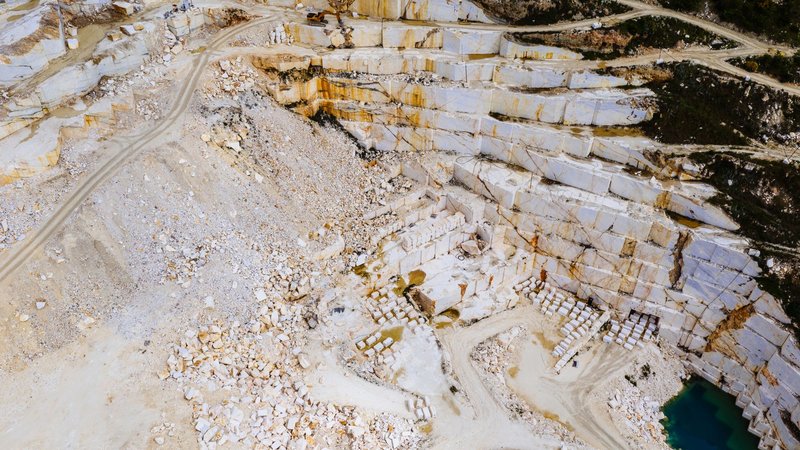
Marble is limestone that’s been transformed by heat and pressure into recrystallized calcite or dolomite, which is what gives it that swirled, veined look instead of limestone’s flatter texture. Carrara, Italy has supplied marble for statues and buildings since Roman times — Michelangelo’s David came from that region’s quarries. The same crystalline structure that makes marble beautiful also makes it soft and vulnerable to acid rain, which is why outdoor marble monuments erode faster than granite ones.
10. Granite
Granite is technically an igneous rock rather than a single mineral, built from an interlocking mix of quartz, feldspar, and mica that crystallized slowly from cooling magma deep underground. That slow cooling produces large, interlocked crystals, which is why granite resists scratching and weathering far better than sedimentary stones like sandstone or limestone. It shows up in kitchen countertops, building cladding, and monuments where durability matters more than cost.
How Nonmetallic Minerals Get Classified by Use
Geologists sort nonmetallic minerals by composition; industries sort them by job. Four categories cover most of it:
- Construction minerals — limestone, sandstone, marble, granite, and gypsum, used as aggregate, dimension stone, and binder.
- Chemical and fertilizer minerals — rock salt for the chlor-alkali industry, gypsum as a soil amendment, and phosphate minerals like apatite that go directly into fertilizer.
- Ceramic and refractory minerals — kyanite and magnesite, chosen specifically because they hold their structure at extreme temperatures.
- Insulating and specialty minerals — mica for electrical and thermal insulation, and asbestos historically, before its risks were understood.
The U.S. Geological Survey’s National Minerals Information Center tracks production and reserves for most of these categories every year, and the totals make clear how construction dwarfs the rest — limestone and aggregate alone account for a larger tonnage than every other nonmetallic mineral combined.
The Quarrying Problem Nobody Puts in the Textbook
Most explainers stop at “here’s what it’s used for.” The part that gets skipped: getting a ton of gypsum or limestone out of the ground isn’t free, even when the mineral itself is abundant.
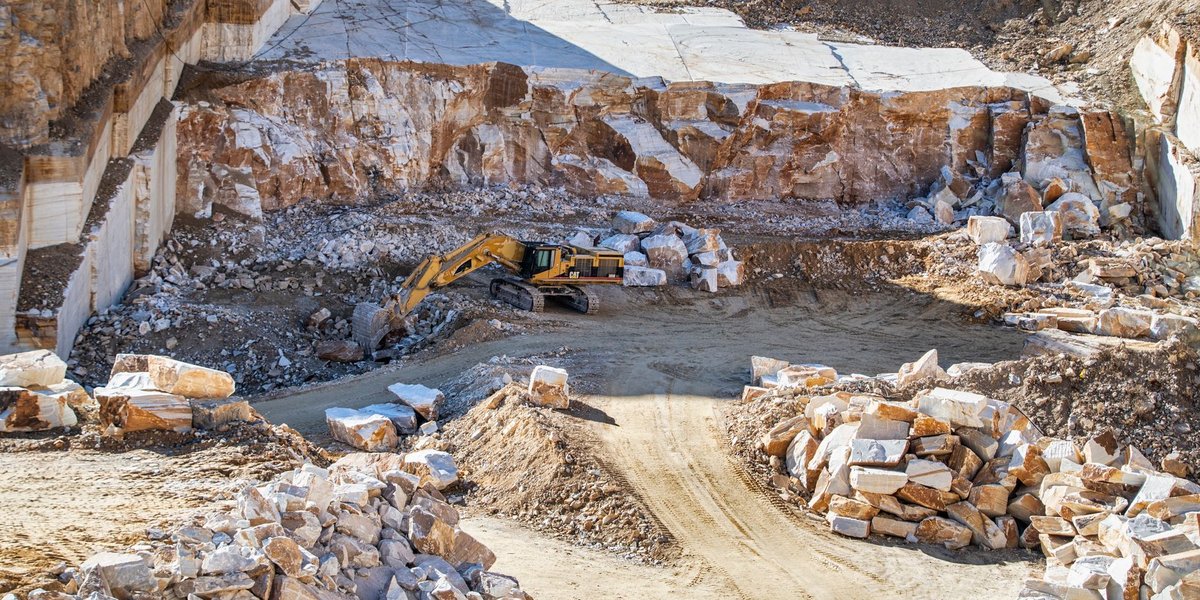
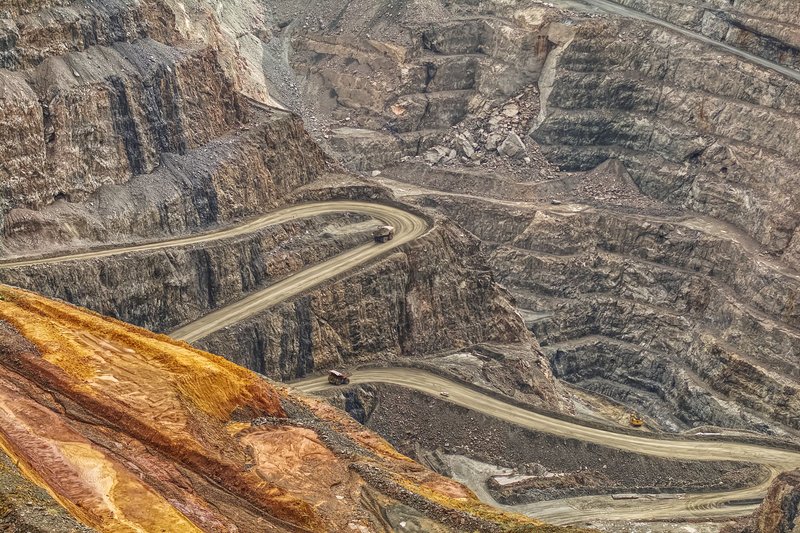
Quarrying reshapes land permanently. An open-pit limestone quarry doesn’t get reclaimed into farmland the way a strip mine sometimes can — the rock is simply gone, and what’s left is a hole or, at best, a lake. Cement production, which runs almost entirely on limestone, is also a genuine climate problem: heating limestone to make clinker releases CO2 both from the fuel burned and from the limestone’s own chemical breakdown, and cement manufacturing is responsible for a meaningful share of global industrial emissions on its own.
There’s a worker-safety angle too. Cutting and crushing silica-bearing stone — granite, sandstone, and quartz-rich rock generally — throws fine dust into the air that causes silicosis in quarry and stonework employees, which is why OSHA maintains a specific exposure standard for respirable crystalline silica rather than leaving it under general dust rules.
None of this makes nonmetallic minerals a bad idea — there’s no substitute for limestone in cement or gypsum in drywall at global scale. But the recycling side is underdeveloped compared to metals. Crushed concrete gets reused as aggregate more often now, and gypsum drywall recycling programs exist in a handful of regions, but neither is close to standard practice the way aluminum or steel recycling is. That gap is where the next real efficiency gains in this industry are sitting, mostly untouched.
Frequently Asked Questions
What’s the main difference between metallic and nonmetallic minerals? Metallic minerals contain elements that conduct electricity and can be smelted into pure metal — iron, copper, gold. Nonmetallic minerals are built from compounds like silicates and carbonates that don’t conduct well and get used at or near their raw mineral form.
Are gemstones nonmetallic minerals? Most are. Diamond, quartz, and corundum (the mineral behind ruby and sapphire) are all nonmetallic — their value comes from hardness, clarity, and crystal structure, not any metal content.
Is coal a nonmetallic mineral? Not in the strict mineralogical sense — coal is organic and lacks a fixed crystal structure, so mineralogists classify it separately as a fossil fuel. Economic geologists and trade statistics sometimes lump it into “nonmetallic mineral resources” anyway, which is where the confusion comes from.
Why did countries stop using asbestos? Inhaled asbestos fibers cause mesothelioma and other lung diseases that can take twenty to forty years to appear after exposure. Once that link was established through decades of worker health data, most industrialized countries restricted or banned it, with the United States finalizing a ban on remaining chrysotile uses in 2024.
What’s the most abundant nonmetallic mineral in Earth’s crust? Feldspar and quartz, both silicates, make up the largest share of the continental crust by volume. Limestone and gypsum are far more economically significant day to day, but they’re nowhere near as abundant geologically.
The Short Version
Nonmetallic minerals don’t get smelted, don’t conduct electricity, and rarely make the news — but pull one category out of the supply chain and entire industries stall. No limestone, no cement. No gypsum, no drywall. No rock salt, no winter road maintenance across half the northern hemisphere. The metallic minerals get the dramatic headlines about supply chains and geopolitics; the nonmetallic ones just quietly hold up the built world, one quarry at a time.