At a Glance
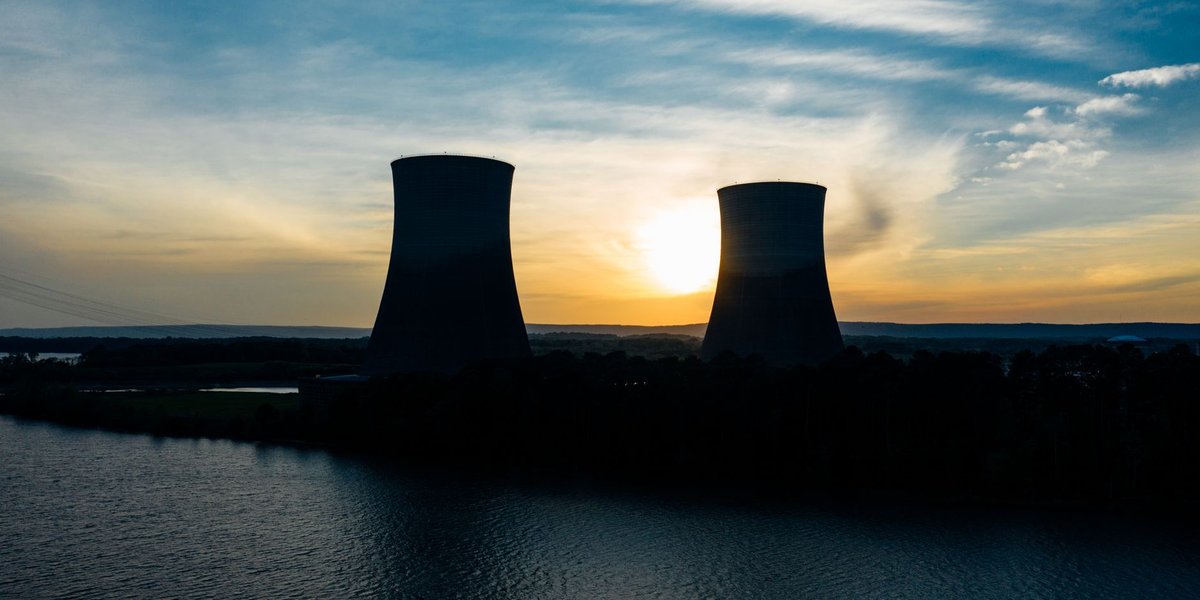
Virginia has two operating nuclear power plants, both owned and run by Dominion Energy: North Anna (Louisa County, on Lake Anna) and Surry (Surry County, on the James River). Between them, four reactors supply close to a third of the electricity Virginia uses. Both sites have been cleared to run for 80 years total, and Dominion is now studying a small modular reactor at North Anna to add even more capacity.
Table of Contents
- Virginia’s Two Nuclear Plants, Side by Side
- North Anna: Twin Reactors on a Man-Made Lake
- Surry: The Plant That Started It
- How Much of Virginia’s Power Actually Comes From Nuclear
- The Earthquake That Shut Down North Anna
- Eighty-Year Licenses and a Reactor That Doesn’t Exist Yet
- What This Means If You Live in Virginia
Virginia’s Two Nuclear Plants, Side by Side
Two sites, four reactors, one operator. Here’s the comparison nobody else puts in one table.
| North Anna | Surry | |
|---|---|---|
| Location | Louisa County, on Lake Anna | Surry County, on the James River |
| Reactors | Unit 1, Unit 2 | Unit 1, Unit 2 |
| Combined capacity | ~1,900 megawatts | ~1,650 megawatts |
| Commissioned | 1978 (Unit 1), 1980 (Unit 2) | 1972 (Unit 1), 1973 (Unit 2) |
| Reactor type | Pressurized water reactor | Pressurized water reactor |
| Operator | Dominion Energy | Dominion Energy |
| License status | Approved for 80 years of total operation | First U.S. plant approved for 80 years of operation |
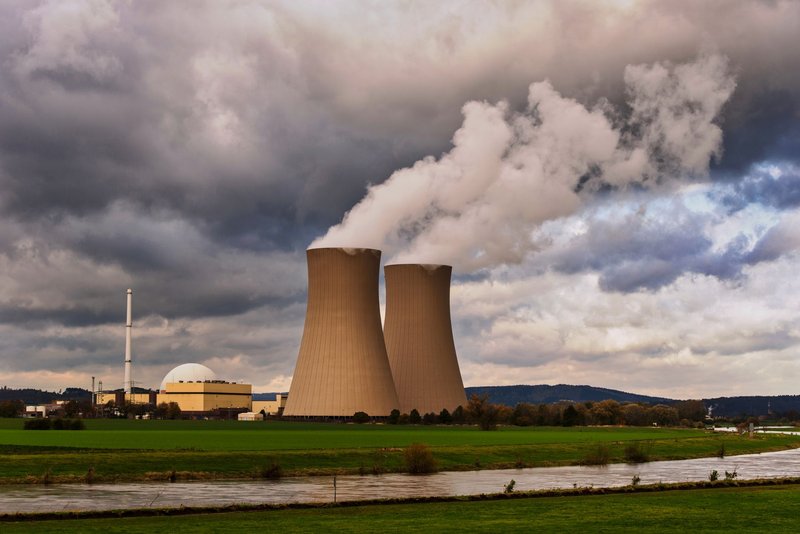
Both are pressurized water reactors, the most common commercial design in the country, and both cool themselves using water bodies engineered or chosen specifically for the job — Lake Anna didn’t exist before the plant did.
North Anna: Twin Reactors on a Man-Made Lake
North Anna sits on the shore of a 13,000-acre lake that Dominion (then Virginia Electric and Power Company) built in the 1970s for the express purpose of cooling the plant. That’s backwards from how most people picture nuclear siting — usually a utility finds a river or coastline and builds around it. Here, the reservoir came second.
The plant runs two units, both online since the late 1970s and early 1980s, producing roughly 1,900 megawatts combined — enough to power well over a million homes. North Anna is also where Dominion wants to put its next reactor: the company has been studying a small modular reactor (SMR) on land it already owns at the site, a project tied in part to surging demand from data centers in Northern Virginia’s “Data Center Alley,” the densest concentration of server farms on the planet.
Surry: The Plant That Started It
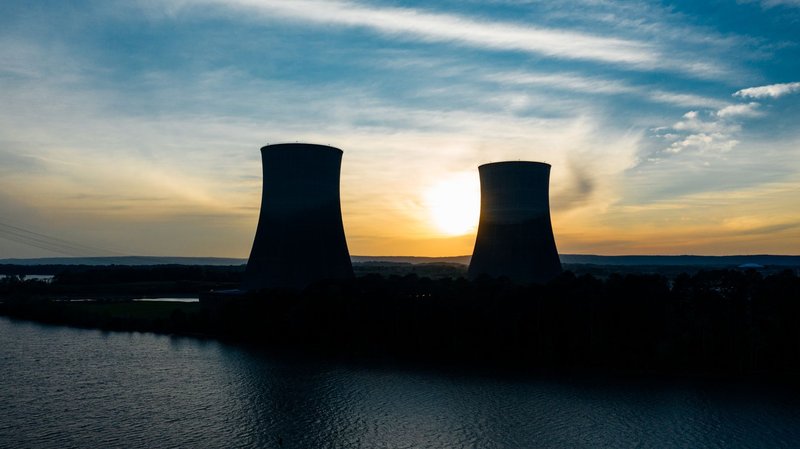
Surry came first. Its two units went commercial in 1972 and 1973, on a peninsula along the James River not far from Jamestown — a stretch of Virginia that’s been central to the state’s history for four centuries longer than the plant has existed. The two reactors put out roughly 1,650 megawatts combined, slightly less than North Anna but from an older, still-running design.
What makes Surry notable now isn’t its age — it’s what the Nuclear Regulatory Commission did with that age. In 2021, Surry became the first nuclear plant in the United States approved to operate for a full 80 years, a regulatory category called “subsequent license renewal.” Utilities had run 40- and 60-year licenses before, but nobody had cleared the bar for 80. Surry did.
How Much of Virginia’s Power Actually Comes From Nuclear
This is the number most articles skip past. Nuclear power supplies close to 30% of the electricity generated in Virginia, according to U.S. Energy Information Administration data — a share that’s stayed remarkably stable even as natural gas and solar have grown. For comparison, nuclear makes up about 18% of the national mix, so Virginia leans on it roughly 60% more than the country as a whole.
That matters because Virginia’s electricity demand isn’t flat — Northern Virginia alone hosts more data center capacity than any other market in the world, and that load doesn’t sleep. Nuclear is the one source in Dominion’s mix that runs at full output around the clock, regardless of weather, which is a big part of why the company keeps extending these licenses instead of retiring the plants.
The Earthquake That Shut Down North Anna
In August 2011, a magnitude 5.8 earthquake centered near Mineral, Virginia — about 11 miles from North Anna — shook the plant hard enough to trigger an automatic shutdown of both reactors. It’s still the largest earthquake recorded in Virginia in over a century, according to the U.S. Geological Survey, and it rattled buildings as far away as Washington, D.C. and New York City.
The plant declared an “unusual event,” the lowest of four NRC emergency classifications, and neither reactor suffered damage that compromised safety systems. But the ground motion at the site exceeded what the plant had originally been designed to withstand, which triggered a lengthy NRC review of North Anna’s seismic assumptions before both units were cleared to restart roughly three months later. The episode reshaped how utilities across the East Coast — a region long assumed to be seismically quiet — think about earthquake risk at nuclear sites.
Eighty-Year Licenses and a Reactor That Doesn’t Exist Yet
Nuclear plants in the U.S. start with 40-year operating licenses, renewable in 20-year increments. Surry’s approval to run to 80 years total means its two units are now licensed into the early 2050s. North Anna has pursued the same subsequent license renewal process, aiming to keep its reactors running for eight decades as well.
The more interesting move is what comes next. Dominion has been evaluating a small modular reactor at North Anna — a design category built around factory-fabricated, smaller-output reactors instead of the sprawling custom-built plants of the 1970s. The pitch is faster construction and lower upfront cost per unit, though no SMR has yet been built and licensed commercially in the U.S. at scale. If Dominion moves forward, it would be the first new nuclear construction in Virginia in roughly half a century — not a replacement for North Anna’s existing units, but an addition next to them.
What This Means If You Live in Virginia
Two plants, four reactors, one company, and a third of the state’s electricity. That’s the whole picture — no hidden third site, no plants in other counties that get left out of the conversation. If you’re near Lake Anna or the James River peninsula, you’re near one of them.
The near-term story to watch isn’t really about safety — both sites have run for decades without a radiological incident that reached the public, the 2011 earthquake included. It’s about capacity. Virginia’s data center growth is outpacing what solar and gas alone can comfortably cover, and nuclear is the only piece of the current mix that doesn’t care whether the sun is out or the wind is blowing. Whatever happens with the North Anna SMR over the next several years will say a lot about how the state plans to keep the lights — and the servers — on.