Table of Contents
- TLDR
- Two very different kinds of cave
- Corner Brook Caves
- The Dungeon, Bonavista
- Spillars Cove sea caves
- Topsail Beach Cave
- Long Point sea caves, Twillingate
- Safety before you go
- Region breakdown
TLDR
Search “caves in Newfoundland and Labrador” and you get TripAdvisor review threads, not a real guide. Here’s the short version: Corner Brook Caves on the west coast is the only guided, walk-in limestone cave system in the province, and its 2026 season status is worth confirming before you drive out — some visitor reports suggest tours haven’t been running consistently. The Dungeon in Bonavista is a UNESCO-recognized sea cave that collapsed into a sinkhole you view from above, not inside. Spillars Cove, also near Bonavista, and Topsail Beach on Conception Bay South both have accessible sea caves you can walk into at low tide. Twillingate’s Long Point coastline has sea caves too, usually seen from a boat alongside icebergs and whales.
Two very different kinds of cave
Newfoundland and Labrador has two cave-forming processes going on, and mixing them up is the fastest way to show up somewhere expecting the wrong thing.
Karst caves form when slightly acidic groundwater dissolves limestone or dolomite over thousands of years, carving passages, sinkholes, and underground streams. Corner Brook Caves is this type — it’s the reason you need a helmet and a headlamp there, not sandals. Karst topography needs a specific bedrock, which is why true walk-in cave systems are rare in the province; most of Newfoundland’s coastline is granite, gneiss, and other rock that doesn’t dissolve the same way.
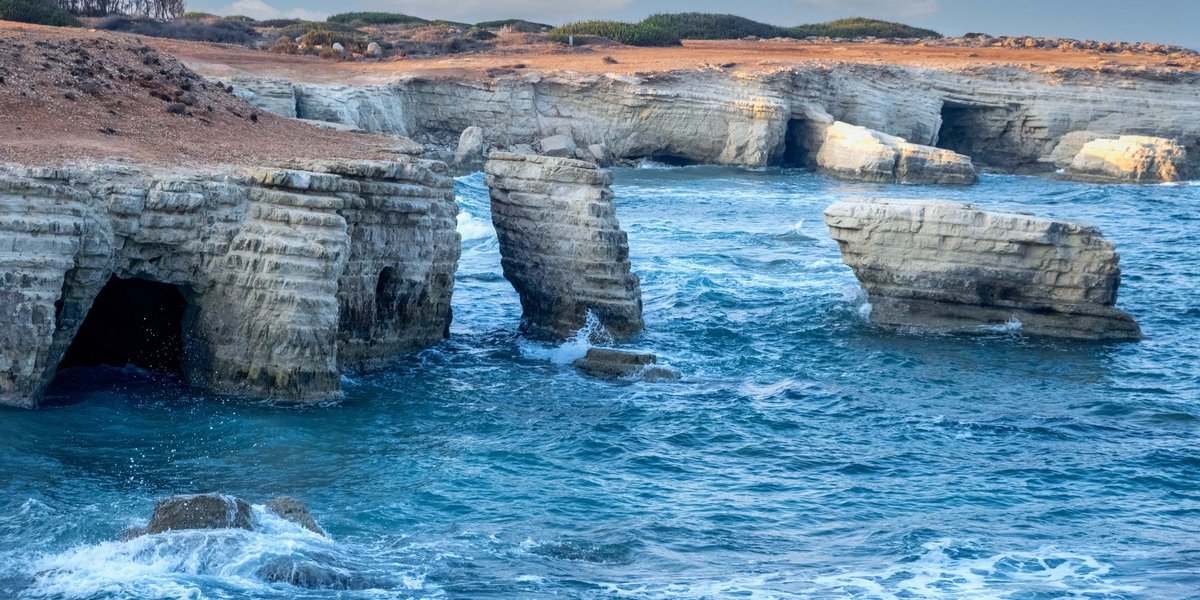
Sea caves are a coastal erosion story: waves hammer a weak point in a cliff face — a fault line, a soft rock seam — for centuries until it hollows out. They’re shallower, usually open at both ends or open to the sky where the roof has collapsed, and tide-dependent. The Dungeon, Spillars Cove, Topsail Beach, and the Long Point formations near Twillingate are all sea caves. You don’t need gear to see most of them, but you do need to check a tide table.
The National Geographic explainer on karst landscapes covers the dissolution process in more depth if you want the geology behind it.
Corner Brook Caves
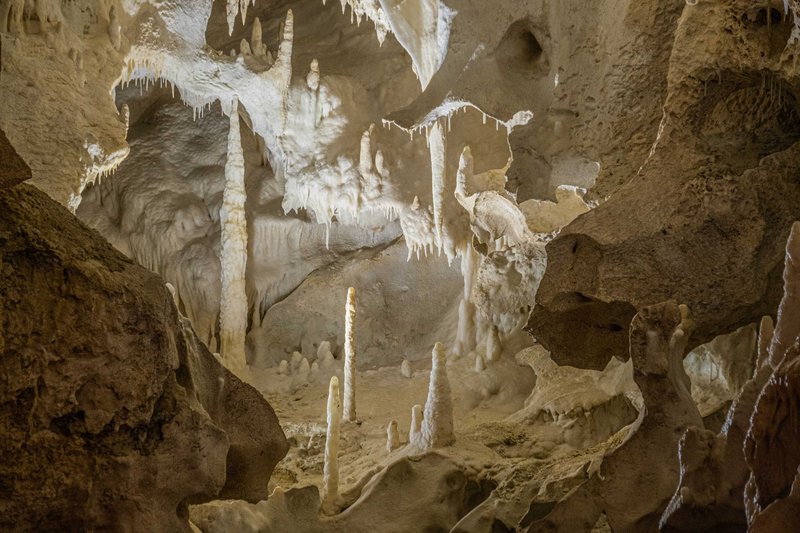
This is the province’s only real limestone cave system open to the public, and it’s the one item on this list that requires an actual guided tour rather than a walk-up visit. The system runs close to a kilometer through dissolved limestone bedrock near Corner Brook, with passages tight enough that operators issue helmets and headlamps rather than suggest them.
Access has historically been tied to a hydro dam release schedule upstream, which controls water levels in the cave and determines which sections are passable on a given day — part of why this isn’t a spot you can just wander into on your own. That dependency is also the reason to check before you commit to the drive: recent visitor reports through 2026 flag the guided tour as possibly not running on its usual schedule, or not running at all in some periods. Call ahead or check the operator’s current listing rather than trusting an old blog post. If it is running, it’s the most genuinely cave-like experience on this list — enclosed, echoing, actual darkness if your light goes off.
The Dungeon, Bonavista
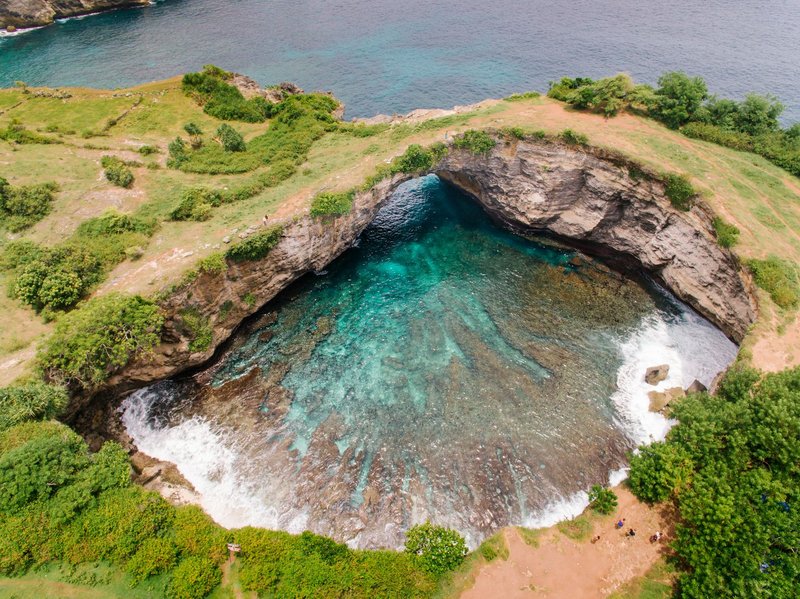
The Dungeon sits inside Dungeon Provincial Park a few kilometers outside Bonavista, and it’s recognized as a UNESCO geosite for a reason: it’s a textbook example of a sea cave whose roof caved in, leaving two natural arches and a deep, roughly circular sinkhole that the ocean still surges into. You don’t climb down into it — you view it from a fenced overlook and walking trail above, watching the water punch through the arches below.
It’s the most photographed formation on this list and the easiest to fold into a Bonavista day trip alongside the lighthouse and Ryan Premises. There’s no admission fee and no booking required — it’s a short walk from the parking area, which makes it the lowest-effort stop here if your time in the region is limited.
Spillars Cove sea caves
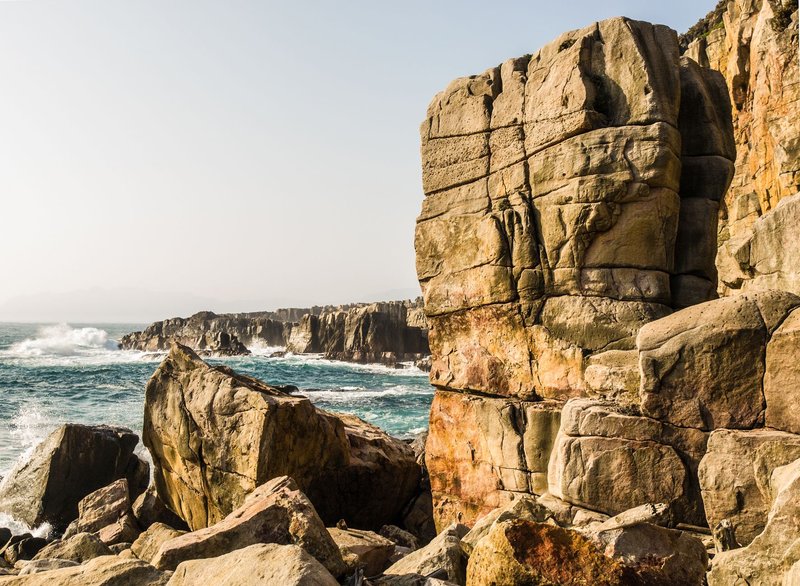
A few minutes from The Dungeon, Spillars Cove has a cluster of sea caves and arches carved into the same stretch of coastline, plus a rougher, less-groomed trail than the provincial park gets you. This is the spot locals mention when they say Bonavista’s coast has more going on than just the one famous sinkhole. Low tide opens up more of the cave mouths to walk near; at high tide, keep your distance — the swell here isn’t gentle.
It’s also a decent whale-watching vantage point in season, since the same cliffs that host the caves face open water where humpbacks feed close to shore in early summer.
Topsail Beach Cave
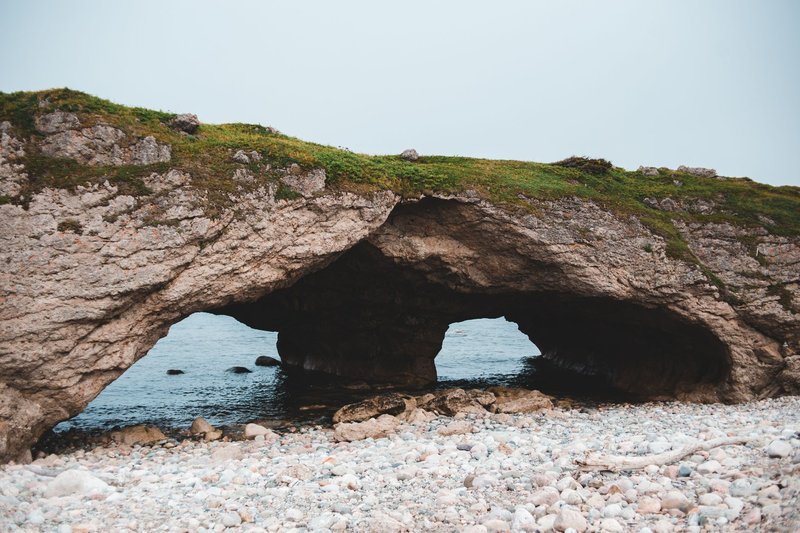
Closer to St. John’s, Topsail Beach in Conception Bay South has a sea cave carved into the headland that’s walkable at low tide without any special gear — good runners and some caution on wet rock is all you need. It’s a fraction of the size of anything on the west coast or Bonavista peninsula, but its proximity to the capital region makes it the practical choice if you’ve got an afternoon and don’t want to commit to a multi-hour drive.
The beach itself is stones rather than sand, which locals call “beach glass” territory — sea-worn glass fragments turn up regularly among the rocks, a byproduct of decades of tide-tumbled debris.
Long Point sea caves, Twillingate
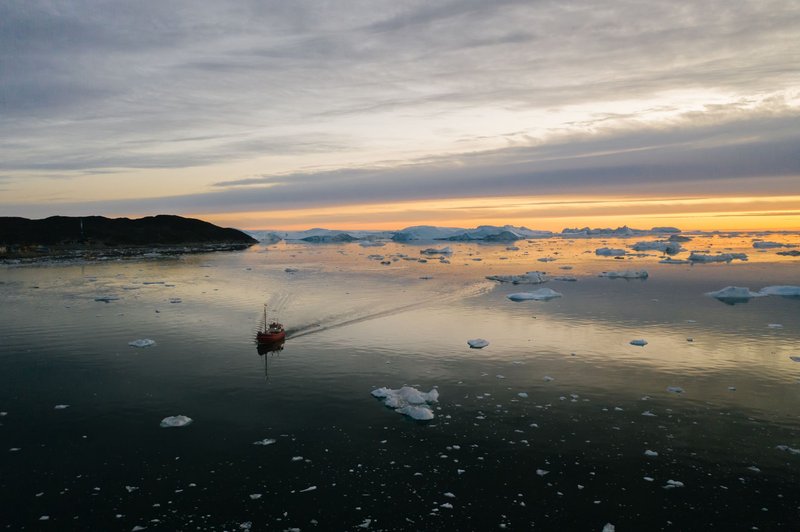
Twillingate’s coastline near Long Point Lighthouse has sea caves cut into the same rugged cliffs that make the area famous for iceberg viewing in spring and early summer. Most visitors see these caves from a tour boat rather than on foot, since the terrain around them is steep and exposed. It’s less a “go look at a cave” stop and more a “the cave is one more thing you’ll see” stop on a boat tour built around icebergs and whales — worth knowing going in, so you’re not disappointed if the cave itself is a brief pass-by rather than the main event.
Safety before you go
Sea caves and tides don’t negotiate. A cave mouth that’s dry and walkable at low tide can fill fast as the tide turns, and Newfoundland’s coastal tides move with enough range to trap someone who loses track of time. Check a tide table before you go into any sea cave, not just the ones on this list, and treat “I’ll just be a few minutes” as the exact mindset that gets people stuck.
Corner Brook Caves carries a different risk profile — confined, wet, low-light passages where a twisted ankle or a dead headlamp becomes a real problem fast, which is the entire reason it’s a guided-only experience rather than a self-guided one. Don’t attempt it outside an operator-led tour even if you find an unlocked entrance.
Region breakdown
- West coast (Corner Brook area): Corner Brook Caves — limestone system, guided only, confirm current tour status
- Bonavista Peninsula: The Dungeon (UNESCO geosite, overlook only) and Spillars Cove (walk-in sea caves, tide-dependent)
- Avalon Peninsula (Conception Bay South): Topsail Beach Cave — easiest access from St. John’s
- Notre Dame Bay (Twillingate): Long Point sea caves — best seen by boat tour, paired with iceberg season
None of these are a full day on their own — pair Corner Brook Caves with Gros Morne if you’re already on the west coast, and stack The Dungeon and Spillars Cove into the same Bonavista stop since they’re minutes apart. Topsail Beach works as a half-day from St. John’s, and Twillingate’s caves are really an add-on to whatever iceberg or whale tour you’ve already booked. Check current UNESCO Global Geoparks listings if you want to see how The Dungeon’s designation fits into the wider geosite network, and pull a local tide table — NOAA’s tide basics explain what you’re reading if it’s your first time checking one — before you plan around any sea cave on this list.