Nitrogen is the most abundant gas in the atmosphere and famously reluctant to react — that triple bond holding N2 together is one of the strongest in chemistry. But once something forces nitrogen to let go of it, the element forms compounds across nearly every branch of chemistry: explosives, fertilizers, anesthetics, rocket fuel, and the amino acids your body is built from. The “nitrogen compounds” label covers all of that, and most lists you’ll find either drown you in formulas or flatten everything into flashcard bullets.
This is the classification without either failure mode: what each class is, the formula pattern that defines it, a real compound you’d recognize, and where it actually shows up.
TLDR: Nitrogen compounds split into two broad camps. Inorganic nitrogen compounds — nitrides, azides, hydrides, halides, oxides, and oxoacids — cover everything from airbag propellant to nitric acid. Organic nitrogen compounds — amines, amides, nitriles, and nitro/nitroso groups — cover amino acids, painkillers, plastics, and TNT. What separates one class from another is mostly the oxidation state nitrogen sits at and what it’s bonded to.
Table of Contents
- Why Nitrogen’s Oxidation State Is the Key to All of This
- Inorganic Nitrogen Compounds
- Organic Nitrogen Compounds
- Comparing the Classes at a Glance
- Why This Chemistry Runs the World: Fertilizer, DNA, and the Nitrogen Cycle
Why Nitrogen’s Oxidation State Is the Key to All of This

Nitrogen has five valence electrons and a genuinely wide range of oxidation states, from -3 up to +5. That range is why nitrogen chemistry sprawls the way it does. Carbon mostly sticks to -4 through +4; nitrogen swings further, and each stop along that scale tends to produce its own family of compounds.
At -3, nitrogen has picked up three electrons and looks like ammonia (NH3) or the amine group in an amino acid. At 0, it’s just N2, minding its own business. Climb to +3 and you get nitrites; go all the way to +5 and you get nitric acid and every nitrate salt in a bag of fertilizer. Knowing the oxidation state of the nitrogen in a compound tells you almost immediately which family it belongs to and how it behaves. Reducing agents cluster at the negative end, oxidizers at the positive end.
Inorganic Nitrogen Compounds
Inorganic nitrogen chemistry is where nitrogen bonds to metals, halogens, oxygen, or hydrogen, with no carbon skeleton involved.
Nitrides
A nitride forms when nitrogen bonds to a less electronegative element, usually a metal or metalloid. Lithium nitride (Li3N) is ionic and reacts violently with water. Titanium nitride (TiN) and silicon nitride (Si3N4) are covalent or interstitial nitrides — hard, heat-resistant materials used as coatings on cutting tools and in ceramic engine parts. Boron nitride (BN) even has a graphite-like form used as a dry lubricant.
Azides
The azide ion, N3-, is a chain of three nitrogens carrying a formal negative charge and a lot of stored energy. Sodium azide (NaN3) decomposes explosively into nitrogen gas the instant it’s triggered, which is exactly why it sat inside car airbags for decades before being phased out for less toxic alternatives. Lead azide does the same job in blasting caps.
Hydrides
Ammonia (NH3) is the big one: colorless, pungent, and the single largest synthetic nitrogen compound produced on Earth by mass. Hydrazine (N2H4), two nitrogens each carrying hydrogens, is a powerful reducing agent used as rocket fuel because it’s hypergolic with certain oxidizers, meaning it ignites on contact with no spark needed. Hydroxylamine (NH2OH) sits in between, used in oxime chemistry and semiconductor manufacturing.
Halides
Nitrogen trifluoride (NF3) is stable enough to be piped into semiconductor fabs for plasma-cleaning process chambers. Nitrogen trichloride (NCl3) is considerably less friendly: a yellow oily liquid that decomposes explosively with heat or shock, which is why it’s now mostly a historical curiosity rather than an industrial reagent. Nitrogen triiodide (NI3) is the extreme case, a contact explosive so sensitive that touching it with a feather after it dries is a standard chemistry-demo party trick.
Oxides
This family alone spans six distinct compounds, because nitrogen forms oxides at nearly every accessible oxidation state. Nitrous oxide (N2O) is the dentist’s laughing gas and also a potent greenhouse gas, with roughly 300 times the warming potential of CO2 molecule-for-molecule. Nitric oxide (NO) looks trivial on paper but turned out to be a major signaling molecule in the human body, triggering blood vessel dilation — the 1998 Nobel Prize in Medicine went to the researchers who worked that out. Nitrogen dioxide (NO2) is the brown-tinged pollutant behind urban smog and a direct byproduct of combustion engines.
Oxoacids
Nitric acid (HNO3) is one of the “big three” mineral acids alongside sulfuric and hydrochloric, used to manufacture nitrate fertilizers and, further downstream, explosives like TNT and nitroglycerin. Nitrous acid (HNO2) is far weaker and unstable outside cold, dilute solution, but its nitrite salts, like sodium nitrite, show up as the curing agent that keeps bacon pink and blocks botulism growth.
Organic Nitrogen Compounds
Organic nitrogen chemistry is where nitrogen attaches to a carbon backbone, and this is the half of the taxonomy that touches biology directly. Amino acids, DNA bases, and most pharmaceuticals owe their nitrogen to one of the five groups below.
Amines
An amine is ammonia with one, two, or three hydrogens swapped for carbon groups: primary, secondary, or tertiary. Methylamine is the simplest primary amine; aniline, an amine attached to a benzene ring, was the starting point for the first synthetic dyes in the 1850s. Every amino acid carries an amine group, which is the half of the molecule that links up with the next amino acid’s carboxylic acid to build a protein.
Amides
An amide is a carbonyl carbon bonded directly to nitrogen, R-CO-NH2. Acetaminophen is structurally an amide. So is nylon, a polymer strung together entirely by repeating amide linkages, which is why chemists call protein backbones “polyamides” too: the peptide bond joining every amino acid in your body is, structurally, an amide.
Nitriles
A nitrile carries a carbon triple-bonded to nitrogen, R-C≡N. Acetonitrile is a common laboratory solvent; acrylonitrile is the “A” in ABS plastic, the material Lego bricks and car dashboards are made from. A related nitrile-forming compound is also what makes almonds and stone-fruit pits smell faintly like marzipan, and why eating a handful of raw apricot kernels is a genuinely bad idea.
Nitro and Nitroso Compounds
A nitro group (-NO2) attached to carbon gives you nitrobenzene, or, stack three of them onto a toluene ring, trinitrotoluene, better known as TNT. A nitroso group (-N=O) is one oxygen lighter, and it shows up in nitrosamines, a class the FDA has flagged as probable human carcinogens when they form from nitrite-cured meats reacting with amines during cooking.
Comparing the Classes at a Glance
| Compound Class | Formula Pattern | Example | Where You’ll See It |
|---|---|---|---|
| Nitride | M-N (metal/metalloid + N) | Si3N4, TiN | Ceramic coatings, cutting tools |
| Azide | R-N3 or M(N3)ₙ | NaN3 | Airbag propellant, detonators |
| Hydride | N-Hₙ | NH3, N2H4 | Fertilizer feedstock, rocket fuel |
| Halide | N-Xₙ | NF3, NCl3 | Semiconductor manufacturing |
| Oxide | N-Oₙ | N2O, NO, NO2 | Anesthesia, smog, biological signaling |
| Oxoacid | H-N-Oₙ | HNO3, HNO2 | Fertilizer production, food curing |
| Amine | R-NH2 / NHR / NR2 | Aniline, amino acids | Proteins, dyes |
| Amide | R-CO-NHR | Acetaminophen, nylon | Painkillers, polymers, peptide bonds |
| Nitrile | R-C≡N | Acetonitrile, acrylonitrile | Solvents, ABS plastic |
| Nitro/Nitroso | R-NO2 / R-N=O | TNT, nitrosamines | Explosives, cured meats |
Why This Chemistry Runs the World: Fertilizer, DNA, and the Nitrogen Cycle
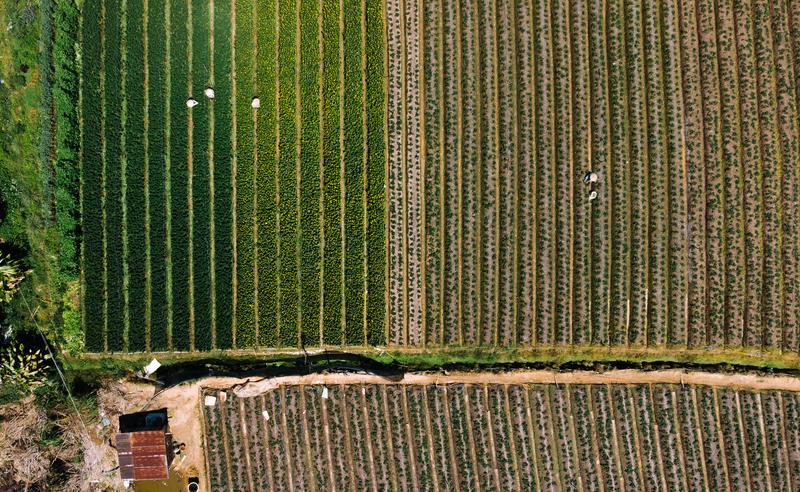
None of this stays confined to a lab bench. The Haber-Bosch process forces atmospheric nitrogen to react with hydrogen under enormous heat and pressure, producing ammonia at industrial scale. That single reaction turned N2, a gas almost nothing could touch, into the fertilizer that’s estimated to feed close to half the world’s population, because the ammonia becomes nitrate fertilizer, which becomes crop yield, which becomes food.
The tradeoff is real. Nitrate that crops don’t absorb runs off into waterways, where it feeds algae blooms that choke off oxygen for everything else living there. The EPA tracks nutrient pollution as one of the most widespread and expensive environmental problems in the country, and most of it traces straight back to the nitrate compounds covered above.
Biologically, nitrogen isn’t optional. Every amino acid carries an amine group, every DNA and RNA base is built around a nitrogen-containing ring, and none of it exists without nitrogen fixation. NASA’s Earth Observatory has documented how that fixation historically ran on lightning, industrial synthesis, and bacteria living in the root nodules of legumes, before humans tipped the balance toward the industrial side. Fixation, nitrification, denitrification, repeat — a taxonomy that starts with formulas on a whiteboard ends, eventually, back in the soil.