A plant that’s “native” to North America just grew here without anybody planting it. A plant that’s endemic to North America grows here and nowhere else on the planet — pull it out of its one home range and it’s gone for good. That distinction trips up almost everyone, including the gardening sites that slap “native” and “endemic” on the same species without blinking.
It matters more than a vocabulary quibble. Endemic species are the ones a single bulldozer, drought, or invasive beetle can erase from existence entirely. They’re concentrated in a handful of corners of the continent — old mountains, isolated grasslands, a sliver of the California coast — and the reasons they cluster there tell you something about how deep time, ice, and geography manufacture biodiversity.
Below are 18 plants found only in North America, grouped by the hotspots that produced them. For each you get the scientific and common name, exactly where it grows, its habitat, and how close it is to disappearing.
Table of Contents
- Native vs. Endemic: The Difference That Actually Matters
- Why a Few Regions Breed So Many Endemics
- Appalachian Mountains
- Southeastern Coastal Plain
- Central Grassland & Edwards Plateau
- California Floristic Province
- Western Deserts
- Endemism Hotspots at a Glance
Native vs. Endemic: The Difference That Actually Matters {#native-vs-endemic}
Every endemic plant is native. Not every native plant is endemic. That’s the whole rule.
Native means a species occurs naturally in a place without human introduction. A sugar maple is native to most of the eastern United States — and also native to parts of Canada. Wide range, lots of populations, native everywhere it grows.
Endemic narrows the lens. A plant endemic to a place is found only there and naturally nowhere else. The scale of “there” is what you have to pin down: a species can be endemic to a continent, a single mountain range, or one limestone glade the size of a parking lot. When a botanist says a plant is endemic to the Appalachians, they mean its entire global distribution sits inside those mountains. It’s the same slippage that makes most “endangered species” lists misleading — the endemic species of Michigan get muddled the same way, with “endangered” and “endemic” used as if they were interchangeable.
This is why endemism is the metric conservationists watch. A native plant with a continent-wide range can lose ten populations and shrug. A plant endemic to one serpentine outcrop has no backup. Lose that outcrop and the species is extinct — not locally, but everywhere, forever. The IUCN Red List tracks exactly this kind of vulnerability, and narrow endemics dominate its most threatened categories.
Why a Few Regions Breed So Many Endemics {#why-regions}
Endemics don’t scatter evenly across the map. They pile up in specific kinds of places, and the ingredients are consistent.
Isolation. A population cut off from its relatives — by an ocean, a mountain wall, or a band of unsuitable habitat — stops trading genes with the outside world. Given enough time, it drifts into its own species. Islands are the classic example, but a mountaintop is an island too, surrounded by a “sea” of warmer lowland the plant can’t cross.
Old, stable ground. Endemism rewards patience. The southern Appalachians escaped the glaciers that bulldozed northern North America during the last ice age, so lineages there have had millions of uninterrupted years to diverge. The Appalachian Mountains are among the oldest on Earth, and their flora reflects that head start.
Weird soils and broken topography. Serpentine, limestone, gypsum, and granite each demand different chemistry from a plant’s roots. Where the geology turns to a patchwork — California’s fractured terrain, the Edwards Plateau’s limestone — specialists evolve to exploit each pocket, and those specialists go nowhere else.
Climatic refuge. When the climate swung cold during glaciations, some species survived only in small pockets that stayed livable. Those refugia became endemic factories: isolated, stable, and full of survivors with nowhere else to go.
Stack these together and you get the five regions below.
Appalachian Mountains {#appalachians}
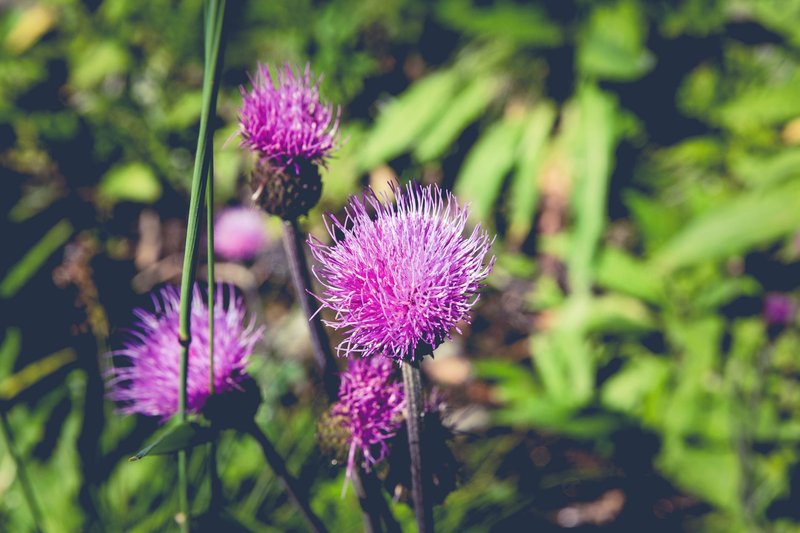
Over 450 plant taxa are endemic to the Appalachians, the densest concentration of plant endemism in eastern North America. The range’s age and its glacier-free southern peaks did the work.
1. Spreading Avens (Geum radiatum) A yellow-flowered perennial clinging to high-elevation rock outcrops in North Carolina and Tennessee, mostly above 4,500 feet. It’s federally endangered — fewer than a dozen populations survive, threatened by trampling hikers and a warming climate squeezing it off the mountaintops.
2. Roan Mountain Bluet (Houstonia montana) Endemic to a handful of grassy balds and rocky summits along the North Carolina–Tennessee line. Small purple flowers, an exceptionally narrow range, and a federal threatened listing. Its entire world is a few high ridgelines.
3. Heller’s Blazing Star (Liatris helleri) Found only on a few quartzite cliffs and outcrops in the North Carolina High Country. The lavender flower spikes bloom from thin soil on exposed rock that few other plants tolerate — which is exactly why it survives there and nowhere else.
4. Gray’s Lily (Lilium grayi) A nodding, red-orange lily endemic to the high mountain meadows and seeps of the southern Appalachians across Virginia, North Carolina, and Tennessee. It’s declining steadily, hit by a fungal blight and the slow loss of the open balds it depends on. The same kind of narrow, rock-and-glade endemism shows up just west of here too, in the endemic plants of Arkansas clinging to the Ouachita and Ozark uplands.
Southeastern Coastal Plain {#southeast}
The flat, fire-shaped coastal plain from the Carolinas to the Gulf is a global biodiversity hotspot, and its longleaf pine savannas and seepage bogs are endemic-rich.
5. Venus Flytrap (Dionaea muscipula) The most famous endemic on this list, and far more restricted than most people realize. Wild Venus flytraps grow naturally within roughly a 75-mile radius of Wilmington, North Carolina — a sliver of the Carolinas’ wet pine savanna, and nowhere else on Earth. Poaching for the houseplant trade is so severe that taking one from the wild is now a felony in North Carolina.
6. Florida Torreya (Torreya taxifolia) A coniferous tree endemic to the steep ravines along the Apalachicola River in the Florida Panhandle and a sliver of Georgia. A fungal disease collapsed the population in the 20th century, and it’s now one of the most endangered conifers in the world — survivors rarely reach reproductive size before the blight kills them.
7. Miccosukee Gooseberry (Ribes echinellum) Known from just two spots on Earth: one lake margin in Florida and one in South Carolina. That’s the entire global range of the species — a textbook narrow endemic hanging on at two disjunct sites.
8. Chapman’s Rhododendron (Rhododendron chapmanii) A pink-flowered evergreen shrub endemic to a few sandy, fire-maintained flatwoods in the Florida Panhandle. Fire suppression is its enemy: without periodic burns, competing shrubs shade it out.
Central Grassland & Edwards Plateau {#grassland}
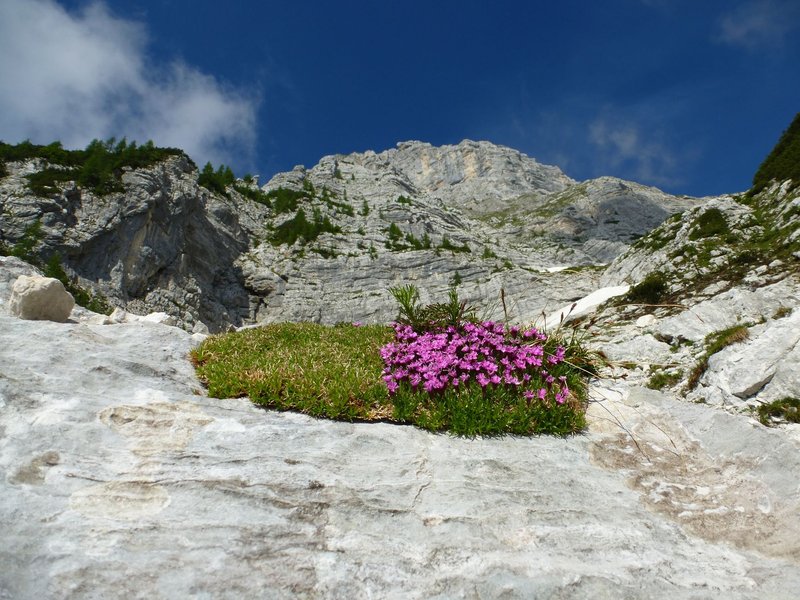
A scientific catalog of the central grasslands documented 382 endemic plant taxa across the prairies and the limestone country of central Texas. The Edwards Plateau’s broken limestone and spring-fed canyons concentrate them.
9. Texas Snowbells (Styrax platanifolius ssp. texanus) A small tree with white, bell-shaped flowers endemic to limestone canyon walls in a few Edwards Plateau counties. Federally endangered, and historically grazed to the brink — seedlings rarely survived where deer and goats could reach them.
10. Tobusch Fishhook Cactus (Sclerocactus brevihamatus ssp. tobuschii) A tiny barrel cactus endemic to limestone outcrops of the Edwards Plateau. Once federally endangered, it recovered well enough to be delisted in 2018 — one of the rare endemic success stories, after intensive monitoring proved populations were larger and more stable than feared.
11. Big Red Sage (Salvia penstemonoides) Thought extinct for nearly a century until it was rediscovered on Edwards Plateau seepage slopes in the 1980s. The deep-red flower spikes grow on wet limestone ledges that grazing animals can’t easily reach, which is roughly why any survived at all.
12. Texas Wild Rice (Zizania texana) Endemic to a single 2-to-3-mile stretch of the San Marcos River in central Texas. It needs clear, constantly flowing spring water at a steady temperature — conditions that exist in essentially one place — and it’s federally endangered, vulnerable to any drop in the spring flow.
California Floristic Province {#california}
California is one of only a handful of plant biodiversity hotspots in North America, and roughly a third of its native plant species grow nowhere else. The state’s fractured geology, Mediterranean climate, and tangle of mountains and valleys do the manufacturing.
13. Giant Sequoia (Sequoiadendron giganteum) The largest trees on Earth by volume are endemic to about 75 scattered groves on the western slope of the Sierra Nevada — a narrow elevation band between roughly 5,000 and 7,000 feet. The entire wild population of the planet’s biggest tree fits inside a few dozen Sierra groves, which recent megafires have put under real threat.
14. Torrey Pine (Pinus torreyana) The rarest pine in the United States, endemic to one stretch of coastal bluff north of San Diego and a single population on Santa Rosa Island. Twisted by ocean wind, it survives in just two places — making it one of the most geographically restricted pines in the world.
15. Coast Redwood (Sequoia sempervirens) The tallest trees on Earth are endemic to a narrow fog belt along the California and extreme southern Oregon coast. They depend on summer fog to drink through their needles when it doesn’t rain — pull them out of that coastal strip and they can’t get the water they need.
16. California Pitcher Plant (Darlingtonia californica) A carnivorous plant endemic to cold serpentine bogs and seeps of northern California and southwestern Oregon. The hooded, cobra-like leaves trap insects, and the plant tolerates the toxic serpentine soils that exclude most competitors — a specialist locked to a specific, scarce substrate.
Western Deserts {#deserts}
The deserts of the Southwest look barren, but isolation and bizarre soils make them quiet endemism factories — many species cling to a single dune field or gypsum outcrop. The continent’s desert biomes span everything from hot sand seas to cold high-elevation basins, and each pocket of that range builds its own specialists.
17. Joshua Tree (Yucca brevifolia) The signature plant of the Mojave Desert, endemic to the Mojave across parts of California, Nevada, Arizona, and Utah. It depends entirely on the yucca moth to pollinate it — no other insect does the job — and a warming, drying Mojave is pushing its range toward collapse at lower elevations.
18. Las Vegas Bearpoppy (Arctomecon californica) A yellow-flowered poppy endemic to gypsum soils in the Mojave around southern Nevada and a corner of Arizona. It grows only on these chalky, crumbling gypsum badlands — soil so specialized that the plant’s range is essentially a map of where that gypsum sits, much of it now under the spread of Las Vegas.
Endemism Hotspots at a Glance {#table}
| Region | Why it breeds endemics | Approx. endemic taxa | Flagship species |
|---|---|---|---|
| Appalachian Mountains | Ancient, glacier-free peaks; sky-island isolation | 450+ | Spreading Avens |
| Southeastern Coastal Plain | Fire-shaped savannas; seepage bogs | Hundreds | Venus Flytrap |
| Central Grassland & Edwards Plateau | Limestone canyons; spring-fed isolation | 382 | Texas Wild Rice |
| California Floristic Province | Fractured geology; Mediterranean climate | ~2,000+ | Giant Sequoia |
| Western Deserts | Gypsum/serpentine soils; dune isolation | Many narrow endemics | Joshua Tree |
The pattern repeats across every region: the same forces that isolate a plant — a mountain wall, a fog belt, a patch of toxic soil — are the forces that strand it. Endemism is biodiversity and fragility wearing the same coat. The plants that make North America’s flora genuinely its own are also, almost by definition, the ones with the least room to fail.