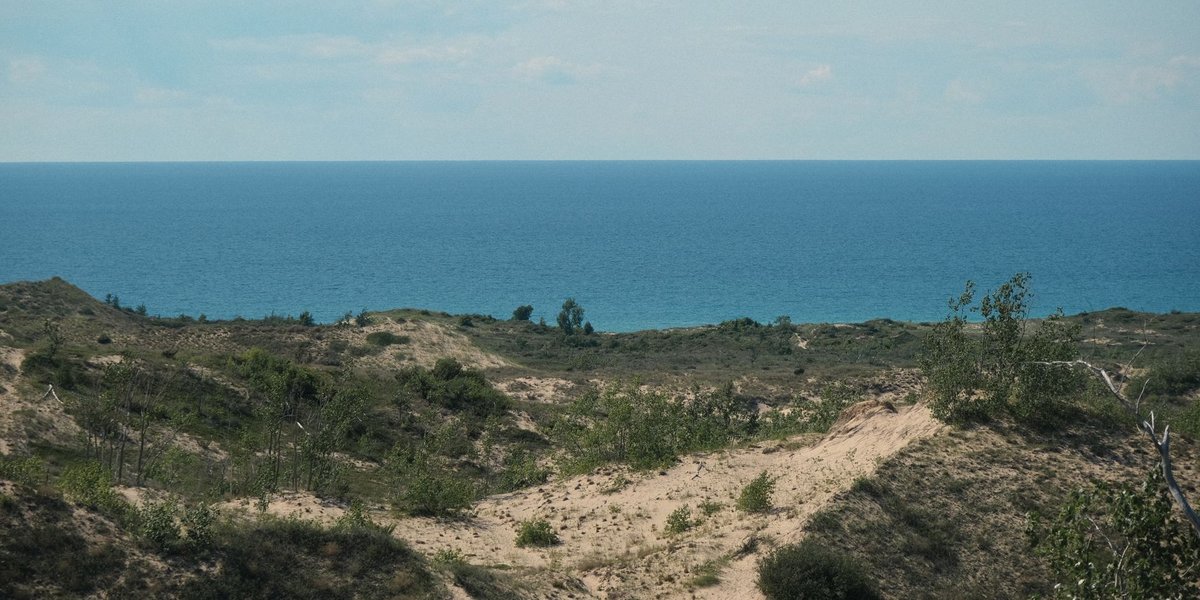
Here’s the thing most “endangered species of Michigan” articles get wrong: they use “endangered” and “endemic” like they mean the same thing. They don’t. A gray wolf is endangered in Michigan, but it also roams Canada, Minnesota, and Wisconsin. An endemic species is pickier. It lives here and nowhere else on Earth.
By that strict definition, Michigan has remarkably few true endemics. One plant, really, belongs entirely to the state. A small handful more belong to the Great Lakes basin and happen to do most of their living within Michigan’s borders. That scarcity is the whole story, and it’s a more interesting one than another recycled list of threatened mammals.
So this is the honest version. We’ll define the terms, then profile the plants that genuinely exist nowhere else, where to find them, and why the Great Lakes shoreline keeps producing species you can’t see anywhere else in the world.
Table of Contents
- Endemic vs. Endangered vs. Native: Why It Matters
- Michigan Monkey Flower: The Only True State Endemic
- Dwarf Lake Iris: Michigan’s State Wildflower
- Pitcher’s Thistle: The Dune Specialist
- Houghton’s Goldenrod: A Straits Original
- Why the Great Lakes Shoreline Breeds Endemics
- Where to See Them
- The Threats They All Share
Endemic vs. Endangered vs. Native: Why It Matters {#endemic-vs-endangered}
Three words get tangled constantly, so let’s untangle them.
Native means a species got to Michigan on its own, before European settlement, without human help. White-tailed deer are native. So are sugar maples and loons. Native covers a huge swath of Michigan’s wildlife, and most of those species live in plenty of other states too.
Endangered describes how close a species is to disappearing. It’s a conservation status, not a geographic one. A species can be endangered across its whole range or just locally. The Kirtland’s warbler was famously endangered, but it nested in Michigan jack pine and wintered in the Bahamas, so it was never endemic.
Endemic is the geographic one. An endemic species is restricted to a single defined area and found nowhere outside it. The smaller the area, the more remarkable the endemic. A species endemic to a continent is one thing — North America has its own roster of species found nowhere else on the continent — but a species endemic to one watershed in one Michigan county is something else entirely.
These categories overlap, which is exactly where confusion creeps in. The Michigan monkey flower is native, endangered, and endemic. Most of Michigan’s famous “endangered species,” though, are native and endangered but not endemic at all. Keep the three straight and the rest of this article makes sense.
Michigan Monkey Flower: The Only True State Endemic {#michigan-monkey-flower}
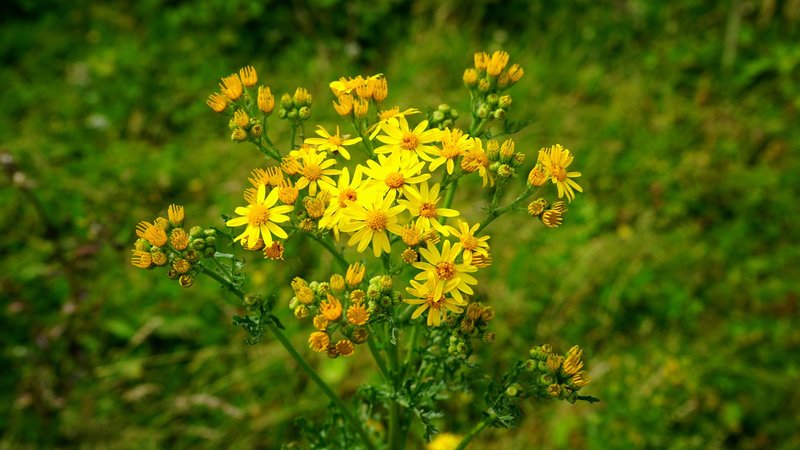
If Michigan has a single species that belongs to it and to nowhere else, this is it. Mimulus michiganensis, the Michigan monkey flower, grows in cold, spring-fed seeps and stream margins along the northern Lower Peninsula, clustered around the Straits of Mackinac and Grand Traverse regions. Globally, it has been documented at only around a dozen sites, all of them in Michigan.
The plant is a small perennial with bright yellow, snapdragon-like flowers, and it’s astonishingly fussy about water. It needs cold groundwater seeping out year-round, the kind of habitat that exists in narrow bands where springs hit the surface. Warm the water, divert the spring, or shade the seep with development, and the population collapses. That’s why it sits on the federal endangered species list and is ranked critically imperiled.
What makes it a textbook endemic is the combination of a tiny global range and a habitat that simply doesn’t occur elsewhere in the same form. It isn’t rare because it’s losing ground across a wide territory. It’s rare because its entire territory is a few groundwater seeps in northern Michigan. The U.S. Fish & Wildlife Service lists it among the rarest plants in the Great Lakes region for exactly that reason.
This is the species to name when someone asks what’s found only in Michigan. Everything else on this list is shared, at least a little, with neighboring shorelines.
Dwarf Lake Iris: Michigan’s State Wildflower {#dwarf-lake-iris}
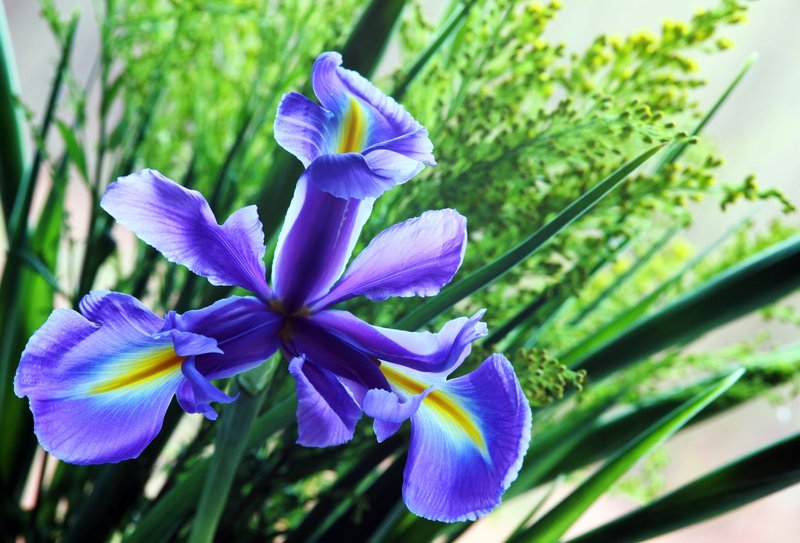
The dwarf lake iris (Iris lacustris) is Michigan’s official state wildflower, and it’s a Great Lakes endemic in the strict sense: it grows nowhere on the planet outside the northern shores of Lakes Michigan and Huron. The global range is essentially a thin ribbon of shoreline, with Michigan holding the overwhelming majority of all known populations. A small number spill into Ontario and Wisconsin, but if you want to see this plant, Michigan is where you go.
It’s tiny. The flowers are deep blue-violet, sitting only a few inches off the ground, and they bloom in late May along limestone-rich shorelines and in the dappled edges of cedar forests near the water. It spreads by underground rhizomes, forming low mats rather than tall stalks, which is part of why it’s easy to walk right past.
The dwarf lake iris is federally listed as threatened. Its dependence on that specific calcium-rich, near-shore zone is the same trap the monkey flower faces: a narrow habitat means a narrow range means high vulnerability. Shoreline development and altered water levels chip away at the exact strip of land it needs.
Pitcher’s Thistle: The Dune Specialist {#pitchers-thistle}
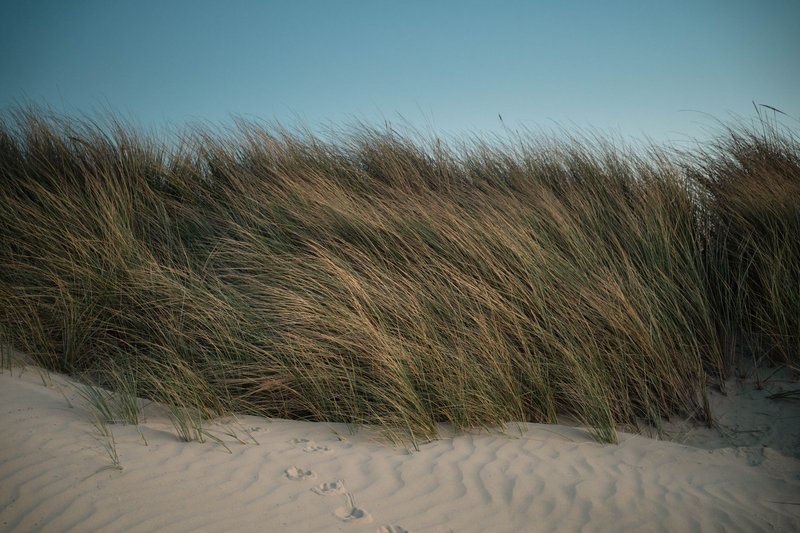
Forget whatever you picture when you hear “thistle.” Pitcher’s thistle (Cirsium pitcheri) isn’t the spiny roadside weed. It’s a pale, silvery-green plant with creamy white-to-pinkish flower heads, and it lives only on the open sand dunes of the upper Great Lakes, Michigan included. It’s endemic to the dune systems of Lakes Michigan, Huron, and Superior, and it’s found nowhere else worldwide.
The plant’s whole life strategy is built around shifting sand. It’s a long-lived monocarpic species, meaning it spends several years, sometimes five or more, growing a deep taproot and a rosette of leaves before it flowers once, sets seed, and dies. That taproot anchors it in dunes that are constantly moving, and the silvery hairs on its leaves reflect harsh sunlight and reduce water loss in an environment with almost no shade and very little fresh water.
Pitcher’s thistle is federally threatened. The irony is that the same recreational draw of Great Lakes dunes, foot traffic, off-road vehicles, and shoreline development, directly degrades the habitat it depends on. According to the IUCN Red List, dune-restricted endemics like this one are among the most sensitive plants to habitat disturbance precisely because they can’t relocate to a different ecosystem. There isn’t another ecosystem for them.
Houghton’s Goldenrod: A Straits Original {#houghtons-goldenrod}
Houghton’s goldenrod (Solidago houghtonii) rounds out the group. It’s a Great Lakes endemic concentrated around the Straits of Mackinac, growing in the moist, calcium-rich interdunal flats and limestone shorelines of northern Lake Huron and Lake Michigan. The bulk of its global population sits in Michigan, with a few outlying spots in Ontario and a disjunct population far away in New York.
It’s a modest-looking goldenrod, with flat-topped clusters of yellow flowers in late summer, but its habitat requirements are exacting. It needs those alkaline, seasonally wet shoreline flats, the kind formed where limestone bedrock meets fluctuating lake levels. That habitat is geologically specific and geographically tiny, which is why a plant in the goldenrod family, a group otherwise famous for growing absolutely everywhere, ended up rare and federally threatened.
Named for Michigan’s first state geologist, Douglass Houghton, it’s a fitting endemic for the state: tied to the exact chemistry and hydrology of the northern Great Lakes coast.
Why the Great Lakes Shoreline Breeds Endemics {#why-the-shoreline}
Notice the pattern. Every plant on this list lives on or near the Great Lakes shoreline, and most cluster around the same northern stretch. That’s not a coincidence. It’s geology and ice.
Around 10,000 years ago, retreating glaciers left behind a brand-new landscape: bare dunes, limestone pavement, cold groundwater seeps, and shorelines that have been rising and falling ever since as the land slowly rebounds from the weight of vanished ice. These habitats are young, harsh, and unusual. The limestone bedrock makes the soil and water alkaline, and the lakes create cool, moist microclimates right at the water’s edge.
Most plants can’t tolerate those conditions. The few that adapted, evolving to thrive in shifting sand or cold alkaline seeps, found themselves with little competition but also with nowhere else to go. Their specialized traits locked them into a habitat that exists only along these particular shorelines. The National Park Service describes Great Lakes dune and shoreline systems as some of the most ecologically distinctive in North America, and that distinctiveness is exactly what produces endemics.
A young, isolated, chemically peculiar habitat is an evolutionary incubator. The Great Lakes basin is one of those, which is why a state better known for its lakes and forests quietly hosts plants that grow nowhere else in the world.
Where to See Them {#where-to-see-them}
You don’t need a research permit to see most of these plants. You need timing and the right shoreline.
For the dwarf lake iris, the northern Lake Michigan and Lake Huron coastlines in late May are your best bet. Limestone-rich shoreline preserves and the cedar-edged trails of the northern Lower Peninsula and eastern Upper Peninsula are reliable. Look low, near the ground, in the partial shade where forest meets shore.
Pitcher’s thistle shows up on open dunes along Lake Michigan through summer. The big dune systems of the western Lower Peninsula coast are good hunting grounds. Look for the silvery rosettes among the marram grass, and stay on marked trails, because trampling the dune is the single worst thing a visitor can do to this plant.
Houghton’s goldenrod blooms in late summer around the Straits of Mackinac, in the wet limestone flats near the shore. The Michigan monkey flower, by contrast, is the hardest to see and the one to admire from a distance. Its seep habitats are fragile and most sites aren’t publicized, for good reason. Stumbling into a cold spring and compacting it is enough to harm a population.
The rule for all four: stay on the trail, don’t pick, and treat the shoreline like the rare habitat it is.
The Threats They All Share {#the-threats}
Read the four profiles back to back and the same threats keep surfacing. That’s the unifying tragedy of Great Lakes endemics: a narrow range means a small problem becomes an existential one.
Shoreline development is the big one. Every species here needs a specific strip of coast, and that’s the same strip people want for homes, marinas, and beaches. Pave it, and the plant has no second location to retreat to.
Habitat-specific disruption finishes the job. Divert a spring and the monkey flower’s seep dries up. Stabilize a dune or trample it flat, and Pitcher’s thistle loses the shifting sand it evolved for. Alter lake levels or shoreline chemistry, and the dwarf lake iris and Houghton’s goldenrod lose their alkaline flats. Invasive species like spotted knapweed and baby’s breath crowd the dunes; climate-driven shifts in lake levels reshape the shorelines faster than these slow-growing plants can follow.
The endemic of Michigan is, almost by definition, a specialist with no backup plan. That’s what makes these four plants worth knowing, and worth protecting. A gray wolf can recolonize Michigan from Wisconsin. A Michigan monkey flower lost from its last seep is gone from the planet. That’s the difference endemic makes, and it’s the reason this short list matters more than its length suggests.