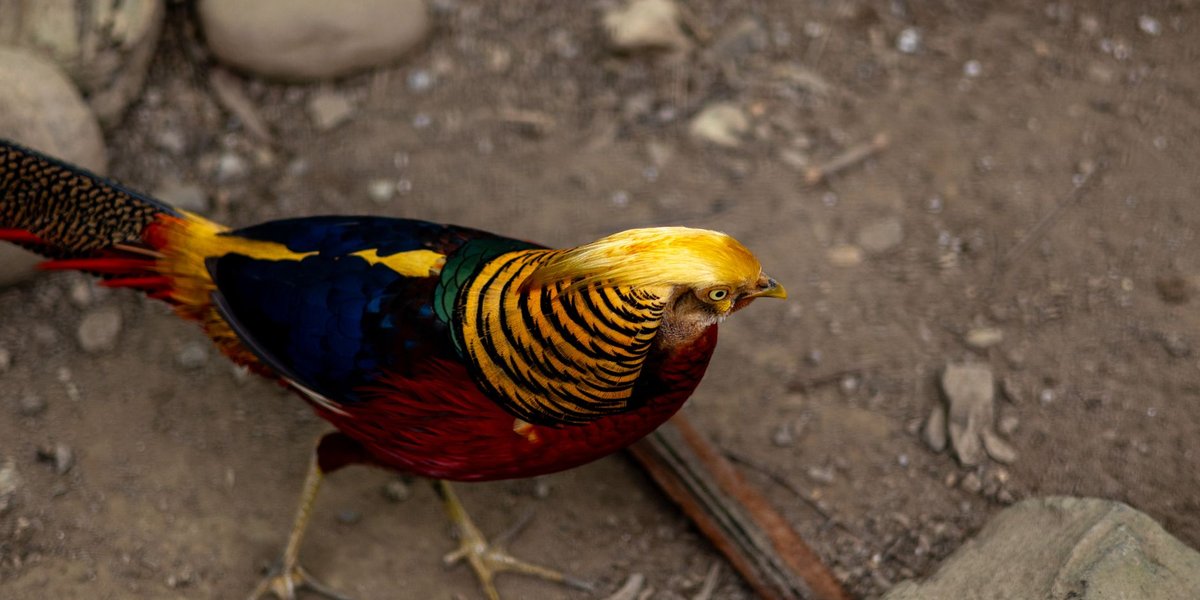
China holds roughly 1,431 bird species, which puts it eighth in the world and ahead of every country in Asia except Indonesia. That number includes 57 species found nowhere else on Earth, from the gold-and-scarlet Golden Pheasant to the Crested Ibis, a bird that fell to seven known individuals in 1981 and has since clawed its way back.
This isn’t a taxonomic list — the full roster runs longer than most people want to scroll. It’s a guide to the birds of China actually worth knowing: the endemics, the showstoppers, the ones you’ll genuinely see if you go looking, and the few that tell the country’s conservation story. Grouped by type so you can skim to what you care about, with a quick-reference table at the bottom.
Table of Contents
- The short version
- Endemic birds: found only in China
- Pheasants and galliforms
- Waterbirds and cranes
- Birds of prey
- Songbirds and everyday backyard birds
- Where and when to birdwatch in China
- Conservation: the birds China nearly lost
- Quick reference table
The short version
If you want the highlights without the scroll:
- Most iconic: the Red-crowned Crane (Manchurian Crane), the de facto national bird, woven into Chinese art for over a thousand years as a symbol of longevity.
- Most spectacular: the Golden Pheasant — yes, the one that looks computer-generated. It’s a real bird, endemic to central China.
- Best comeback: the Crested Ibis, down to seven wild birds in 1981, now numbering in the thousands.
- Most likely to land in your hotel courtyard: the Eurasian Tree Sparrow and the Light-vented Bulbul, two of the most common birds in China’s cities.
- Best places to go: Qinghai Lake for breeding waterbirds, Yunnan for sheer diversity, Emei Shan for endemics — April through August.
Endemic birds: found only in China
China’s 57 endemic species are the reason serious birders book the trip. These are the birds you can’t tick off anywhere else.
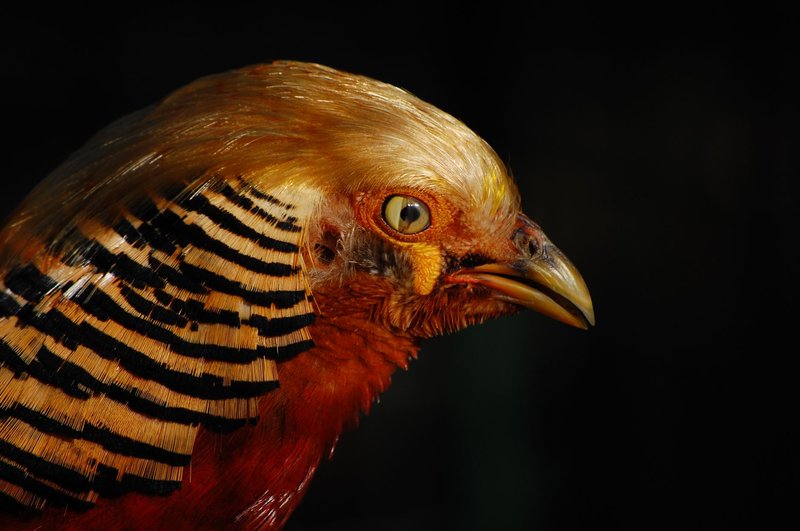
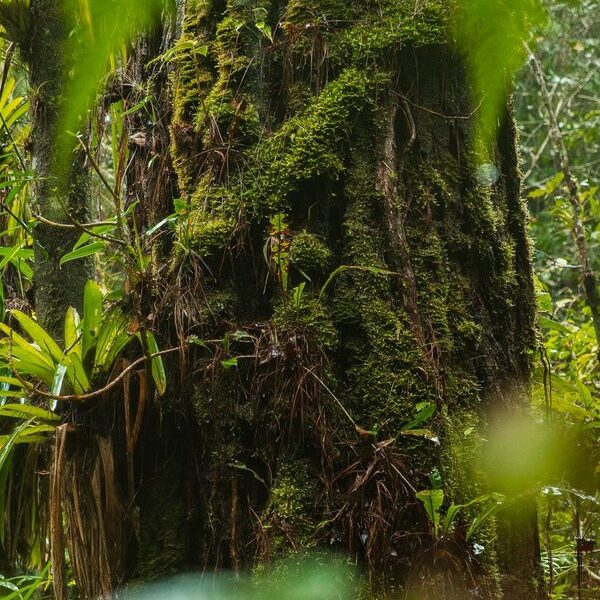
Golden Pheasant (Chrysolophus pictus). The poster bird. Males wear a golden crest, a scarlet underside, and a barred orange cape they can fan across their face during display. Endemic to the mountain forests of central China — Shaanxi, Gansu, and Sichuan. They’re surprisingly hard to see despite the color, because they skulk in dense undergrowth and bolt rather than fly. These temperate mountain woodlands are one of several distinct types of forest biome, and the cover they provide is exactly what lets such a vivid bird stay hidden.
Lady Amherst’s Pheasant (Chrysolophus amherstiae). The Golden Pheasant’s cousin, swapping gold for silver, black, and a red-and-white barred cape. Found in southwestern China and adjacent Myanmar. Named after Sarah Amherst, who sent the first specimen to London in 1828.
Brown Eared Pheasant (Crossoptilon mantchuricum). A heavy, dark-bodied pheasant with white “ear” tufts that stick out past the back of the head like a handlebar mustache. Restricted to a few mountain ranges in northern China and listed as Vulnerable.
Chinese Monal (Lophophorus lhuysii). A high-altitude pheasant with iridescent plumage that shifts from green to purple to bronze depending on the light. It lives above the treeline in the mountains of Sichuan and Qinghai, often near snow.
Sichuan Jay, Sichuan Treecreeper, and the Sichuan parrotbills round out a cluster of small endemics concentrated in the province’s mountains — which is exactly why Sichuan shows up on every China birding itinerary.
Pheasants and galliforms
China is a global hotspot for the pheasant family. Beyond the endemics above, a few more are worth knowing.
Common Pheasant (Phasianus colchicus). The bird Western hunters know as the “ring-necked pheasant” originally came from Asia, and China sits at the heart of its native range. Roughly 30 subspecies occur across the country, varying in collar and rump color.
Temminck’s Tragopan (Tragopan temminckii). A stocky forest pheasant. The male inflates a blue-and-red throat lappet during courtship — a bib of bare skin that unfurls like a painted napkin and then retracts. Found in the mountains of central and southern China.
Tibetan Snowcock (Tetraogallus tibetanus). A grey-and-white galliform of the high Tibetan Plateau, often spotted above 4,000 meters where almost nothing else with feathers bothers to live.
Waterbirds and cranes
China sits on the East Asian–Australasian Flyway, so its wetlands fill with migrating waterbirds twice a year. The cranes are the headliners.
Red-crowned Crane (Grus japonensis), also called the Manchurian Crane. White body, black flight feathers, and a bare patch of red skin on the crown. It breeds in the marshes of northeastern China and winters along the coast. The species is a fixture of Chinese and Japanese painting, where it stands for long life and fidelity. With fewer than 3,000 mature birds left, the IUCN lists it as Vulnerable.
Black-necked Crane (Grus nigricollis). The only crane that spends its whole life on the high plateau, breeding on the Tibetan Plateau in summer and wintering in Yunnan and Guizhou. It was the last crane species described by science, in 1876.
Mandarin Duck (Aix galericulata). The male is a riot of orange “sail” feathers, a purple chest, and a white crescent over the eye. In Chinese culture, mandarin ducks symbolize marital devotion because pairs are often seen together. They nest in tree cavities, and the ducklings leap from the hole to the ground days after hatching.
Baer’s Pochard (Aythya baeri). A diving duck that has crashed so hard it’s now Critically Endangered, with the global population possibly under 1,000. A handful of breeding sites in eastern China are among the last strongholds. The lakes and marshes it depends on are among the most threatened of all the freshwater biomes, which is a large part of why the species is in such trouble.
Birds of prey
Saker Falcon (Falco cherrug). A large falcon of the open grasslands and the Tibetan Plateau, prized for centuries in falconry, which is part of why it’s now Endangered.
Himalayan Vulture (Gyps himalayensis). One of the largest raptors in Asia, with a wingspan near three meters. You’ll see them riding thermals over the plateau and high valleys, especially near “sky burial” sites where they feed.
Crested Goshawk (Accipiter trivirgatus). A forest hawk of southern China that has adapted to wooded city parks, hunting pigeons and squirrels in places like Hong Kong and Taipei.
Black Kite (Milvus migrans). The default urban raptor across much of China. If you see a fork-tailed bird wheeling over a city river or rubbish tip, it’s almost certainly this one.
Songbirds and everyday backyard birds
Most of what you’ll actually see day to day are smaller birds. These are the common birds in China that turn up in parks, gardens, and city streets.
Eurasian Tree Sparrow (Passer montanus). The sparrow you’ll see everywhere — and the bird at the center of one of history’s worst ecological blunders. During the 1958 “Four Pests” campaign, China tried to exterminate sparrows to protect grain; with the birds gone, locust populations exploded and the resulting crop losses worsened a catastrophic famine.
Light-vented Bulbul (Pycnonotus sinensis). A grey-brown bulbul with a white patch on the back of the head. One of the most abundant songbirds in eastern and southern cities, loud and constantly chattering.
Azure-winged Magpie (Cyanopica cyanus). Soft grey body, black cap, and powder-blue wings and tail. Travels in noisy family flocks through northern parks and woodland.
Red-billed Leiothrix (Leiothrix lutea). A small, brilliantly colored babbler with an orange-red bill and yellow throat. Popular in the cage-bird trade, which is part of why you’ll often hear them before you see them.
Oriental Magpie-Robin (Copsychus saularis). Black-and-white, perky-tailed, and one of the most reliable singers in southern Chinese gardens. It’s one of the more memorable birds in any roundup of animals whose names start with R, and in southern China you barely have to look for it.
Where and when to birdwatch in China
The country is enormous, so pick a region by what you want to see.
- Qinghai Lake (Qinghai): China’s largest lake and a breeding ground for Bar-headed Geese — the birds that migrate over the Himalayas at altitudes where the air holds a fraction of the oxygen at sea level. Best May to July.
- Yunnan (southwest): The richest province for sheer species count, where Himalayan, Southeast Asian, and Chinese birds overlap. Sites like Gaoligongshan and the area around Lijiang are productive. Good much of the year, best March to June.
- Emei Shan and the Sichuan mountains: Your best shot at endemics — pheasants, parrotbills, and the Sichuan specialties. Aim for April to June.
- Yancheng and the Jiangsu coast: Wintering Red-crowned Cranes and migrating shorebirds on the mudflats. Best in winter for cranes, spring and autumn for waders.
The general rule: April through August is peak for breeding plumage and song, while winter is the time for cranes and waterfowl at their concentration sites. Bring a scope for the wetlands and plateau; a lot of the good stuff is far across open water or grassland.
Conservation: the birds China nearly lost
China carries 108 globally threatened bird species, one of the heaviest burdens of any country, driven by wetland drainage, hunting, and the historic cage-bird trade.
The standout success is the Crested Ibis (Nipponia nippon). By 1981 it was thought possibly extinct until seven birds turned up in a single valley in Shaanxi. A protection program around those last individuals — guarding nests, banning pesticides in the area, captive breeding — pulled the population back into the thousands. It remains one of conservation’s clearest demonstrations that a species can be brought back from a handful of survivors.
Not every story ends that way. Baer’s Pochard and the Yellow-breasted Bunting both collapsed within living memory, the bunting largely because it was trapped and eaten in vast numbers. They’re reminders that abundance is not the same as safety.
Quick reference table
| Species | Type | Status | Where to see it |
|---|---|---|---|
| Red-crowned Crane | Crane | Vulnerable | NE China marshes; Yancheng coast in winter |
| Golden Pheasant | Pheasant (endemic) | Least Concern | Central China mountain forests |
| Lady Amherst’s Pheasant | Pheasant (endemic) | Least Concern | SW China |
| Crested Ibis | Wading bird | Endangered | Shaanxi |
| Black-necked Crane | Crane | Near Threatened | Tibetan Plateau (summer); Yunnan (winter) |
| Mandarin Duck | Waterfowl | Least Concern | Wooded ponds, E and S China |
| Baer’s Pochard | Diving duck | Critically Endangered | Eastern China wetlands |
| Saker Falcon | Raptor | Endangered | Grasslands, Tibetan Plateau |
| Himalayan Vulture | Raptor | Near Threatened | Plateau and high valleys |
| Eurasian Tree Sparrow | Songbird | Least Concern | Everywhere |
| Light-vented Bulbul | Songbird | Least Concern | E and S China cities |
| Azure-winged Magpie | Songbird | Least Concern | Northern parks and woodland |
China’s birdlife rewards both the casual visitor and the obsessive lister. You can see a Mandarin Duck on a city pond and a Black-necked Crane on a 4,000-meter plateau in the same trip. Start with the endemics if you’re traveling to bird, watch the sparrows and bulbuls if you’re just curious what’s outside your window, and keep the crane in mind as the thread that runs through all of it — the bird China has been painting for a thousand years and is now working to keep.