Equatorial Guinea is small enough to drive across the mainland in a day, yet it packs three completely different botanical worlds into that footprint: a volcanic island chain, a speck of an oceanic island 350 kilometers offshore, and a chunk of continental rainforest. Each one grew its own plants. That’s the whole story of why the endemic plants of Equatorial Guinea matter — geography did the work, and isolation kept it.
Most of what’s online about this flora is either a dense taxonomic list with no pictures or an app landing page that promises “top plants” and delivers nothing. This is the readable version: where the endemics live, which species stand out, and why a chunk of them are one bad logging season away from disappearing.
Table of Contents
- Why Equatorial Guinea breeds endemics
- Bioko Island: the cloud forest engine
- Annobón: an oceanic island that built its own flora
- Río Muni: the mainland rainforest
- The conservation problem
- Standout endemics at a glance
Why Equatorial Guinea breeds endemics
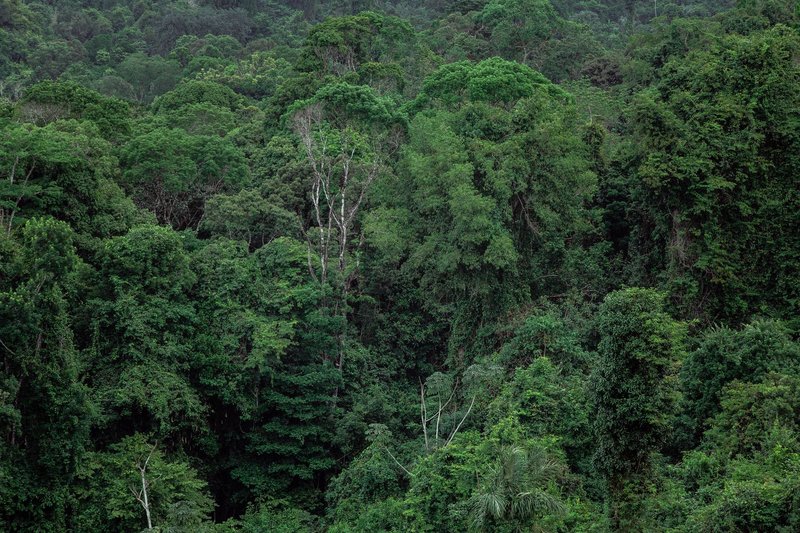
Endemism — a species existing in one place and nowhere else — comes from isolation plus time. Equatorial Guinea has both, in three flavors.
The country sits inside the Guinean Forests of West Africa, one of the planet’s 36 biodiversity hotspots as defined by Conservation International. Hotspots earn that label two ways: they hold a huge number of endemic plants, and they’ve already lost most of their original habitat. The Guinean Forests qualify on both counts.
Then there’s the Cameroon Volcanic Line, a chain of volcanoes running from the Gulf of Guinea inland. Bioko sits on it. Volcanic islands rise as bare rock, get colonized by whatever drifts or flies in, and those colonists evolve in isolation. Add elevation — Bioko climbs past 3,000 meters — and you stack different climate zones on top of each other, each with its own plant community.
Annobón takes isolation to the extreme. It’s a true oceanic island, formed by volcanism, never connected to the continent. Anything growing there had to cross open ocean to arrive, which is exactly the recipe that produces species found nowhere else.
Bioko Island: the cloud forest engine
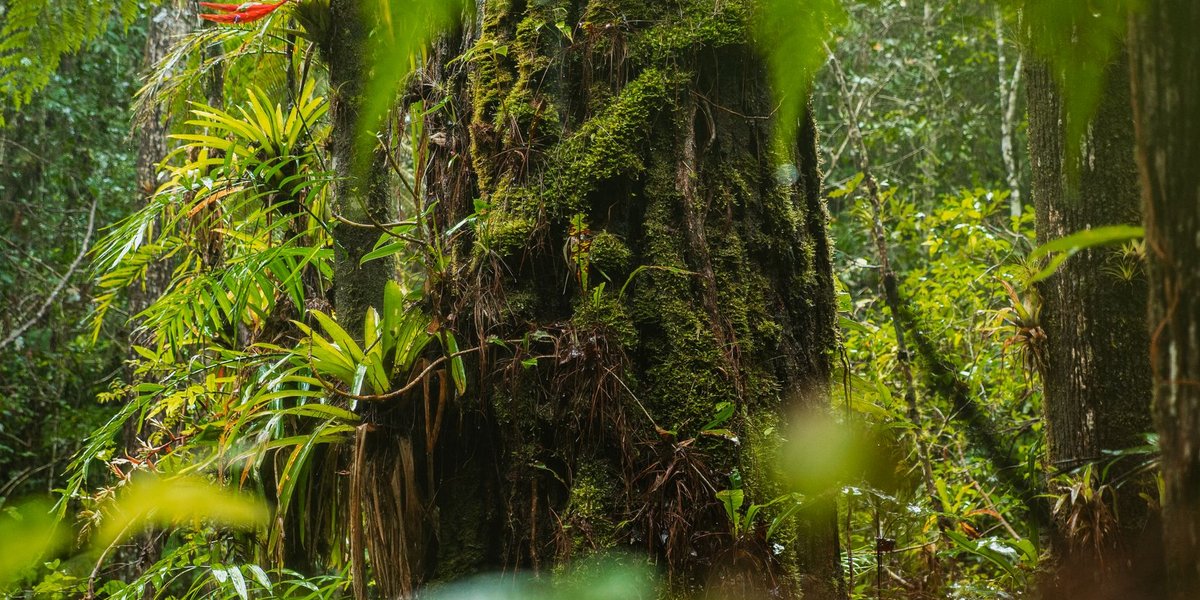
Bioko is where Equatorial Guinea’s endemism concentrates. The island’s southern highlands stay wrapped in cloud forest, and the constant moisture plus the altitude gradient creates the conditions that mint new species.
Endemic orchids are the island’s signature. The Gulf of Guinea highlands host a long roster of orchids restricted to these cloud forests, many in genera like Polystachya and Bulbophyllum. They cling to mossy trunks at elevation, which is precisely why they don’t spread — the narrow band of cool, wet forest they need exists almost nowhere else.
Begonia is the other Bioko story. The Gulf of Guinea is a hotspot for the genus, and several begonias are tied to the wet rock faces and stream edges of these islands. They’re small, easy to miss, and genuinely restricted in range.
The mountain also carries an Afromontane flora — plants adapted to cool, high-elevation tropics — that links Bioko to highland Cameroon across the water. That shared evolutionary history is the fingerprint of the Cameroon Volcanic Line: the same uplift event seeded both, then the sea cut them apart and let each drift.
Annobón: an oceanic island that built its own flora
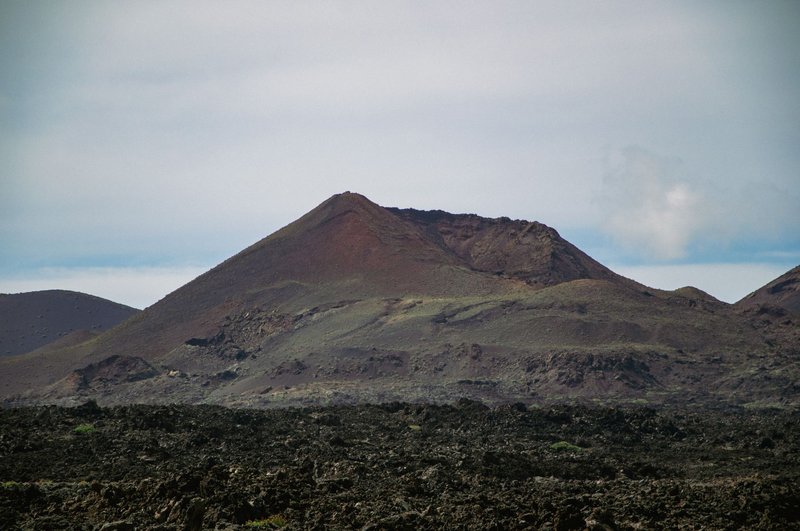
Annobón is roughly 17 square kilometers of volcanic island sitting alone in the South Atlantic. For botanists, small and isolated is the dream combination, because it forces speciation.
Cassipourea annobonensis carries the island’s name in its own. It’s a member of the Rhizophoraceae — the family that includes mangroves — adapted to the island’s forest rather than its shoreline, and it’s documented as an Annobón endemic.
The island’s flora as a whole punches above its size. A speck of land that small having any endemics at all is the signal: these plants evolved in place, with no continental gene flow to blur them back into more widespread species. The flip side is brutal math. When a species’ entire global population fits on 17 square kilometers, a single storm, invasive species, or land-use change can erase it. There’s no second population anywhere.
Río Muni: the mainland rainforest
The continental portion, Río Muni, is the largest piece of the country and the one botanists have surveyed most systematically. A published checklist of its vascular plants catalogued the region’s species and flagged which ones are endemic and which are threatened — the kind of baseline work that makes everything else possible.
The headline mainland endemic is Chonopetalum, a genus in the soapberry family (Sapindaceae) restricted to this corner of Central Africa. An endemic genus, not just a species, is a bigger deal than it sounds: it means an entire branch of the plant family tree exists only here. Lose it and you don’t lose one species, you lose a lineage.
Begonia aequatoguineensis — the species epithet literally means “of Equatorial Guinea” — is a mainland endemic begonia, part of the same Gulf of Guinea begonia radiation that shows up on Bioko. The mainland forests also hold endemic trees and shrubs across families like Rubiaceae and Annonaceae, the workhorse groups of African rainforest understory.
Río Muni’s endemics are harder to dramatize than an island’s because the forest is continuous and the species ranges blur into neighboring Gabon and Cameroon. That overlap cuts both ways: Gabon shares much of this rainforest belt and carries its own roster of endemic species, so the two countries’ floras are best read as one continuous Central African system rather than separate lists. But continuous forest is also what’s actively being cut, which moves the conservation question from theoretical to immediate.
The conservation problem
This is the part the dense catalogs skip. Endemism and extinction risk are the same coin.
The IUCN Red List assesses species against extinction-risk criteria, and a recurring pattern across Equatorial Guinea’s flora is “Data Deficient” — assessors don’t have enough information to even rank the species. For a narrow-range endemic, data deficiency isn’t reassuring. It usually means nobody has checked whether the population is collapsing.
The pressures are the standard tropical lineup: logging concessions in the mainland forest, agricultural clearing, and the unique vulnerability of island species with nowhere to retreat. A mainland tree under pressure might survive across the border in Gabon. An Annobón endemic has no border to cross.
The opportunity sitting inside this problem: a lot of these species are poorly documented precisely because the region is under-studied, not because the plants are gone. Good survey work, protected-area enforcement around Bioko’s southern highlands, and basic monitoring on Annobón would move species from “we don’t know” to “we can manage this.” The plants are still here. The window is the question.
Standout endemics at a glance
| Species / genus | Where it lives | Group | Notes |
|---|---|---|---|
| Chonopetalum | Río Muni (mainland) | Sapindaceae | Endemic genus — an entire lineage found only here |
| Begonia aequatoguineensis | Río Muni (mainland) | Begoniaceae | Name means “of Equatorial Guinea” |
| Cassipourea annobonensis | Annobón | Rhizophoraceae | Endemic to a 17 km² oceanic island |
| Highland orchids (Polystachya, Bulbophyllum spp.) | Bioko cloud forest | Orchidaceae | Restricted to cool, wet montane forest |
| Gulf of Guinea begonias | Bioko, Annobón | Begoniaceae | Tied to wet rock and stream edges |
| Afromontane shrubs | Bioko highlands | Various | Shared ancestry with Cameroon’s mountains |
Equatorial Guinea’s endemic plants aren’t a tidy list you memorize — they’re a map. Bioko’s altitude builds orchids and begonias, Annobón’s isolation builds one-island specialists, and the mainland holds whole endemic lineages like Chonopetalum hiding in continuous forest. The geography explains the biology every time. And the same isolation that created these plants is exactly what makes them so easy to lose, which is the part worth caring about.