Table of Contents
- Why Arkansas?
- Ouachita Mountain Endemics
- Ozark Plateau Endemics
- Gulf Coastal Plain Endemics
- Conservation Status
Arkansas doesn’t usually top the list when people think about botanical biodiversity. That’s a mistake. The state harbors somewhere between 40 and 60 plant species found nowhere else on the planet — a number that puts it among the most botanically significant states in the entire eastern United States.
That’s not an accident of geography. It’s the result of ancient geology, climate refugia, and millions of years of isolation doing exactly what evolution does when given enough time and enough unusual substrate.
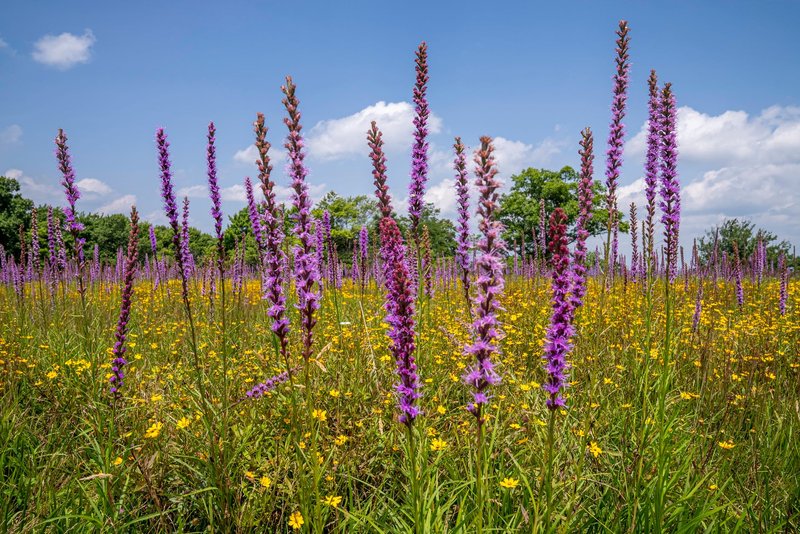
Why Arkansas? {#why-arkansas}
Most endemism in temperate North America clusters around geological or climatic refugia — places where unusual soil chemistry, topographic isolation, or long-term climate stability allowed populations to diverge and specialize without competition from outside. Arkansas has two of the most important examples in the entire eastern United States: the Ouachita Mountains and the Ozark Plateaus.
The Ouachitas run east-west — one of the very few mountain ranges in North America oriented that way — which means they were never glaciated, even during the Pleistocene. That gave plant populations a continuous, geologically stable environment to evolve in for tens of millions of years. Add the unusual sandstone and novaculite soils that characterize much of the range, and you get conditions that many plants can tolerate but most competitors cannot.
The Arkansas Natural Heritage Commission documents over 700 rare plant species in the state, dozens of which are strict endemics — plants whose entire global range fits within Arkansas’s borders. For a fuller picture of everything the state claims exclusively — from fungi to fish to flowering plants — the Endemic Species of Arkansas catalog is worth exploring.
Ouachita Mountain Endemics {#ouachita-mountain-endemics}
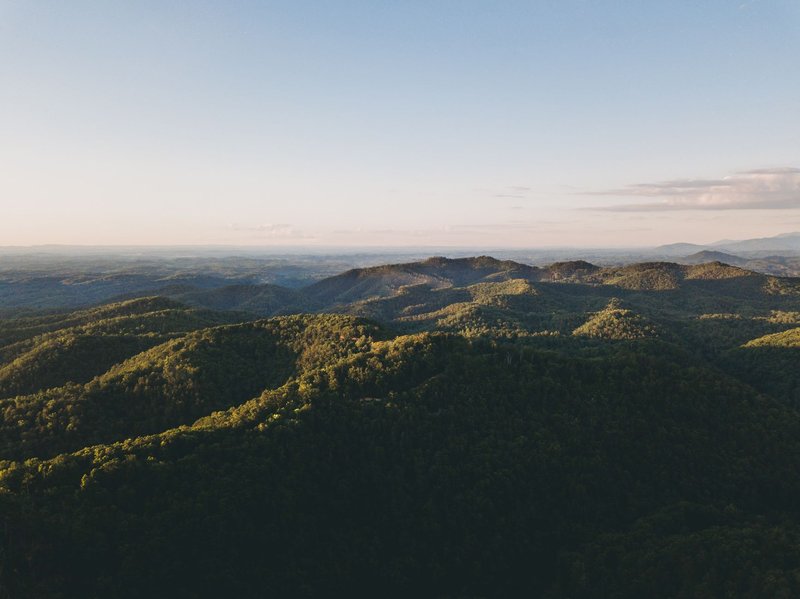
Ouachita Goldenrod (Solidago ouachitensis)
Found only on rocky, open slopes in the Ouachita Mountains, this goldenrod blooms in late summer and tolerates the thin, nutrient-poor soils of novaculite outcrops that most plants won’t touch. It’s closely related to other eastern goldenrods but its restricted range and specific substrate requirements mark it as a distinct species. Pollinators — particularly native bees and skippers — are dense around blooming colonies.
Mead’s Milkweed (Asclepias meadii) — Ouachita variant
While Asclepias meadii has a broader range, isolated Ouachita populations show distinct morphological traits that some botanists treat as a separate taxon. Milkweed distribution in the interior highlands is patchy and tied to prairie remnants and open glades — both of which are themselves threatened by fire suppression.
Harperella (Ptilimnium nodosum)
A federally endangered aquatic plant found in fast-flowing, rocky streams in the Ouachitas and a few scattered sites in neighboring states. It requires the kind of clear, highly oxygenated stream conditions that are increasingly rare as sedimentation from logging and development degrades water quality. The entire known U.S. population is small enough that a single bad drought year triggers serious concern among conservation biologists.
Arkansas Meadow-rue (Thalictrum arkansanum)
Low-growing and easy to overlook on a forest floor, this meadow-rue was only formally described as a distinct species in the late 20th century. It grows in mesic, mixed hardwood forests of the Ouachitas and Ozarks, favoring stream-adjacent habitats with partial shade. The Latin name makes the distribution explicit.
Fourpetal Pawpaw (Asimina tetramera)
Technically centered in Florida, but an isolated disjunct population exists in the Ouachitas — an example of a species with a wildly fragmented range that provides a window into past climate connectivity between the Gulf Coast and the Interior Highlands. The four-petaled flowers are unusual even within the pawpaw genus.
Ozark Plateau Endemics {#ozark-plateau-endemics}
The Ozarks sit on ancient carbonate bedrock — limestone and dolomite — rather than the sandstones and novaculites of the Ouachitas. That chemistry difference produces a different suite of specialists. Glade communities on south-facing dolomite outcrops are among the most species-rich natural communities in the state, and several glades harbor plants found nowhere else.
Arkansas Springbeauty (Claytonia arkansana)
This is one of the most botanically interesting endemics in the state. Claytonia arkansana is a small spring ephemeral that emerges early, blooms, sets seed, and vanishes before the forest canopy closes overhead — all in a few weeks. It grows in rich, rocky woods in the Ozarks and was long lumped in with the much more widespread Claytonia virginica before being recognized as its own species based on chromosome number differences and subtle morphological traits. Finding it requires knowing when and where to look, which is part of why it took so long to describe.
Ozark Chinquapin (Castanea ozarkensis)
The blight that wiped out American Chestnut in the early 20th century hit the Ozark Chinquapin too, though not quite as completely. Surviving trees in the Arkansas Ozarks resprout from root systems even after the above-ground portion dies, meaning the species persists in a stunted, blight-suppressed form rather than having gone fully extinct. Research into blight-resistant individuals is ongoing — the American Chestnut Foundation has parallel programs that some botanists hope will inform chinquapin recovery. Whether C. ozarkensis constitutes a true endemic or a subspecies is still debated, but its primary stronghold is unambiguously the Arkansas Ozarks.
Widow’s Cross Stonecrop (Sedum pulchellum var. ozarkanum)
Glades in the Boston Mountains and Springfield Plateau host this succulent stonecrop, which tolerates the bone-dry, high-radiation conditions of exposed dolomite outcrops that would desiccate most plants by July. It flowers pink-magenta in late spring, making glade communities briefly spectacular before the heat sets in.
Ozark Least Trillium (Trillium pusillum var. ozarkanum)
A dwarf trillium restricted to a handful of sites in the Arkansas Ozarks — and a good example of a plant where the “variety” distinction carries real conservation weight. Total known populations fit comfortably on a single county map. It grows in moist, rocky wooded slopes and blooms white, aging to pink. Trillium populations grow slowly and don’t recover quickly from disturbance.
Gulf Coastal Plain Endemics {#gulf-coastal-plain-endemics}
The southern tier of Arkansas transitions into the Gulf Coastal Plain, and the Ouachita River basin in particular connects the Interior Highlands to the broader coastal plain flora. A handful of endemic species tie these two worlds together. The adjacent region tells a similar story: the endemic plants of Louisiana share some of the same Coastal Plain pressures and habitats, and several Arkansas borderland species have their closest relatives there.
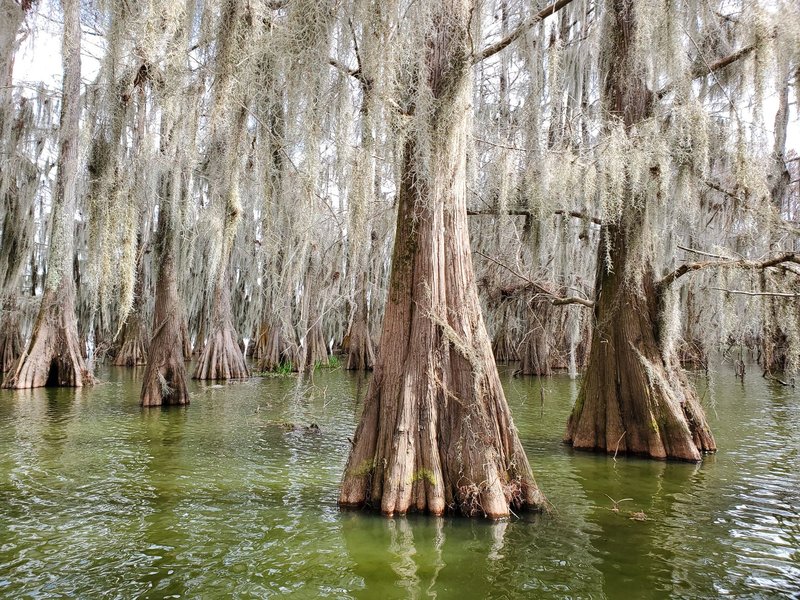
Arkansas Savanna Blazing Star (Liatris compacta var. arkansana)
Longleaf pine savannas once covered millions of acres in the Gulf Coastal Plain, and the Arkansas-Louisiana border zone held the northernmost extension of that ecosystem. Nearly all of it is gone now — converted to agriculture or pine plantations — but remnant patches support blazing stars that haven’t been documented elsewhere. The variety designation reflects distributional isolation rather than striking visual difference.
Spiny-pod (Matelea baldwyniana)
A milkweed vine in the family Apocynaceae, this species has a restricted range centered on the Coastal Plain of Arkansas and adjacent states. It grows in open, disturbed habitats and woodland edges, producing distinctively spiny seed pods that distinguish it from related vines. Populations are sparse and distribution records patchy.
Conservation Status {#conservation-status}
Most Arkansas endemics are not doing well, and the reasons are predictable: habitat loss from agriculture and urban expansion, fire suppression that allows woody vegetation to overtake open glade and savanna communities, altered hydrology that changes stream conditions for aquatic species, and the slow accumulation of invasive plants that outcompete native specialists on the margins.
The U.S. Fish and Wildlife Service currently lists several Arkansas endemics under the Endangered Species Act, including Harperella. Others, like the Ozark Least Trillium, are candidates that haven’t yet made it through the formal listing process. The gap between “rare” and “legally protected” is wide, and most Arkansas endemic plants fall somewhere in it.
The Arkansas Natural Heritage Commission maintains the state’s most comprehensive inventory of rare plant occurrences and manages several natural areas specifically to protect endemic populations. Glade restoration work — reintroducing prescribed fire to dolomite outcrops — has benefited several Ozark endemics in the past two decades, which shows that directed management can work when there’s enough remaining habitat to restore.
For a state that doesn’t get much attention in mainstream conservation discourse, Arkansas holds an outsized number of irreplaceable species. Every one of the plants on this list exists in its current form because of the specific combination of geology, climate history, and ecological conditions that the Interior Highlands and Gulf Coastal Plain of Arkansas provide. Lose the habitat, lose the plant — and there’s no population in another country to fall back on.