
Table of Contents
- TLDR
- Benefit 1: You learn to solve problems nobody has solved for you
- Benefit 2: The career range is wider than “physicist”
- Benefit 3: You understand the machines around you
- Benefit 4: The personal payoff
- Benefits mapped to career outcomes
- The honest downsides
- Who physics is best for
TLDR
The benefits of physics fall into four groups: a transferable problem-solving skill set, a career range that reaches well beyond research labs, a working understanding of everyday technology, and a personal reward that is hard to get elsewhere. The costs are real too. The maths is demanding, the workload is heavy, and a physics degree does not point at one obvious job. If you like working out why things behave the way they do, and you can tolerate being stuck for hours, it’s a strong choice.
Benefit 1: You learn to solve problems nobody has solved for you
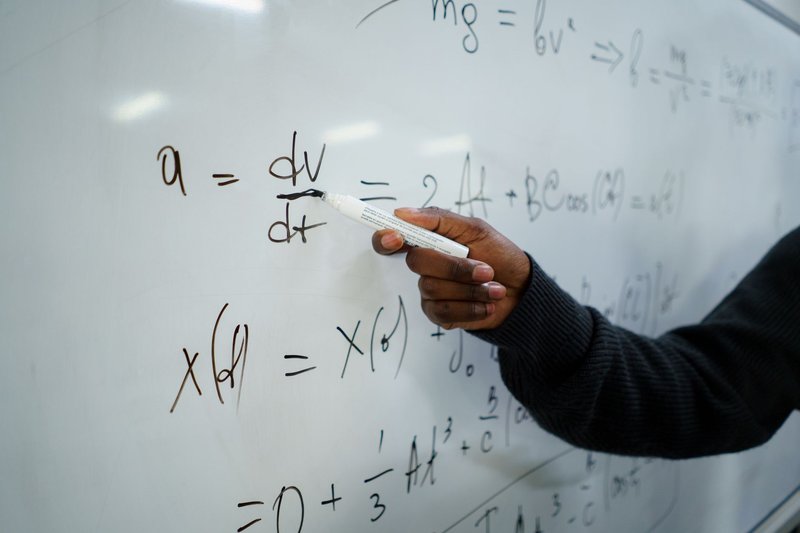
Most university pages list “problem-solving skills” and leave it there. The specific version is more useful. A physics course trains you to take a messy situation, decide what matters, throw away what doesn’t, write a model, and check whether the answer is even plausible. That last step is the habit employers notice.
Physicists call it estimation. Can you work out roughly how much energy a city uses in a day, or how many piano tuners a town supports, with no data in front of you? You make assumptions, state them, and get an answer within a factor of ten. Then you refine it.
A few skills come out of that process:
- Quantitative modelling. You turn a vague question into equations you can test.
- Comfort with uncertainty. Every measurement has an error bar, and you learn to say how big it is.
- Programming and data analysis. Most degrees now include Python or similar tools for simulations and lab data.
- Reasoning from first principles. When a rule of thumb fails, you can rebuild the logic from the ground up.
These transfer. Law schools, for instance, see physics majors do well on admissions tests, and physics graduates routinely land in software, consulting and finance roles that never mention the word “physics” in the job ad.
Benefit 2: The career range is wider than “physicist”

Only a minority of physics graduates become professional physicists. The rest spread out, and that’s a feature of the degree rather than a flaw in it.
The American Institute of Physics tracks this closely. AIP’s statistics show that most physics bachelor’s graduates who enter the workforce go to the private sector, mainly into engineering, computing and technical roles, with others heading to education, government and the military. Many others go on to graduate school, and not only in physics.
On pay, the US Bureau of Labor Statistics reports a median annual wage for physicists and astronomers well above $150,000. That figure covers people with doctorates, so it overstates what a fresh bachelor’s graduate earns. Still, it shows where the ceiling sits for people who stay in the field.
Common destinations include:
- Data science and machine learning. Physics trains you in statistics, linear algebra and model-fitting, which is most of the job.
- Medical physics. Radiation therapy and imaging teams rely on physicists to calibrate machines and plan treatments. It needs a graduate degree and clinical training, and it pays well.
- Engineering. Electrical, aerospace, optical and materials engineering all draw on physics graduates.
- Finance. Quantitative analysts model markets with the same maths used for random motion in physics.
- Patent law. Patent attorneys and examiners need people who can read a technical specification and tell whether it’s new.
- Energy and climate. Solar, nuclear, grid modelling and atmospheric science are applied physics.
Benefit 3: You understand the machines around you
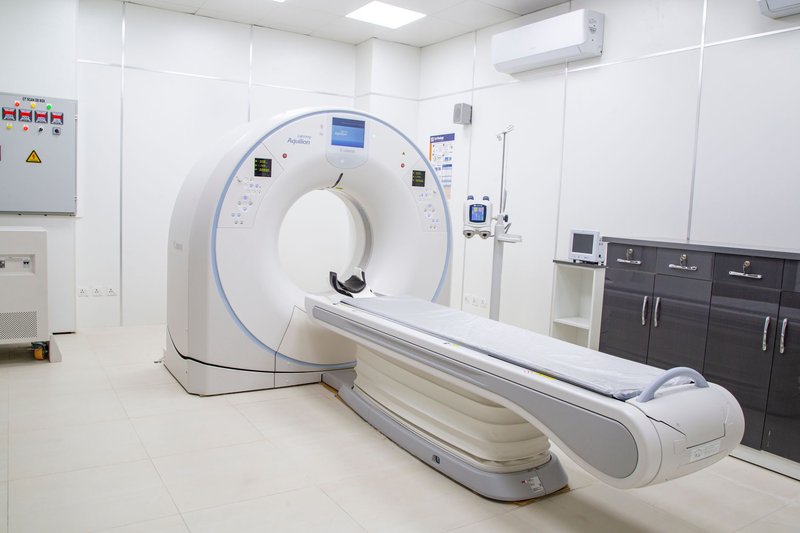
This one gets ignored in the “reasons to study physics” lists, yet it’s probably the most lasting. Physics explains why your daily tools work.
MRI scanners. An MRI uses strong magnetic fields and radio pulses to make hydrogen nuclei in your body emit signals. The technique grew out of nuclear magnetic resonance, a physics lab method. Paul Lauterbur and Peter Mansfield won the 2003 Nobel Prize in Physiology or Medicine for turning it into medical imaging.
GPS. Satellite clocks run at a different rate from clocks on the ground, partly because of their speed (special relativity) and partly because they sit higher in Earth’s gravity (general relativity). The net effect is about 38 microseconds per day. Without correcting for it, position errors would pile up at roughly ten kilometres a day. Neil Ashby’s review of relativity in GPS in Living Reviews in Relativity works through the numbers.
Phones and computers. Transistors depend on the quantum behaviour of electrons in semiconductors. Flash storage, LEDs and camera sensors do too.
Solar panels. They work through the photoelectric effect, the same phenomenon Einstein explained in 1905.
You don’t need a degree to appreciate these, but a physics background means you can read a news story about fusion power, battery chemistry or a new telescope and tell hype from substance.
Benefit 4: The personal payoff
Some benefits don’t show up on a salary chart.
Physics changes how you see ordinary things. A rainbow becomes light refracting and dispersing inside droplets. A spinning skater pulling in their arms becomes conservation of angular momentum. You can’t switch this off once it’s installed, and most people who study the subject say that is the best part.
There’s also the intellectual bracing of it. Few subjects let you go from the motion of a thrown ball to black holes using a short list of principles. The sense that the universe is intelligible, and that you can follow the argument, is a real reward.
And it builds tolerance for difficulty. After a few terms of problem sets where you stare at a page for an hour before the first line comes, an ordinary workplace challenge looks manageable.
Benefits mapped to career outcomes
| Benefit | What it looks like in practice | Where it leads |
|---|---|---|
| Quantitative modelling | Building and testing mathematical models | Data science, quantitative finance |
| Error and uncertainty analysis | Judging how reliable a number is | Engineering, research, quality control |
| Programming and simulation | Writing code for data and models | Software, machine learning |
| Instrumentation and lab skills | Building and calibrating experiments | Medical physics, electronics, optics |
| Technical reading and reasoning | Parsing dense specifications | Patent law, consulting, policy |
| Applied physics knowledge | Understanding energy, waves and materials | Renewable energy, aerospace, semiconductors |
The honest downsides
Physics isn’t for everyone, and the promotional pages rarely say so.
The maths is hard. Calculus, differential equations, linear algebra and, later, tensor and quantum formalism arrive quickly. Students who enjoy the ideas but struggle with the algebra often hit a wall.
The workload is heavy. Weekly problem sets, lab reports and the pace of the material mean physics has a reputation for long hours. Expect to feel behind at some point.
The career path is unlabelled. Nursing leads to nursing. Physics leads to a dozen possible jobs, and you have to choose and sell yourself. Some graduates find that uncomfortable.
Academic jobs are scarce. If your goal is a permanent research position, the competition for postdocs and faculty posts is intense. Most PhDs end up outside academia.
It isn’t the only route. Engineering gives a more direct path to many of the same jobs. Maths and computer science offer similar quantitative training with less lab time. Physics earns its place when you want the underlying science, not just the application.
Who physics is best for
Physics suits you if:
- You like asking why things work, and you’re not satisfied by “because it does.”
- You can stay with a hard problem without a guaranteed payoff.
- You want a flexible degree that keeps options open across tech, finance, medicine and research.
- You’re comfortable with maths, or willing to work at it.
It suits you less if you want a clear, single job at graduation, you dislike mathematical abstraction, or you’d rather build things than model them. In that case, engineering or computer science might fit better.
The benefits of physics are real, but they come from effort. The subject rewards people who treat it as a way of thinking rather than a list of facts, and that way of thinking is what employers, and curious people generally, tend to value.