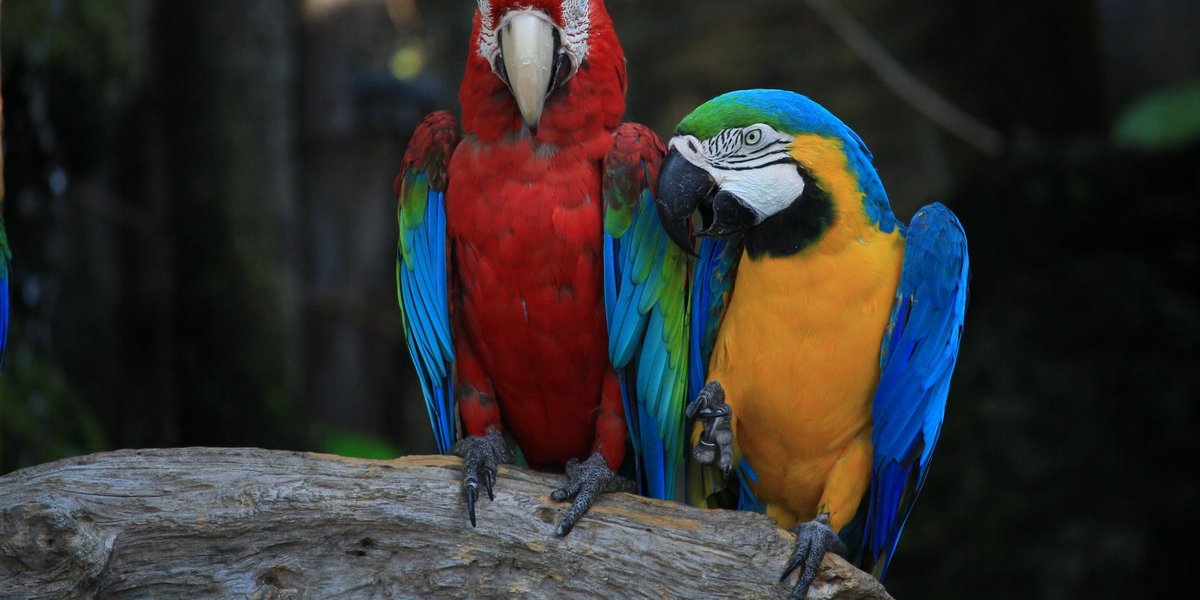
Brazil has roughly 1,900 bird species, which puts it among the top three countries on Earth for avian diversity. About 240 of those exist nowhere else, and around 10% are threatened with extinction. The numbers are big because the country is big: a continent-sized landmass that stacks rainforest, wetland, savanna and coastal forest side by side.
Taxonomic lists make that diversity unreadable. Birds make more sense when you sort them by where they live. This guide goes biome by biome, profiles the signature birds of each, and ends with the practical part: where to go, when, and what to carry.
Table of Contents
- Brazil’s birds in numbers
- Amazon rainforest birds
- Birds of the Pantanal
- Cerrado and Caatinga birds
- Atlantic Forest birds
- Brazil’s national bird
- Endemic and endangered birds of Brazil
- Birdwatching in Brazil: where, when and what to bring
- Summary
Brazil’s birds in numbers
The exact count shifts every few years as taxonomists split one species into two or add a vagrant that blew in from Argentina. The Brazilian Ornithological Records Committee maintains the official national list, and it sits just under 1,900 species. Check the live tally on eBird’s Brazil page, where birders log sightings in real time.
| Biome | Signature birds | Best season |
|---|---|---|
| Amazon | Harpy Eagle, Scarlet Macaw, Hoatzin | Dry season, roughly June to November |
| Pantanal | Hyacinth Macaw, Jabiru, Toco Toucan | July to October |
| Cerrado and Caatinga | Red-legged Seriema, Lear’s Macaw, Greater Rhea | May to September |
| Atlantic Forest | Saffron Toucanet, Red-necked Tanager, Brazilian Merganser | Year-round, best in the drier months |
Amazon rainforest birds
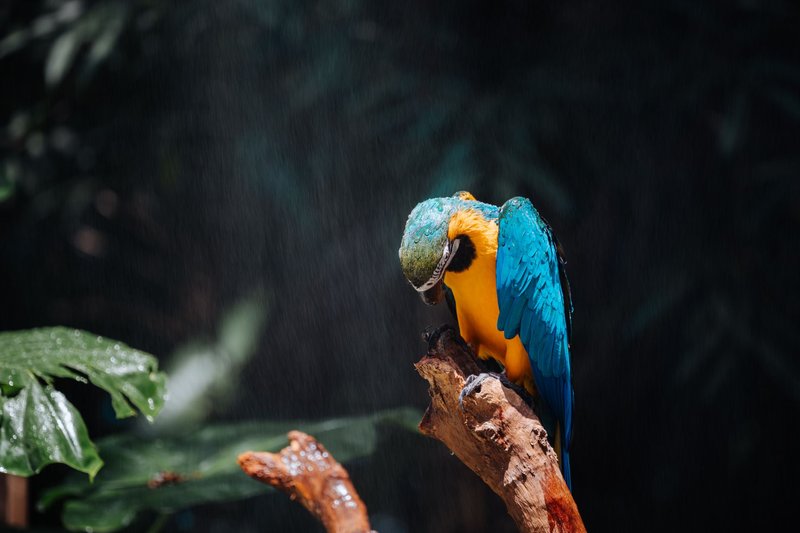
The Amazon holds the highest raw species count of any forest biome, but it is the hardest biome to see birds in. The canopy sits 30 meters or more overhead, the light is poor, and most birds announce themselves by sound long before you spot them. Your best odds are on a river: boats cover distance quietly, and birds on the bank are not afraid of them.
Harpy Eagle. One of the largest eagles in the world, with talons roughly the size of a grizzly bear’s claws. It hunts sloths and monkeys in the canopy. Identification tip: a split double crest on the head that fans out like a crown, and a black chest band. Seeing one is a matter of luck and a guide who knows an active nest. The southern Amazon around Alta Floresta in Mato Grosso is a recognized spot.
Scarlet Macaw. Red, yellow and blue, loud, and usually in pairs. Pairs fly in tandem and stay together for life. Look for the yellow band across the folded wing, which separates it from the Red-and-green Macaw, another Amazon resident that is darker and more maroon. Clay licks on riverbanks draw groups in the early morning.
Hoatzin. Here is the oddball. It is a pheasant-sized bird that ferments leaves in its crop, like a cow, and smells bad enough that locals call it the stinkbird. Look for a spiky rust-colored crest and a blue face on branches overhanging slow water. Chicks have claws on their wings to climb back into the nest after dropping into the river.
Guianan Cock-of-the-rock. Males are an orange so intense it looks edited. They gather at display grounds called leks in the northern Amazon, with a disc-shaped crest hiding the bill.
Amazonian Umbrellabird. A black bird with a shaggy crest and a feathered wattle hanging from its throat. Found on river islands, and the kind of find that makes a birder go quiet.
Birds of the Pantanal
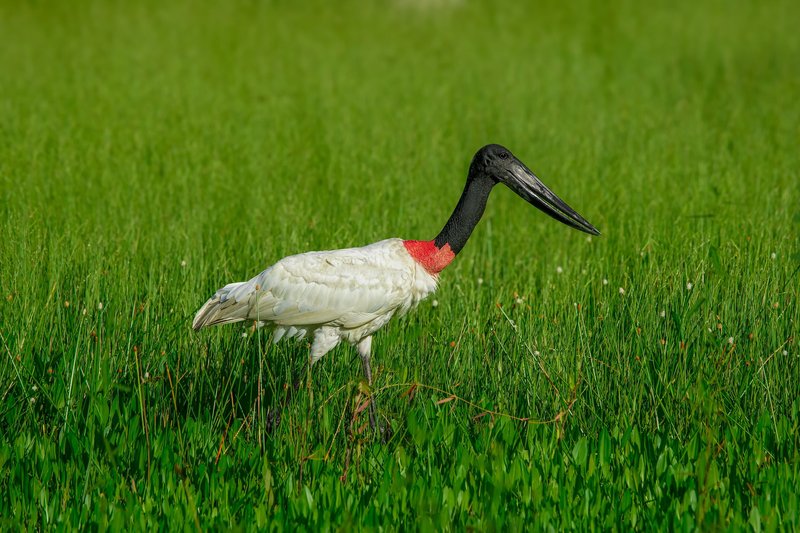
The Pantanal is the largest tropical wetland on the planet and the easiest place in South America to see big birds. There is no canopy to hide in. Water levels fall during the dry season, fish get trapped in shrinking pools, and storks, herons and ibises crowd around them. More than 650 bird species have been recorded here, and many of them stand in plain view beside the Transpantaneira dirt road.
Hyacinth Macaw. The longest parrot in the world, at about a meter from head to tail tip, and a deep cobalt blue with yellow patches around the eyes and bill. It feeds mainly on palm nuts that most birds can’t crack. The species is classified as Vulnerable by the IUCN, mostly because of past capture for the pet trade and habitat loss. The Pantanal holds the largest population.
Jabiru. Locally called the tuiuiú, this stork stands up to 1.4 meters tall with a wingspan approaching 2.6 meters. White body, bald black head, and a red band at the base of the neck like a collar. It is the symbol of the Pantanal. Look for it at pond edges and in huge stick nests at the tops of trees.
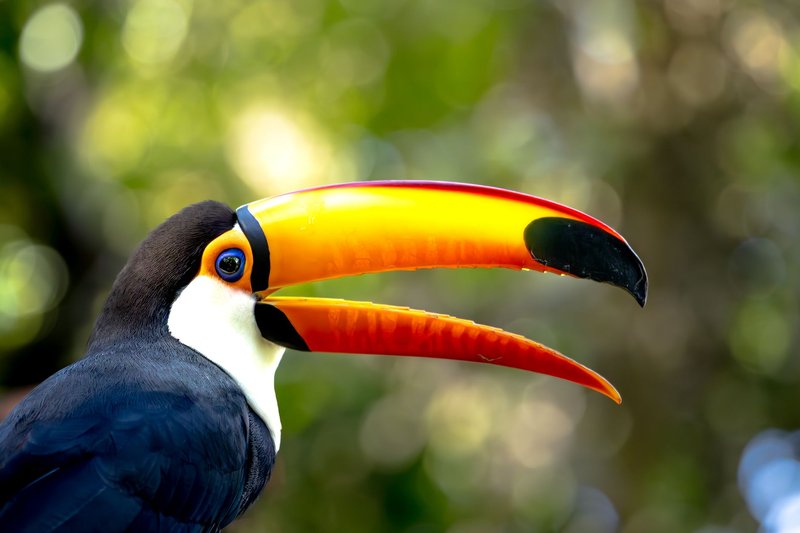
Toco Toucan. The largest toucan, with an orange bill that can reach about 20 cm. The bill is light and full of air pockets, and it helps the bird shed heat. Identification tip: black body, white throat, and a black spot near the bill tip. Often perched in the open on fence posts, which makes it the beginner’s toucan.
Golden-collared Macaw. Small, green, and easy to overlook next to the Hyacinth. A yellow-gold patch on the nape gives it its name, and it also has a gray face and a dark bill. It travels in noisy flocks in dry woodland at the Pantanal’s edges.
Rufous-tailed Jacamar and Bare-faced Curassow. Two lesser-known residents worth the trouble if you have the time.
Cerrado and Caatinga birds
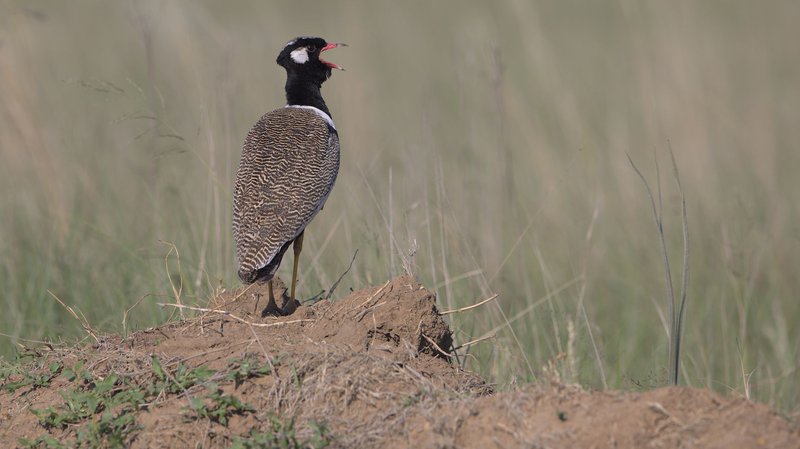
The Cerrado is a savanna that wraps across central Brazil, and it is one of the most threatened biomes in the country because soy and cattle have eaten large parts of it. The Caatinga is the dry, thorny scrub of the northeast. Both have fewer species than the Amazon but a high share of endemics.
Red-legged Seriema. A long-legged, crested ground bird that hunts snakes and lizards by running them down and slamming them against rocks. Identification tip: red legs and bill, a gray body, and a loud, yelping call that carries for kilometers. Easy to find in Emas National Park in Goiás.
Greater Rhea. South America’s version of an ostrich, standing 1.5 meters tall and flightless. Males incubate eggs from several females and raise the chicks alone.
Lear’s Macaw. A dark blue macaw with a pale yellow patch at the base of the bill. It lives in the Caatinga of northern Bahia, where it nests in sandstone cliffs and feeds almost entirely on the nuts of the licuri palm. It was close to disappearing in the 1980s and 90s, and conservation work has brought the population back into the thousands.
Spix’s Macaw. Extinct in the wild since around 2000, and a symbol of how fast a species can vanish. Captive-bred birds were released in Bahia from 2022, the first return of the species to the wild in over two decades.
Atlantic Forest birds
The Atlantic Forest once covered the entire coast from the northeast to the south. Today, only a fragment of it remains, and what is left is squeezed between São Paulo, Rio de Janeiro and the sea. Even so, it holds more endemic bird species than any other Brazilian biome. It rewards birders because the trails are close to big cities and the forest is easy to walk.
Saffron Toucanet. A small toucan, golden-yellow with an orange rump and a red patch on the lower back. It is endemic to the Atlantic Forest, and it is found in the forests of Rio de Janeiro and São Paulo states. Fruiting trees along trails are the place to wait.
Red-necked Tanager. A tanager that looks hand-painted, in teal, turquoise and violet with a flame-colored throat. It moves in mixed flocks through the mid-canopy, which means that when one shows up, a dozen other species are usually nearby.
Brazilian Merganser. One of the rarest ducks in the world, and listed as Critically Endangered. Fewer than 250 mature individuals are thought to survive, mostly in a few clean, fast-flowing rivers around the Serra da Canastra in Minas Gerais. It is a living argument for protecting headwater streams.
Swallow-tailed Manakin and Red-ruffed Fruitcrow. Look for the Swallow-tailed Manakin, a blue and black bird with long tail streamers, in the forest understory. The fruitcrow, deep red at the throat, is much harder to find.
Brazil’s national bird
The national bird of Brazil is the Rufous-bellied Thrush, called the sabiá-laranjeira in Portuguese. It is not a colorful bird: gray-brown above, with an orange-rust belly. What it has is a voice. Its song is a long run of clear, flute-like phrases, usually sung at dawn from the top of a tree, and it appears in Brazilian poetry and music. The 19th-century poem “Canção do Exílio” by Gonçalves Dias, which famously mentions the sabiá, is memorized by generations of schoolchildren.
You don’t need to travel to see one. The species lives in gardens and city parks across most of the country, including central São Paulo.
Endemic and endangered birds of Brazil
Around 240 Brazilian bird species are found nowhere else. Most of them are in the Atlantic Forest, the Cerrado and the Caatinga, which are exactly the biomes that have lost the most land to agriculture and development. According to BirdLife International, the global authority that assesses birds for the IUCN Red List, habitat loss is the main driver of decline for Brazilian birds, ahead of the pet trade.
The picture is not all bleak. Lear’s Macaw has recovered, the Hyacinth Macaw has stabilized in parts of the Pantanal where private ranches protect nest trees, and the Spix’s release is underway. The warning signs are the species at the other end: the Brazilian Merganser and several Atlantic Forest birds with tiny ranges.
Birdwatching in Brazil: where, when and what to bring
Where to go.
- Pantanal (Mato Grosso and Mato Grosso do Sul): the most productive single destination for a first trip. The Transpantaneira road and lodges near Porto Jofre offer the best large-bird viewing.
- Atlantic Forest (Itatiaia, Serra dos Órgãos, Ubatuba): the most endemics in the shortest drive. Day trips from Rio de Janeiro or São Paulo are enough.
- Amazon (Alta Floresta, Manaus, Belém regions): go with a guide and a boat.
- Emas National Park (Goiás): the Cerrado’s reference site for seriemas, rheas and maned wolves.
When to go. The dry season (roughly July to October in the Pantanal, June to November in the Amazon) concentrates birds around water and makes trails passable. The Atlantic Forest works in most months, but the drier southern winter gives clearer views.
What to bring. Binoculars at 8×42, a rain jacket even in the dry season, and a field guide. The standard references are the Birds of Brazil series (published with the Wildlife Conservation Society), which splits the country into regional volumes, and Ber van Perlo’s single-volume Birds of Brazil. Download the Merlin Bird ID app before you leave, since sound ID helps a lot in dense forest.
Summary
Brazil’s birds make sense once you stop counting species and start sorting by habitat. The Pantanal is the place to see Hyacinth Macaws, Jabirus and Toco Toucans in the open. The Atlantic Forest packs in the most endemics and sits close to major cities. The Amazon is richer but harder, and the Cerrado and Caatinga hold some of the most threatened birds in the Americas. Start with the biome that matches your time and your budget, and the rest of the birds of Brazil follow.