TLDR
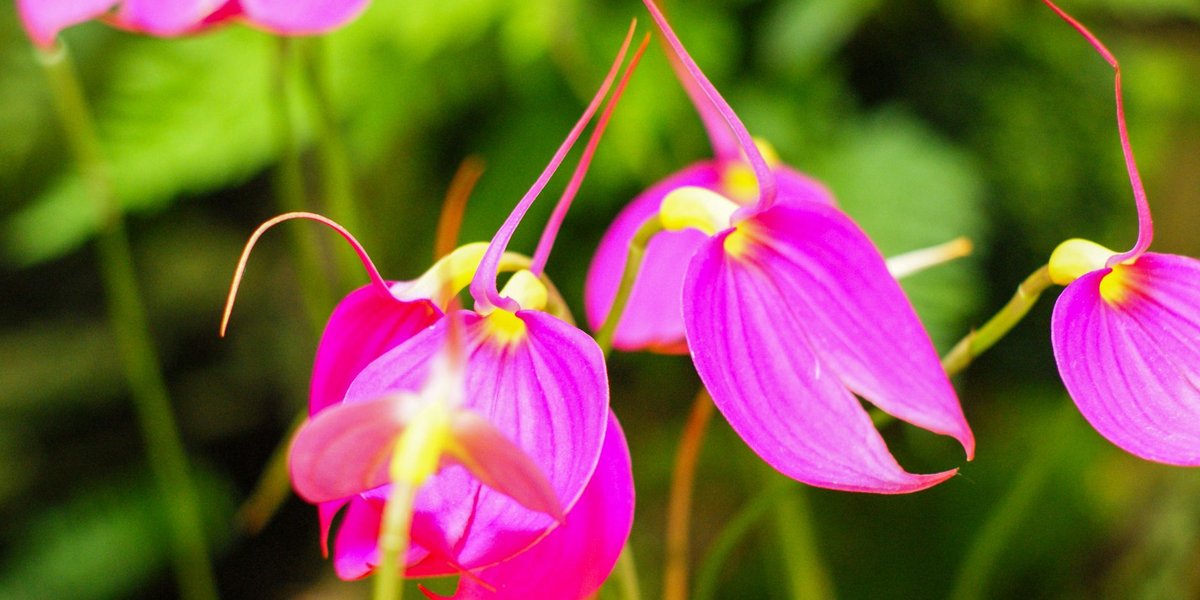
Luxembourg has essentially no true endemic vascular plants. No species grows here and nowhere else. What the country does have is a set of rare and regionally characteristic natives, concentrated in the Ösling’s bogs and heaths and the Gutland’s limestone grasslands and old mining sites.
Contents
- Why Luxembourg has no true endemics
- The apomictic exception
- The Red List numbers
- Ösling: rocky slopes, heath and bogs
- Gutland: limestone, marl and orchid meadows
- Minett: plants that moved into the mines
- How to see them
Why Luxembourg has no true endemics
Endemism needs isolation and time. Islands have it. Mountain summits have it. Luxembourg, a country of about 2,600 square kilometres in the middle of western Europe, has neither. It has no sea barrier, no high peaks, and no habitat that has been cut off long enough for a species to evolve in place and stay put.
The flora here arrived by recolonization. Plants spread in from wider European ranges, and the borders on the map mean nothing to a seed. A species that grows in Luxembourg also grows in Belgium, Germany or France.
So the useful question is a different one: which plants are rare here, and which define the landscape? That list is long.
The apomictic exception
Botanists do sometimes describe a few plants as locally endemic. These are almost always apomictic microspecies, groups such as dandelions (Taraxacum), brambles (Rubus) and hawkweeds (Hieracium). Apomicts produce seed without fertilization, so each lineage copies itself and can be named as its own “species”. Some of these lineages have a tiny range.
Whether they count as endemics depends on how narrowly you split the genus. Specialists argue about it. For a general reader, treat them as a footnote, not as the answer.
The Red List numbers
Luxembourg’s national Red List of vascular plants, published by the Musée national d’histoire naturelle in its 2025 edition, assesses 1,423 native and established alien taxa. About 35% of them are threatened (critically endangered, endangered or vulnerable). In 2005 that figure was 30.4%. Another 8.9% are regionally extinct. The data sits on the National Red List portal alongside other countries’ assessments.
One in three plants threatened, in a country this small, is why the rare-native angle matters more than the endemic one.
Ösling: rocky slopes, heath and bogs
The Ösling is Luxembourg’s northern third, the southeastern edge of the Ardennes massif. The rock is acidic schist and quartzite, the soils are poor, and the climate is cooler and wetter than the south.
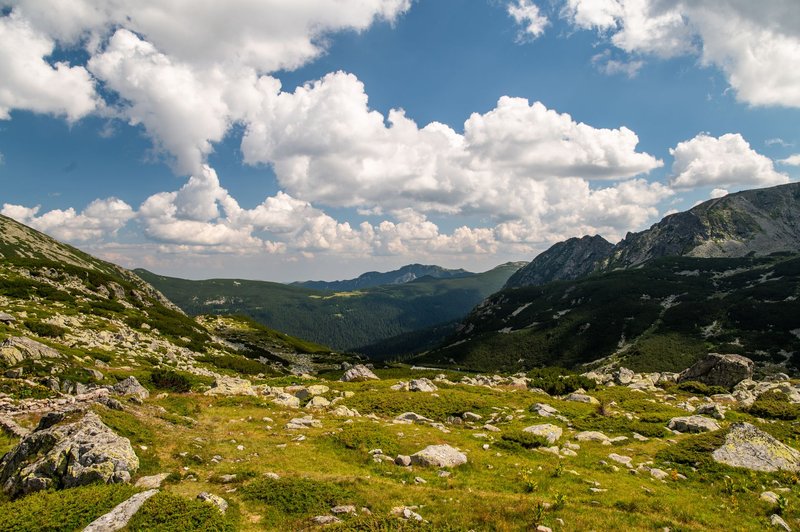
Arnica (Arnica montana). A yellow, daisy-like flower of nutrient-poor meadows and heath. It needs low-intensity grazing or mowing and no fertilizer, which is exactly what modern farming removed. It’s the textbook example of a plant that tracks old-style land use.
Wild daffodil (Narcissus pseudonarcissus). Valley meadows in the north fill with these in early spring. They’re smaller and paler than garden daffodils, and they bloom in drifts along stream valleys.
Spignel (Meum athamanticum). A feathery umbellifer of upland meadows with a smell sometimes compared to fenugreek. In Luxembourg it’s a plant of the Ösling’s cooler uplands, not the lowlands.
Round-leaved sundew (Drosera rotundifolia). A carnivorous plant that lives on the acidic peat bogs of the northern plateau. It gets its nitrogen from insects because the bog gives it almost none. Peat bogs are small and scattered here, so every population is a small one.
Gutland: limestone, marl and orchid meadows
South of the Ösling, the Gutland (“good land”) sits on limestone, marl and sandstone. The soil is richer and drains differently, and the warm, dry slopes of the Moselle valley give sun-loving species a foothold.
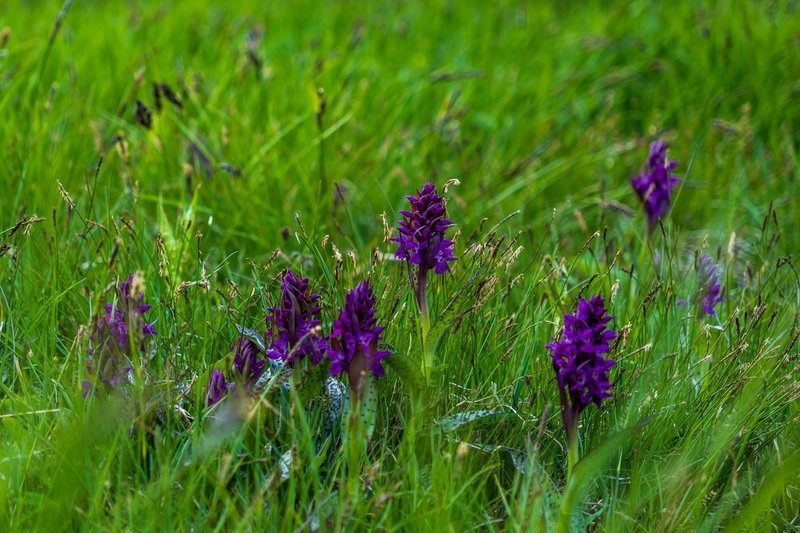
Bee orchid (Ophrys apifera). The flower mimics a female bee to lure male pollinators. It grows on calcareous grassland, road verges and quarry edges.
Fly orchid (Ophrys insectifera). Same trick, different insect. It’s slimmer and easier to miss, and it favours open woodland edges on limestone.
Military orchid (Orchis militaris). Pink-and-white flowers shaped like tiny helmeted figures. It’s a plant of dry calcareous grassland and one of the Gutland’s signature orchids.
Lizard orchid (Himantoglossum hircinum). The tall one, with a spike of greenish flowers and a long twisted lip that gives it its name. It also has a goaty smell. Look for it on warm limestone slopes.
Pasqueflower (Pulsatilla vulgaris). Purple, silky and early. It flowers on dry, sunny calcareous slopes in spring, and it’s one of the plants people mean when they talk about vanishing dry grassland.
Orchid-rich grassland is the habitat to worry about most. It disappears two ways: ploughing and fertilizing on one side, abandonment and scrub on the other.
Minett: plants that moved into the mines
The Minett is the red-earth iron ore region in the southwest, mined for over a century. When the mines closed, the open pits and spoil heaps became something unplanned: bare, nutrient-poor ground that nobody was managing.
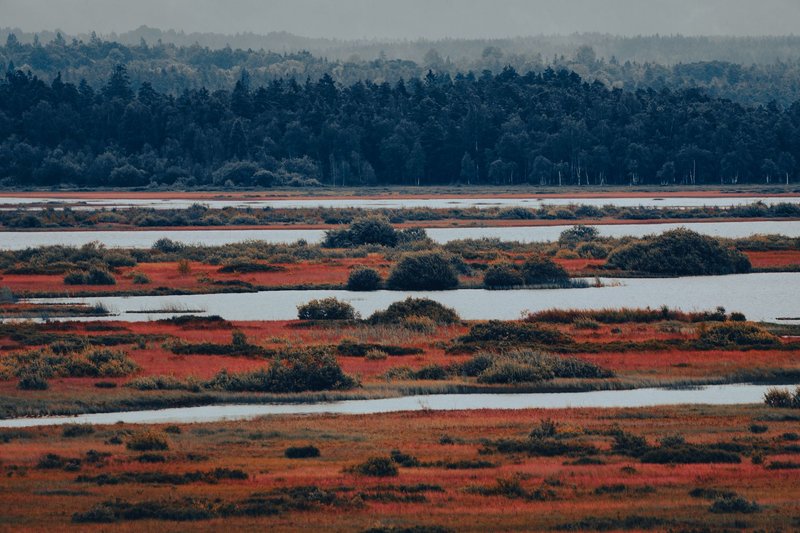
Plants that need open ground colonized it. Pioneer orchids, including bee orchid and several marsh orchids, turn up on disturbed sites. Some of the area is now protected as nature reserve, and the old pits hold species that have become hard to find in farmland. It’s a good case of a landscape made by industry and then reclaimed by the flora around it.
How to see them
A few practical rules cover most visits.
- Time it. Wild daffodils peak in early spring, pasqueflowers in spring, orchids from late spring into early summer. Arnica comes in early summer.
- Match habitat to region. Bogs and heath mean the Ösling. Orchids and calcareous grassland mean the Gutland. Disturbed red-soil ground means the Minett.
- Stay on paths. Bog and grassland species tolerate trampling poorly, and a single boot print can cost a rosette.
- Don’t pick or dig. Many of these plants are protected, and orchids rarely survive transplanting.
Luxembourg’s flora has no endemics to show off. It has something harder to replace: a small country’s worth of habitats, each holding plants that are retreating across the whole region. The 2025 Red List counts that retreat. The meadows, bogs and old mines are where you can still see what it was.