Most lists of Guatemalan scientists are the same five names copied between Spanish-language blogs, with a paragraph each and no photos. That undersells the story. A country of about 18 million people has produced the man who identified the parasite behind river blindness, the biochemist who ended a regional malnutrition crisis with a bag of flour, and the guy who invented CAPTCHA and then gave away Duolingo for free. This is a fuller list, grouped by field, with the specific thing each person actually did — not the vague “made contributions to science” line every other roundup uses.
Table of Contents
- Medicine and Public Health
- Rodolfo Robles
- Federico Lehnhoff
- Ricardo Bressani
- Fernando Mazariegos
- Natural History and Culture
- Jorge A. Ibarra
- Adrián Recinos
- Computer Science and Technology
- Luis Furlán
- Luis von Ahn
- The New Generation
- Katherinne Herrera-Jordan
- Kristhell Lopez
- África Flores
- Nicole Hernandez Hammer
- Why One Small Country Keeps Producing Scientists
Medicine and Public Health
Rodolfo Robles: the doctor who traced blindness to a worm
Robles was born in Quetzaltenango in 1878 and trained in Paris, where he picked up microbiology and mycology at the Pasteur Institute before returning home. In 1915, he removed a nodule from an eight-year-old patient’s forehead and found it packed with a parasitic worm, Onchocerca volvulus — the same organism causing blindness in parts of Africa, now confirmed on the American continent for the first time. The link between the worm and the blindness it caused became the foundation for treating what locals still call “Robles disease.”
That single diagnosis mattered for a century. Guatemala didn’t fully eliminate onchocerciasis until 2016, when the World Health Organization verified transmission had stopped, making it the fourth country in the world to do so — a hundred and one years after Robles found the worm.
Federico Lehnhoff: the neurosurgeon who invented instant coffee
Lehnhoff was a strange combination even by the standards of this list: a Guatemala City–born neurosurgeon, pianist, and self-taught chemist who noticed something in 1909 that thousands of coffee drinkers before him had walked past. Brewed coffee left behind a residue when it evaporated. Add hot water to that residue and you got coffee back. He spent two years turning the observation into an industrial dehydration process, and in 1911 patented soluble coffee in the United States and across Europe — years before the products that would later dominate the category.
Coffee wasn’t his only output. As a practicing physician, he’s credited with developing sulfarsenol, a treatment used against syphilis and amoebic dysentery in an era before antibiotics existed. He taught surgery at the University of San Carlos and introduced neurosurgical techniques that hadn’t reached Guatemala before him.
Ricardo Bressani: the biochemist who fed a country with Incaparina
Bressani earned a PhD in biochemistry from Purdue in 1956 on a Rockefeller Foundation scholarship, then went home to run the food analysis lab at INCAP — the Institute of Nutrition of Central America and Panama — for the next 32 years. His signature achievement was Incaparina, a flour blended from corn and cottonseed protein designed to fight the protein-calorie malnutrition that was killing children across the region. It’s still sold in Guatemalan supermarkets today, decades after its invention.
Bressani published close to 500 scientific papers and picked up the Albert Einstein World Award of Science in 1984 and the Danone International Prize for Nutrition in 2003. Most nutrition scientists get cited. Few get a product still on grocery shelves sixty years later.
Fernando Mazariegos: the chemist behind the clay pot that saves lives
Born in Panajachel in 1938, Mazariegos trained as a pharmaceutical chemist and spent his career watching his own hometown struggle to get clean water. In 1981 he designed a porous ceramic filter treated with colloidal silver; by 1990, working out of Guatemala’s Central American Institute of Industrial Research and Technology, that design became the Ecofiltro. A field study across more than 500 Guatemalan families found it cut diarrheal disease in children under five roughly in half.
The design later became a template studied by engineering programs abroad, including a ceramic filter history project at the University of Pittsburgh’s Swanson School of Engineering. The filters now reach families in more than 40 countries, all built on a household object Mazariegos knew the culture wouldn’t reject: a clay pot.
Natural History and Culture
Jorge A. Ibarra: the 13-year-old who ran a museum
Ibarra was born into a family of naturalists in Quetzaltenango in 1920, and at 13 he was already running the zoological museum at the local faculty of natural sciences. He spent the rest of his life cataloguing Guatemala’s flora and fauna firsthand, on foot, across the country’s varied terrain — cloud forest, coast, volcanic highlands. In 1950 he founded what’s now the National Museum of Natural History in Guatemala City, and he directed it for 46 years.
He also launched a popular-science magazine, Historia Natural y Pro Natura, that ran for two decades and helped make ecology a subject ordinary Guatemalans could follow. The museum was renamed in his honor in 1988, eight years before he stepped down as its director.
Adrián Recinos: the historian who gave the world the Popol Vuh
Recinos was born in Antigua Guatemala in 1886 and grew up in Huehuetenango, and he spent his scholarly life on the pre-Columbian history of the K’iche’ and Kaqchikel peoples. His defining work was tracking down a manuscript in Chicago’s Newberry Library and producing the first Spanish translation of the Popol Vuh, the K’iche’ creation narrative, directly from Francisco Ximénez’s original 18th-century transcription rather than from secondhand European retellings.
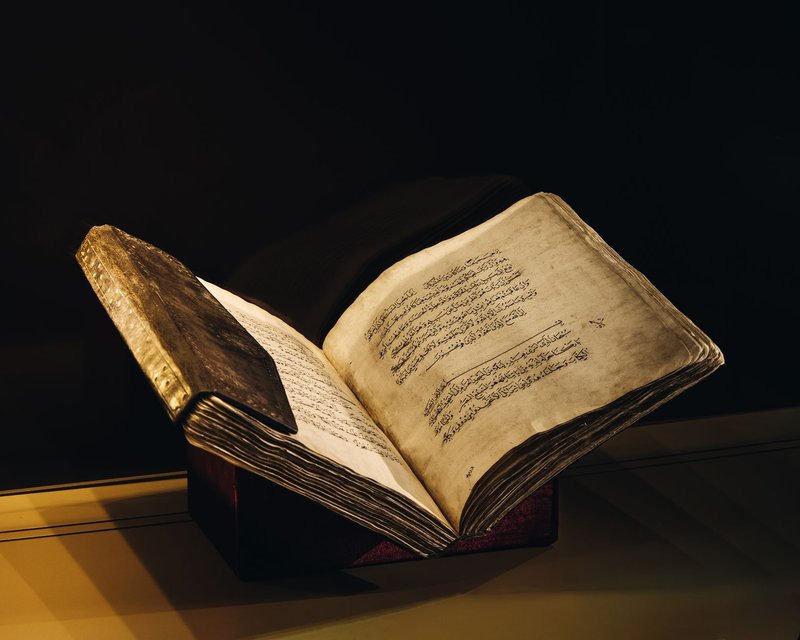
That translation is still the version most Spanish-language editions trace back to, and it moved a foundational Mesoamerican text out of academic archives and into classrooms across Latin America.
Computer Science and Technology
Luis Furlán: the engineer who connected Guatemala to the internet
Furlán, born in Guatemala City in 1948, is an electrical engineer who did the unglamorous infrastructure work that made everything on this list’s tech side possible for the next generation. In 1992 he brought the first internet connection into Guatemala, years before dial-up became a household fixture anywhere in Central America.
It’s the kind of contribution that’s easy to skip in a “greatest hits” science list because it isn’t a discovery — it’s plumbing. But every scientist on this list born after 1990 grew up in a country Furlán had already wired to the rest of the world.
Luis von Ahn: the coder behind CAPTCHA and Duolingo
Von Ahn was born in Guatemala City in 1978 and got hooked on computers after receiving a Commodore 64 at age eight, from parents who were both physicians. He earned a math degree at Duke, then a PhD in computer science at Carnegie Mellon, where he co-invented CAPTCHA — the distorted-text test that separates humans from bots — and later reCAPTCHA, which repurposed that same test to help digitize books and archives. Google bought reCAPTCHA in 2009.

In 2011 he co-founded Duolingo with his graduate student Severin Hacker, built explicitly around a free model so cost wouldn’t be the reason someone couldn’t learn a language. He’s collected a MacArthur Fellowship and the Lemelson-MIT Prize along the way, and in 2021 established the Luis von Ahn Foundation to fund education and opportunity work back in Guatemala.
The New Generation
Katherinne Herrera-Jordan: building Guatemala’s first microgravity lab
Herrera-Jordan grew up on the outskirts of Guatemala City and got interested in science after watching a program about researchers “blowing up and destroying things in the name of science” — not exactly a recruiting pitch, but it worked. She’s now a biochemist and microbiologist who’s collaborated on two NASA-funded space microbiology projects, Space Biofilms and a simulated lunar/Martian microbial study, and she built Guatemala’s first low-cost microgravity simulator.
She founded Verne Technologies, the country’s first space-focused startup, to make that kind of equipment affordable for labs that can’t buy NASA-grade hardware. She also compiled the first comprehensive checklist of spider species in Guatemala — a reminder that most working scientists don’t specialize in just one thing.
Kristhell Lopez: chasing black holes from the Netherlands
Lopez studied physics at Universidad del Valle de Guatemala, then took a scholarship to Austria for a master’s in astrophysics before landing in the Netherlands for her PhD. Her research focused on ultraluminous X-ray sources — deep-space signals that might come from intermediate-mass black holes, a class of object astronomers still haven’t confirmed exists. She’s one of only two Guatemalan women currently working as astrophysicists.
She’s also helped organize Guatemala’s first conference on archaeoastronomy, connecting her field back to the Maya astronomical record most Guatemalans learn about only in history class, not physics class.
África Flores: predicting algae blooms from space
Flores was born in Retalhuleu, on Guatemala’s Pacific coastal plain, and trained as an agronomy engineer before moving into earth system science. She works with NASA’s SERVIR program, using satellite radar and remote sensing to track deforestation and water quality across Latin America, and she’s the regional science coordination lead for SERVIR Amazonia.
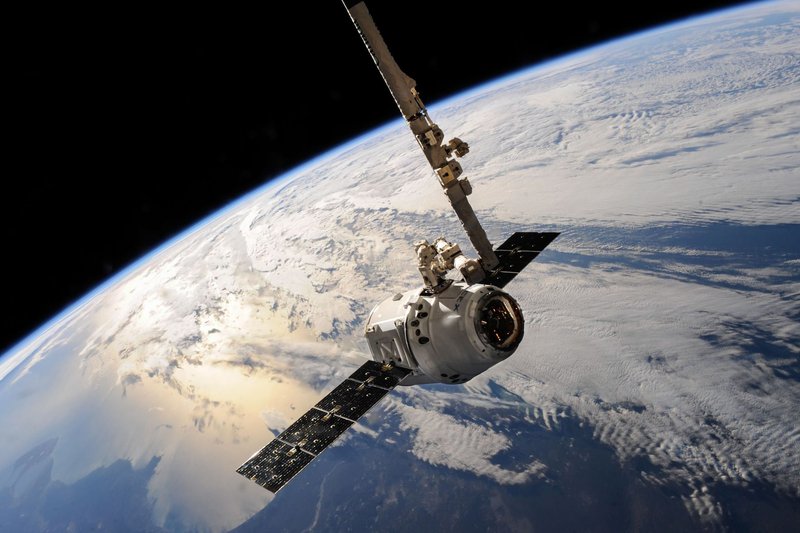
Her best-known project used AI and satellite data to build an early-warning system for algae blooms on Lake Atitlán, funded by a National Geographic and Microsoft grant — the kind of practical output that got her recognized by NASA’s Applied Sciences program as a breakthrough scientist.
Nicole Hernandez Hammer: measuring the tide before it reaches your door
Hernandez Hammer was born in Guatemala and moved to the United States at four. She earned a master’s in biology at Florida Atlantic University and spent 15 years in academia studying sea-level rise before shifting into advocacy, arguing that flood risk from climate change lands hardest on low-income coastal communities and communities of color — a claim she backs with her own technical papers on sea-level projections, not just talking points.
Michelle Obama invited her as a guest to the 2015 State of the Union specifically to put a face on that research. She later worked as a climate-science advocate for the Union of Concerned Scientists, translating projection models into numbers city planners could actually use.
Why One Small Country Keeps Producing Scientists
Twelve names from a country the size of Ohio isn’t an accident, and the pattern traces back to two institutions. INCAP, founded in Guatemala City in 1949, became the regional nutrition research hub for all of Central America and Panama — it’s where Bressani built his career, and it trained a generation of food scientists who never show up on the “famous” lists because their work was regional, not headline-grabbing. Universidad del Valle de Guatemala later became the training ground for the physics and astrophysics side of the list, producing both Lopez and other Guatemalan researchers now working at international observatories.
Compare that to Guatemala’s neighbors. Costa Rica gets more international attention for its science ecosystem, largely because of sustained government investment in biodiversity research. El Salvador and Honduras, with similar population sizes, don’t have an equivalent to INCAP anchoring a whole discipline regionally. Guatemala’s advantage wasn’t more funding — it was one institution that stuck around long enough to become infrastructure, the same way Furlán’s internet cable became infrastructure for von Ahn’s generation.
No Guatemalan scientist has won a Nobel Prize yet, and von Ahn remains the closest thing to a global household name the country has produced. But the throughline across a century — from Robles’s parasite in 1915 to Flores’s satellite models today — is unmistakable: specific, unglamorous problems, solved by people who stayed close enough to the problem to actually see it.