A cognitive bias is a systematic pattern in how your brain deviates from rational judgment. The word “systematic” matters: these aren’t random slips. Everyone makes the same mistakes in the same direction, which is why researchers can predict them.
Biases also aren’t just flaws. They come from mental shortcuts (heuristics) that let you decide quickly with incomplete information. Judging a stranger in half a second kept your ancestors safe. The same shortcut now makes you trust a confident hiring candidate who can’t actually do the job.
Below are 17 examples of cognitive biases, grouped by the kind of thinking they distort. Each one has a definition, a scene you’ll recognize, and a fix you can use today.
Contents
- Quick Reference Table
- Examples of Cognitive Biases in Decision-Making
- Memory Biases
- Social Biases
- Probability and Belief Biases
- How to Reduce Cognitive Bias
- FAQ
Quick Reference Table
| Bias | One-line example | Quick fix |
|---|---|---|
| Anchoring | The “original price” makes the sale price feel cheap | Set your own number before seeing theirs |
| Sunk cost | Finishing a bad movie because you paid for the ticket | Ask what you’d choose if you started today |
| Framing | “90% fat-free” beats “10% fat” | Restate the choice in the opposite frame |
| Loss aversion | Holding a losing stock to avoid “locking in” the loss | Judge the position as if you’d just bought it |
| Status quo | Never changing the default settings or plan | Schedule a yearly “re-decide” |
| Hindsight | “I knew that startup would fail” | Write predictions down beforehand |
| Misinformation effect | Remembering a car crash differently after a leading question | Record events early, from the source |
| Rosy retrospection | Remembering the trip as better than it felt | Keep a short trip or project journal |
| Bandwagon | Buying the product with 10,000 five-star reviews | Check what the crowd actually knows |
| Halo effect | Assuming an attractive candidate is also competent | Score each criterion separately |
| Fundamental attribution error | The driver who cut you off is “a jerk” | Invent a plausible innocent reason |
| Bias blind spot | “Other people are biased, I’m objective” | Assume you share the bias |
| Confirmation | Reading only sources that agree with you | Search for the best counterargument |
| Availability | Fearing sharks more than cars | Look up the base rate |
| Gambler’s fallacy | “Red is due after five blacks” | Remember independent events have no memory |
| Conjunction fallacy | Judging a detailed story likelier than a simple one | Count the conditions in the claim |
| Survivorship | Copying the habits of famous dropouts | Ask about everyone who tried and failed |
Examples of Cognitive Biases in Decision-Making
These are the biases that quietly cost you money and time. They show up whenever you weigh options, which is constantly.
1. Anchoring Bias
What it is: Over-relying on the first number or piece of information you see.
In the classic 1974 experiment by Daniel Kahneman and Amos Tversky, published in Science, people spun a rigged wheel that landed on either 10 or 65. They then estimated the percentage of African countries in the United Nations. Those who saw 10 guessed around 25 on average. Those who saw 65 guessed around 45. A wheel they knew was random still steered their answer.
You meet the same trick in salary negotiations, where the first figure spoken sets the range, and on price tags with a crossed-out “was” price.
Counter it: Decide your number before you see theirs. If you can’t, deliberately generate a second anchor from the opposite direction.
2. Sunk Cost Fallacy
What it is: Continuing something because of what you’ve already invested, not what you’ll gain from here.
You’ve spent eight months on a software project that the data says won’t work. Quitting feels like admitting the eight months were wasted, so you add three more. The eight months are gone either way. Only the next three are a choice.
Counter it: Ask, “If I were starting today with nothing invested, would I begin this?” If the answer is no, you have your decision.
3. Framing Effect
What it is: Reaching different conclusions from identical facts depending on how they’re worded.
Tell patients a surgery has a 90% survival rate and most agree to it. Say it has a 10% mortality rate and many refuse. Same surgery, same numbers. Tversky and Kahneman showed this with their “Asian disease” problem in 1981, where framing a public-health program as lives saved versus lives lost flipped people’s choices.
Headlines and product labels exploit it daily.
Counter it: Rewrite the choice in the opposite frame. If your answer changes, the wording is driving you.
4. Loss Aversion
What it is: Feeling a loss roughly twice as strongly as a gain of the same size.
Investors hold a stock that’s down 30% because selling makes the loss real, then sell winners too early to lock in the good feeling. The result is a portfolio full of losers. Loss aversion is also why free trials work: once something is “yours,” giving it up hurts.
Counter it: Judge each holding as if you’d just received its current value in cash. Would you buy it with that cash?
5. Status Quo Bias
What it is: Preferring things to stay as they are, even when change would help.
Most people never touch the default privacy settings on an app, the default 401(k) contribution, or the default phone plan. Countries that make organ donation opt-out, instead of opt-in, see much higher enrollment from the same kind of citizens. Nobody’s values changed. The default did the work.
Counter it: Put a yearly reminder in your calendar to re-decide your big defaults: insurance, subscriptions, savings rate.
Memory Biases
Your memory isn’t a recording. It’s a reconstruction, rebuilt every time you recall it, and the rebuild picks up errors.
6. Hindsight Bias
What it is: Believing after the fact that you “knew it all along.”
After an election upset or a market crash, everyone has a story about the warning signs. Psychologist Baruch Fischhoff found in the 1970s that people who learned an outcome rated it as far more predictable than people who hadn’t. The problem for you: if everything looks obvious afterward, you never learn how uncertain it really was.
Counter it: Write predictions down with a probability and a date. Check them later against what you actually said, not what you remember saying.
7. Misinformation Effect
What it is: Memories getting altered by information you receive after the event.
In a 1974 study by Elizabeth Loftus and John Palmer, participants watched videos of car crashes. Those asked how fast the cars were going when they “smashed into” each other estimated about 41 mph. Those asked about cars that “contacted” each other said about 32. One verb shifted the memory.
This is why eyewitness accounts get shakier after a witness reads news coverage or hears other people’s versions.
Counter it: Write down what you saw as soon as possible, before talking to anyone. Treat vivid but unrecorded memories as drafts.
8. Rosy Retrospection
What it is: Remembering past events as more pleasant than they were at the time.
The vacation with the delayed flight, the food poisoning and the rain becomes “an amazing trip” a year later. It’s the reason people plan a repeat of holidays they complained about for a week. Same with the “good old days” at a previous job.
Counter it: Keep a three-line journal during trips and big projects. Reading your own complaints makes later decisions more honest.
Social Biases
Other people are the biggest input to your judgment, and the least examined.

9. Bandwagon Effect
What it is: Adopting a belief or behavior because many others have.
You pick the restaurant with the line out the door. You buy the book with thousands of reviews. On social media, ranking algorithms amplify posts that already have likes, so early popularity gets multiplied and looks like merit. A post with 40,000 likes feels more true than one with 40, whatever it says.
Counter it: Ask what the crowd actually knows. Ten thousand people repeating a claim is often one person’s claim copied ten thousand times.
10. Halo Effect
What it is: Letting one positive trait color your judgment of unrelated traits.
Edward Thorndike described it in 1920, after finding that military officers who rated soldiers as strong in one area tended to rate them highly in all. In hiring, a candidate who’s tall, articulate and from a famous university gets higher marks on technical skill than their answers deserve. The same thing happens with a polished website and the quality of a company’s product.
Counter it: Score each criterion separately, ideally with a rubric, and score each one before you discuss the candidate as a whole.
11. Fundamental Attribution Error
What it is: Explaining other people’s behavior by their character while explaining your own by circumstances.
A driver cuts you off, so he’s reckless. When you do it, you were late and didn’t see him. A colleague misses a deadline because she’s lazy. You miss one because the brief changed twice. You hold all the context for your own life and none for theirs.
Counter it: Before judging, write one plausible innocent explanation. You don’t have to believe it. Having it changes your next move.
12. Bias Blind Spot
What it is: Seeing biases in other people more easily than in yourself.
In studies by Emily Pronin and colleagues, people rated themselves as less biased than the average person, which can’t be true for most of them. Reading a list like this one produces the effect in real time: you recognize your coworker in half the entries.
Counter it: Assume you share every bias here. Build checks, like a second opinion or a written decision log, that don’t rely on you noticing in the moment.
Probability and Belief Biases
Humans are poor intuitive statisticians. These biases show up when you estimate odds, weigh evidence or form beliefs.
13. Confirmation Bias
What it is: Seeking, noticing and remembering information that supports what you already believe.
You think a certain diet works, so you search “benefits of the diet,” and the results confirm it. Recommendation feeds learn what you click and serve more of it, building a loop around your existing views. Even AI chat tools can feed it: ask a leading question and you’ll often get an answer shaped to fit.
Confirmation bias and anchoring bias get confused because both involve early information. The difference is that anchoring distorts a number you’re estimating, while confirmation distorts which evidence you collect and trust afterward.
Counter it: Search for the strongest argument against your view, and write it so a supporter of the other side would agree with it.
14. Availability Heuristic
What it is: Judging how likely something is by how easily examples come to mind.
Plane crashes dominate the news, so flying feels dangerous, though a person traveling by car faces much higher risk per mile. After a friend gets mugged, your neighborhood feels unsafe, regardless of the crime statistics. Vivid and recent beats common.
Counter it: Look up the base rate. One search for the actual statistic often resets your gut.
15. Gambler’s Fallacy
What it is: Believing a random event is “due” because of a recent streak.
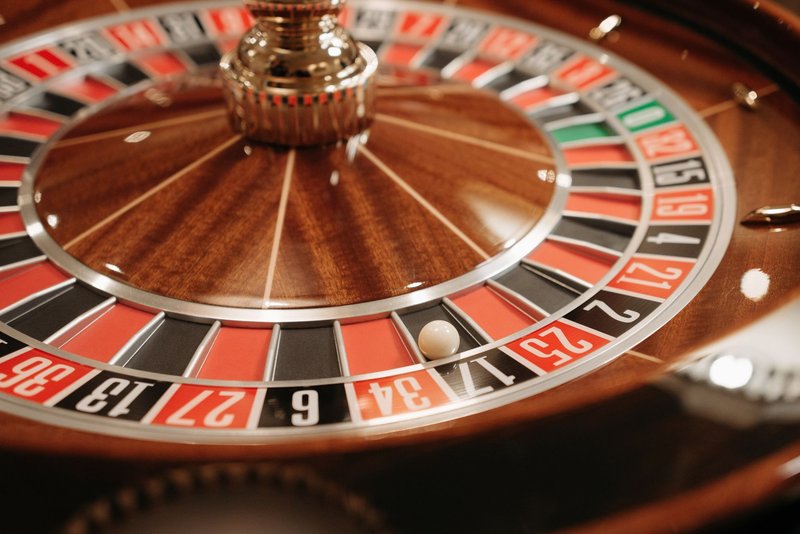
At a Monte Carlo casino in 1913, the roulette ball landed on black 26 times in a row. Gamblers kept piling money onto red, convinced it had to come. Each spin was independent, and the wheel had no memory. The same error appears when people expect a coin-flip streak to “balance out,” or assume a sales slump means a good month is overdue.
Counter it: Ask whether each event actually affects the next. For independent events, past results tell you nothing about future ones.
16. Conjunction Fallacy
What it is: Judging a specific, detailed scenario as more probable than a more general one.
Tversky and Kahneman’s famous “Linda problem” describes Linda as 31, single, outspoken and deeply concerned with social justice. Which is more likely: she’s a bank teller, or she’s a bank teller active in the feminist movement? Most participants in the original study picked the second, though it can’t be likelier than the first. Adding details makes a story feel more plausible while making it less probable.
Investment pitches and conspiracy theories both lean on this.
Counter it: Count the conditions in a claim. Every “and” lowers its probability.
17. Survivorship Bias
What it is: Studying only the winners and ignoring everyone who failed.
During World War II, statistician Abraham Wald was asked where to add armor to bombers returning with bullet holes. He pointed out that the holes showed where planes could be hit and still return. The armor belonged where the returning planes were clean, because planes hit there never came back.
Business books that study successful founders do the opposite. They list shared habits, like dropping out of college or taking big risks, without checking how many failed founders had the same ones.
Counter it: Ask, “Who tried this and isn’t in the data?” Look for the failure rate before copying the strategy.
How to Reduce Cognitive Bias
You can’t switch biases off. You can design around them. A few habits work across almost all 17 examples above:
- Slow down on big decisions. Most biases come from fast, automatic thinking. A 24-hour rule for purchases and commitments above a set amount cuts impulsive anchoring, framing and bandwagon effects.
- Write things down. Predictions, reasons for a decision, a description of an event. A written record beats memory, which fixes hindsight bias and the misinformation effect.
- Argue the other side. Assign yourself, or a colleague, the job of making the best case against your preferred option. This is the most direct fix for confirmation bias.
- Use structure. Rubrics for hiring, checklists for reviews and fixed criteria before you see options limit the halo effect and anchoring.
- Check base rates. Before trusting a story, find out how often that kind of thing happens.
- Get outside views. Someone without your investment can see sunk costs and attribution errors you can’t.
Awareness alone doesn’t work well. Knowing what the anchoring bias is doesn’t stop an anchor from working on you. Process does. Pick the two or three biases that cost you most, at work or with money, and build one habit for each.
FAQ
What are the most common cognitive biases?
Confirmation bias, anchoring, the availability heuristic, hindsight bias and the bias blind spot appear on almost every list, because they affect everyday choices in every domain.
What’s the difference between a cognitive bias and a logical fallacy?
A cognitive bias is a built-in pattern in how your brain processes information, and it often happens without you noticing. A logical fallacy is a flaw in an argument’s structure. They overlap: the conjunction fallacy and gambler’s fallacy are both. But you can commit a bias in your head without ever making an argument.
Are cognitive biases always bad?
No. Heuristics let you decide fast with limited information, and they’re often right enough. They fail mainly when stakes are high, the situation is unfamiliar or the environment is designed to exploit them, like pricing pages and feeds.
What are examples of cognitive bias in the workplace?
Anchoring in salary negotiations, the halo effect in hiring, sunk cost in projects that should be cancelled, confirmation bias in performance reviews and the fundamental attribution error when judging a colleague’s missed deadline.
How do you avoid cognitive bias?
You mostly can’t avoid it, but you can reduce its effects with processes: written predictions, rubrics, a deliberate case against your own view and a delay before major decisions. See the section above for the full list.
Do all cognitive biases hold up in research?
No. Psychology’s replication problems are real. A large 2015 project in Science tried to reproduce 100 psychology studies and found that only about 36% of the replications produced statistically significant results. Anchoring, framing and the availability heuristic have held up well. Others have been questioned, including the size of loss aversion in some contexts and the original Dunning-Kruger interpretation. Treat the list as a map of tendencies with different levels of evidence, not as fixed laws.