Quick answer: examples of each state
| State | Everyday examples | What the particles do |
|---|---|---|
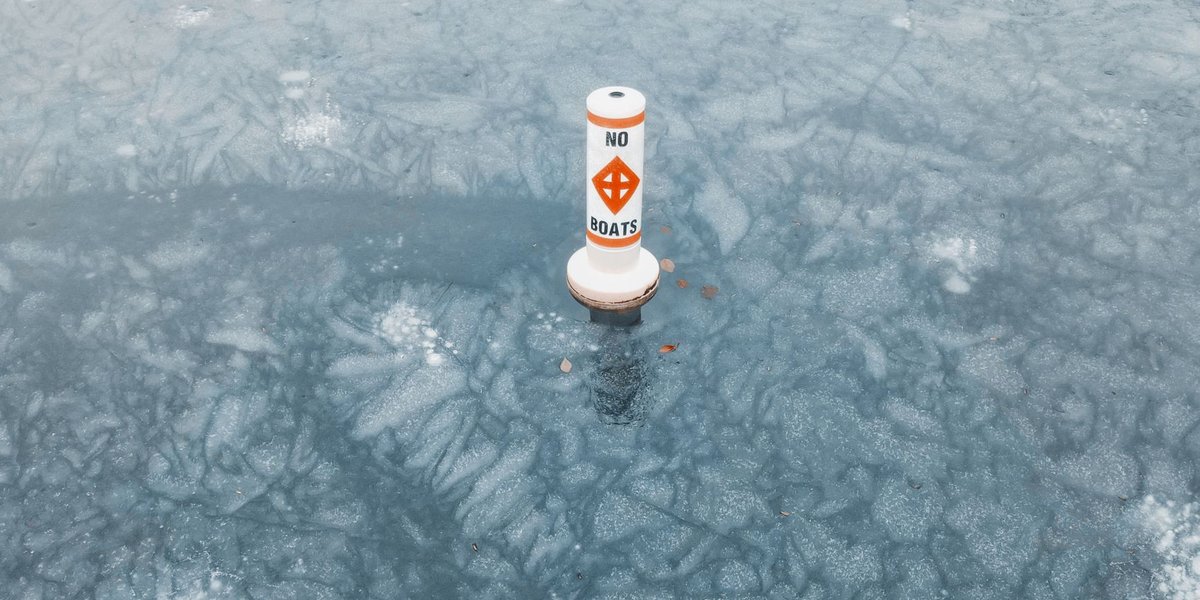
| Solid | Ice cube, wooden spoon, coin, butter, glass | Locked in place, vibrating |
| Liquid | Water, milk, cooking oil, honey, mercury | Touching but sliding past each other |
| Gas | Air, steam, helium in a balloon, carbon dioxide in soda bubbles | Far apart, flying in all directions |
| Plasma | Lightning, neon signs, the Sun, auroras | Gas stripped of electrons, electrically charged |
| Bose-Einstein condensate | Rubidium or sodium atoms cooled to nearly absolute zero | Atoms merged into one quantum blob (lab only) |
Four of these you can see without leaving the house. The fifth needs a laser lab.
On this page:
- Why states differ at all
- Solid examples
- Liquid examples
- Gas examples
- Plasma examples
- Bose-Einstein condensate
- Changes of state, using water
- Borderline cases that trip people up
- Classify these 10 items
Why states differ at all
Every state of matter is the same stuff in a different mood. Heat a material and its particles move faster; cool it and they slow down. The state comes down to how much energy the particles have compared with how hard they pull on each other: stay put, slide around, or fly apart.
That single idea explains every example below. When you’re unsure which state something belongs to, ask two questions: does it keep its own shape, and does it keep its own volume?
- Solids keep both.
- Liquids keep their volume but take the shape of the container.
- Gases keep neither. They spread to fill whatever space they’re in.
Solid examples
A solid holds its shape because its particles are fixed in position. They still vibrate, but they don’t trade places.
Common examples of solids:
- An ice cube
- A wooden spoon
- A coin
- A rock
- Butter straight from the fridge
- A pencil
- Window glass
Most solids are crystalline, meaning the particles sit in a repeating pattern. Salt and ice are textbook cases. Glass is different: its particles are jumbled, which is why scientists call it an amorphous solid. The old claim that old windows are thicker at the bottom because glass slowly flows is a myth. Medieval glassmakers simply made uneven panes.
Liquid examples
In a liquid, particles stay in contact but can slide past each other. That’s why water pours, takes the shape of a glass, and still can’t be squeezed into a smaller volume.
Common examples of liquids:
- Water
- Milk
- Cooking oil
- Honey
- Orange juice
- Mercury, the only metal that’s liquid at room temperature
- Bromine, one of only two elements that are liquid at room temperature
Honey is a useful reminder that “runny” isn’t the test. It moves slowly because it’s viscous, but it still flows and still takes the shape of its jar. That’s a liquid.
Gas examples
Gas particles are far apart and move fast, so a gas has no shape or volume of its own. Put it in a bigger container and it fills the container.
Common examples of gases:
- Air, which is roughly 78 percent nitrogen and 21 percent oxygen
- Helium in a party balloon
- Carbon dioxide in soda bubbles
- Natural gas in a stove line
- Water vapor
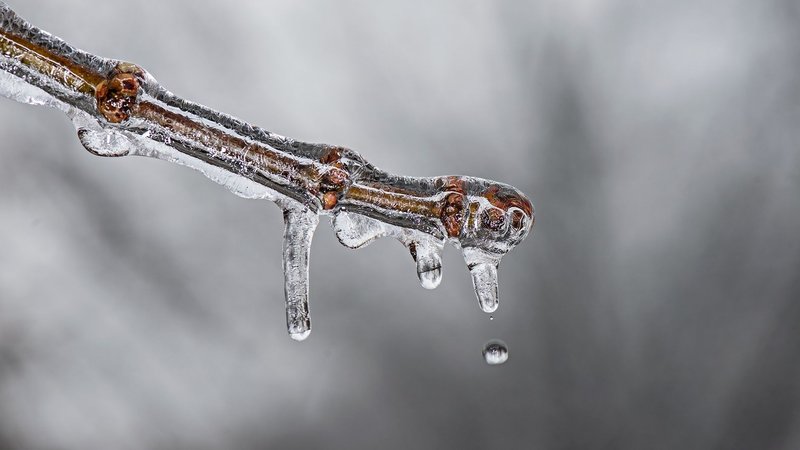
- Steam
Here’s the one that catches people: the white cloud above a kettle isn’t steam. Real steam is invisible water vapor, and you can see the clear gap between the spout and the white plume. The cloud is tiny liquid droplets that formed as the vapor cooled. Same story for the “smoke” over a hot cup of coffee.
Plasma examples
Plasma is what you get when a gas gets energetic enough to knock electrons off its atoms. The result is a soup of charged particles that conducts electricity and responds to magnetic fields. Gas doesn’t do either.
It sounds exotic, yet Science News Explores points out that plasma is the most common visible state in the universe, because stars are made of it.
Examples of plasma you can actually see:
- Lightning. The bolt heats air so intensely that it ionizes along its path.
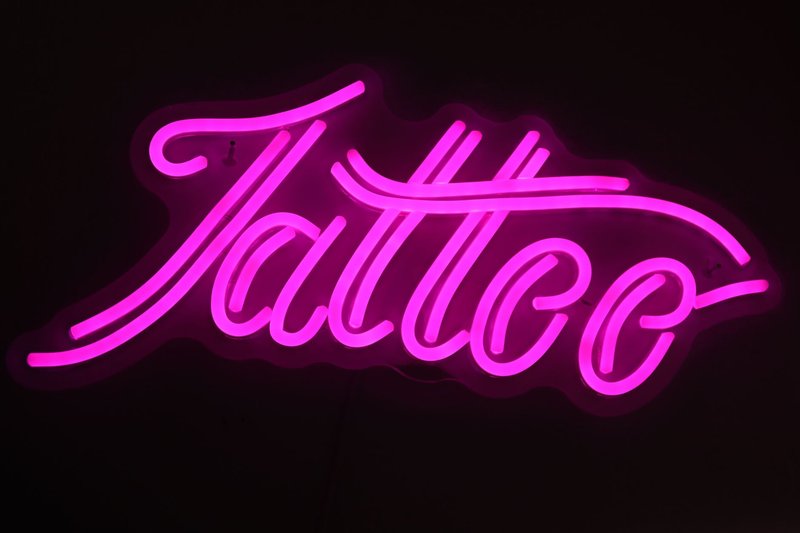
- Neon signs. Electricity runs through low-pressure neon gas and strips electrons, and the glow comes from the atoms settling back down. Argon, krypton and xenon signs work the same way with different colors.
- Fluorescent tubes. Same principle inside the glass, with a coating that converts the light.
- The Sun and other stars. Plasma all the way through.
- Auroras. Charged particles from the Sun collide with gases in the upper atmosphere.
- Plasma balls. The glowing tendrils you can touch at a science museum.
The idea that plasma is only found in space is the gap in most guides. You walk past it every time you pass a neon storefront.
At the extreme end, CERN smashes heavy ions together to create a quark-gluon plasma, a state similar to the universe’s first microseconds after the Big Bang.
Bose-Einstein condensate
You won’t find this one at home. A Bose-Einstein condensate (BEC) forms when certain atoms are cooled to within a tiny fraction of a degree above absolute zero, the point where thermal motion nearly stops. The atoms stop acting like separate particles and behave as a single quantum object.
Satyendra Nath Bose and Albert Einstein predicted it in the 1920s. Eric Cornell, Carl Wieman and Wolfgang Ketterle made the first ones in 1995, work that earned them the 2001 Nobel Prize in Physics. Cornell and Wieman used rubidium atoms. Ketterle used sodium.
BECs are still lab-only. NASA’s Cold Atom Lab makes them aboard the International Space Station, where microgravity lets researchers keep the condensates around longer than they can on Earth.
Changes of state, using water
Water is the best example because you can watch it hit three states in a kitchen. At normal sea-level pressure:
- Melting: ice turns to liquid water at 0 °C.
- Freezing: liquid water turns to ice at 0 °C.
- Evaporation and boiling: liquid becomes gas. Boiling happens at 100 °C, but evaporation happens at any temperature, which is why a puddle disappears on a cool day.
- Condensation: gas becomes liquid. The droplets on a cold glass came from water vapor in the room, not from the glass leaking.
- Sublimation: solid goes directly to gas. Dry ice (solid carbon dioxide) does this at about -78.5 °C, which is why it never leaves a puddle. Freezer burn is a slower version with ice.
- Deposition: gas goes directly to solid. Frost on a window forms this way.
- Ionization: gas becomes plasma. This takes lightning or a few thousand degrees, not a stovetop.
Change of state is a physical change. The molecules of H₂O are the same in ice, water and steam. Only their arrangement and energy change.
If you want a trick to try: gallium melts at about 30 °C, which means a lump of it will turn liquid in your palm.
Borderline cases that trip people up
Textbook lists stay safe with water and oxygen. The questions students ask about are messier.
Sand. Each grain is a solid. Pour a pile and it flows like a liquid, which is why it’s fine to call it a granular material. A single grain is solid; the pile behaves in between.
Toothpaste and ketchup. Both are solid-like at rest and flow when you squeeze them. They’re still classed as liquids with unusual flow behavior.
Oobleck (cornstarch and water). It acts like a liquid when you pour it slowly and like a solid when you punch it. Cornstarch particles suspended in water lock together under sudden force.
Whipped cream and foam. Gas bubbles trapped in a liquid. That’s a mixture of states, not a fourth category.
Smoke. Tiny solid and liquid particles floating in air. Scientists call that an aerosol, and technically it’s not a gas.
Fire. The flame itself is mostly hot gas, and a small portion of it is ionized. A candle flame counts as plasma only under a loose definition. Lightning and neon signs are cleaner examples if you need a safe answer on a test.
Jelly and gelatin. A network of protein or starch holding water in place. It keeps its shape like a solid yet is mostly liquid.
Classify these 10 items
Write down solid, liquid, gas, plasma or “mixture” for each before you scroll to the answers.
- An ice cube
- Orange juice
- Helium in a balloon
- Lightning
- Steam from a kettle spout (the invisible part)
- Butter
- Sand in an hourglass
- Whipped cream
- Mercury at room temperature
- The glow inside a neon sign
Answers:
- Solid
- Liquid
- Gas
- Plasma
- Gas
- Solid
- Solid (a pile of solid grains that flows)
- Mixture of gas bubbles in liquid
- Liquid
- Plasma
Nine or ten correct means you’ve got the logic. If you missed the sand or the whipped cream, go back and apply the two questions from the start: does it keep its own shape, and does it keep its own volume?