Affiliate links: as an Amazon Associate 33Science earns from qualifying purchases. See our affiliate disclosure. Amazon changes prices daily, so this guide does not list them.
The best lab safety goggles for most people are the Uvex Stealth with the HydroShield lens. They carry the D3 splash rating that chemistry work requires, use indirect vents so liquid cannot run in, and have the only anti-fog coating I have trusted through a full afternoon lab. If you wear prescription glasses, buy the Uvex Stealth OTG or the Ergodyne Skullerz Modi instead.
I have worn goggles in teaching labs, detector halls and other people’s chemistry departments for close to twenty years, and I wear glasses under all of them. That last detail shaped this list more than anything else. A goggle that fogs, pinches your glasses or leaks at the temple ends up on someone’s forehead, and a goggle on a forehead protects nothing.
Quick picks
| Goggle | Best for | Fits over glasses? | |
|---|---|---|---|
| Uvex Stealth (S3960HS) | Best overall | Small frames only | Check on Amazon |
| 3M GoggleGear 3000 (GG3301-SGAF) | Best anti-fog | Yes, slotted shroud | Check on Amazon |
| Uvex Stealth OTG (S3970HSF) | Best over glasses | Yes | Check on Amazon |
| Ergodyne Skullerz Modi OTG | Large glasses frames | Yes | Check on Amazon |
| 3M Chemical Splash Goggle (91252) | Budget and spares | Some frames | Check on Amazon |
| United Scientific Kids Goggles | Children under 10 | No | Check on Amazon |
What makes a goggle a lab goggle
My first week as a demonstrator in an undergraduate lab, a student swirled a flask of dilute sodium hydroxide a little too hard. He was wearing safety glasses, the open kind with side shields, and they passed every rule on the door. A thin stream of solution ran down his eyebrow, around the shield and into the corner of his eye. He spent fifteen minutes at the eyewash and was fine. I went home and bought goggles for myself the same evening.
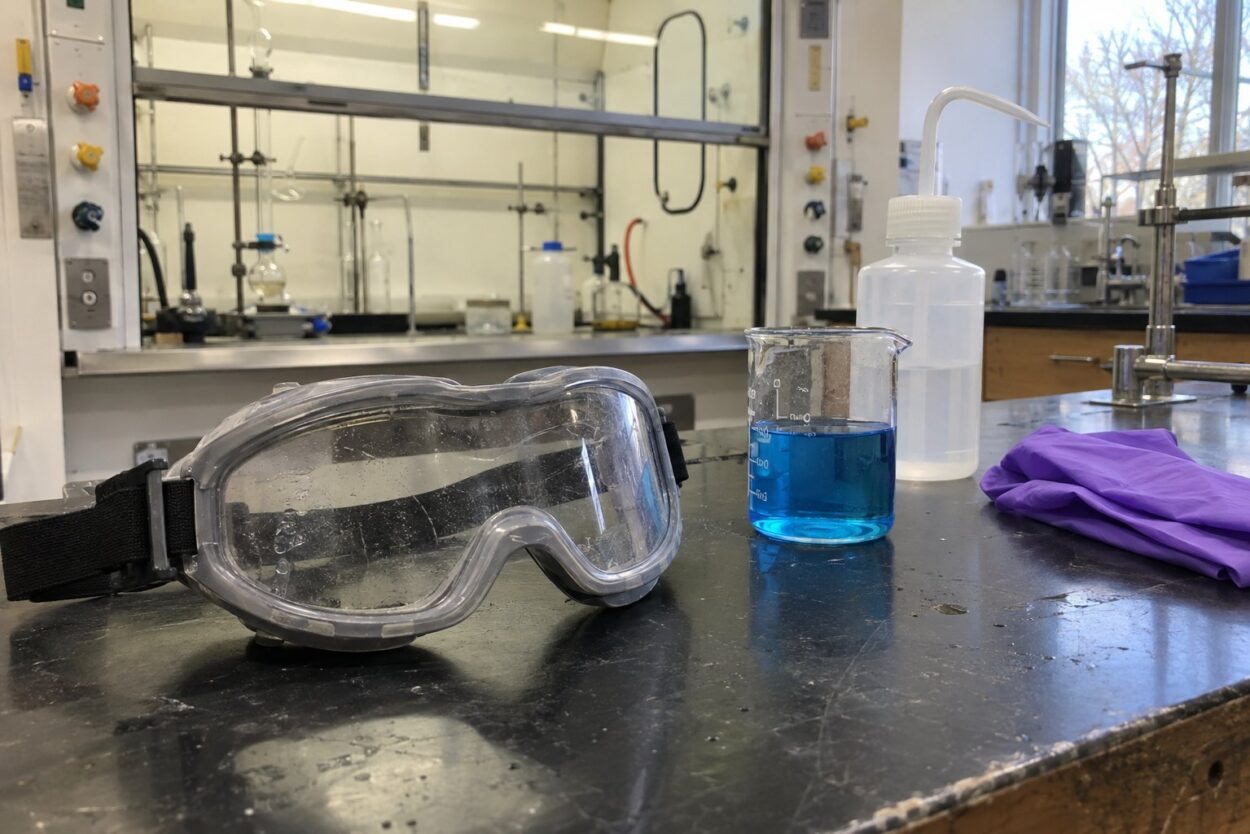
Safety glasses stop flying objects. They do not stop liquid that arrives from above or runs down your face, and most splashes in a chemistry lab do exactly that. A lab goggle has to seal against the face and still let enough air through to stay clear. Three things on the frame tell you whether it does.
The D3 mark
ANSI/ISEA Z87.1 is the American standard for eye protection, and OSHA’s eye and face rule (29 CFR 1910.133) points to it. Under the standard, a goggle that passes the droplet and splash test is stamped D3. D4 means dust and D5 means fine dust. A Z87+ mark means it also passed the high-impact test, and since the 2020 edition an X means the lens passed a standard anti-fog test.
No D3 means no chemistry. That is the rule at most university chemistry departments, including Stony Brook and Truman State, and it is mine. The mark is molded into the frame, usually on the brow or the side of the shroud. Look for it on the goggle itself, because Amazon listings often leave it out or fill it in carelessly.
Indirect vents
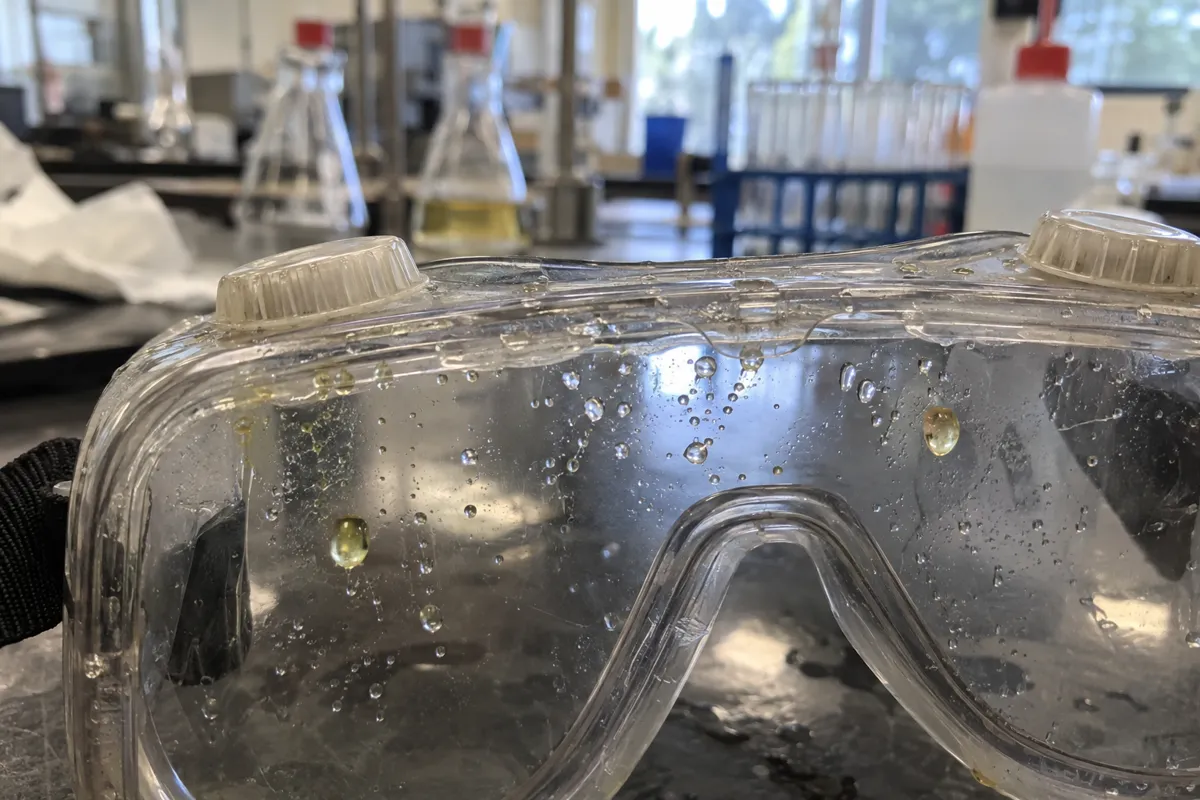
Look at the vents. Direct-vent goggles have open holes or perforations through the frame, which let in air and liquid alike. Indirect-vent goggles cover each opening with a cap or a baffle, so air takes a bent path and liquid cannot follow. Every goggle in this guide is indirect-vented. Non-vented goggles exist for gases and vapors, but they fog within minutes and nobody keeps them on.
A soft, flexible seal
Hard goggles with a rigid rim leave gaps at the cheekbones and nose on most faces. The good ones use a soft elastomer or TPV frame that bends to the face, with a strap that holds it there without pressing a ring into your skin. If you can slide a fingertip under the frame anywhere, liquid can get there too.
The best lab safety goggles
Best overall
1. Uvex Stealth (S3960HS)
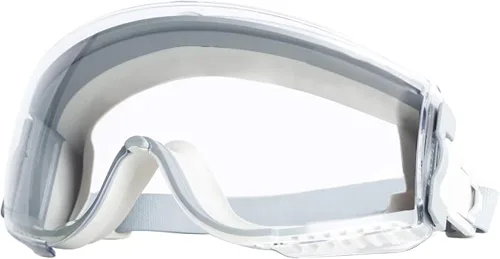
The Stealth is the goggle I reach for when I visit a lab that lets me bring my own. Its frame is soft enough to fold in half, so it seals on narrow and wide faces, and the low profile does not catch on a fume hood sash. Honeywell bonds its HydroShield anti-fog coating to the lens, and it lasts far longer than the dip-coated lenses on cheap goggles. I have washed mine for over a year before it started to haze.
- Z87+ impact and D3 splash, CSA Z94.3
- Indirect vents, latex-free neoprene strap that pivots and stays put
- Snap-on replacement lenses and an optional prescription insert
- Made in the USA
Watch out for: the standard Stealth sits close to the face. Small, thin glasses fit under it. Anything larger needs the OTG version below.
Best anti-fog
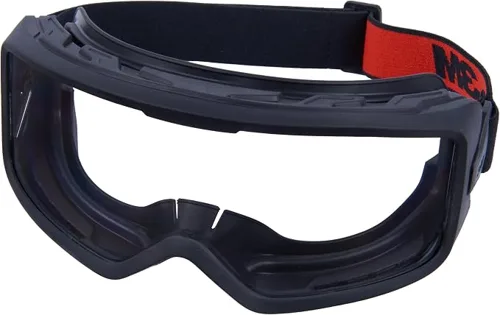
2. 3M GoggleGear 3000 (GG3301-SGAF)
Fog is the reason most people take goggles off, and this is the 3M goggle built around that problem. Its Scotchgard coating resists fog 11 times longer than 3M’s previous anti-fog coating and resists scratching 7 times better, according to 3M. On a humid summer day in an old building with weak air handling, it was the one pair in the room nobody lifted to wipe. The black TPV shroud has slots at the temples for glasses arms, which takes most of the pressure off a pair of frames.
- Tested to ANSI/ISEA Z87.1-2020, D3 splash and D4 dust
- Indirect vents, slotted nose bridge, wide cloth strap
- Accepts many prescription glasses through the shroud slots
Watch out for: it is bulkier than the Stealth and costs more. A PVC-shroud version (GG3101-SGAF) is also sold; the TPV one is softer on the face.
Best over glasses
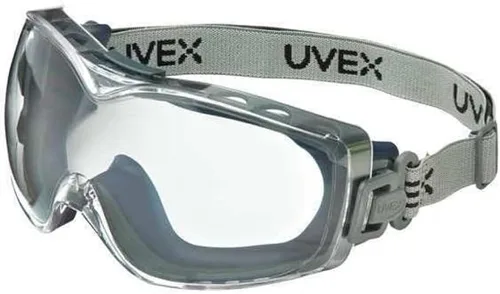
3. Uvex Stealth OTG (S3970HSF)
This is the goggle on my own face most days. It is the Stealth scaled up to fit over prescription eyewear, with the same soft frame, the same HydroShield lens and the same indirect vents. My glasses sit inside it without the arms being bent against my temples, and after a three-hour session I do not have the red line across the bridge of my nose that smaller goggles leave. The wide fabric strap grabs hair less than neoprene does.
- Z87+ impact, D3 splash, CSA Z94.3
- Fits over most prescription glasses
- Wide fabric headband; a neoprene version (S3970HS) is also sold
Watch out for: on a small face with no glasses, it sits loose. Buy the standard Stealth instead.
Best for large glasses frames
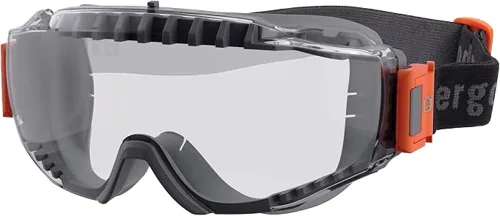
4. Ergodyne Skullerz Modi OTG
A colleague with thick, wide frames could not get a Stealth OTG to seal at the corners. The Modi did. It has a deeper cup than the Uvex and a soft gasket around the face, and its lens carries the 2020 anti-fog X mark, so the fog claim has been tested to the standard rather than just printed on the box.
- Marked Z87.1+ X D3 under ANSI/ISEA Z87.1-2020, plus CSA Z94.3 and EN166
- Indirect vents, Fog-Off+ anti-fog and anti-scratch coating
- Over-the-glasses design with a soft frame gasket
Watch out for: it is the largest goggle here. On a narrow face without glasses it leaves gaps.
Best budget
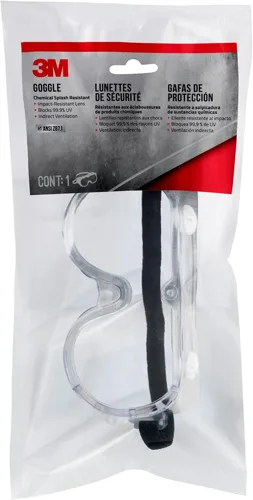
5. 3M Chemical Splash Goggle (91252)
This is the goggle most of us wore in high school chemistry: a clear, flexible one-piece frame with four capped vents and a plain elastic strap. It is one of the cheapest D3 goggles from a major maker, which makes it the right choice for spares, for a home lab that sees use twice a month and for a parent buying for a teenager’s chemistry class. I keep two in a drawer for visitors.
- D3 splash rated, indirect vents, impact-resistant polycarbonate lens
- Scratch-resistant coating, blocks 99.9% of UV
- Flexible frame and adjustable strap
Watch out for: the lens has a scratch coating but no real anti-fog. Wipe on an anti-fog treatment or expect to fight condensation on warm days.
Best for kids
6. United Scientific Kids Safety Goggles
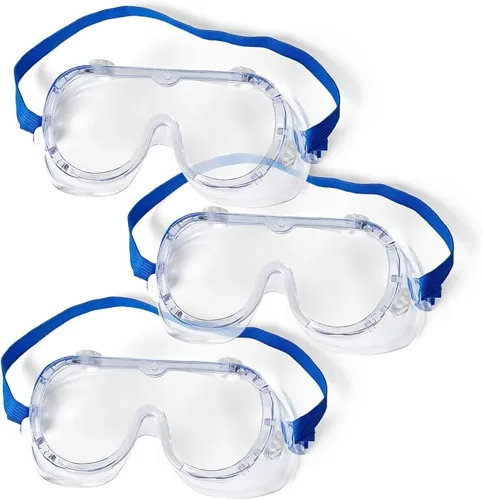
Adult goggles slide down a young child’s face and leave a gap under the eyes that a splash finds immediately. United Scientific sells lab supplies to schools, and these are cut for faces up to 5.5 inches across the temples, which covers most children in early elementary school. They come in a pack of three, enough for siblings or a kitchen-table science session with a friend.
- Listed as ANSI Z87.1 with D3, D4 and D5 ratings, indirect vents
- Polycarbonate lens, PVC frame, 13.25-inch elastic strap
- Sized for temple widths up to 5.5 inches
Watch out for: measure across your child’s temples before ordering. Older kids with wider faces fit the 3M 91252 better.
Goggles I would not use for chemistry
The best-selling safety goggle on Amazon, by a wide margin, is the DeWalt DPG82 Concealer. It is a good goggle, and I keep one in the garage for the table saw. DeWalt sells it for impact and dust, and its product bullets claim the Z87.1+ impact rating only. For a splash of acid, use a goggle with D3 on the frame.
Avoid these as well:
- Perforated or direct-vent goggles. If you can see daylight through holes in the frame, liquid can come through them.
- Unbranded bulk packs with no markings. Many 10-packs and 12-packs on Amazon say “lab” and “splash” in the title but carry no D3 mark on the frame. Some are fine. You cannot tell which until they arrive, so check every one.
- Safety glasses for liquid work. Visitor specs and wraparound glasses are fine for observing or for solid samples. They are not splash protection, which is how my student ended up at the eyewash.
- Swim or ski goggles. They seal well but are not impact tested, and their foam and lens coatings are not made to handle solvents.
How to stop lab goggles fogging
Fog is the most common way goggles fail in a teaching lab, because it is the reason people push them up onto their foreheads. I once counted during a two-hour organic practical: by the last half hour, nine of twenty-four students had their goggles on their heads, most of them during the distillation, the most dangerous step of the afternoon.
- Buy a bonded coating. HydroShield, Scotchgard and Fog-Off+ are cured into the lens and last through many washes. Cheap goggles use a sprayed or dipped coating that rinses away within a few weeks.
- Look for the X mark. It means the lens passed the Z87.1-2020 anti-fog test.
- Wash with mild soap and water only. Alcohol wipes and paper towels strip and scratch anti-fog coatings. Rinse, then air dry or blot with a microfiber cloth.
- Put them on before you get warm. Goggles pulled onto a sweaty face fog instantly. Put them on as you walk in, before the first experiment starts.
- Loosen the strap a notch. Cranked-tight straps push the frame into the skin and close off the vents.
Wearing lab goggles over glasses
Glasses wearers have two choices: an over-the-glasses (OTG) goggle or a goggle with a prescription insert. I tried the insert route with the standard Stealth for a year. It works, but I had to swap my glasses for the goggle every time I went from the bench to the computer, and I left the insert in the wrong building twice. An OTG goggle is simpler.
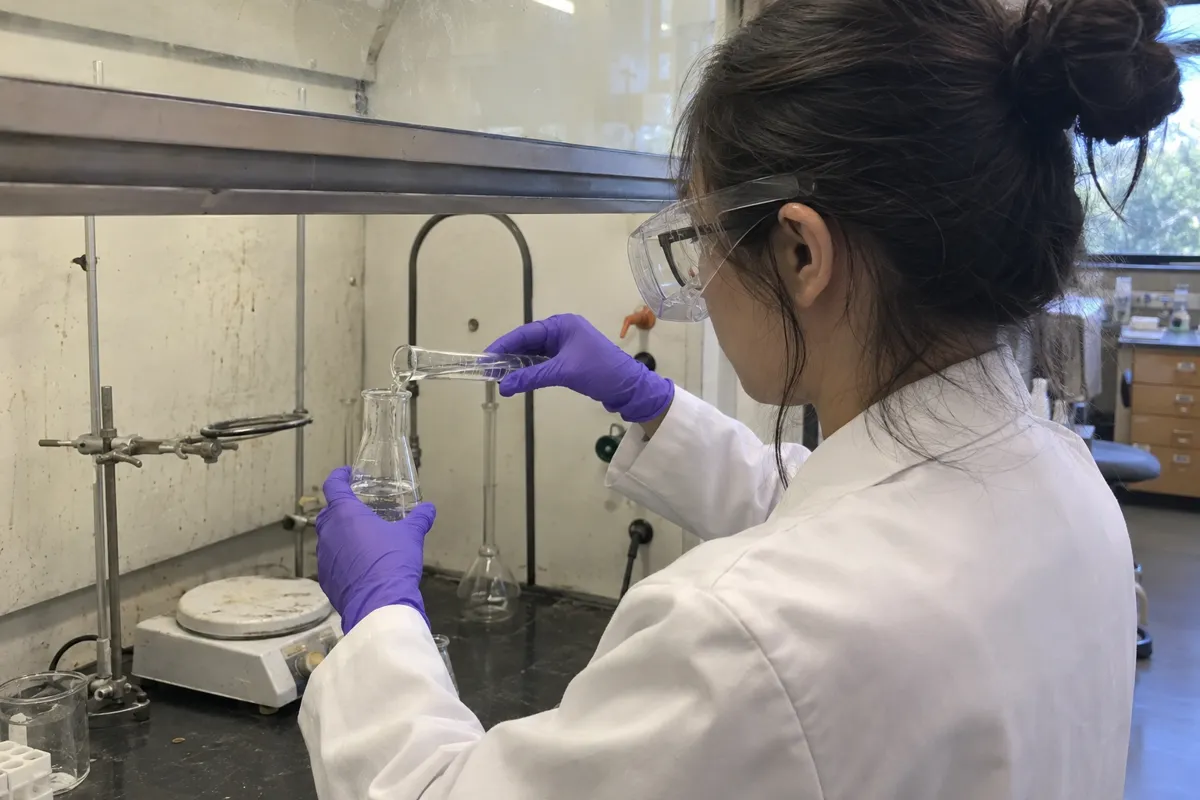
Three things to check with an OTG goggle:
- The arms. Your glasses arms should pass through a slot or sit under a soft section of the frame, not get pressed into your temples.
- The seal at the corners. Put the goggle on over your glasses and run a finger around the frame. Large frames often lift the goggle at the outer corners.
- Two layers of fog. Your glasses can fog inside the goggle. An anti-fog wipe on your own lenses solves most of it.
Contact lenses are allowed in most labs now, but only under a sealed splash goggle. A splash can trap a chemical behind the lens, so if you wear contacts, tell the lab supervisor and know where the eyewash is before you start.
Goggles for a school lab or classroom
Visiting a high school chemistry department last spring, I watched a teacher run forty students through a lab with one goggle cabinet. Each class took goggles off the hooks, wore them and hung them back, and the cabinet ran a UV cycle between periods. Shared goggles are normal in schools, and UV cabinets help, but they do not replace washing. UV light only disinfects the surfaces it reaches, and a goggle has shadows.
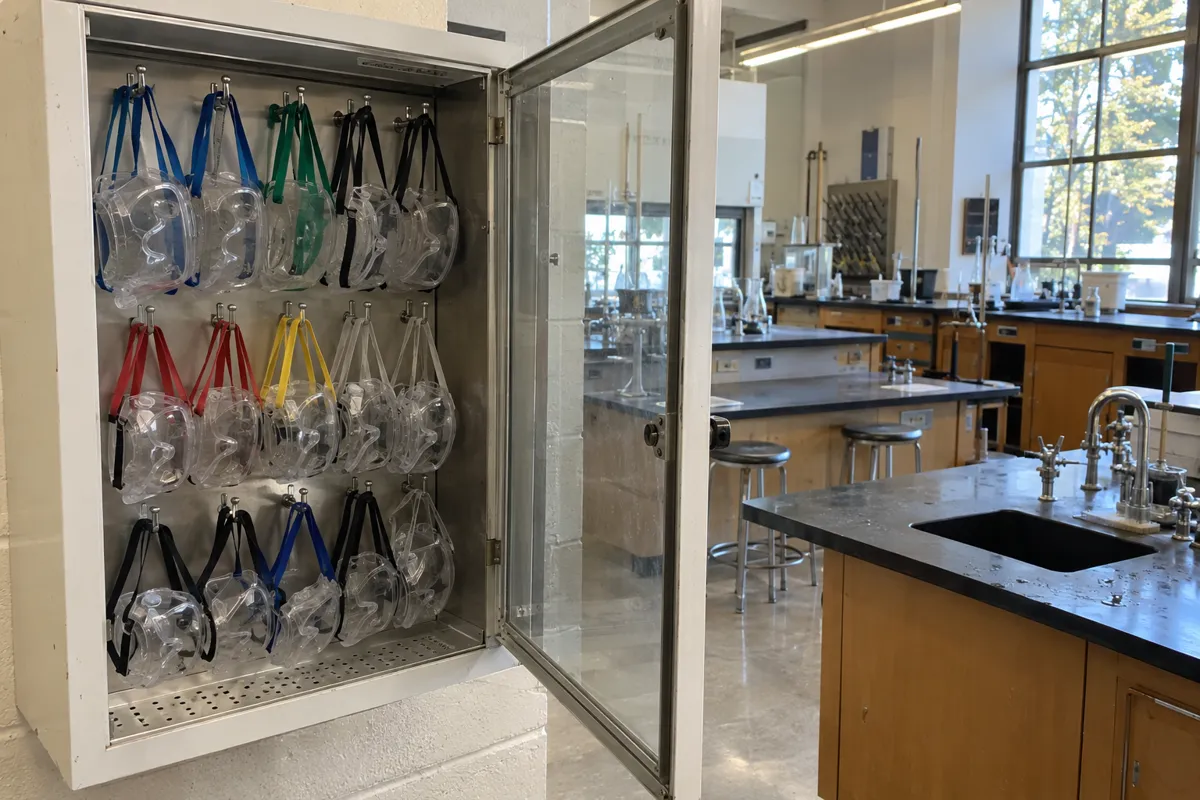
- Buy D3 goggles in bulk from a known maker. The 3M 91252 costs little enough to buy one per student, which avoids sharing altogether.
- Wash shared goggles with mild soap and water between classes, or as often as the school’s policy requires.
- Keep a few OTG and kids’ sizes on hand. Every class has students with glasses and a few with small faces.
- Replace any goggle with a cracked frame, a scratched lens or a strap that no longer holds. A goggle that slides down the nose stops sealing.
How long lab goggles last
The lens wears out before the frame. Replace goggles when the lens is scratched enough to blur the view, when the anti-fog coating stops working, when the frame stiffens or cracks, or when the strap loses its stretch. With daily use and gentle washing, my Stealth lenses last about a year. Solvents shorten that. Acetone and some other organic solvents can craze a polycarbonate lens, so rinse off any splash right away and look closely at the lens afterward.
Goggles are one part of your eye protection. Work in a fume hood when the procedure calls for it, use a face shield over goggles when you pour large volumes of corrosives, and keep the eyewash path clear. If you are building a home or school lab from scratch, our list of laboratory equipment covers the rest, and our guides to strong acids and common acids explain what you are protecting your eyes from.
FAQ
Indirect-vent splash goggles marked D3 under ANSI/ISEA Z87.1. The Uvex Stealth is the best all-round choice, and the Uvex Stealth OTG is best if you wear glasses.
D3 means the goggle passed the ANSI/ISEA Z87.1 droplet and splash test. D4 means dust protection and D5 means fine dust protection. A goggle needs D3 to be used for liquid chemicals.
No, not when you work with liquids. Safety glasses stop impact but leave gaps at the top, sides and bottom where splashes enter. Most university chemistry departments require splash goggles for any work with hazardous liquids.
Direct-vent goggles have open holes in the frame that let in air and liquid. Indirect-vent goggles cover each vent with a cap or baffle, so air can flow but liquid cannot. Lab work needs indirect vents.
Yes, with an over-the-glasses (OTG) goggle such as the Uvex Stealth OTG, the Ergodyne Skullerz Modi or the 3M GoggleGear 3000. They have room for glasses arms and keep a seal around the frames.
Buy goggles with a bonded anti-fog coating, put them on before you get warm, keep the strap slightly loose so the vents stay open and wash them only with mild soap and water. Alcohol and paper towels strip anti-fog coatings.
Most labs allow contact lenses as long as you wear sealed splash goggles over them. Contacts give no protection on their own. Check your lab’s chemical hygiene plan, since some workplaces still restrict them.
Replace them when the lens is scratched or crazed, the anti-fog coating stops working, the frame cracks or the strap loses its stretch. With daily use that is usually about once a year.
Some are. Check the frame for the Z87 and D3 marks when they arrive. If the goggle has no D3 marking, use it for dust and impact work only, not for liquid chemicals.
Sources
- OSHA, 29 CFR 1910.133 Eye and Face Protection
- ANSI, ANSI/ISEA Z87.1-2020 overview
- Stony Brook University EHS, Eye Protection
- Truman State University Chemistry, Safety Eyewear Policy
- UNC Chapel Hill, Laboratory Safety Manual, Chapter 5: Protective Clothing and Equipment
- Cal State Long Beach, Eye Protection Policy
- UMass Amherst EHS, Eye Protection Program