An ester is an organic compound with the group RCOOR’, a carbonyl carbon (C=O) bonded to an oxygen that carries a second carbon group. Take a carboxylic acid, swap the hydrogen of its -OH for an alkyl or aryl group, and you have an ester. Every example below follows that pattern.
The good news for anyone studying them: esters are everywhere. The banana smell in a candy, the sharp whiff of nail polish remover, the wintergreen in a muscle rub and the fabric in your T-shirt are all examples of esters.
Contents
- Examples of esters at a glance
- Fruit and flavor esters
- Esters in everyday products
- Fats, oils, and waxes
- Polyesters
- Esters of inorganic acids
- How to name an ester
- Quick answers for exam questions
Examples of esters at a glance
Each ester is built from a parent acid and a parent alcohol, and its name is a direct readout of both. The table gives you the core examples in one place.
| Ester | Formula | Made from (acid + alcohol) | Smell or use |
|---|---|---|---|
| Ethyl acetate | CH₃COOCH₂CH₃ | Acetic acid + ethanol | Nail polish remover, glue and paint solvent |
| Isoamyl acetate | CH₃COOCH₂CH₂CH(CH₃)₂ | Acetic acid + 3-methylbutan-1-ol | Banana, “pear drop” candy |
| Ethyl butanoate | CH₃CH₂CH₂COOCH₂CH₃ | Butanoic acid + ethanol | Pineapple |
| Propyl acetate | CH₃COOCH₂CH₂CH₃ | Acetic acid + propan-1-ol | Pear |
| Octyl acetate | CH₃COO(CH₂)₇CH₃ | Acetic acid + octan-1-ol | Orange |
| Methyl butanoate | CH₃CH₂CH₂COOCH₃ | Butanoic acid + methanol | Apple |
| Ethyl formate | HCOOCH₂CH₃ | Formic acid + ethanol | Raspberry, rum-like flavoring |
| Methyl anthranilate | H₂NC₆H₄COOCH₃ | Anthranilic acid + methanol | Concord grape |
| Benzyl acetate | CH₃COOCH₂C₆H₅ | Acetic acid + benzyl alcohol | Jasmine, perfumery |
| Methyl salicylate | HOC₆H₄COOCH₃ | Salicylic acid + methanol | Wintergreen, pain-relief rubs |
| Aspirin (acetylsalicylic acid) | C₉H₈O₄ | Salicylic acid + acetic acid | Pain and fever relief |
| Triglyceride (fat or oil) | Three fatty-acid chains on a C₃ backbone | Glycerol + three fatty acids | Cooking oils, butter, body fat |
| Beeswax (e.g., myricyl palmitate) | Long-chain RCOOR’ | Palmitic acid + a long-chain alcohol | Candles, polish, honeycomb |
| PET (polyethylene terephthalate) | Repeating ester units | Terephthalic acid + ethylene glycol | Soft-drink bottles, polyester fabric |
| Nitroglycerin | C₃H₅(ONO₂)₃ | Nitric acid + glycerol | Explosives, angina medication |
The sections below explain the ones worth knowing in more detail.
Fruit and flavor esters
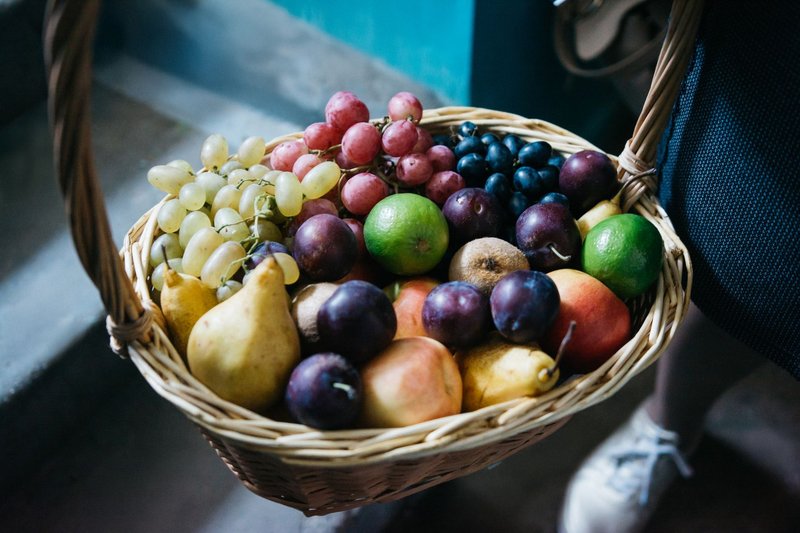
Small esters are volatile, and your nose picks them up easily. That is why so many fruit smells trace back to them. A fruit’s aroma is never one compound (a real banana contains dozens), but a single ester can carry most of the recognizable note.
Isoamyl acetate is the textbook example. It smells like banana and pear drops, it is the compound most teaching labs make for an esterification demonstration, and it shows up in honeybee alarm pheromone. According to its PubChem entry, it is also known as isopentyl acetate or “banana oil.”
Ethyl butanoate (also called ethyl butyrate) smells like pineapple. Propyl acetate smells like pear, octyl acetate like orange, and methyl butanoate like apple. Notice the pattern: the same acetic acid appears in three of those four names, and only the alcohol changes. Swap ethanol for propan-1-ol or octan-1-ol and the smell moves from solvent-sweet to pear to citrus.
Two more are worth a mention. Ethyl formate is the one behind raspberry flavoring, and methyl anthranilate gives Concord grape its candy-grape smell, which is why grape soda smells nothing like a green supermarket grape.
Why do esters smell at all when the carboxylic acids they come from smell like vinegar or sweat? Esters have no O-H group, so their molecules can’t hydrogen-bond to each other. They boil at lower temperatures than the acids of similar mass and escape into the air easily. Ethyl acetate, for instance, boils at about 77 °C, while acetic acid boils at about 118 °C.
Esters in everyday products

Ethyl acetate is the ester most people have sniffed without knowing it. It is the main ingredient in many nail polish removers and a common solvent in paints, glues and inks. Some decaffeination processes also use it. It dissolves nail lacquer because the ester is a decent solvent for many organic materials and evaporates quickly.
Methyl salicylate is the wintergreen compound. It’s in sports rubs and ointments, where it works as a counterirritant: it warms the skin and distracts from the ache underneath. It is also toxic if swallowed in quantity, so a bottle of liniment is not a flavoring. Its PubChem record lists the hazards in detail.
Aspirin is the example that trips people up. It looks like an acid on the label (acetylsalicylic acid), and it is, because it still carries a carboxylic acid group. But it also contains an ester group: the phenol -OH of salicylic acid has been capped with an acetyl group (in factory practice, from acetic anhydride). One molecule, two functional groups. If an exam asks “is aspirin an ester?”, the answer is yes. The PubChem page for aspirin shows the structure.
Benzyl acetate gives jasmine and similar floral notes to perfumes and soaps.
Fats, oils, and waxes
The most abundant esters in your life are the ones you eat. A triglyceride is glycerol, a three-carbon alcohol with three -OH groups, joined to three fatty acids by three ester bonds. Olive oil, butter, lard and the fat stored in your body are all triglycerides. Whether a triglyceride is liquid or solid at room temperature depends on its fatty acid chains: more double bonds put kinks in the chains and keep it liquid.
So yes, a fat is an ester. Soap, however, is not. Soap is made by breaking those ester bonds with a strong base (saponification), which releases glycerol and leaves the fatty acids as sodium or potassium salts.
Waxes are esters too, but with one long-chain acid joined to one long-chain alcohol rather than to glycerol. Beeswax is a mixture that includes esters such as myricyl palmitate, which is why it is firm, water-repellent and has a high melting point compared with a fat.
Polyesters

Link a diacid to a diol, and the ester bond repeats down a chain. That is a polyester.
PET (polyethylene terephthalate) is built from terephthalic acid and ethylene glycol. It is the plastic in soft-drink bottles, and the same polymer, spun into fiber, is the “polyester” on your clothing label. Every link in the chain is an ester group, so PET is one long ester molecule, and the ester bond is also its weak point: heat and water can slowly break it back down into its building blocks, which is part of how chemical recycling of PET works. Some polyesters are built to break down on purpose, which is the idea behind biodegradable plastics.
Esters of inorganic acids
Carboxylic acids are not the only acids that form esters. Replace the carboxylic acid with nitric or phosphoric acid and you get inorganic esters.
Nitroglycerin (glyceryl trinitrate) is an ester of nitric acid and glycerol. It is both a famous explosive and a heart medication used to relieve angina.
Phosphate esters hold your genetic code together. The backbone of DNA is a chain of phosphodiester bonds, where each phosphate group is joined to a sugar on both sides. ATP, the cell’s energy currency, is a phosphate ester of the sugar ribose with an adenine base attached.
Some courses limit “ester” to carboxylic acid esters. If yours does, treat these as extras rather than core examples.
How to name an ester
An ester name has two words, and the alcohol comes first. The rule has three steps:
- Take the alkyl group from the alcohol and write it first (methyl, ethyl, propyl).
- Take the carboxylic acid and count its carbons, including the carbonyl carbon.
- Replace the acid’s “-oic acid” ending with “-oate” and write it second.
Three worked cases:
- CH₃COOCH₂CH₃: the alcohol part is ethyl (two carbons on the oxygen). The acid part has two carbons, so ethanoic acid becomes ethanoate. Name: ethyl ethanoate, commonly called ethyl acetate.
- HCOOCH₃: the alcohol part is methyl. The acid has one carbon, so methanoic acid becomes methanoate. Name: methyl methanoate, or methyl formate.
- CH₃CH₂COOCH₃: the alcohol part is methyl. The acid has three carbons, so propanoic acid becomes propanoate. Name: methyl propanoate.
The common names you’ll see on ingredient lists come from the older acid names: formate (methanoate), acetate (ethanoate), propionate (propanoate), butyrate (butanoate). The trap to avoid is counting the carbons on the wrong side of the oxygen. The carbons in the C=O end belong to the acid and go in the second word.
Quick answers for exam questions
- What is the general formula for an ester? RCOOR’, where R is hydrogen or a carbon group and R’ is a carbon group.
- How is an ester made? By esterification: a carboxylic acid and an alcohol react, usually with a few drops of concentrated sulfuric acid as catalyst, to give an ester and water. The reaction is reversible.
- Which ester smells like banana? Isoamyl acetate. Pineapple? Ethyl butanoate. Pear? Propyl acetate. Orange? Octyl acetate.
- Which ester is in nail polish remover? Ethyl acetate, which is also called ethyl ethanoate.
- Is aspirin an ester? Yes, and it is also a carboxylic acid.
- Is a fat an ester? Yes. A triglyceride has three ester bonds.
- Is soap an ester? No. Soap is the salt of a fatty acid, made by breaking down a fat.
- What is the difference between an ester and an ether? An ester has a C=O next to the oxygen (R-CO-O-R’). An ether has only an oxygen between two carbon groups (R-O-R’).
- Is PET an ester? It is a polyester, a polymer whose repeating units are joined by ester bonds.