TLDR
- State mineral: silver. State rock: sandstone. State precious gemstone: Virgin Valley black fire opal. State semiprecious gemstone: turquoise.
- What Nevada mines at scale: gold (by far the biggest), silver, lithium, copper, barite, gypsum and diatomite.
- What collectors chase: turquoise, black fire opal, garnet, azurite and variscite.
- Where you can actually dig: mostly public BLM land, a few fee-dig opal mines, and nothing on an active mine or a private claim.
Table of Contents
- Nevada’s official minerals in one place
- Economic minerals: what Nevada mines
- Gem and collector minerals
- Industrial minerals
- Nevada minerals at a glance
- Minerals by region
- Collecting rules: public land, claims and active mines
Nevada’s official minerals in one place
Silver is Nevada’s state mineral, and the state’s nickname, the Silver State, comes from it. The Comstock Lode at Virginia City, found in 1859, drew tens of thousands of prospectors and helped push Nevada to statehood in 1864. Today most of the silver comes out as a byproduct of gold mining rather than from the old silver camps.
The state rock is sandstone, and you can see why at Red Rock Canyon and Valley of Fire, where the Aztec Sandstone weathers into red and orange cliffs. The state’s two official gemstones are Virgin Valley black fire opal (precious) and turquoise (semiprecious).
Nevada’s mineral story splits in two. One half is industrial: some of the largest gold mines in North America, the only operating lithium brine mine in the country, and a supply of barite that keeps oil rigs drilling. The other half is the rockhound’s Nevada: turquoise from long-closed mines, opal that formed inside buried wood, and garnets you can pull out of volcanic rock with a hand trowel. Most guides cover one half. Here’s both.
Economic minerals: what Nevada mines
Gold
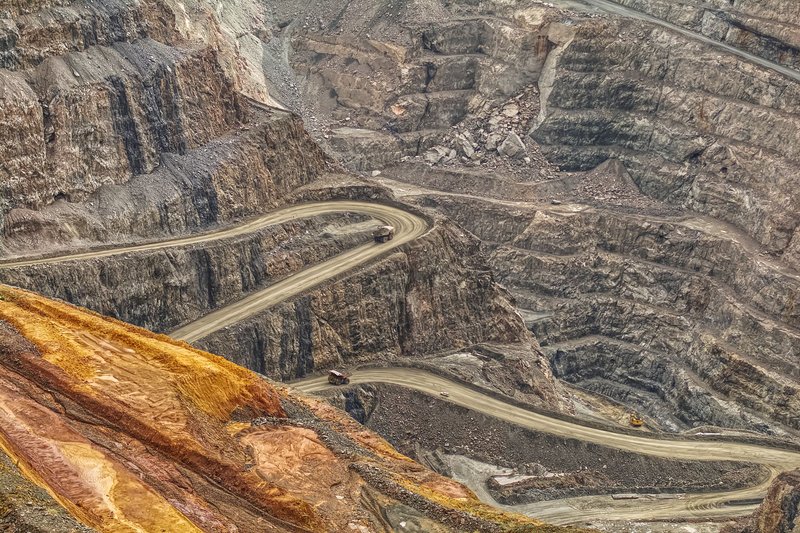
Gold is the headline. Nevada produces roughly three-quarters of all U.S. gold, according to USGS mineral commodity data, and the output is concentrated along a few trends in the north. The Carlin Trend near Elko, the Cortez district in Eureka and Lander counties, and Round Mountain in Nye County are the big ones. Most of the biggest operations sit inside Nevada Gold Mines, the joint venture between Barrick and Newmont.
The gold is often invisible. Carlin-type deposits hold microscopic gold locked in pyrite and other sulfide minerals, so there’s nothing to pan. Trade press reported that Nevada’s output slipped in 2024 even as gold prices climbed, a reminder that mine plans, grades and processing schedules matter as much as the market.
Silver
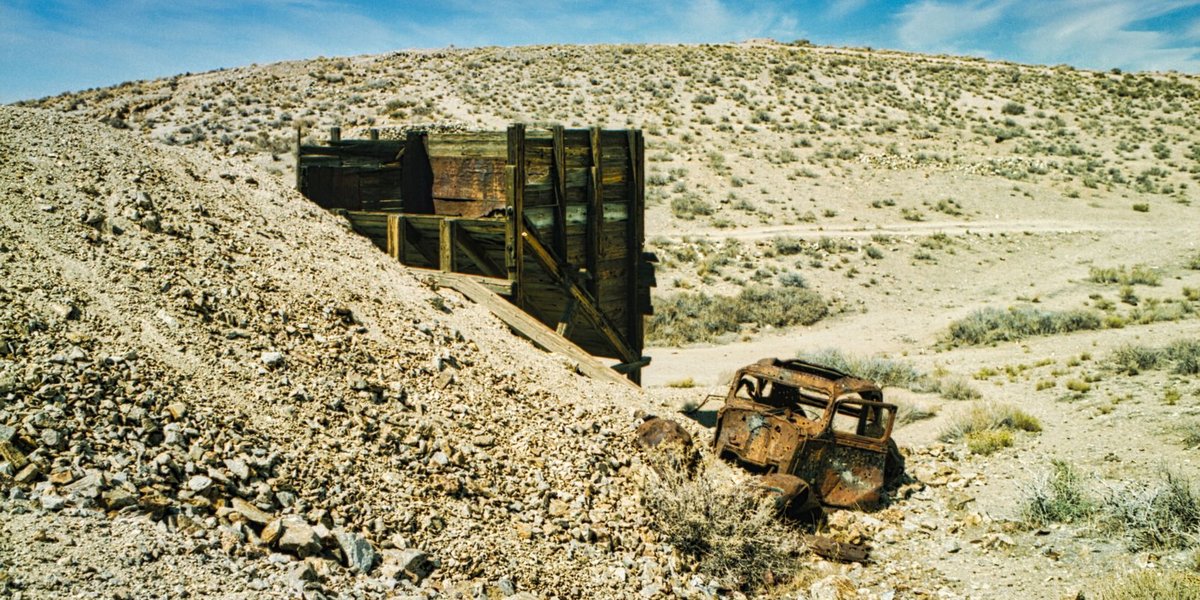
Silver’s story starts at the Comstock Lode in Storey County and the later camps at Tonopah and Austin. Those boom towns are mostly museums and ghost-town tourism now. Current silver output is a smaller, steadier stream recovered alongside gold and base metals. For a collector, the old silver districts are better for mineral specimens in dumps and on tours than for finding silver itself.
Lithium
Lithium is the newcomer. The Silver Peak operation in Clayton Valley, Esmeralda County, has pumped lithium-rich brine from under the valley floor since the 1960s. Per USGS, it’s the only lithium brine operation in the United States. The brine is concentrated in evaporation ponds, which is why Clayton Valley looks like a patchwork of pale green rectangles from the air.
The second act is Thacker Pass in Humboldt County, near the Oregon border. Here the lithium sits in claystone rather than brine, in the McDermitt caldera, and the project (Lithium Americas with General Motors as a partner) is under construction with first production targeted for late 2027. It’s among the largest known lithium resources in the country.
Copper
Copper mining centers on Ely in White Pine County, where the Robinson mine, operated by KGHM, works a large open pit that also yields gold and molybdenum. Another copper district, Yerington in Lyon County, is the story of an earlier era: the Anaconda mine closed in 1978. Copper districts matter for collectors too, because the weathered upper zones produce green malachite and blue azurite.
Gem and collector minerals
Turquoise
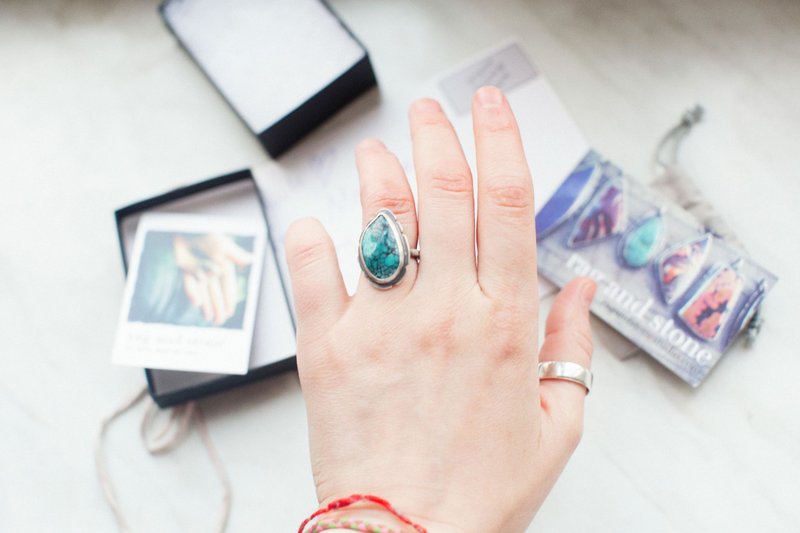
Nevada was once one of the top turquoise producers in the country, with dozens of mines scattered across the central and southern parts of the state. Names collectors still chase include Royston, Godber, Carico Lake, Number Eight and Lone Mountain. Each produces a distinct look: Carico Lake runs a clean, light green-blue, while Royston stones often show brown and green matrix patterns.
Almost every one of these mines is closed or privately held. The practical result is that Nevada turquoise is now mostly a secondhand market, sold as vintage jewelry or from old stock. If you want to hunt for it yourself, you’ll need to confirm land status first, because the best-known deposits sit on claims.
Virgin Valley black fire opal
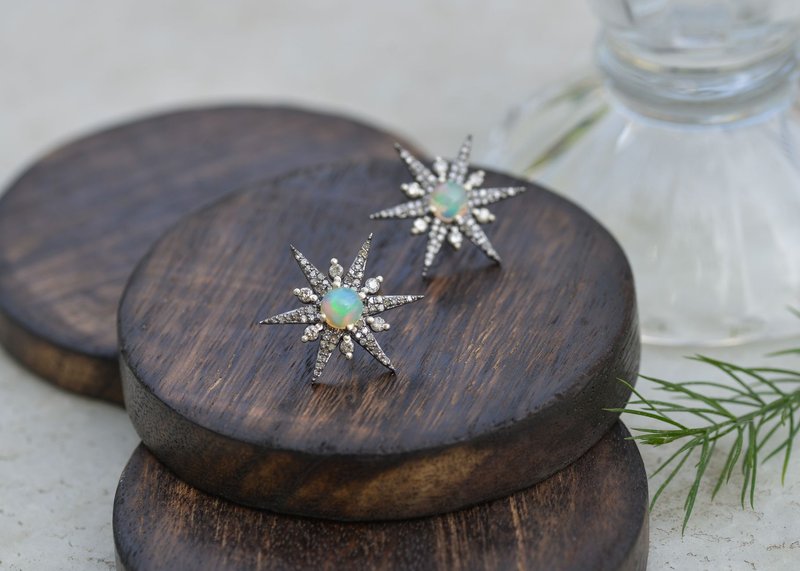
Few gemstones are this tied to one place. In Virgin Valley, Humboldt County, opal formed by replacing buried wood and filling cavities in volcanic ash, and the dark background that gives “black” fire opal its look makes the flashes of color pop. Pieces from Virgin Valley are prized enough that Nevada named it the state precious gemstone.
The opal region is remote, up against the Oregon line near Denio. Several fee-dig operations, including Rainbow Ridge and the Royal Peacock mines, let visitors search dumps and dig for a fee, which solves the claim problem. Call ahead: the mines run seasonally and the road in is long.
Garnet
Garnet Hill, outside Ely in White Pine County, is the easiest win on this list. Deep red garnets weather out of volcanic rock on public land, and BLM-managed collecting with hand tools is allowed. It’s a beginner site: no permit for casual collecting, a short walk from the road, and the garnets are visible in the dirt once you know the color.
Azurite
Azurite shows up in the weathered tops of copper deposits, so the districts that produce copper (Ely, Yerington and smaller prospects across the state) are where Nevada specimens come from. Fine crystals are rare and nearly all come from mine dumps on claims. Treat azurite as a collector’s find from museum and dealer stock more than a field target.
Variscite
Variscite, a green phosphate that gets mistaken for turquoise, is a smaller part of Nevada’s gem story. The state has scattered occurrences in the west and center, but the lapidary-grade material most people know comes from Utah. Nevada is a secondary source, so look for local material as a bonus, not a destination.
Industrial minerals
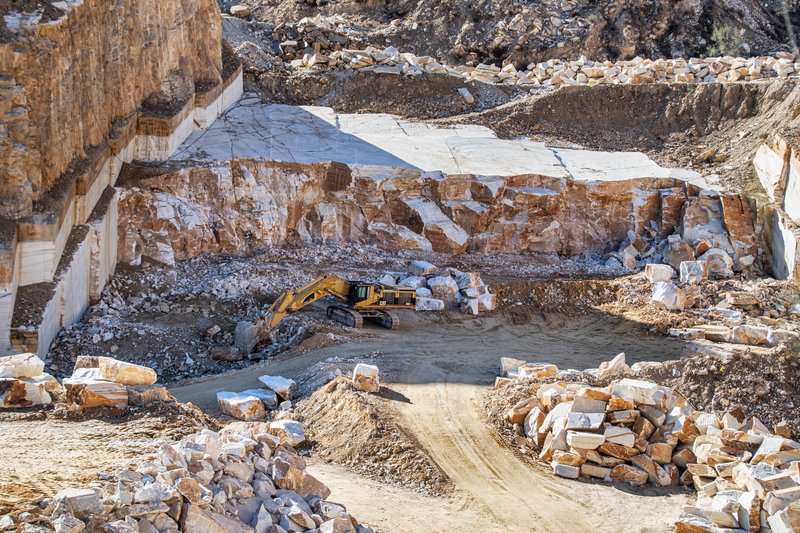
These don’t make jewelry, but they’re probably in your house.
Barite. Nevada is the country’s leading barite producer, with most of the activity in Lander County around Battle Mountain. The heavy white mineral is ground and added to drilling mud to control pressure in oil and gas wells. The mineral’s high density is the whole reason it’s valuable.
Gypsum. The Blue Diamond area near Las Vegas has produced gypsum for decades, mostly for wallboard. Drywall in a Las Vegas Valley new build may well have started as rock from a quarry a few miles away.
Diatomite. Fossilized diatom shells, a fine, lightweight silica, are mined in northwestern Nevada, around Churchill County and Fernley. The powder goes into filtration (it clarifies beer and swimming pool water), cat litter and insulation.
Nevada minerals at a glance
| Mineral | Type | Where in Nevada | Public collecting? |
|---|---|---|---|
| Gold | Economic | Carlin Trend, Cortez, Round Mountain | No, active mines |
| Silver | Economic (state mineral) | Comstock Lode, Tonopah, as a byproduct elsewhere | Historic sites only; no digging |
| Lithium | Economic | Clayton Valley (Esmeralda Co.), Thacker Pass (Humboldt Co.) | No |
| Copper | Economic | Ely, Yerington | No, active or claimed |
| Barite | Industrial | Lander County | No |
| Gypsum | Industrial | Blue Diamond area, Clark Co. | No |
| Diatomite | Industrial | Churchill County, Fernley area | No |
| Turquoise | Gem (state semiprecious gemstone) | Royston, Carico Lake, Number Eight, Lone Mountain | Rarely; most sites are claims |
| Black fire opal | Gem (state precious gemstone) | Virgin Valley, Humboldt Co. | Yes, at fee-dig mines |
| Garnet | Gem | Garnet Hill near Ely | Yes, on public land |
| Azurite | Collector | Copper districts, Ely and Yerington | Mostly on claims |
| Variscite | Gem | Scattered western and central sites | Check land status |
Minerals by region
A quick map in words, north to south:
- Elko, Eureka and Lander counties: the gold heartland (Carlin Trend, Cortez) plus Lander County’s barite.
- Humboldt County: Thacker Pass lithium and the Virgin Valley opal fields.
- Churchill and Lyon counties: diatomite near Fernley and the old copper district at Yerington.
- Storey County: the Comstock Lode and Virginia City’s silver history.
- White Pine County: Ely’s copper and Garnet Hill, the best free-collecting stop.
- Nye and Esmeralda counties: Round Mountain gold, Tonopah silver, Clayton Valley lithium and the central Nevada turquoise belt.
- Clark County: gypsum near Blue Diamond and the sandstone cliffs of Red Rock Canyon and Valley of Fire.
Collecting rules: public land, claims and active mines
Most of Nevada, about 80 percent, is federal land, and most of that is managed by the BLM. That’s good news for rockhounds. The BLM allows casual collection of reasonable amounts of common rocks and minerals for personal use on most of its land. The agency’s published limit is 25 pounds plus one piece per day, up to 250 pounds a year. Use hand tools only, and don’t sell what you collect. The details are on the BLM’s Nevada minerals page.
Four things trip people up:
- Active mines are off limits. That includes the big gold and copper operations and their access roads. If there’s a gate or a haul truck, the answer is no.
- Mining claims belong to the claimant. Public land can still hold a claim, and the claimant controls the minerals. Check land status with the BLM or the county claim records before digging near a known mineral district, and ask whether the land is open.
- Fee-dig mines are the legal route to the good stuff. The Virgin Valley opal mines exist so that you can search a known deposit without trespassing.
- Some places are closed to collecting entirely. National parks, wilderness study areas and many designated recreation sites prohibit it.
For deeper geology, mineral locality maps and publications, the Nevada Bureau of Mines and Geology at the University of Nevada, Reno is the best single source.
Nevada’s minerals run from silver in the state’s nickname to lithium in the batteries of tomorrow’s cars, with garnets and opal for anyone willing to drive a long dirt road. Pick your half, check your land status, and bring more water than you think you need.