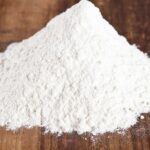
The main uses of calcium are structural and electrical. In your body, calcium builds bones and teeth and carries the signals that contract muscles, fire nerves and clot blood. Outside your body, calcium compounds make cement, clean steel, thicken plastics, treat water and set tofu.
Calcium is the fifth most abundant element in Earth’s crust, so people have been putting it to work for a very long time. This guide covers every major use, then the practical part: how much you need, where to get it, and what happens if you take too much.
Contents
- TLDR
- Uses of calcium in the human body
- Calcium in food and supplements
- Industrial uses of calcium
- Which form of calcium does what
- How much calcium you need
- Risks of too much calcium
TLDR
- In the body: bones and teeth (about 99% of your calcium), muscle contraction, nerve signalling, blood clotting, hormone release.
- In food: dairy, canned fish with bones, calcium-set tofu, fortified drinks, and some additives and preservatives.
- In industry: cement, steelmaking, paper and plastic filler, water treatment, farm soil, chalk and plaster.
- Daily target: 1,000 mg for most adults, 1,200 mg for women over 50 and everyone over 70, 1,300 mg for ages 9 to 18.
- Food first. Supplements help when your diet falls short, and too much causes its own problems.
Uses of calcium in the human body

Your body holds roughly a kilogram of calcium, and about 99% of it sits in your bones and teeth as a mineral called hydroxyapatite. That’s the hard, rigid part of the skeleton. Bone isn’t a static scaffold, though. It’s constantly broken down and rebuilt, and you reach peak bone mass in your late twenties or early thirties. After that, you’re mostly trying to hold on to what you built.
The remaining 1% does the fast work.
Muscle contraction. When a nerve signal reaches a muscle fibre, calcium ions flood into the cell and bind to a protein called troponin. That shifts the filaments inside the fibre so they can slide past each other and pull. No calcium, no contraction. That includes your heart, which depends on a calcium surge with every beat.
Nerve signalling. Calcium entering a nerve terminal is the trigger that makes it release neurotransmitters into the next cell.
Blood clotting. Several steps in the clotting cascade need calcium ions to work. It’s so central that labs add a calcium-binding chemical to blood samples to stop them clotting in the tube.
Hormones and cell signals. Cells use short bursts of calcium as a message that says “now.” Glands release hormones on that cue. Even a fertilized egg gets activated by a wave of calcium sweeping across it.
Because all of this is urgent, your body guards the level of calcium in your blood tightly. When it dips, parathyroid hormone tells your bones to release some from the stockpile. That’s why a diet low in calcium doesn’t show up on a blood test first. It shows up in your bones, years later.
Calcium in food and supplements

What the evidence supports
Getting enough calcium through childhood and the teenage years builds a stronger skeleton. In pregnancy, the WHO recommends calcium supplements for women whose diets are low in calcium, because they reduce the risk of pre-eclampsia. Those are the strong cases.
The weaker case is the one most people buy supplements for: preventing fractures in healthy adults. The NIH Office of Dietary Supplements notes that results from trials are mixed, and that supplements are most useful for people who aren’t getting enough from food. If your diet already covers your needs, extra pills add little.
Food sources
Some typical amounts, based on NIH figures:
| Food | Approximate calcium |
|---|---|
| Plain yogurt, 1 cup | 415 mg |
| Fortified orange juice, 1 cup | 350 mg |
| Canned sardines with bones, 3 oz | 325 mg |
| Milk, 1 cup | 300 mg |
| Calcium-set tofu, half a cup | 250 mg |
Leafy greens like kale, bok choy and collards help, too. Spinach is the famous exception. It contains plenty of calcium, but oxalate in the leaves binds most of it, so you absorb only a small fraction.
Calcium in the ingredient list
Food manufacturers use calcium compounds as tools. Calcium sulfate or calcium chloride curdles soy milk into tofu. Calcium chloride firms canned tomatoes and helps milk set into cheese. Calcium propionate keeps bread from molding. Cooks who make tortillas from scratch soak corn in calcium hydroxide, a process called nixtamalization, which also unlocks the corn’s niacin.
Absorption tips
- Spread it out. Your gut absorbs calcium best in doses of 500 mg or less at a time.
- Match the supplement to your meals. Calcium carbonate needs stomach acid, so take it with food. Calcium citrate works with or without a meal.
- Don’t skip vitamin D. It’s what lets your gut pull calcium out of food.
- Check your medications. Calcium can interfere with some antibiotics, thyroid medication and bisphosphonates. Ask a pharmacist about timing.
Industrial uses of calcium

Pure calcium metal is soft, silvery and reactive, so you rarely meet it. It was first isolated by Humphry Davy in 1808, and the Royal Society of Chemistry notes that its name comes from the Latin calx, meaning lime. That origin tells you where the real action is: limestone, lime and their relatives.
Cement and concrete. Limestone, which is mostly calcium carbonate, is the main raw ingredient in Portland cement. Kilns heat it to turn it into the calcium silicates that harden when mixed with water. Construction is the largest single consumer of calcium compounds.
Steelmaking. Lime acts as a flux in the furnace. It binds with impurities like silica and phosphorus and floats them off as slag. According to the US Geological Survey, steelmaking is one of the biggest markets for lime. Calcium metal itself is also used to strip oxygen and sulfur out of molten steel, and to reduce rare metals like thorium from their ores.
Plastics, paper and paint. Finely ground calcium carbonate is cheap, white and inert. Manufacturers add it to PVC pipe, paper coatings, paint and rubber as a filler and whitener.
Water treatment. Slaked lime (calcium hydroxide) raises pH, softens hard water and helps pull impurities out of sewage. Calcium hypochlorite is the granular chlorine used in swimming pools and as bleaching powder.
Farming. Agricultural lime neutralizes acidic soil so crops can take up nutrients. Gypsum, which is calcium sulfate, loosens clay soils and adds both calcium and sulfur.
Plaster, drywall and chalk. Gypsum, heated, becomes plaster of Paris. Sandwiched between paper, it becomes drywall. Natural chalk is calcium carbonate, as are the shells of clams, oysters and snails. Many classroom “chalk” sticks are actually gypsum, because it writes more cleanly.
Roads and labs. Calcium chloride melts ice at lower temperatures than rock salt and soaks up moisture, so it’s used for de-icing roads and as a drying agent in laboratories.
Light. Before electric bulbs, theaters lit their stages by heating a block of quicklime (calcium oxide) in a hot flame. It glowed intensely white. That’s the origin of “in the limelight.”
Which form of calcium does what
Calcium never shows up alone in nature. It always travels as a compound, and each compound has its own job.
| Compound | Common name | Main uses |
|---|---|---|
| Calcium carbonate | Limestone, chalk, marble, seashell | Cement, antacids, supplements, plastics filler, paper, soil treatment |
| Calcium oxide | Quicklime | Steelmaking, cement, water treatment, historic stage lighting |
| Calcium hydroxide | Slaked lime | Mortar, water and sewage treatment, nixtamalization |
| Calcium sulfate | Gypsum, plaster of Paris | Drywall, plaster, tofu, soil conditioner |
| Calcium chloride | Road de-icer | De-icing, drying agent, cheesemaking, canned vegetables |
| Calcium phosphate | Bone mineral | Bones and teeth, some supplements and fertilizers |
| Calcium hypochlorite | Pool chlorine | Disinfecting pools and water |
| Calcium citrate | Supplements, absorbed with or without food |
How much calcium you need
The NIH recommended daily amounts are:
| Age and group | Daily calcium |
|---|---|
| 1 to 3 years | 700 mg |
| 4 to 8 years | 1,000 mg |
| 9 to 18 years (including pregnancy and breastfeeding) | 1,300 mg |
| 19 to 50 years | 1,000 mg |
| Women 51 to 70 | 1,200 mg |
| Men 51 to 70 | 1,000 mg |
| Everyone 71 and older | 1,200 mg |
Teenagers need the most because they’re laying down skeleton at the fastest rate of their lives. Women’s needs rise after 50 because bone loss speeds up around menopause.
A quick way to check your own intake: a glass of milk or a cup of yogurt is roughly a third of a day’s target for an adult. Add a serving of fortified juice or tofu and you’re most of the way there.
Risks of too much calcium
More isn’t better. The upper limit is 2,500 mg a day for adults 19 to 50, and 2,000 mg for those over 50. Past that, you risk constipation, kidney stones and, in extreme cases, high blood calcium that disrupts the heart and kidneys.
The kidney stone story has a twist. Calcium from food actually lowers stone risk, because it binds oxalate in the gut before it reaches the kidneys. Calcium supplements, particularly taken apart from meals, are the form linked to higher risk. That’s another reason to treat food as the first source and pills as the top-up.
If you take prescription drugs, check for interactions before starting a supplement. If you’ve had kidney stones or a parathyroid condition, ask your doctor first.