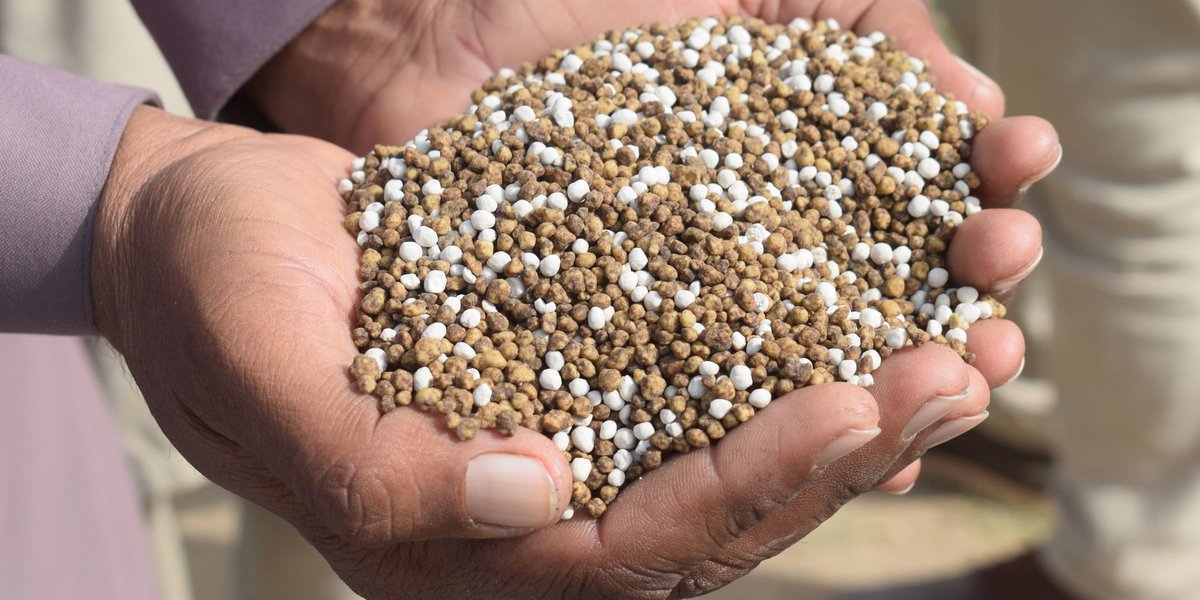
The most common examples of fertilizers are urea, ammonium sulfate, superphosphate, potassium chloride (muriate of potash), NPK blends, manure, compost and bone meal. The first four are inorganic (synthetic or mined). The last three come from living things. Below, each one gets its nutrient content, its source, and the situation where it earns its place.
TLDR
- Nitrogen: urea (46-0-0), ammonium nitrate (34-0-0), ammonium sulfate (21-0-0), blood meal (about 12-0-0).
- Phosphorus: triple superphosphate (0-46-0), single superphosphate (0-20-0), rock phosphate, bone meal.
- Potassium: potassium chloride (0-0-60), potassium sulfate (0-0-50), kelp meal.
- Compound: NPK blends like 10-10-10 and 20-20-20, plus DAP (18-46-0) and MAP (11-52-0).
- Organic: manure, compost, fish emulsion, guano, worm castings, alfalfa meal.
- Exam answer: “Two examples of fertilizers: urea and NPK” is correct. So is “manure and compost” if the question asks for organic ones.
Table of Contents
- How to read an N-P-K label
- Nitrogen fertilizers
- Phosphorus fertilizers
- Potassium fertilizers
- Compound and NPK fertilizers
- Organic fertilizer examples
- Liquid fertilizers
- Comparison table
- Organic vs synthetic fertilizers
- Side effects: runoff and fertilizer burn
How to read an N-P-K label
Every bag carries three numbers, such as 10-5-5. They are the percentages by weight of nitrogen (N), phosphorus (P, expressed as P2O5) and potassium (K, expressed as K2O). Oregon State’s guide to N-P-K lists these three as the major nutrients plants take up, with calcium, magnesium and sulfur as secondary ones.
The math is simple. A 5-pound bag of 10-5-5 holds 0.5 pounds of nitrogen. A 100-pound sack of urea holds 46 pounds. That is why urea is cheap to ship per unit of nitrogen, and why a gardener needs far less of it than of compost.
What each nutrient does:
- Nitrogen drives leaf and stem growth and makes up the chlorophyll that turns leaves green.
- Phosphorus supports root development, flowering and fruiting.
- Potassium regulates water movement in the plant and helps it resist disease and stress.
Nitrogen fertilizers
Nitrogen is the nutrient plants burn through fastest, so these are the most widely used examples of fertilizers on the planet. Most synthetic nitrogen starts as ammonia made by the Haber-Bosch process, developed by Fritz Haber (Nobel Prize in Chemistry, 1918) and scaled up by Carl Bosch. For the chemistry of each nitrogen compound, see nitrogen compounds, class by class.
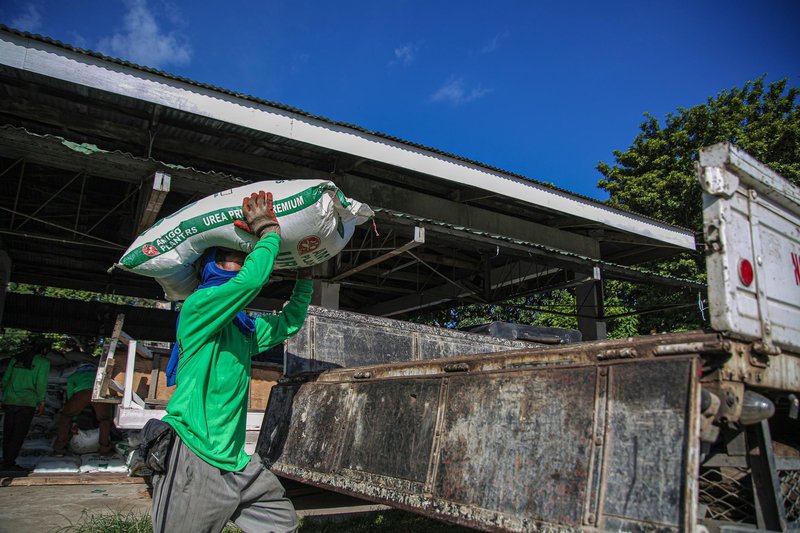
Urea (46-0-0). The highest nitrogen content of any common solid fertilizer. It is made from ammonia and carbon dioxide, comes as small white prills, and dissolves readily in water. Soil microbes convert it to ammonium and then nitrate. On warm, wet soil it can lose nitrogen as ammonia gas if left on the surface, so work it in or water it after applying. Best for lawns, corn, wheat and rice.
Ammonium nitrate (34-0-0). Half the nitrogen is in the ammonium form and half in the nitrate form, so some is available to roots immediately and some lasts longer. It is a strong oxidizer and has been regulated in many countries because it can be used in explosives. Home gardeners rarely see it now.
Ammonium sulfate (21-0-0, with about 24% sulfur). Lower in nitrogen but it supplies sulfur, which many soils lack. It also acidifies soil, which makes it a good pick for blueberries, azaleas and other acid-loving plants, and a poor pick for soil that is already acidic.
Calcium nitrate (15.5-0-0). Supplies nitrogen plus calcium. Growers use it on tomatoes and peppers to head off blossom-end rot, which is a calcium problem.
Anhydrous ammonia (82-0-0). The most concentrated nitrogen fertilizer, stored as a pressurized gas and injected into the soil by farm equipment. Not a home-garden product.
Sodium nitrate, or Chilean nitrate (16-0-0). Mined from the Atacama Desert, and the original commercial nitrogen fertilizer before Haber-Bosch. It is a natural mineral, so some organic standards allow limited use. Sodium builds up in soil with repeated use.
Phosphorus fertilizers
Phosphorus moves slowly through soil, so it is placed near roots rather than spread thin. Most phosphate fertilizer starts as rock phosphate, which is treated with acid to make the phosphorus soluble.
Single superphosphate (0-20-0). Rock phosphate treated with sulfuric acid. It also carries calcium and sulfur. The oldest manufactured fertilizer, first produced in England in the 1840s.
Triple superphosphate (0-46-0). Made with phosphoric acid instead, giving more than double the phosphorus. Common in crop and vegetable production.
Diammonium phosphate, DAP (18-46-0), and monoammonium phosphate, MAP (11-52-0). Both give nitrogen and phosphorus in one granule. DAP is the world’s most widely traded phosphate fertilizer. It makes soil slightly alkaline near the granule, and MAP slightly acidic, which affects how well seedlings tolerate them.
Rock phosphate (about 0-3-0 available). Finely ground raw mineral, accepted in organic farming. Its phosphorus is locked up unless the soil is acidic (below about pH 6), so it works slowly or not at all in neutral and alkaline soil.
Bone meal (about 3-15-0). Steamed, ground animal bones. A slow-release organic phosphorus and calcium source, often added to planting holes for bulbs and roses. Numbers vary by brand.
Potassium fertilizers
Potassium chloride, muriate of potash (0-0-60). The most common potassium fertilizer, mined from ancient salt deposits. Cheap and concentrated, but it carries chloride, which can stress chloride-sensitive crops like potatoes, tobacco and some fruit.
Potassium sulfate, sulfate of potash (0-0-50, with about 18% sulfur). Costs more, but it has no chloride. A better choice for strawberries, grapes, tomatoes and other sensitive crops.
Sulfate of potash-magnesia, Sul-Po-Mag (0-0-22). Adds magnesium and sulfur. It is a standard fix for magnesium-poor soils.
Kelp meal (about 1-0-2). Dried seaweed. Low in the big three, rich in trace elements. Use it as a supplement, not a main feed.
Wood ash. Supplies potassium and raises soil pH, so use it sparingly and only on acidic soil. Don’t spread it near acid-loving plants.
Compound and NPK fertilizers
A compound fertilizer contains two or more of the major nutrients in a single granule. The most common examples of fertilizers on a garden-center shelf fall here.
Balanced NPK blends (10-10-10, 20-20-20). Equal parts N, P and K. These are the generic “all-purpose” choice. They suit a first feed when you don’t know what your soil lacks, but a soil test is a better guide. The University of Minnesota’s advice on choosing a fertilizer is to match the product to soil test results and avoid adding more phosphorus than the test calls for.
Lawn fertilizers (for example 24-0-6). High nitrogen, little or no phosphorus, because lawns usually have enough phosphorus already.
Tomato and flower fertilizers (for example 5-10-10). Lower nitrogen with more phosphorus and potassium, to favor fruit and blooms over leaf.
Controlled-release granules (Osmocote is the best-known brand). Each granule is coated in a polymer shell that releases nutrients as water and warmth pass through. One application can last for months.
Organic fertilizer examples
Organic fertilizers come from plants, animals or minerals and are low in nutrients by weight. Their value is slow release and the improvement they bring to soil structure. Numbers vary a lot between batches. For a longer catalogue of organic options, see the complete list of organic fertilizers.
Compost (about 1-1-1). Decomposed plant matter. Barely a fertilizer in the numbers, but it feeds soil life and holds water.
Cow manure (about 1-0.5-1). Gentle and bulky. Low in nitrogen, high in organic matter. Compost it first or apply it in autumn so it does not burn plants or carry weed seeds into beds.
Chicken manure (about 3-2-2). Much richer than cow manure and also hotter. Fresh poultry manure can scorch roots, so age it for several months.
Blood meal (about 12-0-0). Dried slaughterhouse blood. One of the fastest-acting organic nitrogen sources, and one of the easiest to overdo.
Bat guano (about 10-3-1) and seabird guano. Droppings mined from caves and islands. Bat guano is nitrogen-heavy and used for leafy growth; high-phosphorus guano suits flowering.
Worm castings (about 1-0-0). Gentle enough to put straight in a seed-starting mix.
Alfalfa meal (about 2-1-2). Ground alfalfa hay. It also contains triacontanol, a natural growth stimulant, which is why rose growers like it.
Liquid fertilizers
Liquid fertilizers dissolve in water and are applied to soil or sprayed on leaves. They act in days instead of weeks.
Fish emulsion (about 5-1-1). Made from processed fish waste. It works quickly and smells for a day or two.
Liquid seaweed. Low in N-P-K, high in micronutrients and plant hormones. Used as a foliar spray.
Water-soluble synthetic powders (Miracle-Gro All Purpose is 24-8-16). Mix into a watering can. Widely used for container plants, which drain nutrients quickly.
Compost tea. Compost steeped in water. Evidence on its nutrient value is mixed, and results depend heavily on the compost.
Comparison table
| Fertilizer | Type | N-P-K | Release speed | Best use |
|---|---|---|---|---|
| Urea | Synthetic nitrogen | 46-0-0 | Fast | Lawns, grain crops |
| Ammonium sulfate | Synthetic nitrogen | 21-0-0 | Fast | Acid-loving plants |
| Triple superphosphate | Synthetic phosphorus | 0-46-0 | Medium | Root crops, new beds |
| Potassium chloride | Mineral potassium | 0-0-60 | Fast | Most field crops |
| Potassium sulfate | Mineral potassium | 0-0-50 | Fast | Chloride-sensitive crops |
| DAP | Compound | 18-46-0 | Fast | Starter fertilizer |
| 10-10-10 | Compound | 10-10-10 | Fast | General garden use |
| Osmocote | Controlled-release | 14-14-14 (Classic) | Slow, months | Containers, bedding |
| Compost | Organic | about 1-1-1 | Very slow | Soil building |
| Chicken manure | Organic | about 3-2-2 | Medium | Vegetable beds (aged) |
| Blood meal | Organic | about 12-0-0 | Fast | Nitrogen boost |
| Bone meal | Organic | about 3-15-0 | Slow | Bulbs, roses |
| Fish emulsion | Organic liquid | about 5-1-1 | Fast | Seedlings, containers |
| Rock phosphate | Mineral | low available P | Very slow | Acidic soils |
Organic vs synthetic fertilizers
The plant takes up the same ions either way. A nitrate ion from urea is chemically identical to one from chicken manure. The differences are practical.
- Concentration. Synthetic fertilizers carry 20 to 82% nitrogen. Organic ones carry roughly 1 to 12%, so you apply much more material.
- Predictability. Synthetic labels are exact. Organic numbers are averages, and nutrient release depends on soil temperature and microbes.
- Soil effects. Organic materials add humus, which improves water retention and structure. Synthetic ones add only nutrients.
- Speed. Synthetic nitrogen is available at once. Organic nitrogen must be mineralized by microbes first, which can take weeks.
- Risk. Soluble synthetic fertilizers burn roots when overapplied. Fresh manure does too.
Neither is better in every case. Vegetable gardeners often use compost for soil and a nitrogen booster for hungry crops like corn and squash.
Side effects: runoff and fertilizer burn
Nutrients that plants don’t use go somewhere else. Nitrate leaches into groundwater, and phosphorus attached to soil particles washes into streams and lakes, where it feeds algal blooms. The University of Maryland’s garden fertilizer guidance notes that phosphorus can build up in soil and move into waterways, especially on sloped ground. Many US states now restrict phosphorus on lawns for this reason.
Fertilizer burn is the other common failure. Soluble fertilizers are salts, and too much pulls water out of roots. The symptoms are brown leaf tips and wilting in the days after application. The fix is to water deeply and to apply at the rate on the label, not more. A soil test before you buy tells you what the soil actually lacks, and it often shows that phosphorus is already plentiful.