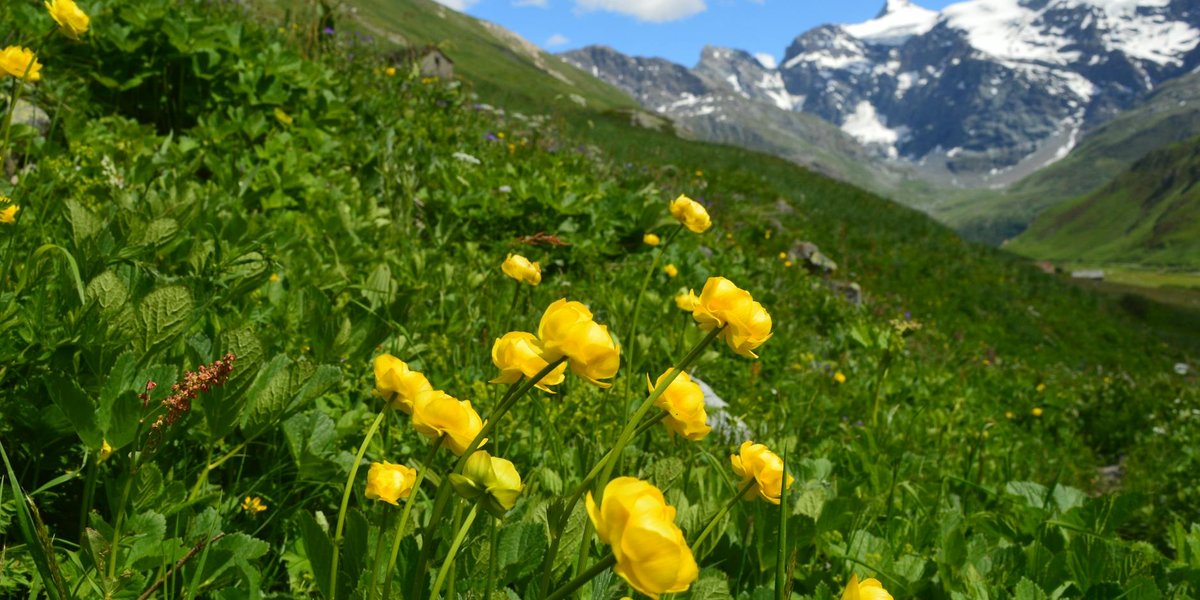
Type “endemic plants of Ukraine” into a search bar and you get journal papers. Taxonomic checklists. A data table announcing 76 endemic species across 49 genera, written for people who already own a flora key and a hand lens. Useful if you’re a botanist. Useless if you just want to know which plants grow in Ukraine and nowhere else on Earth, and why that’s the case.
So here’s the readable version.
Ukraine sits on roughly 4,600 native vascular plant species, and a surprising slice of them are endemics, found within its borders and nowhere else. They cluster in two places: the Ukrainian Carpathians in the west, and the Crimean Mountains in the south. Both are mountain ranges, and that’s not a coincidence. Mountains isolate populations the way islands do. A plant stranded on one limestone plateau, cut off by valleys and climate from its nearest relatives, slowly becomes its own thing.
Below are 12 of them. Some you could spot on a summer hike. Others survive as a few hundred individuals clinging to a single cliff face.
Table of Contents
- Why Ukraine has so many endemics
- Endemics of the Ukrainian Carpathians
- Carpathian buttercup
- Carpathian rampion
- Rocky cow-wheat
- Alternate-leaved thyme
- Carpathian bellflower
- Endemics of the Crimean Mountains
- Yaila catchfly
- Crimean dead-nettle
- Crimean edelweiss
- Crimean crocus
- Bieberstein’s crocus
- Steven’s maple
- Crimean iris
- What war does to a flora
Why Ukraine has so many endemics
Endemism is mostly a story about isolation plus time. A species becomes endemic when its population gets separated from everything related to it long enough to evolve into something distinct, and then never spreads beyond that pocket.
The Ukrainian Carpathians are a biodiversity engine on their own. Around 2,532 vascular plant species grow there, close to half of Ukraine’s entire flora packed into a single mountain system. The Carpathians acted as a refuge during the Ice Ages, sheltering plants while glaciers reworked the lowlands, then handing them isolated peaks to diversify on once the ice pulled back. Estimates of how many species are strictly endemic range from about 70 up to 125 or more, depending on how narrowly you define “endemic,” according to a nomenclatural checklist published in PhytoKeys. The same mountain arc keeps generating endemics on the far side of the border, too, where Poland’s slice of the Carpathians shelters its own list of plants and animals found nowhere else, a reminder that the range as a whole works like one long isolation engine.
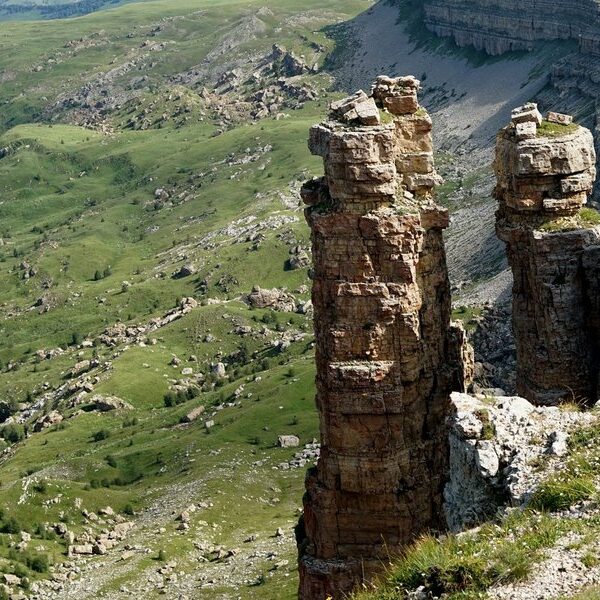
Crimea is the other hotspot, and it’s the one general-audience articles forget. The peninsula holds roughly 280 endemic species, about 10% of its flora, with the densest concentration on the yaila, the high limestone plateaus of the Crimean Mountains. Petrophytes, plants that live on bare stone, dominate the list. A bare cliff is a tiny, hard-to-reach world. Colonize one and you may never leave.
The two regions barely overlap in their endemic species, which is why a guide to one is only half the story.
Endemics of the Ukrainian Carpathians
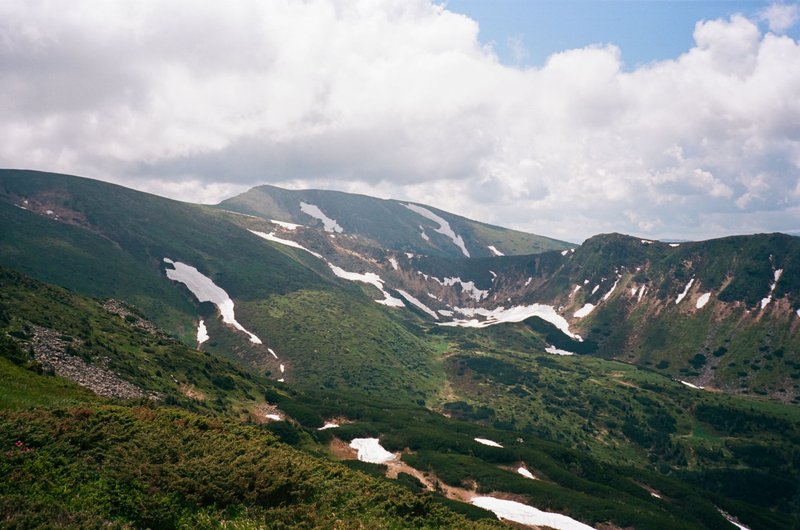
The Carpathian endemics lean toward alpine meadows, scree slopes, and the subalpine zone above the treeline. Many are listed in the Red Book of Ukraine, the national register of threatened species. In the Gorgany reserve alone, 34 higher vascular plant species are Red Book listed, roughly a fifth of all the protected plants the Carpathians shelter.
1. Carpathian buttercup (Ranunculus carpaticus)
A mountain buttercup that doesn’t stray from the Carpathian arc. It favors damp subalpine meadows and the edges of mountain streams, where the soil stays cool and wet through summer. The flowers are the standard glossy yellow of any buttercup, which is exactly the problem for spotting it: it looks ordinary until you check the leaf shape and realize you’re looking at something that grows on no other mountain range.
2. Carpathian rampion (Phyteuma tetramerum)
A bellflower relative with dense, spiky heads of deep blue-violet flowers, packed tight like a small bottlebrush. It grows in subalpine meadows and rocky grasslands. The “tetramerum” refers to its flower parts arranged in fours, the detail that separates it from the wider-ranging rampions across the rest of Europe.
3. Rocky cow-wheat (Melampyrum saxosum)
Cow-wheats are partial parasites: they photosynthesize, but they also tap the roots of neighboring plants for water and nutrients. This one specializes in rocky, stony ground, hence saxosum, from the Latin for “full of rocks.” It’s a quiet example of how endemics often carve out a narrow technical niche, in this case a specific lifestyle on a specific substrate, that keeps them pinned to one region.
4. Alternate-leaved thyme (Thymus alternans)
A creeping, mat-forming thyme that hugs rocky slopes and releases the familiar sharp scent when you brush it. Thymes are notoriously hard to tell apart, and this one is a Carpathian specialist defined partly by its alternating leaf arrangement. It’s the kind of plant a casual hiker walks straight over without realizing it grows nowhere else.
5. Carpathian bellflower (Campanula carpatica)
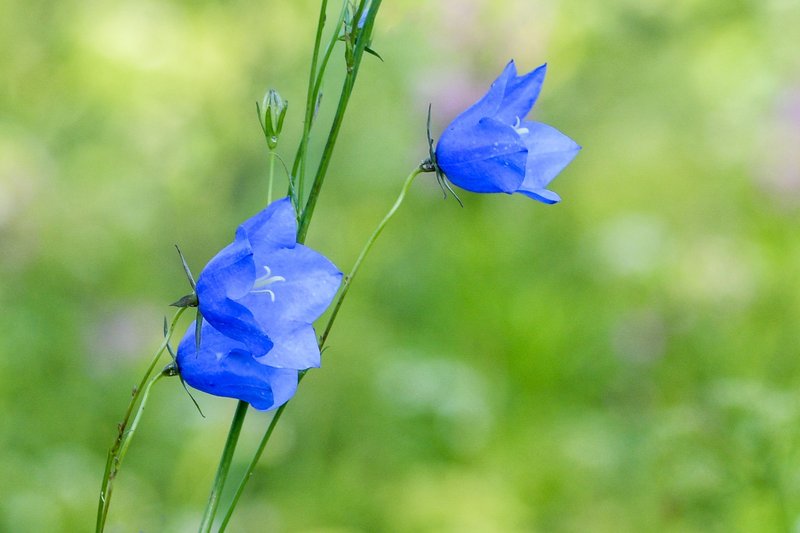
The most recognizable name on this list, partly because gardeners adopted it. The wild plant grows on limestone cliffs and rocky ledges in the Carpathians, producing open, upward-facing bell-shaped flowers in blue and violet. Centuries of cultivation mean you can buy Carpathian bellflowers at a garden center on another continent, but the original populations remain tied to these specific mountain rocks.
Endemics of the Crimean Mountains
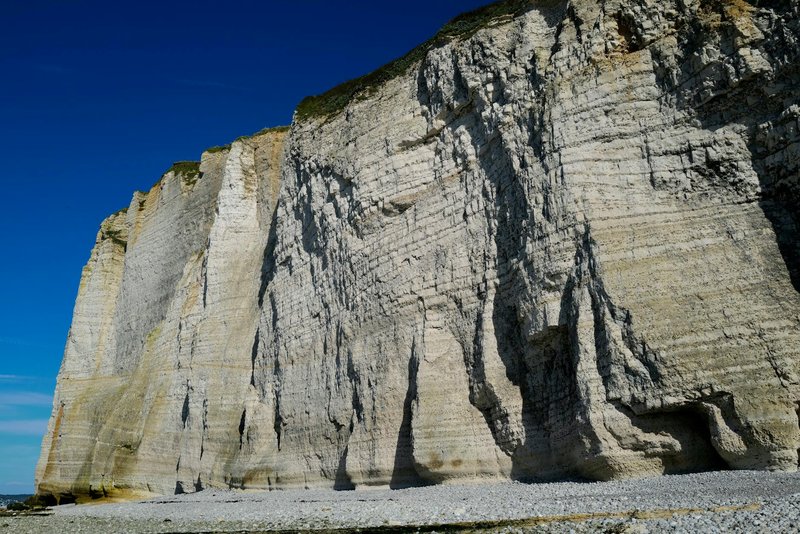
The Crimean endemics are a different cast: stone-dwellers of the yaila plateaus, many with tiny populations restricted to a handful of cliffs. The flora of the yailas is unusually rich in narrow endemics, plants confined to an area so small that losing one site can mean losing the species.
6. Yaila catchfly (Silene jailensis)
The poster child for Crimean fragility. Silene jailensis is an obligate petrophyte, meaning it can only live on bare rock, and it clings to small stony habitats on the Crimean yaila. Its populations are naturally tiny, regulated by internal limits rather than outside pressure, and researchers studying the Nikitskaya Yaila population have flagged weak seed renewal, a worrying sign for a plant that already exists in such small numbers. It’s listed in the Red Book of Ukraine and maintained in laboratory gene banks as a hedge against extinction.
7. Crimean dead-nettle (Lamium glaberrimum)
A member of the mint family, smooth-leaved (glaberrimum means “very smooth” or “hairless”), found only in the Crimean mountains. Like Silene jailensis, it’s a conservation priority that botanists have propagated in vitro, growing plantlets in sterile culture to preserve the genetics when the wild population is too small to risk. Two endemics from the same plateau, both kept alive partly in a lab.
8. Crimean edelweiss (Cerastium biebersteinii)
Not a true edelweiss at all, but a chickweed dressed up like one. Cerastium biebersteinii wears a dense coat of silvery-white hairs that give it the same fuzzy, frosted look as the alpine edelweiss, an adaptation to the bright, dry, exposed conditions on the yaila. It’s widespread across the Crimean plateaus and found nowhere else, and it’s another plant that escaped into gardens as a silver ground cover.
9. Crimean crocus (Crocus angustifolius)
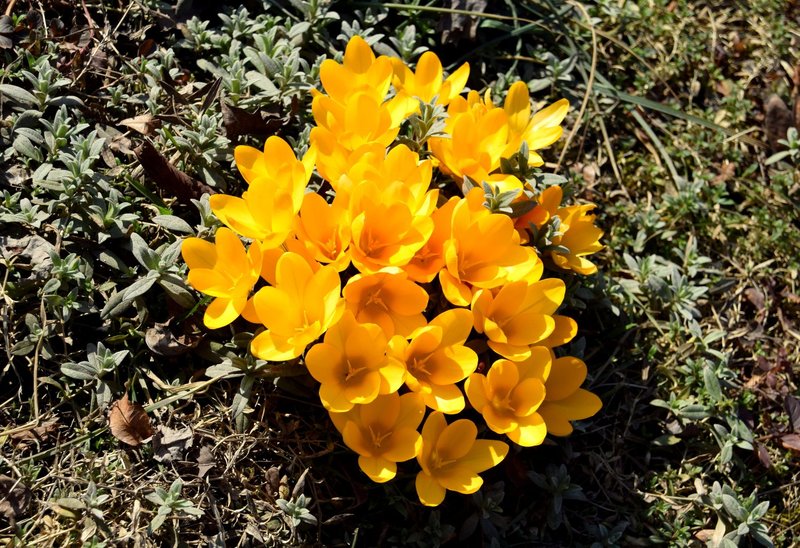
A narrow-leaved crocus (angustifolius means “narrow-leaved”) that pushes up golden-yellow, often bronze-streaked flowers in early spring. It’s recorded in the Red Book of Ukraine. Spring-flowering bulbs like this one are especially vulnerable to collection and habitat disturbance, because the showy flower is the easiest thing in the world to spot and dig up.
10. Bieberstein’s flora and the yaila grasslands
The yaila isn’t just cliffs. The plateau grasslands run to about 500 species, threaded with Volga fescue, brome grasses, junegrass, feather grass, violets, and clover. Inside that grassy matrix sit the narrow endemics, which is part of why they’re hard to protect: you can’t fence off a single rare plant without preserving the whole grassland system that surrounds it. Conservation here is all-or-nothing.
11. Steven’s maple (Acer stevenii)
A small endemic maple of the Crimean mountain forests, named for Christian Steven, the botanist who founded the Nikitsky Botanical Garden in Crimea in 1812. Endemic trees are rarer than endemic herbs, because trees disperse seed widely and tend to spread across regions. A maple that stayed put in one mountain range is genuinely unusual.
12. Crimean iris (Iris taurica)
A dwarf iris of the Crimean steppe-forest fringe, taurica referring to Tauris, the classical name for Crimea. It throws up violet-to-yellow flowers low to the ground in spring. Like the crocus, its beauty is its liability: ornamental, easy to find, easy to lose.
What war does to a flora
Most threats to endemic plants are slow: a warming climate nudging alpine species off the tops of their mountains, grazing pressure, collectors. The Red Book of Ukraine was built to track exactly these pressures, and the Carpathian reserves like Gorgany exist to hold the line.
Then there’s the threat almost nobody plans for. A large share of Ukraine’s strict endemics, the Silene jailensis and Lamium glaberrimum of the yaila, sit in Crimea, a region that has been occupied since 2014 and effectively cut off from Ukrainian conservation science. You can’t monitor seed renewal on a cliff you can’t reach. Russia’s full-scale invasion in 2022 added direct damage across the country: shelling, fires, mined nature reserves, and military activity inside protected areas, as conservation groups including Plantlife have documented. A plant that survives on a single Crimean plateau has no margin for a front line moving across it.
That’s the real reason the lab cultures and gene banks matter. For some of these species, a few frozen plantlets in a sterile flask may be the most secure population that exists. The endemic flora of Ukraine is a record of millions of years of isolation doing its slow work, and right now part of that record is being kept alive on a shelf, waiting for the day someone can plant it back on its cliff.