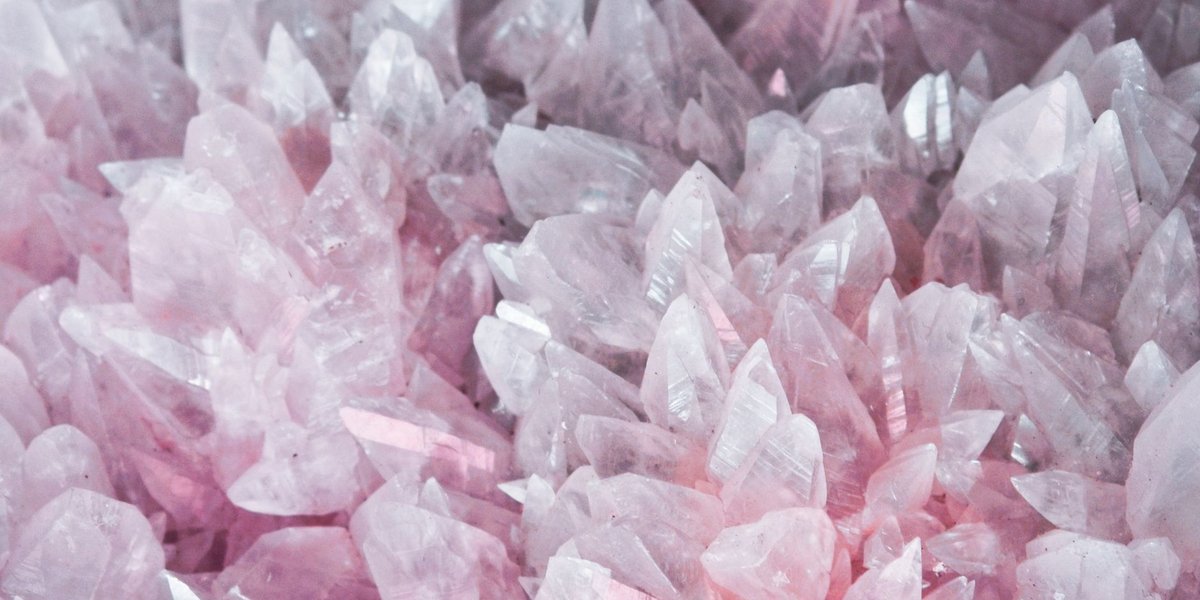
Erbium compounds are almost all pink. The oxide, the nitrate, the sulfate and the fluoride all come out some shade of rose, and the chloride and iodide lean violet. That color is the clue to everything else on this page: it comes from the same electron behavior that lets a pinch of erbium carry your internet traffic across an ocean.
This guide covers the main erbium compounds, what each one looks like, how it’s made, and where it ends up. A quick-reference table comes first, then the details.
Contents
- Quick-reference table
- Why erbium chemistry is simple
- Why erbium compounds are pink
- Erbium oxide (Er2O3)
- Erbium chloride, fluoride and iodide
- Nitrate, sulfate and oxalate
- Rarer compounds
- Where erbium compounds get used
- Safety and handling
- Summary
Quick-reference table
| Compound | Formula | Color | Water solubility | Main use |
|---|---|---|---|---|
| Erbium(III) oxide | Er2O3 | Pink | Insoluble | Glass and ceramic colorant, dopant source |
| Erbium(III) chloride | ErCl3 | Violet to pink | Soluble | Precursor to erbium metal and other compounds |
| Erbium(III) fluoride | ErF3 | Pink | Insoluble | Optical coatings, fluoride glass fibers |
| Erbium(III) iodide | ErI3 | Violet | Soluble | Research, lighting chemistry |
| Erbium(III) nitrate | Er(NO3)3 | Pink | Soluble | Starting material for doped materials |
| Erbium(III) sulfate | Er2(SO4)3 | Pink | Soluble | Laboratory salt, separation chemistry |
| Erbium(III) oxalate | Er2(C2O4)3 | Pink | Insoluble | Intermediate that is heated to make the oxide |
Hydrates change the exact shade and the formula you’ll see on a bottle. The sulfate, for example, usually comes as an octahydrate.
Why erbium chemistry is simple
Erbium sits in the lanthanides, the row of rare earth elements that most periodic tables park below the main block. Nearly every erbium compound you’ll meet contains the Er3+ ion. The element gives up three electrons and stops there.
That’s the reason the formulas look so repetitive: Er2O3, ErCl3, ErF3, ErI3. Pair a 3+ ion with a 2-, 1- or 3- partner and the ratios follow. Compare that with iron or manganese, which swap between several oxidation states and produce a zoo of oxides. Erbium rarely does. Lower oxidation states exist in a few unusual halides and organometallics, but they’re lab curiosities.
The Royal Society of Chemistry lists erbium as element 68, and the NIH’s PubChem element page has the physical data if you want the numbers behind the table.
Why erbium compounds are pink
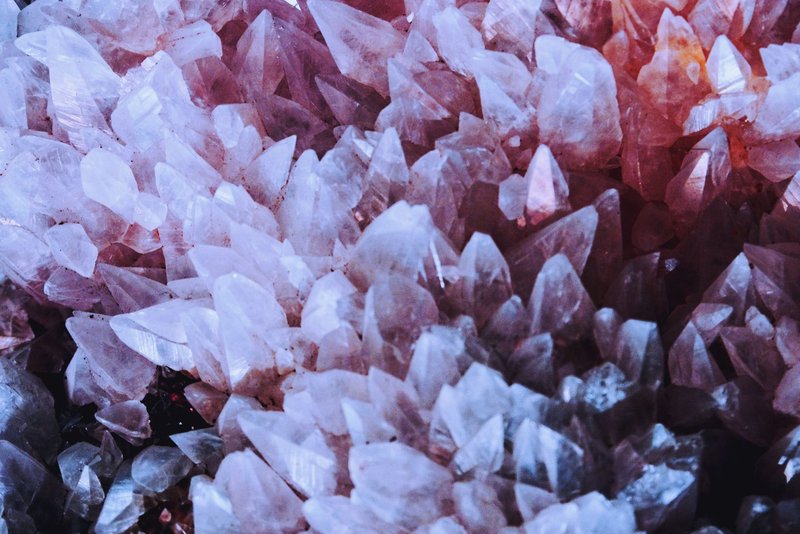
Most colored metal compounds get their color from outer electrons that move between orbitals and absorb broad slices of visible light. Copper sulfate is blue for this reason. Erbium works differently.
In Er3+, the electrons responsible for color sit in the 4f orbitals, which are buried under filled 5s and 5p shells. The surrounding atoms barely disturb them. So the ion absorbs light only at a handful of very narrow wavelengths, in the blue-green region and a few others, and lets the rest through. What’s left is pink.
Two consequences follow. First, the color barely changes from one erbium compound to the next, so a pink powder is a decent hint that erbium is present. Second, those narrow absorption lines make erbium useful in optics: a glass doped with it blocks specific wavelengths and passes others, and the same 4f transitions give it a sharp emission in the infrared.
Neighboring rare earths show the same trick in other colors. Holmium compounds run yellowish, and thulium compounds tend toward pale green. Erbium is the pink one.
Erbium oxide (Er2O3)
This is the compound you’re most likely to see. Erbium oxide is a pink powder that doesn’t dissolve in water and melts around 2,300 °C, which is why it survives glassmaking and ceramic firing without trouble.
It’s made by heating almost any other erbium compound in air. Roast the oxalate, nitrate or hydroxide and you get Er2O3. Because it’s the stable end product, it’s also the form in which erbium is usually sold and shipped before being converted into metal or other salts.
Its uses are straightforward. Glassmakers add it to give a pink tint, and it works in glazes and enamels for the same reason. It’s also the standard raw material for erbium dopants in fiber optics and laser crystals, where it’s mixed in at tiny concentrations.
Erbium chloride, fluoride and iodide
Erbium(III) chloride (ErCl3). Violet-pink crystals that soak up water from the air, so it’s usually handled as a hexahydrate or kept dry in a glovebox. The anhydrous form melts near 774 °C. Metallurgists use it as a precursor: reduce the chloride with a more reactive metal and you get erbium metal. Getting the dry version isn’t as simple as heating the hydrate, because that tends to produce an oxychloride, so chemists typically use ammonium chloride or similar routes.
Erbium(III) fluoride (ErF3). A pink solid that doesn’t dissolve in water. Fluorides matter in optics because they transmit infrared light well, and ErF3 shows up in fluoride glass fibers and thin-film coatings. It forms as a precipitate when you add fluoride ions to a soluble erbium salt.
Erbium(III) iodide (ErI3). Violet and water-soluble. It’s a research compound and appears in some specialty metal halide lamp formulations, where rare earth iodides tune the color of the light.
Nitrate, sulfate and oxalate
These three are the workhorses of the lab bench rather than the factory floor.
Erbium(III) nitrate is a pink, very soluble salt. It’s a convenient starting point when you want to dissolve erbium and then precipitate or deposit it somewhere else, such as into a sol-gel glass or onto a ceramic powder.
Erbium(III) sulfate forms pink crystals, usually as the octahydrate. It dissolves in water, though its solubility drops as the solution warms, which is a trait it shares with several other rare earth sulfates.
Erbium(III) oxalate is the one that matters for purification. It’s insoluble, so adding oxalic acid to a solution of rare earth salts pulls erbium out as a pink precipitate. Filter it, then heat it, and it breaks down to Er2O3. This precipitate-then-roast route is a standard way to turn dissolved erbium into oxide.
Rarer compounds
Erbium forms hydrides (ErH2 and ErH3), borides, carbides and nitrides, mostly studied in materials research. Erbium nitride (ErN) is a rock-salt-structure solid that physicists study for its magnetic behavior at low temperature.
Organoerbium compounds, where the metal bonds to carbon-based ligands, are the exotic end of the family. Tris(cyclopentadienyl)erbium is the classic example. These compounds react with air and moisture, so they’re made and handled under inert gas. Researchers mainly use them as precursors for depositing thin films of erbium-containing materials.
Where erbium compounds get used
Fiber amplifiers
This is erbium’s biggest job. An erbium-doped fiber amplifier (EDFA) is a length of ordinary optical fiber with a small amount of Er3+ mixed into the glass core. A pump laser, typically at 980 or 1480 nanometers, excites the erbium ions. When a weak signal arrives at about 1550 nm, the ions release their stored energy into it and the signal comes out stronger.
The wavelength is the whole point. Silica fiber loses the least light near 1550 nm, and erbium happens to emit right there. The amplifier works on light directly, with no conversion to an electrical signal and back, and it amplifies many wavelengths at once. That combination, developed in the late 1980s by groups at the University of Southampton and Bell Labs, made long-distance undersea cables practical at the capacity we use now.
The erbium arrives as the oxide or a salt, gets mixed into the glass at a concentration of a few hundred parts per million, and the rest is fiber drawing.
Lasers
The Er:YAG laser uses a yttrium aluminum garnet crystal doped with Er3+ and emits at 2,940 nm. Water absorbs that wavelength very strongly, so the beam is stopped in the first fraction of a millimeter of tissue. That’s why Er:YAG lasers are used in dentistry and skin resurfacing: they remove thin layers with limited heat spreading into the surrounding tissue.
Erbium-doped glass lasers emit near 1535 nm. That band is absorbed before it reaches the retina, which makes it far safer for eyes than other common infrared lasers. Military and surveying rangefinders use it for that reason.
Glass, sunglasses and goggles
Pink glass is the visible, everyday use. Erbium oxide in glass gives a soft rose color that doesn’t fade, since it’s an ion in the glass structure and not a surface dye. The same narrow absorption lines make erbium-doped glass useful in filters and protective eyewear. Some sunglass lenses and welding goggles use rare earth additions, erbium among them, to absorb parts of the spectrum while keeping colors readable.
Other uses
Erbium also goes into nuclear control materials, small additions to vanadium alloys to make them easier to work, and colored ceramic glazes. These are minor volumes next to optics.
Safety and handling
Erbium compounds are considered low to moderately toxic. Soluble salts like the chloride and nitrate are more of a concern than the insoluble oxide, but none of them rank with lead or cadmium compounds.
The practical risks are modest. Fine powders irritate the eyes, skin and lungs, so wear gloves and eye protection and avoid making dust. Nitrate salts are oxidizers and can intensify a fire. Organoerbium compounds and finely divided erbium metal react with air and water and need inert-gas handling. Check the safety data sheet for the specific compound before you handle it.
Summary
Erbium compounds are simple because Er3+ is almost the only ion involved. They’re pink because the 4f electrons absorb light at narrow, sharply defined wavelengths. The oxide is the common commercial form, the chloride is the route to the metal, the oxalate is the purification step, and the fluoride and organometallics serve optics and research.
What makes this element worth knowing is that the same ion does the coloring in a pink glass and the amplifying in an undersea cable. Pick up a pink erbium compound and you’re holding a material that is quietly doing both jobs.