A pathogen is any microorganism or infectious agent that causes disease in a host. That covers bacteria, viruses, fungi, protozoa, parasitic worms and one odd outlier made of nothing but misfolded protein. The word comes from the Greek pathos (suffering) and genes (producer), which is a fair summary of the job description.
TL;DR
- Six main types: bacteria, viruses, fungi, protozoa, helminths (parasitic worms) and prions.
- Spread: through the air, water, food, bites from vectors like mosquitoes, and direct contact with people, animals or blood.
- Damage: pathogens harm you by killing cells, releasing toxins, or triggering an immune response that does collateral damage.
- Treatment depends on type: antibiotics only hit bacteria, antivirals and antifungals are narrow, and prions have no cure.
- Most effective defense: blocking the route of transmission. Handwashing, clean water, vaccines and food handling beat treatment.
Contents
- Pathogen, parasite, germ: what’s the difference?
- The six types of pathogens compared
- How pathogens spread
- How pathogens make you sick
- Pathogens and the immune system
- Pathogens beyond humans
- Treatment and prevention by type
- Pathogens FAQ
Pathogen, parasite, germ: what’s the difference?
These three words get used as synonyms. They aren’t.
Pathogen describes an outcome: something that causes disease. Parasite describes a lifestyle: an organism that lives on or in another and feeds at its expense. Germ is a casual word with no scientific definition, though people usually mean bacteria and viruses.
The categories overlap. A tapeworm is a parasite and a pathogen. A malaria protozoan is both. But your gut is full of bacteria that are neither, and many of them live in mutualistic partnerships with you, and plenty of parasites cause little obvious harm.
Context also matters. Escherichia coli lives in your intestines doing useful work, yet certain strains such as O157:H7 produce a toxin that can wreck your kidneys. Some microbes only turn pathogenic when your defenses drop, like Pseudomonas aeruginosa in a burn wound or Candida in someone on chemotherapy. These are called opportunistic pathogens. Pathogenicity is not a fixed trait of the organism. It depends on the organism, the dose, the route and the host.
The six types of pathogens compared
Here is the side-by-side most explainers skip.
| Type | Typical size | How it replicates | Example diseases | Main treatment |
|---|---|---|---|---|
| Bacteria | 1 to 5 micrometres | Divides on its own (binary fission) | Cholera, tuberculosis, strep throat | Antibiotics |
| Viruses | 20 to 300 nanometres | Hijacks host cells to copy itself | Influenza, measles, HIV, COVID-19 | Vaccines, antivirals |
| Fungi | 3 to 10 micrometres (yeasts); far longer for molds | Spores, budding or growth of filaments | Athlete’s foot, ringworm, Candida auris infections | Antifungals |
| Protozoa | 10 to 50 micrometres | Divides inside or outside host cells | Malaria, giardiasis, sleeping sickness | Antiprotozoal drugs |
| Helminths (parasitic worms) | Millimetres to metres | Lay eggs or larvae | Tapeworm, hookworm, schistosomiasis | Antiparasitic drugs |
| Prions | No cell; a single protein | Misfolded protein forces normal copies to misfold | Creutzfeldt-Jakob disease, mad cow disease | None |
A few details the table can’t carry:
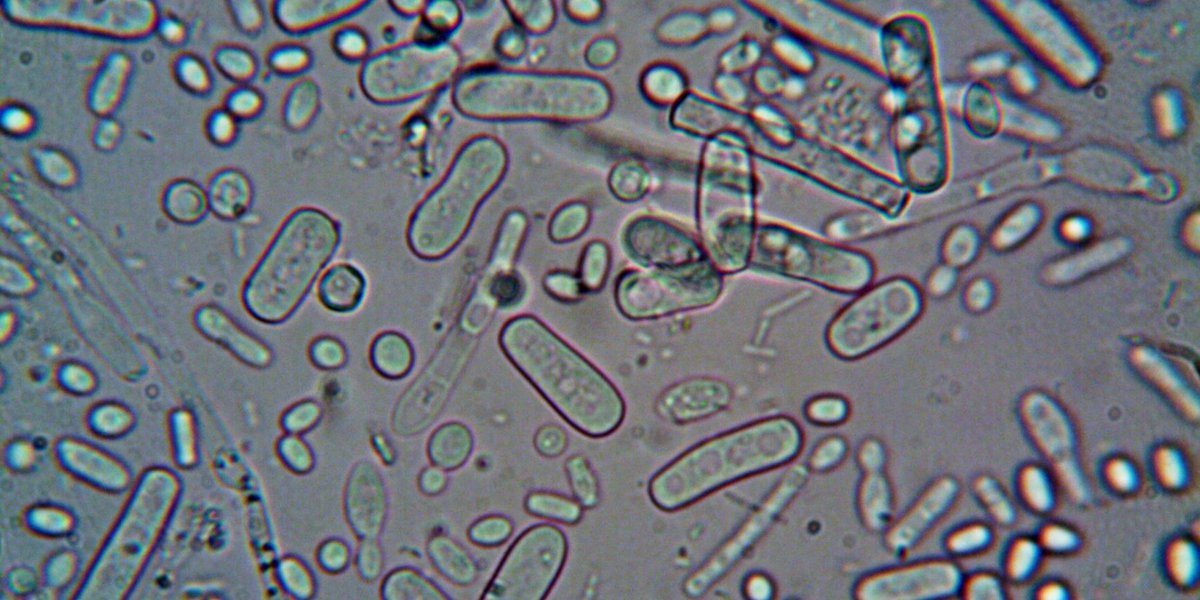
Bacteria are living single cells with their own machinery. Most are harmless or helpful. The troublemakers, like Vibrio cholerae, Mycobacterium tuberculosis and Streptococcus pyogenes, are a small minority. A list of pathogenic bacteria covers the ones that cause disease, along with the illnesses they cause and where they live.
Viruses sit at the edge of the definition of life. They carry genetic material in a protein shell and have no metabolism. Outside a host cell, a virus is inert. That’s why antibiotics do nothing to them: there’s no bacterial machinery to attack.
Fungi are closer to animals than to plants on the evolutionary tree, which makes antifungals hard to design. Drugs that poison a fungal cell tend to poison yours too. Candida auris, first described in 2009, is a yeast that resists several antifungal classes and spreads in hospitals, and the CDC tracks it as an urgent threat.
Protozoa are single-celled organisms with a nucleus, so they’re more complex than bacteria. Plasmodium, the genus behind malaria, spends part of its life cycle in mosquitoes and part in human liver and red blood cells.
Helminths are the only pathogens you can see. Some tapeworms grow several metres inside the gut. Strictly speaking they’re multicellular animals, but they count as pathogens because of what they do to a host.
Prions are the strangest entry. They have no DNA or RNA. A prion is a normal brain protein folded into the wrong shape, and it converts neighboring proteins to match. They survive cooking, standard disinfection and even autoclave temperatures that would sterilize a surgical tray.
How pathogens spread
Every pathogen needs a way out of one host and into the next. The routes fall into five main groups.
Airborne and droplet. Coughs, sneezes and even talking release particles. Large droplets travel a short distance and drop. Smaller aerosols can hang in the air for minutes to hours. Measles is among the most contagious known: one infected person can pass it to 12 to 18 others in a susceptible population.
Waterborne. Cholera is the textbook case. V. cholerae thrives in water contaminated with human feces, and the World Health Organization estimates that cholera causes millions of cases and tens of thousands of deaths a year. The fix is not a drug. It’s a sewage system.
Foodborne. Salmonella, Listeria and norovirus move through undercooked meat, unwashed produce and infected food handlers. Listeria is notable because it grows at refrigerator temperatures.
Vector-borne. An animal carries the pathogen between hosts. Mosquitoes carry malaria, dengue and Zika. Ticks carry Lyme disease. Fleas carried Yersinia pestis, the bacterium behind the plague. The WHO reports that malaria still kills hundreds of thousands of people each year, most of them young children in Africa.
Contact. Direct touch, shared surfaces, sex, and contaminated blood. Bloodborne pathogens such as HIV, hepatitis B and hepatitis C travel through blood and certain body fluids. This is why needlestick injuries, shared needles and unscreened transfusions are tracked so closely, and why healthcare workers get hepatitis B vaccination.
Epidemiologists describe this as the chain of infection: a reservoir (where the pathogen lives), a way out, a mode of transmission, a way in, and a susceptible host. Break any one link and the chain fails. That one idea explains most public health advice.
How pathogens make you sick
Having a pathogen in your body isn’t the same as having a disease. What matters is virulence, the degree of harm a pathogen can do, and it comes through several mechanisms.
Toxins. Some bacteria cause disease almost entirely through the chemicals they release. Cholera toxin forces intestinal cells to dump water, producing the severe watery diarrhea that can kill through dehydration within hours. Tetanus and botulism work the same way, through toxins that attack the nervous system. In these cases the bacterium itself can be nearly harmless without its toxin.
Direct cell destruction. Viruses burst cells open as new viral particles escape. Polio kills motor neurons this way. Many protozoa, including malaria parasites, rupture the red blood cells they occupy, which produces the repeating fever cycles of the disease.
Tissue invasion and competition. Worms and large parasites steal nutrients and block organs. Hookworms attach to the intestine wall and feed on blood, and a heavy infection causes iron-deficiency anemia.
Immune overreaction. Often it’s your own defenses that cause the worst damage. In sepsis, the body’s response to infection spirals into widespread inflammation that damages organs. In severe influenza and COVID-19, a flood of inflammatory signals can injure the lungs more than the virus does.
Pathogens also fight back. Some hide inside host cells. Others coat themselves in molecules that look like host tissue. Influenza changes its surface proteins constantly, which is why flu shots are reformulated each year. HIV goes further by infecting the very immune cells meant to coordinate the response.
Pathogens and the immune system
Your body has layers of defense. Skin, stomach acid, mucus and tears block most invaders before they start. The innate immune system reacts within minutes, using white blood cells that engulf anything that looks foreign. The adaptive immune system takes days to ramp up the first time, but it builds memory. Specific antibodies and T cells get made for a specific pathogen, and a second encounter triggers a far faster response.
That memory is the principle behind vaccines. A vaccine shows the immune system a harmless piece or weakened version of a pathogen, so the real one meets a prepared defense.
Immunity has gaps. Prions are made of a protein your body already produces, so the immune system doesn’t see them as foreign. Some pathogens vary faster than antibodies can adapt. And age, malnutrition, stress, and drugs that suppress immunity all raise vulnerability.
Pathogens beyond humans
Human disease is only part of the picture. Pathogens infect every living group.
Plants. The oomycete Phytophthora infestans caused the potato blight that triggered the Irish famine of the 1840s. Wheat rust fungi still threaten harvests today. Plant pathogens are a food security issue as much as a biology one.
Animals. Avian influenza, African swine fever and chytrid fungus (which has driven amphibian declines worldwide) all reshape ecosystems and farming.
Zoonoses. A zoonotic disease jumps from animals to people. Rabies, Ebola, and most influenza pandemics trace back to animal hosts. Land clearing, wildlife trade and intensive farming bring people and animal pathogens into closer contact, which raises the odds of a spillover.
Treatment and prevention by type
Matching the tool to the pathogen is what separates effective treatment from useless treatment.
- Bacterial infections: antibiotics. They work by blocking cell wall construction, protein production or DNA copying. They don’t work on viruses, and taking them for a cold only breeds resistance.
- Viral infections: vaccines prevent many. Antivirals exist for HIV, hepatitis C, herpes and influenza, but there are far fewer antivirals than antibiotics.
- Fungal infections: antifungal creams, pills or intravenous drugs, depending on depth of infection.
- Protozoal and worm infections: targeted antiparasitic drugs, along with prevention such as bed nets, clean water and sanitation.
- Prion diseases: no effective treatment. Prevention is about controlling exposure, such as banning feed that contained infected animal tissue.
Antimicrobial resistance is the major emerging problem. Bacteria, fungi, viruses and parasites evolve to survive the drugs aimed at them, and overuse in medicine and farming speeds this up. The WHO lists antimicrobial resistance among the top global public health threats, with drug-resistant infections directly causing over a million deaths a year.
For everyday protection, the best-supported steps are boring ones:
- Wash hands with soap for 20 seconds, especially before eating and after the bathroom.
- Cook meat to safe internal temperatures and keep raw and cooked foods apart.
- Stay up to date on vaccines.
- Use clean water or treat it when in doubt.
- Use repellent and nets in mosquito or tick areas.
- Stay home when you’re sick.
Pathogens FAQ
What are the 4 main types of pathogens? Most textbooks list bacteria, viruses, fungi and parasites, with parasites covering both protozoa and worms. This post splits parasites in two and adds prions, giving six.
Are all bacteria pathogens? No. The vast majority are harmless or beneficial. Only a small fraction cause disease in humans.
Can a virus be treated with antibiotics? No. Antibiotics target bacterial structures that viruses don’t have.
What is the most dangerous pathogen? It depends on the measure. By annual deaths, Mycobacterium tuberculosis and Plasmodium falciparum rank among the highest. By fatality rate in infected people, prion diseases and rabies once symptoms appear are near 100 percent.
How small is a pathogen? From a virus of about 20 nanometres to a tapeworm of several metres. Roughly a hundred thousand times separates the smallest from the largest.
What’s the difference between a pathogen and a toxin? A pathogen is a living (or living-adjacent) agent that replicates. A toxin is a chemical it may produce. Some diseases come from the toxin even after the microbe is gone.